Elementor Page #2820

Corpus Christi to Fort Lauderdale Feb 26, 2026

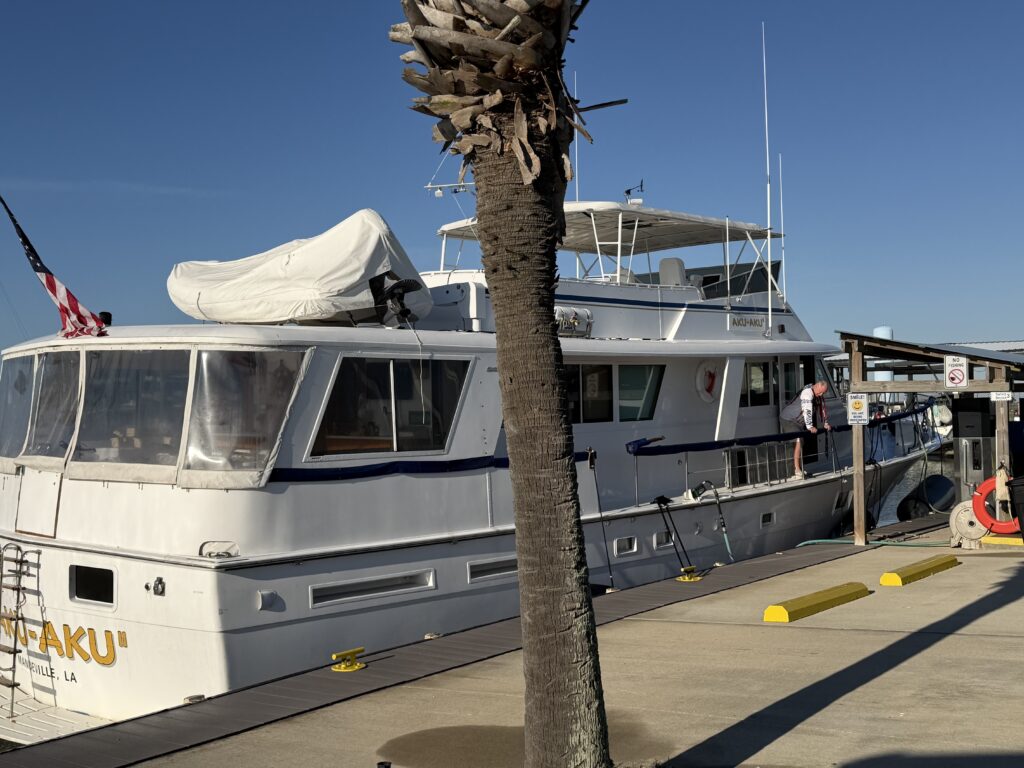
After almost a year in Corpus Christi, we’ve semi-mastered driving the boat: we can take it out, bring it back, and put it in a slip without too much fanfare. It’s been real progress, and I emphasize we because it’s truly a team effort—everyone has learned their parts and roles, and together we’ve come a long way. Now it’s time for the next step: taking the boat and heading toward the Seattle–Victoria, BC area. The plan is to leave Corpus Christi and follow the Intracoastal Waterway to New Orleans, then continue along the Intracoastal until we get to Flordia and then turn south down the west coast of Florida to the tip, around the corner, and back up the east coast to Fort Lauderdale. A route we figure is about 1,150 miles and will take roughly 6 to 9 days. When the boat arrives in Fort Lauderdale, it will be loaded onto a larger ship with a number of other yachts, then carried through the Panama Canal and up the West Coast all the way to Victoria, Canada, a passage expected to take between 21 and 28 days, weather permitting.

When we started planning this trip, the first priority was figuring out the crew, since we needed four to six people to make the journey, we ended up with five.  The first step was securing a captain, and thankfully Captain Marty was available to take command of the Aku-Aku for this trip. Next, my sister Peg called and said she’d like to join us, and I told her, “Sure, come on with us” so Peg flew in from Bayfield, Colorado on February 26 and Robert Spillers drove over  from Austin, Texas to our house in San Antonio as well. We loaded up the truck and drove to Corpus Christi with all of our supplies, arriving on the evening of the 26th with plans to depart on the 27th. Marty flew in from New Orleans on the morning of 27th, and we cast off around noon that day. I used to work for Dr. Robert Spiller, when Jennifer and I came back from Vietnam; he gave me my first job back  in veterinary medicine after I’d been away from it for about 28 years.  I worked at his clinic, Town & Country Veterinary Hospital, where I worked for about seven years before we both moved to other practices and he eventually sold that one. We’ve stayed in touch over the years, and he has a strong interest in learning how to run the yacht, so he joined us for the trip as well, rounding out our crew: Jennifer, Robert, Marty, my sister Peg, and me—the crew assembled, ready to go, and eager for the journey ahead.

Off We Go...

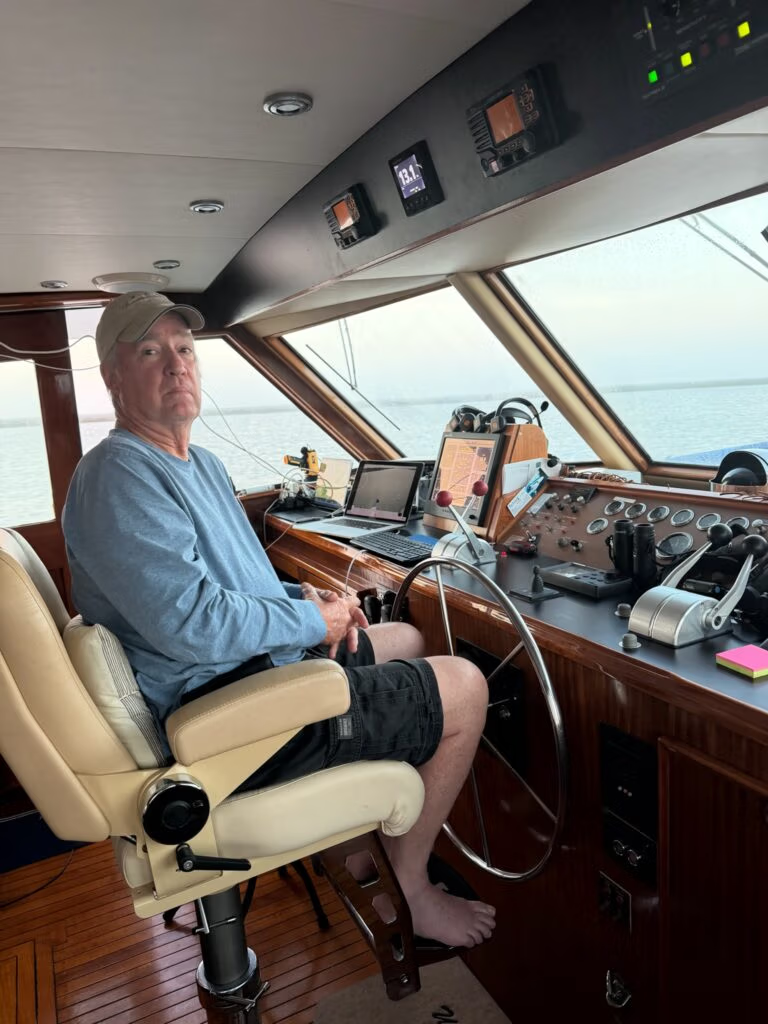
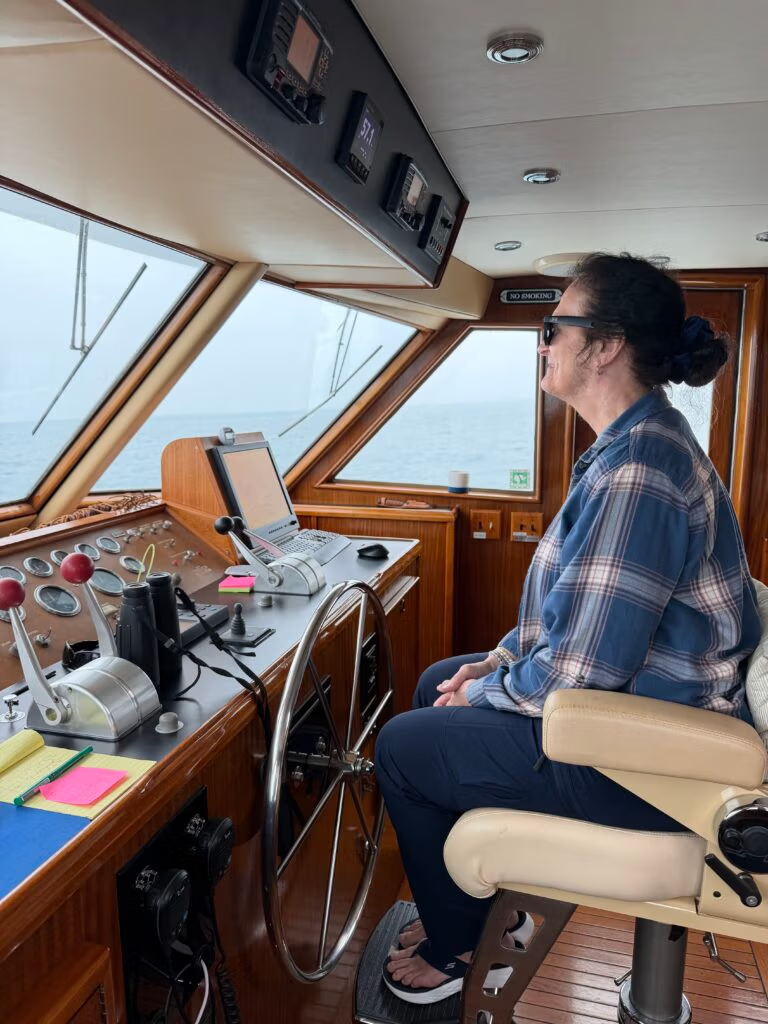
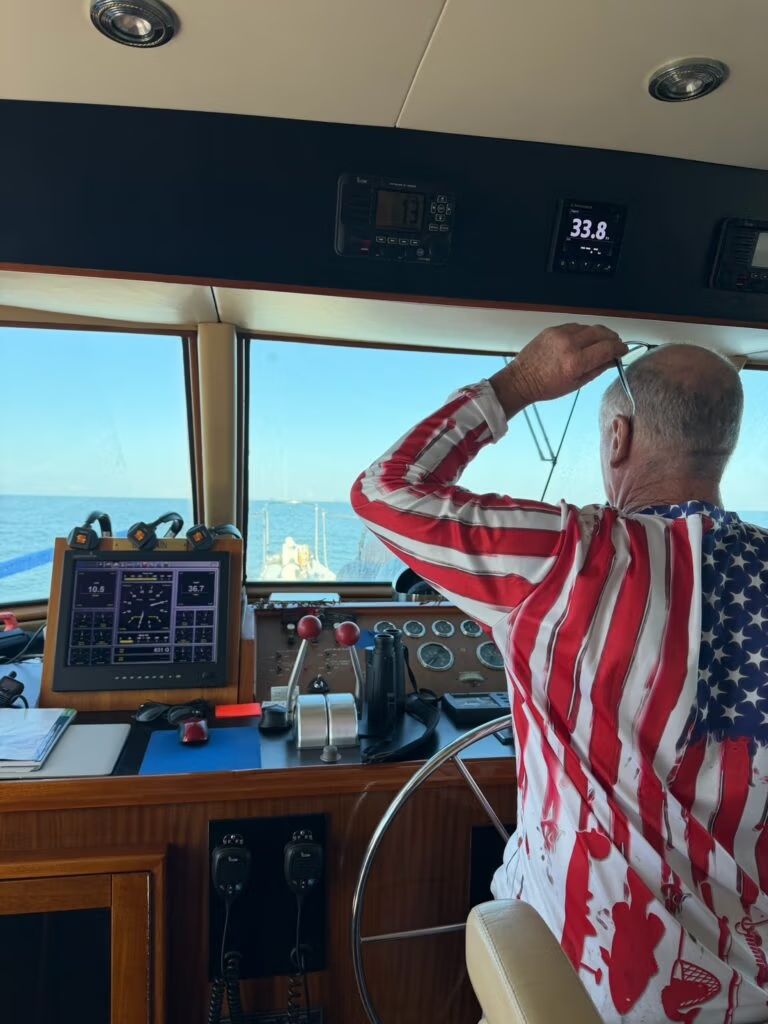
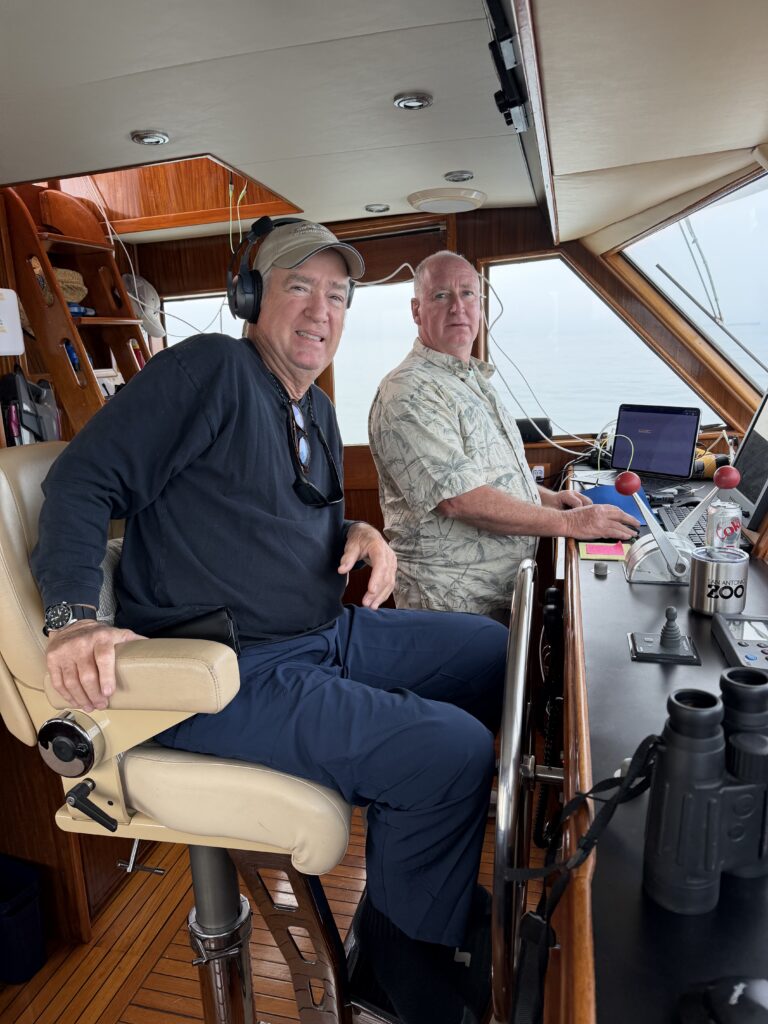
Everyone would take a turn at the helm.
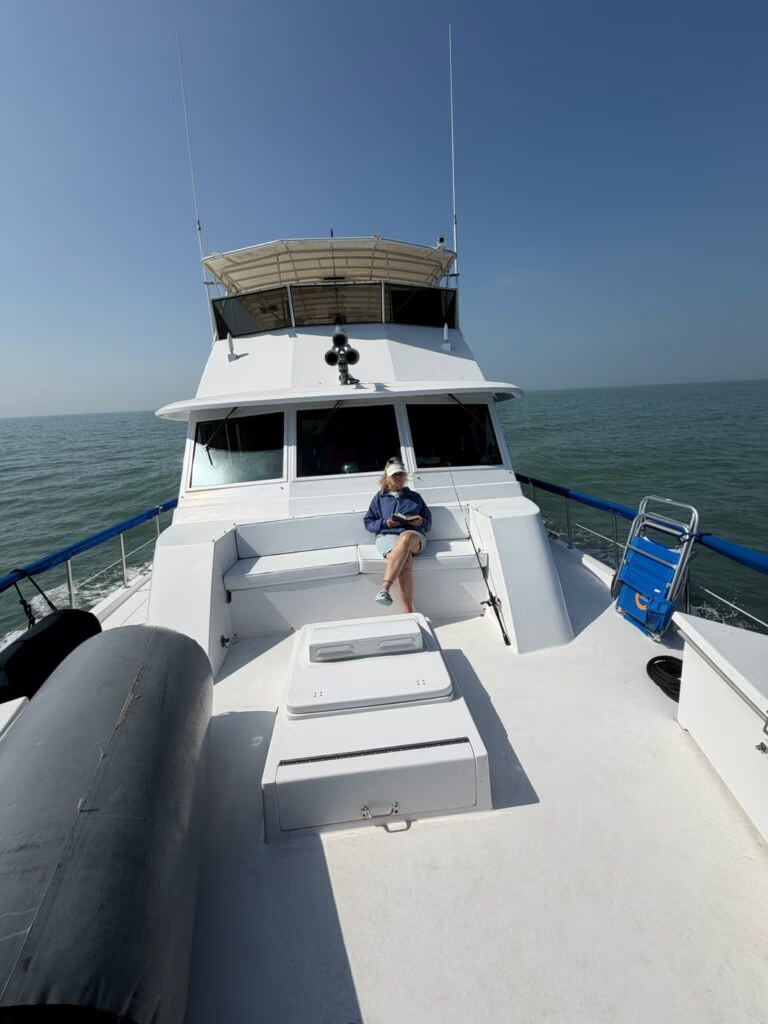
Peg's favorite place!

We left Corpus Christi around noon on February 27, bound for Freeport, Texas, with a steady breeze pushing us along the Intracoastal. Along the way we made a quick fuel stop at Port A before continuing on toward our destination for the night. Freeport turned out to be a bit rough around the edges, and that evening my sister Peg and Jennifer bravely went ashore in a sketchy area to hunt down supper, eventually returning with pizza that tasted especially good after a long day on the water. We hadn’t made quite as many miles as we’d hoped, but we were satisfied with the progress and grateful for a quiet night. The next morning, after topping off the tanks at Freeport Marina—spending $1,999.42 on diesel—we were in good spirits as we prepared to get underway again on February 28, even though the day greeted us with fog and rain.

Rain and Fog most of the Day, 28 Feb

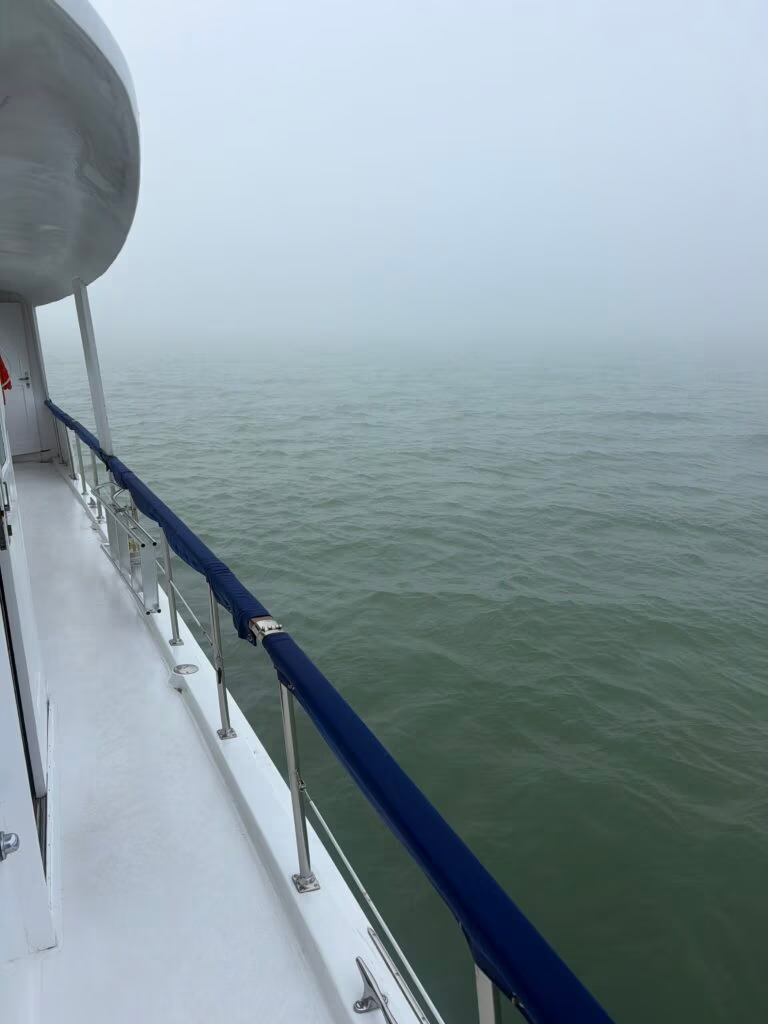
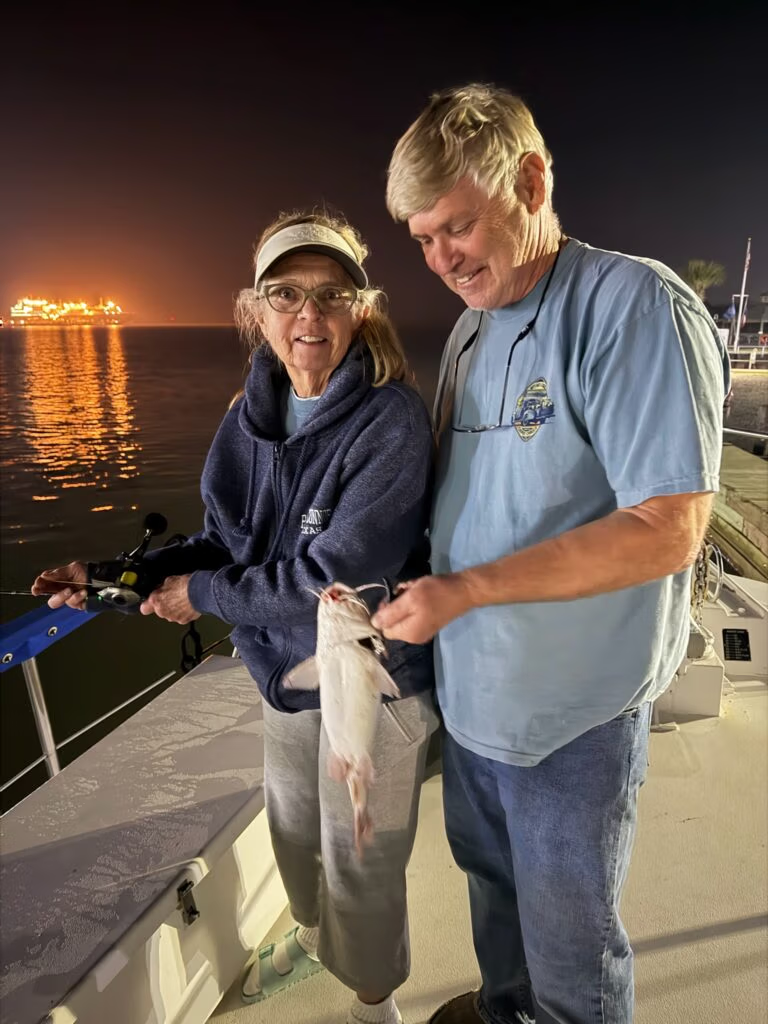
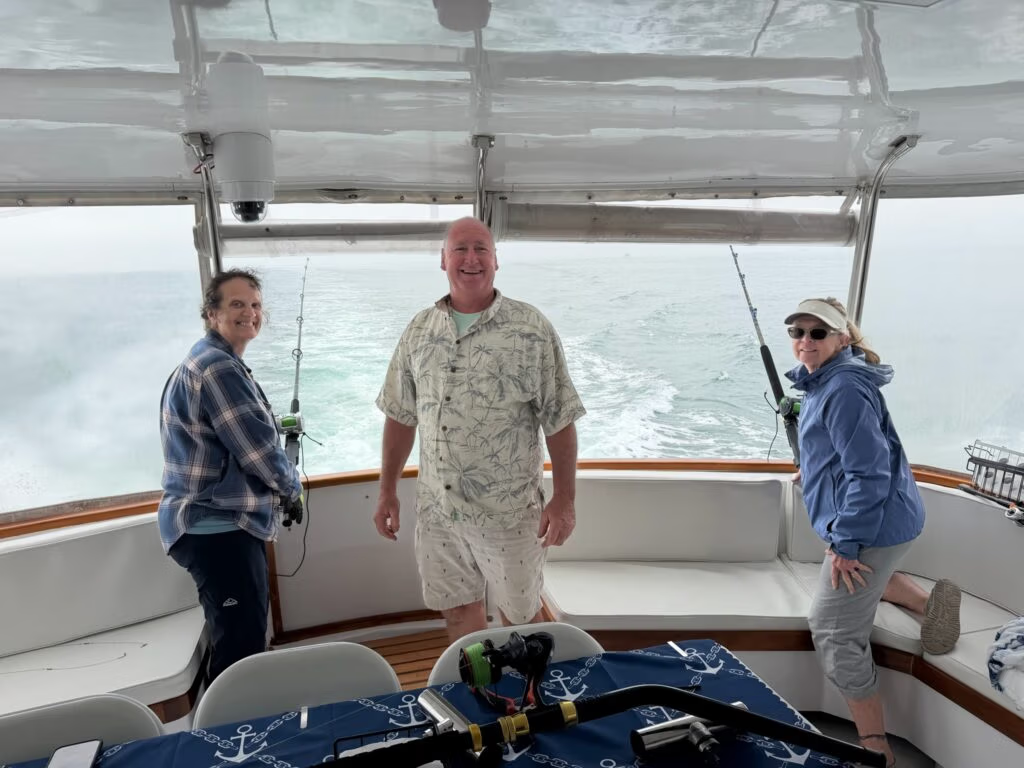
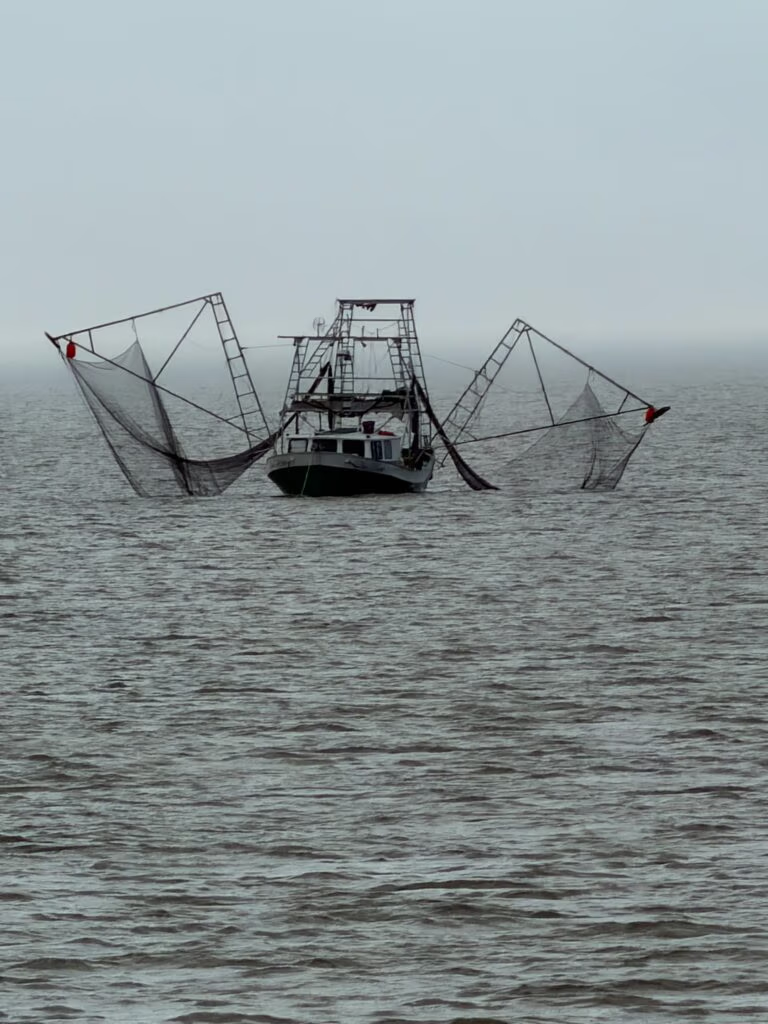
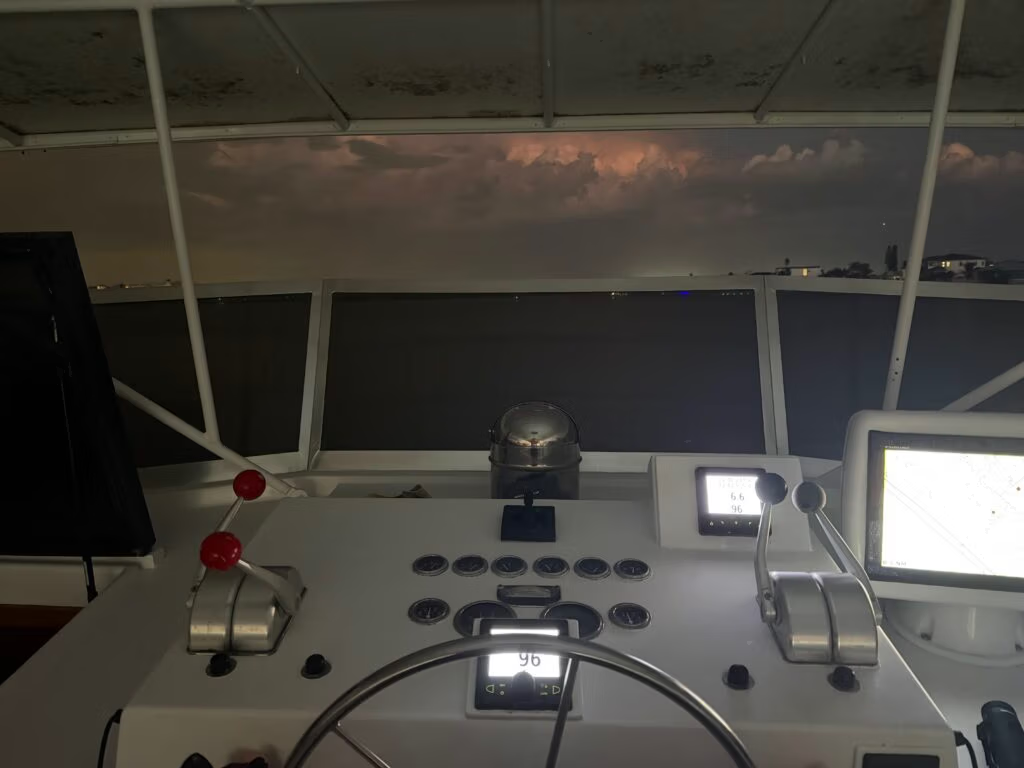
We left Freeport early in the morning, heading out along the Intracoastal with plans to slip out into the Gulf for a bit to get away from the fog.  The heavy rain and thick fog made the day stressful from the start, sometimes going only 4 knots.  At times the fog was so dense it was hard to see anything in front of us, and at one point we ran into a tense situation where one barge was pushed up on the shore while another was coming straight toward us, forcing us over into the mud before Marty skillfully worked us free. After that close call, we pushed on through the day until we reached Port Arthur, where we finally found a spot to tie up for the night. Peg did a little fishing and pulled in some odd-looking fish, while Jennifer and Peg cooked supper aboard. The evening turned out relaxed and pleasant, a welcome contrast to the hectic, rain‑ and fog‑filled day, and we went to bed ready to refuel and get underway again in the morning.  Fuel Cost 1746.73

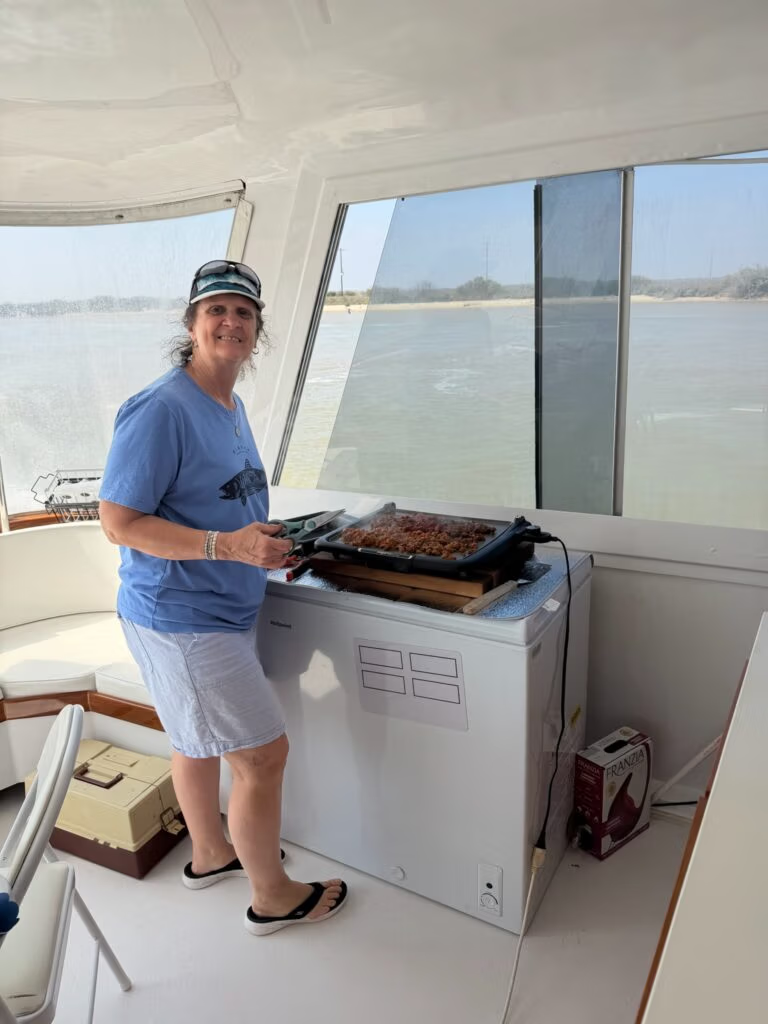
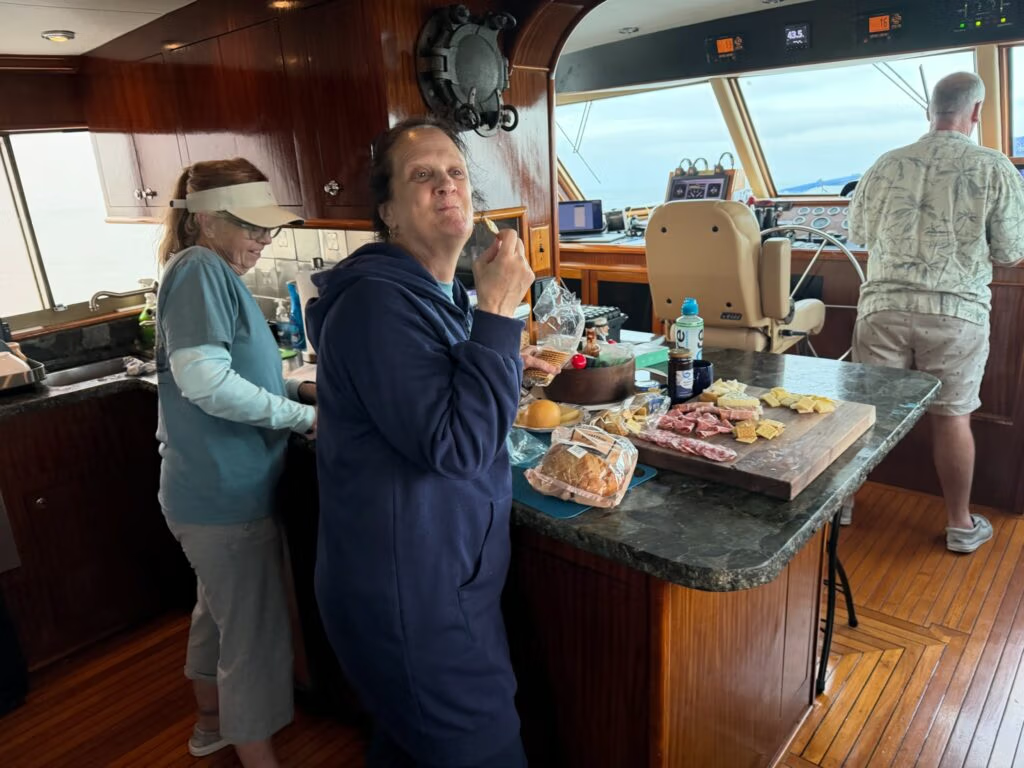
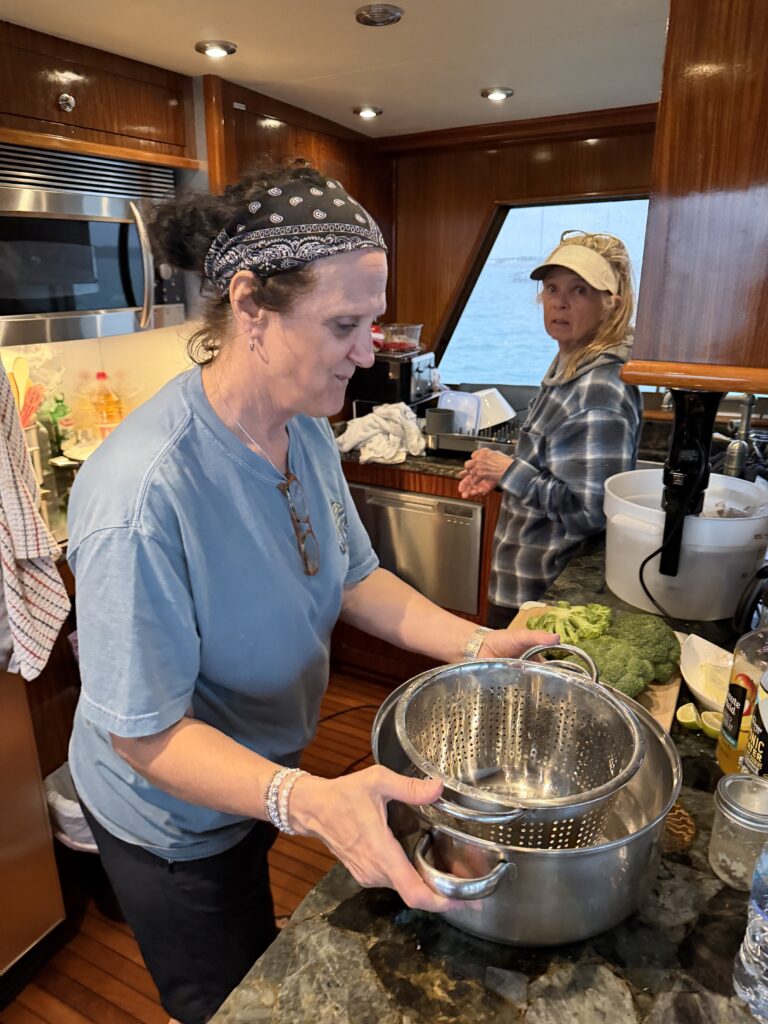
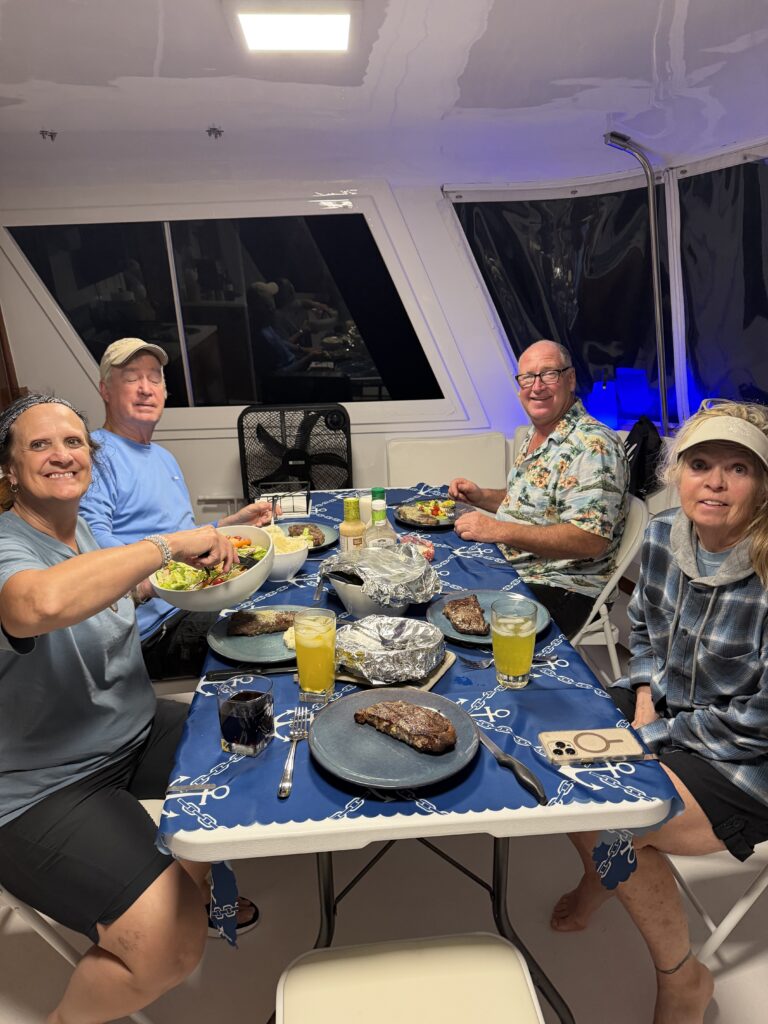
Jenn and Peg kept the Crew fed...no one went hungry.

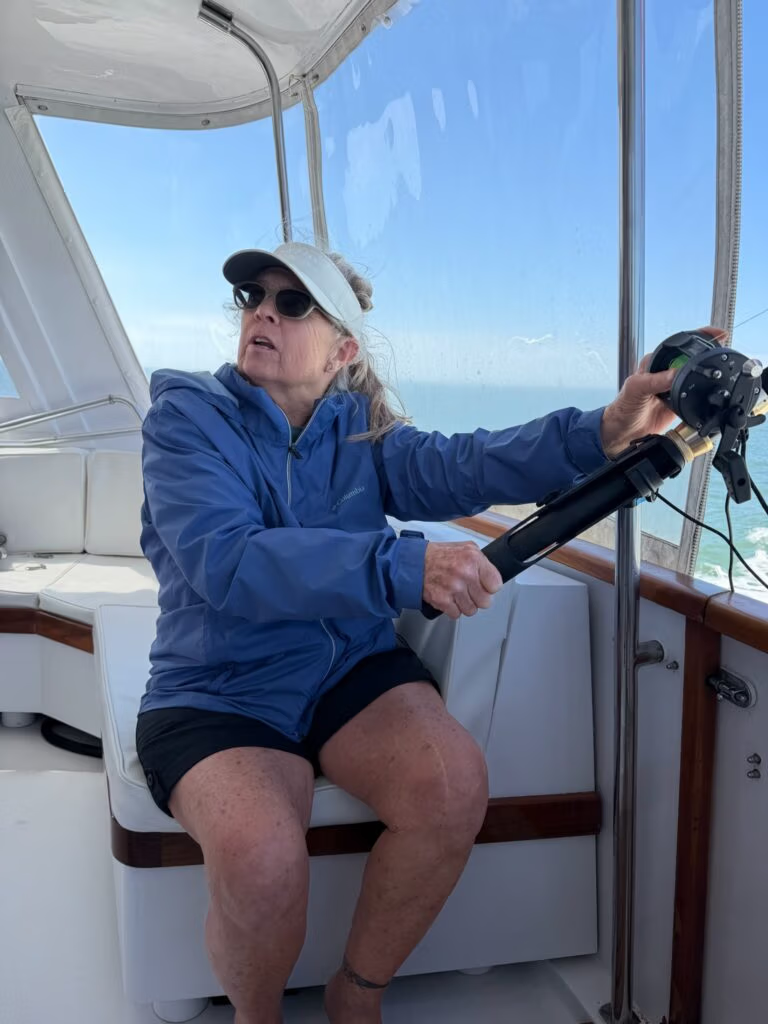
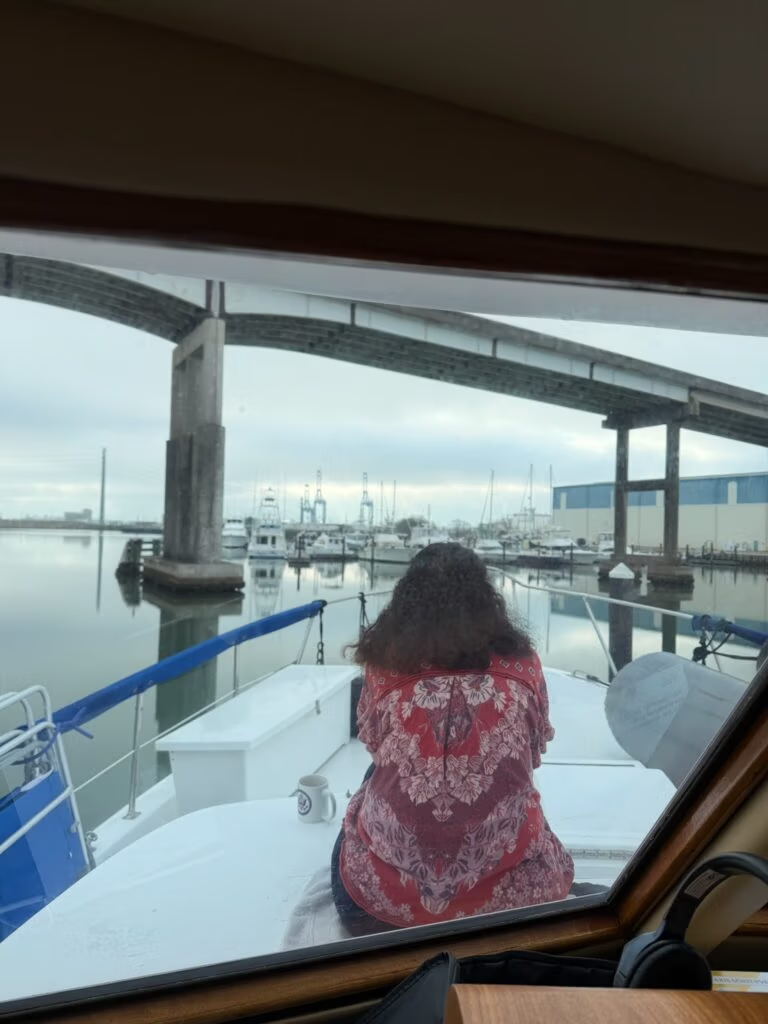
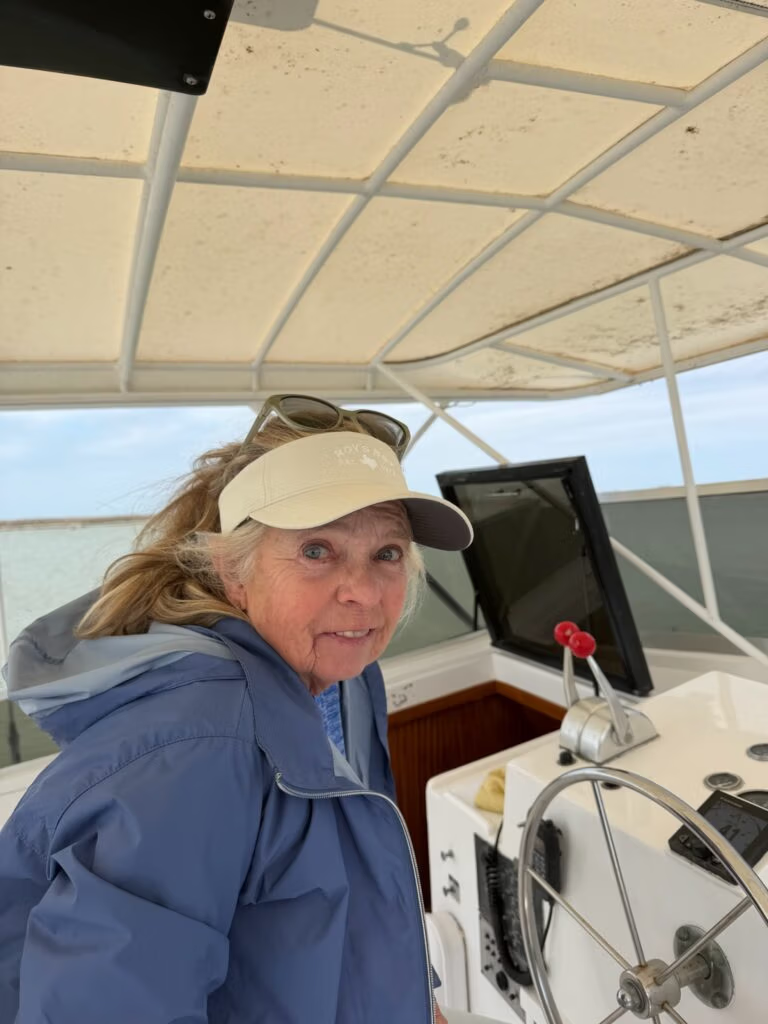
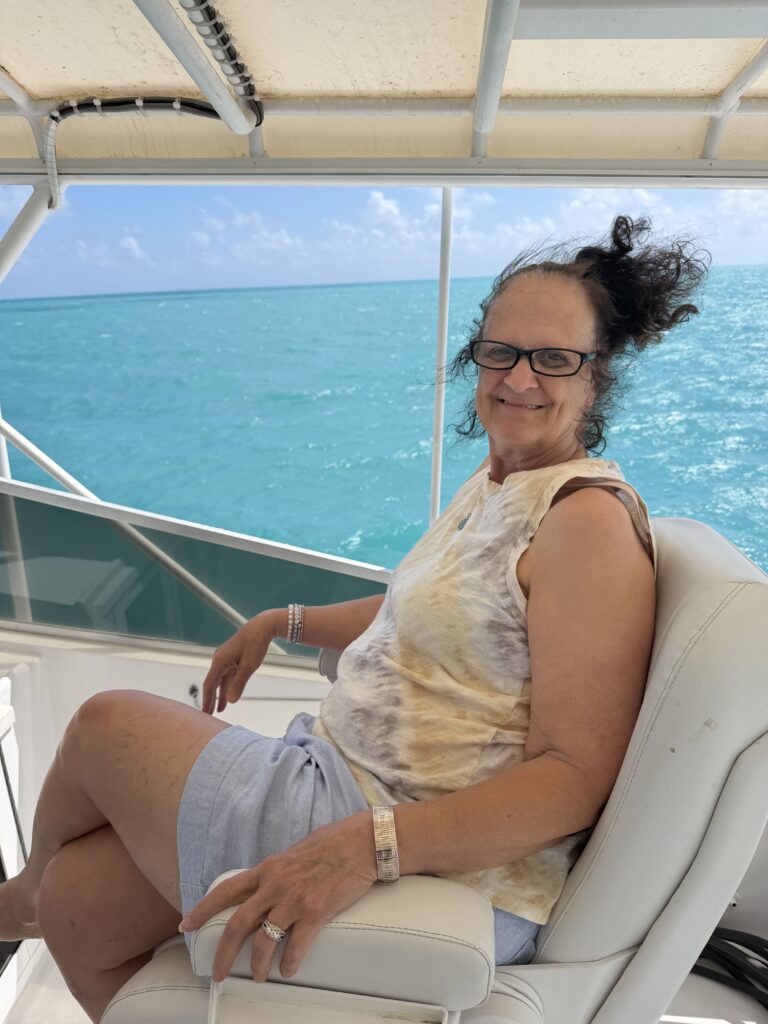
Jennifer and Peg kept us well fed and served snacks most days. Cooking on a moving boat is a real skill and not for the faint of heart.   You can’t imagine how hard it is to drive in fog on a narrow passage, Marty really earned his keep this day.  Robert monitored the radar and would identify oncoming traffic…   The picture below is Jenn sitting the helm once we got into the Gulf, what a day.   

Peg gave the fish to some folks at the dock, made their day.

1 March, Port Fourchon, Louisiana

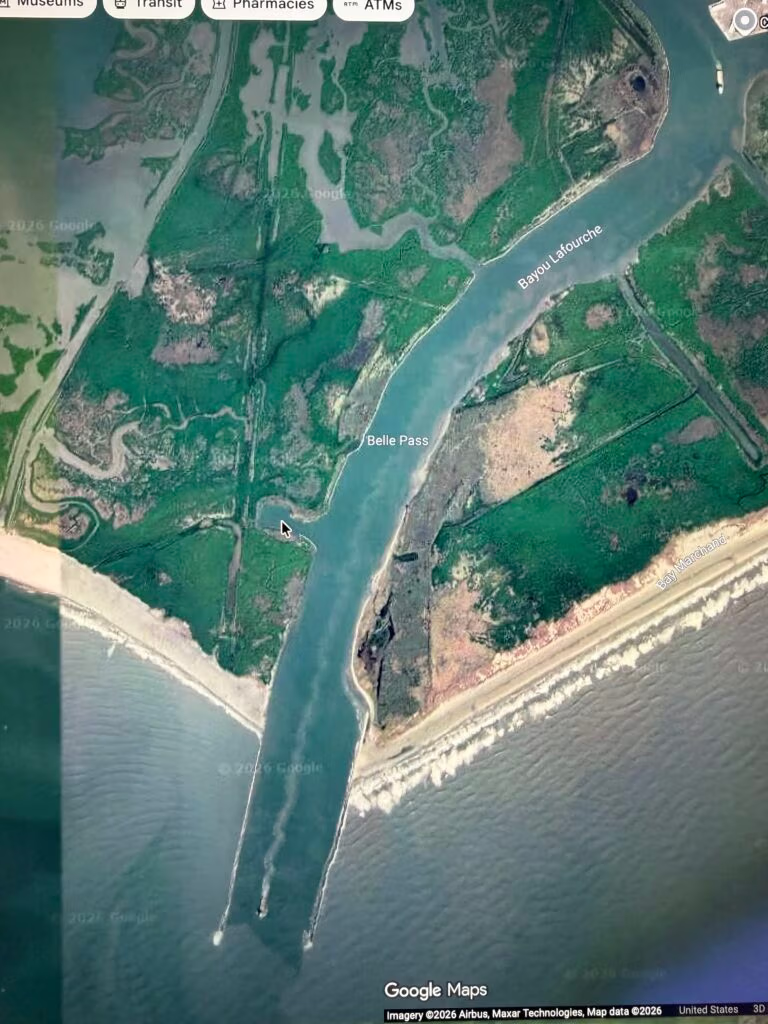
After spending the night at Port Arthur tied to the dock, we fueled up the next morning and headed back out to the Gulf, making our way to Port Fourchon, Louisiana. We had to travel a long way up into the channel to find a suitable anchorage for the overnight stay. The first couple of places we tried had such strong current that we dragged anchor and had to move on. It grew quite late into the night before we finally found a spot far enough in to set the hook, though even there I was concerned about a bank of rocks to our north. The anchor did drag a little, but not too much. Despite the restless night, everyone  woke up the next morning fresh and ready to continue our journey on to Hurricane Hole… 

2 March, Grand Isle, Louisiana

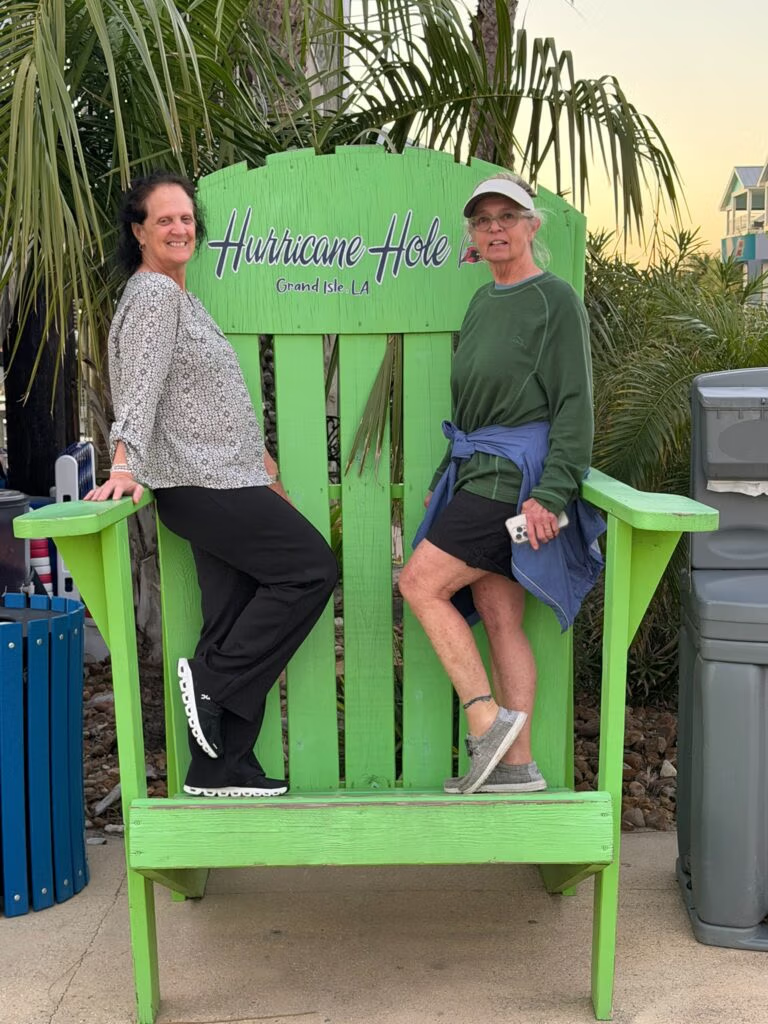
After our challenging anchorage experience, we put in at Hurricane Hole on Grand Isle, Louisiana, a premier marina and resort destination on the island’s southwest end that was founded by Don Hargroder after he couldn’t dock his 82-foot boat . Over the past decade, it has transformed into a Caribbean-inspired spot with condos, a restaurant, a pool, and a gym, serving as a critical, high-end shelter for vessels during hurricanes . We fueled up there, with gas running us $3,586.59, and spent the night tied up in what proved to be a tricky docking situation with many other boats in close quarters. By the time we arrived, all the restaurants had closed down, so we cooked supper on the boat that night and got a good rest before heading out the next morning toward Gulfport.

Pictures Along the Way

On March 3rd, we departed Grand Isle with the intention of our next stop at Gulf Port Marina.  Peg and Jennifer fished from the back of the boat at times—though it was more fishing than catching. I have to pause here to recognize what an excellent crew we had aboard: Marty proved to be a superb captain, Robert Spillers brought his professional expertise as a navigator from his time as a B-52 guy in the United States Air Force, my sister Peg fit right in and did her share of cooking, and of course Jennifer, always the matriarch, made sure we were fed and everything was taken care of while even finding time to drive the boat and learn its handling. Overall, it was a good night as we made our way from Hurricane Hole at Grand Isle toward Gulfport.

Robert's keen sense of humor.

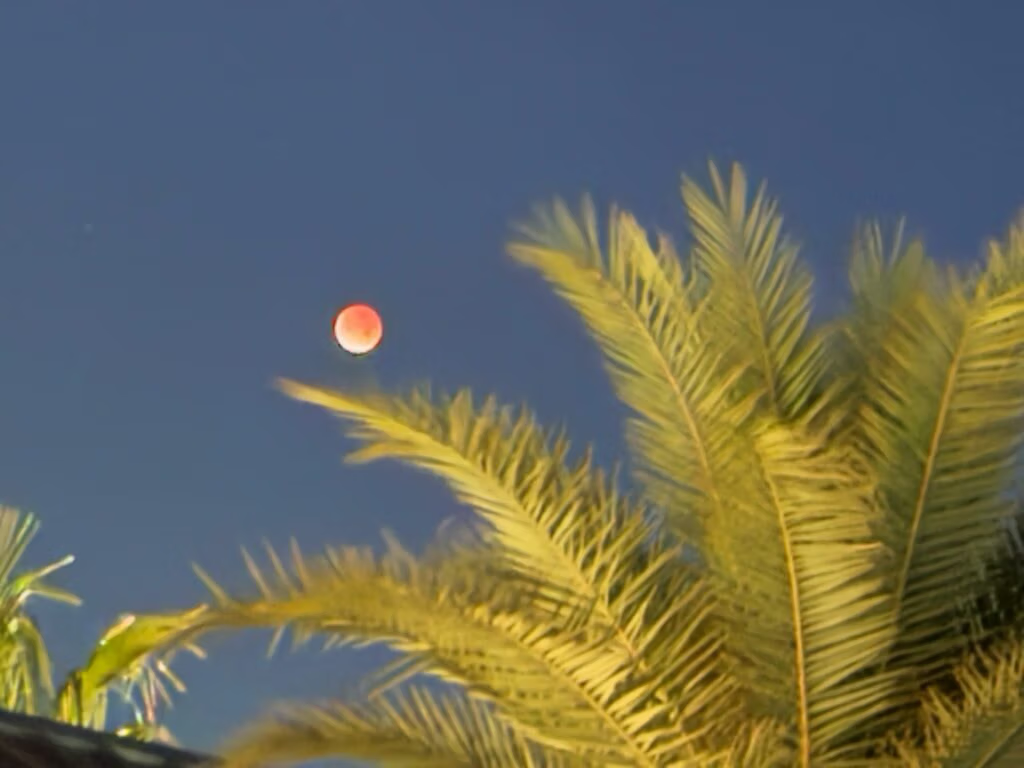
3 March, Blood Moon

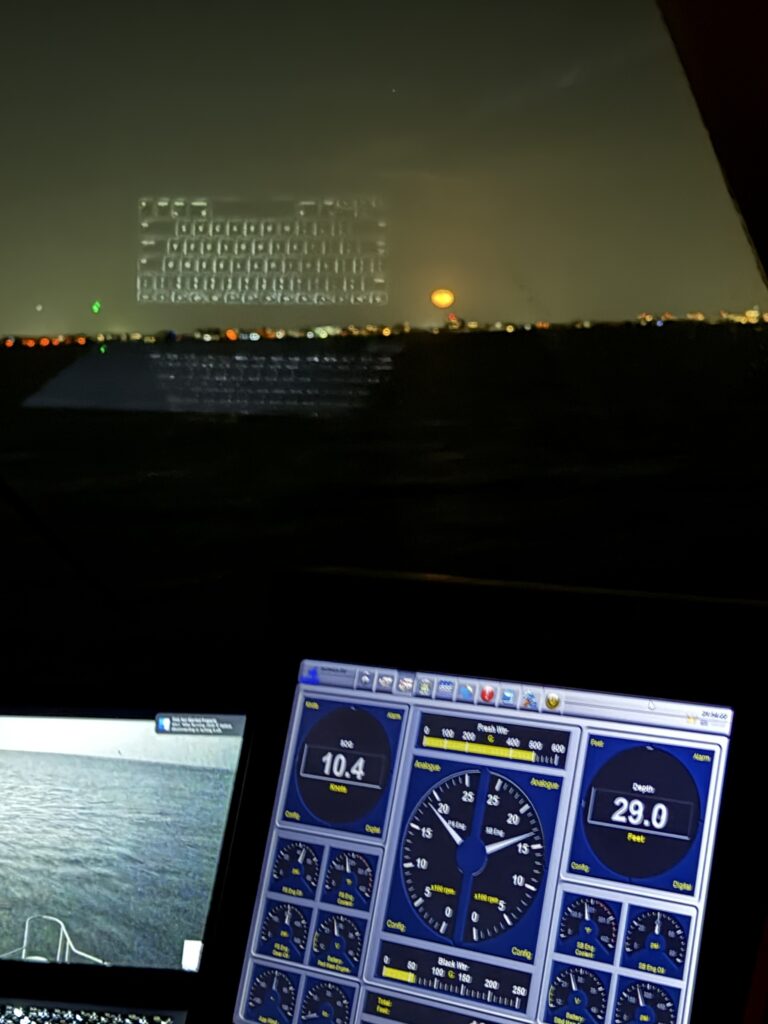
While we were docked at Hurricane Hole on Grand Isle, the night of March 3rd brought us the spectacular orange moon—a total lunar eclipse, also known as a blood moon, which occurs when Earth travels directly between the sun and moon, casting its shadow on the lunar surface and giving it a distinctive reddish-copper hue from the scattered red and orange wavelengths of sunlight passing through Earth’s atmosphere. Throughout history, cultures worldwide have viewed blood moons with both wonder and fear: the Incas believed a jaguar had eaten the moon and would come to Earth next, ancient Mesopotamians saw it as a threat to their king, and Chinese cultures thought dragons or wild animals were attacking the moon. My sister Peg and Jennifer got up sometime in the middle of the night to take pictures of this remarkable celestial event, and I would be remiss if I didn’t include mention of it here. I must admit that none of the guys got up to see it—just the girls had the presence of mind to capture that beautiful moment while the rest of us slept through this rare astronomical phenomenon that occurs roughly every 2.5 years from any given location.

Sights Along The IntraCostal

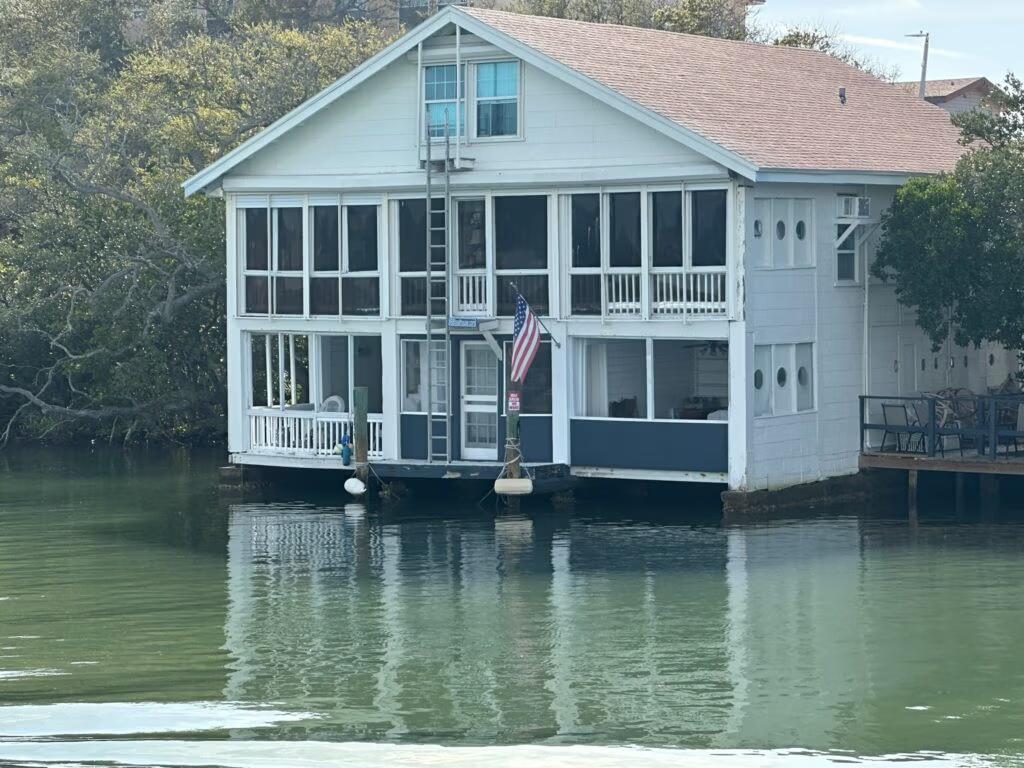
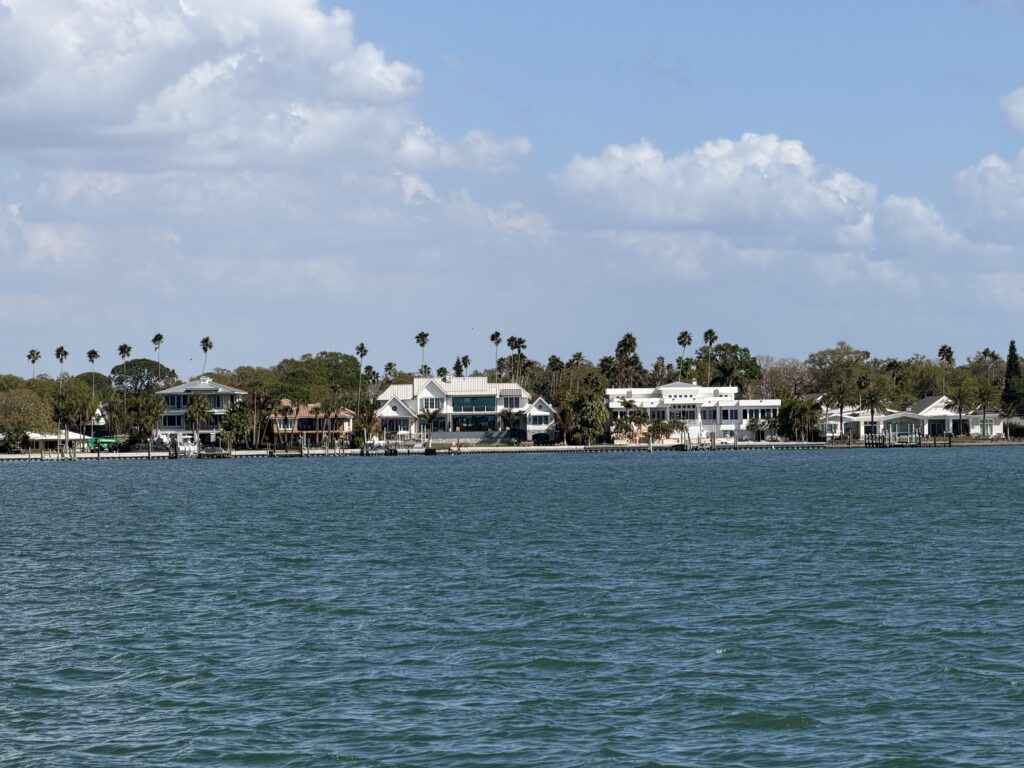
The stretch of the Intracoastal Waterway between New Orleans and the northern tip of Florida is an amazing cruising ground, and many boaters choose to make this segment the centerpiece of their journey. It offers beautiful houses and scenery along the way, with small villages and inviting spots that make you want to stop and explore. There are drawbridges and locks scattered along the route, adding interest and variety so that it feels like there is something new around every corner. This section is part of the broader Atlantic and Gulf Intracoastal Waterway system, a protected inland route that began taking shape in the 1800s as canals and natural waterways were gradually linked to support commercial shipping and, later, recreational boating. Today, it blends that working-waterway heritage with a relaxed cruising lifestyle, and it is definitely a trip I would not mind doing again in the future.

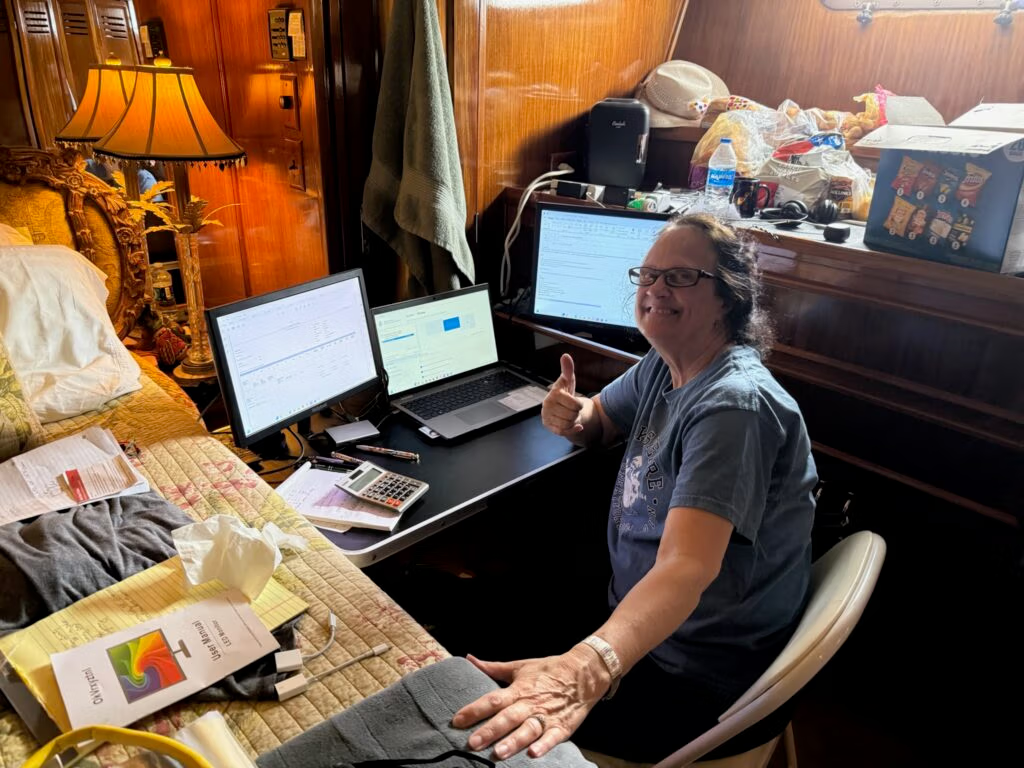
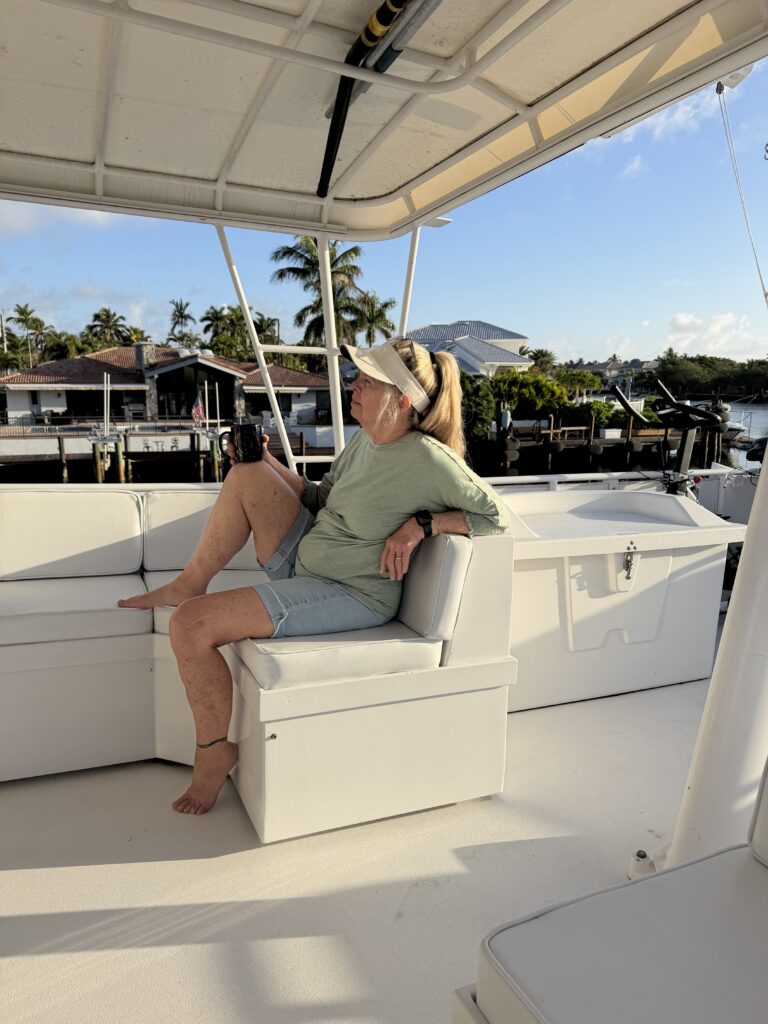
Jennifer Working while Underway
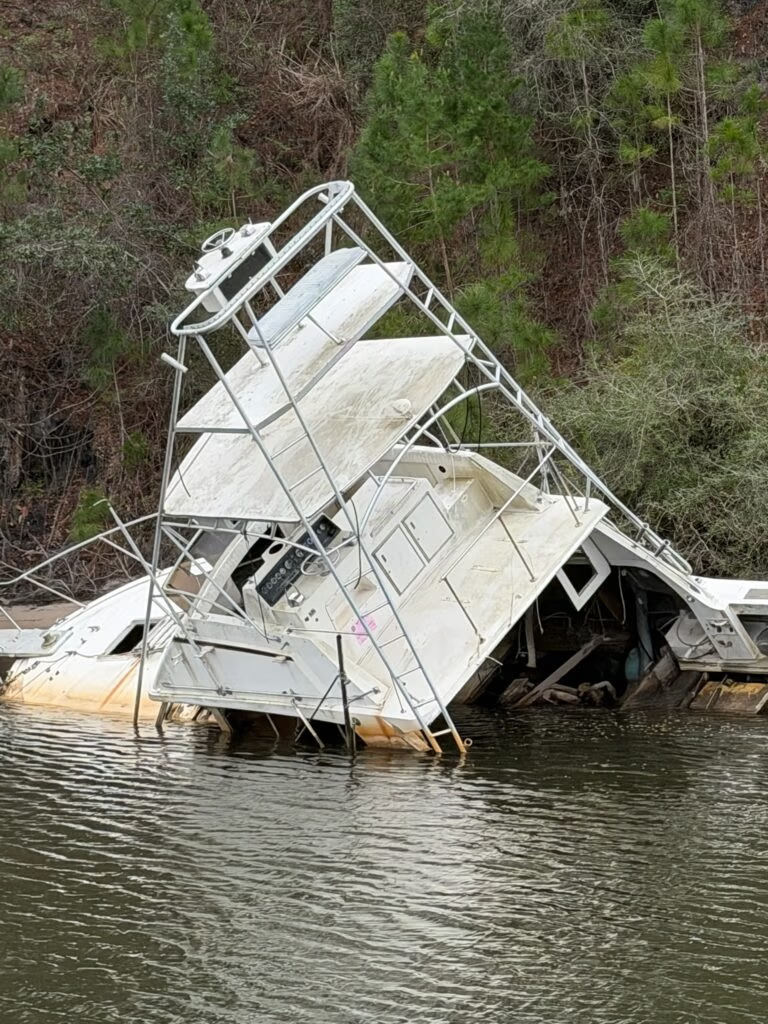
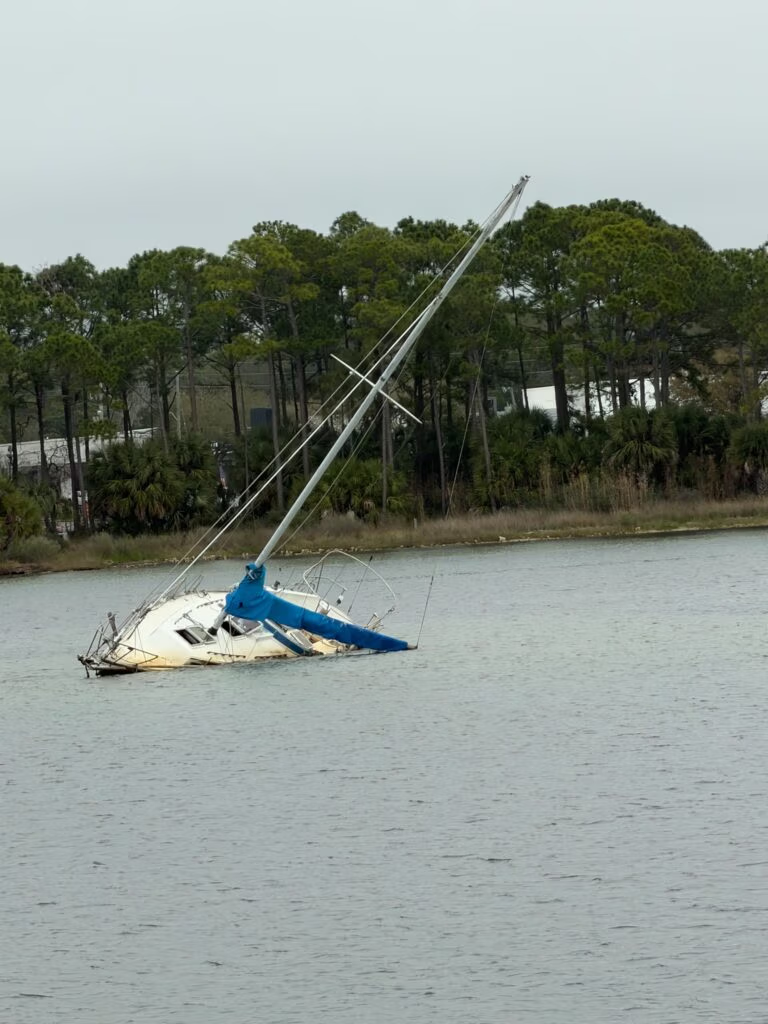
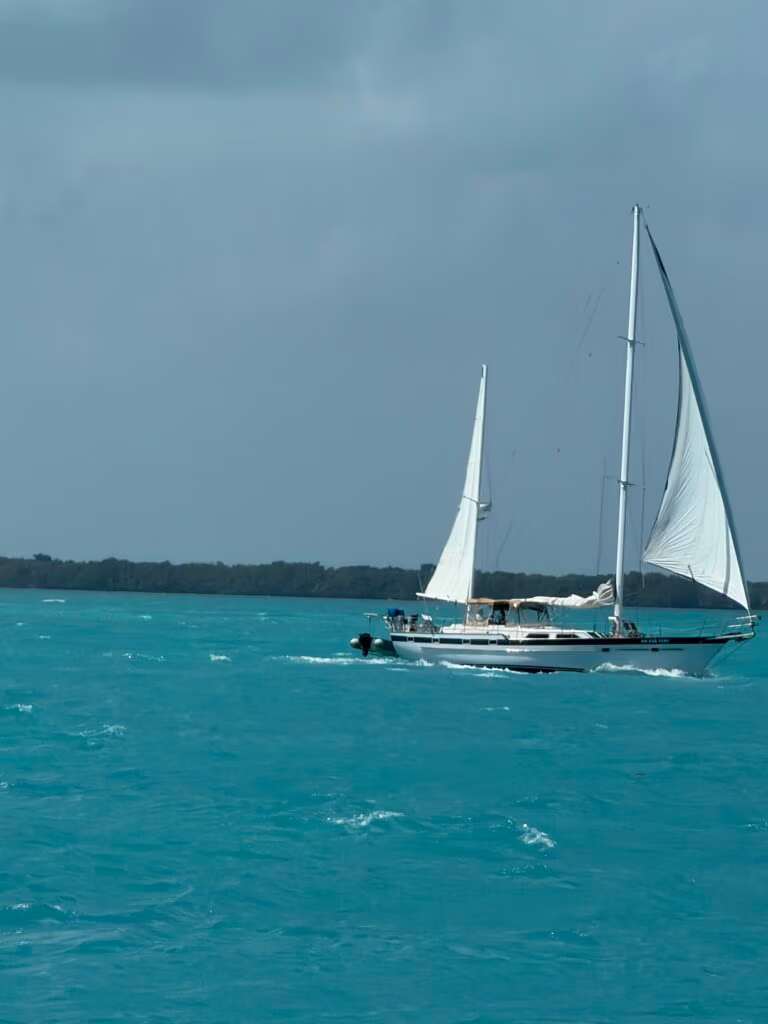
We saw numerous sunken boats, so sad someone's dream lost to some storm or bad luck, makes you wonder.

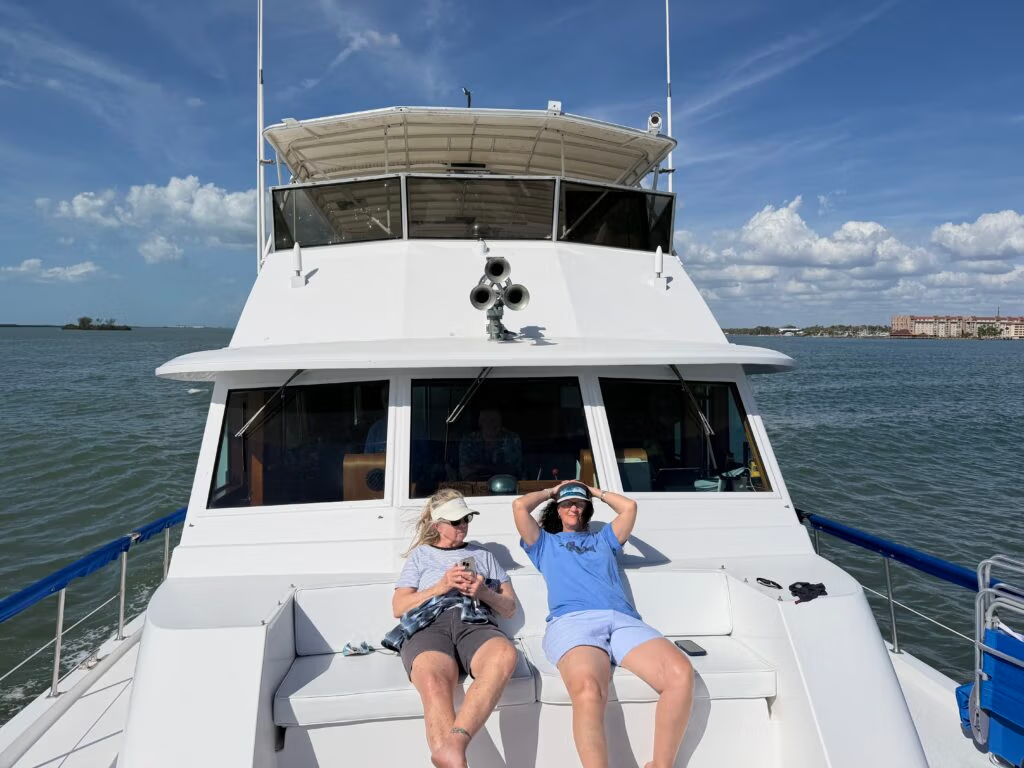
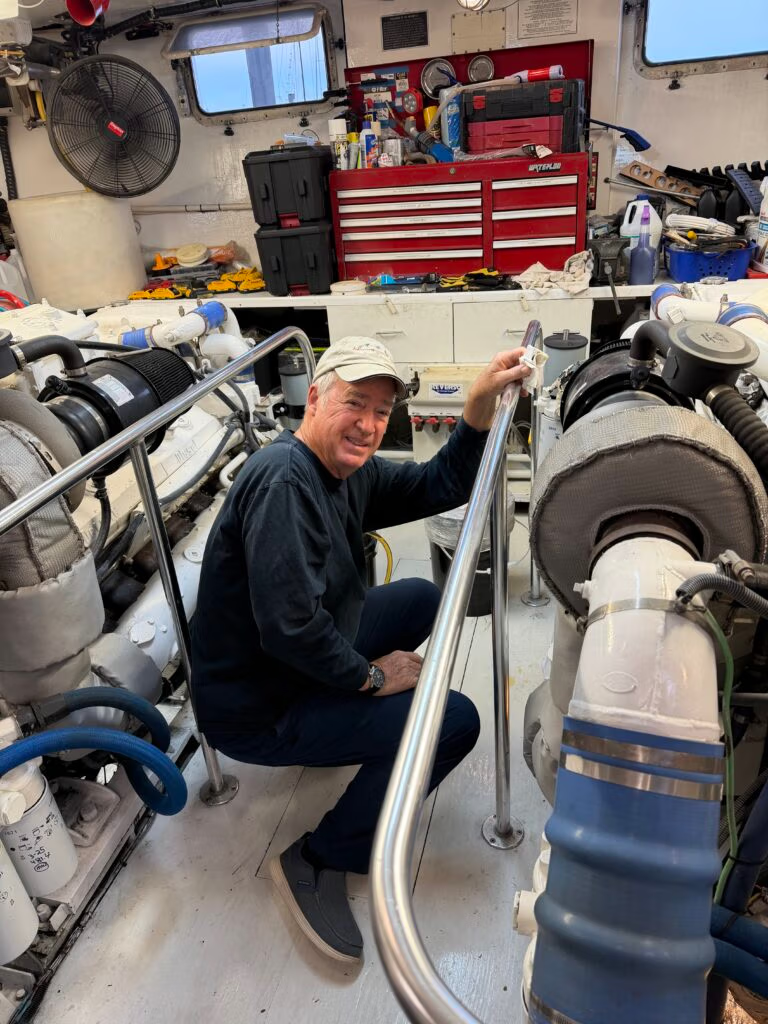
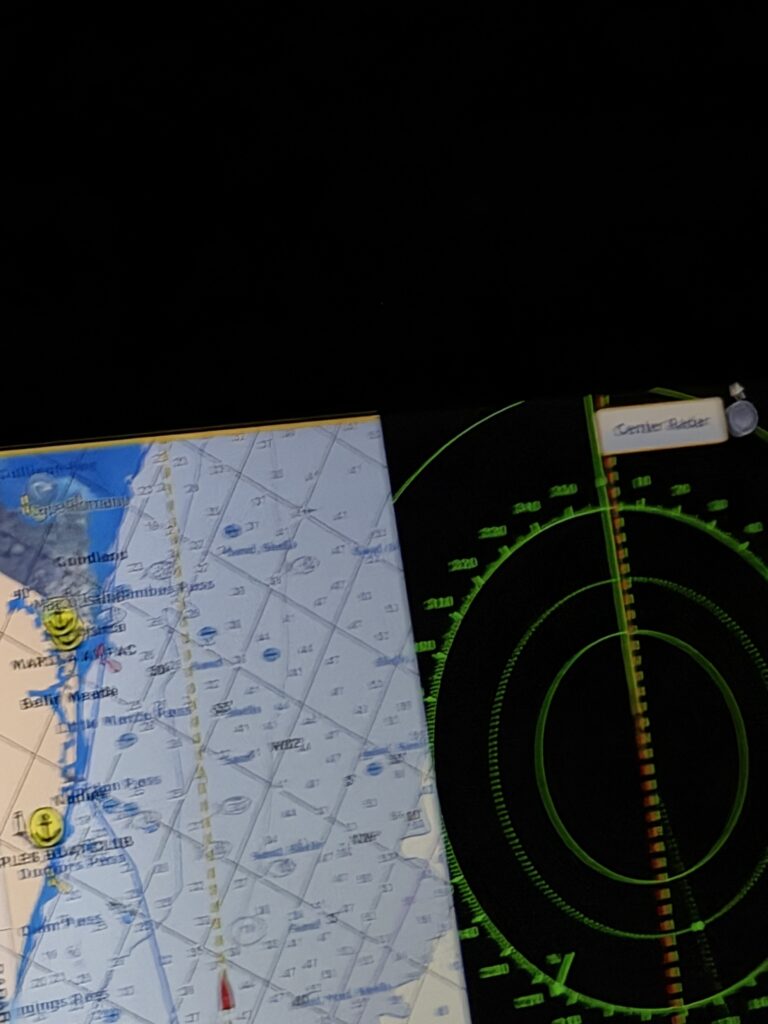
The days kept us constantly busy with essential maintenance and navigation duties. Engines had to be checked and oil topped off, radiator fluids monitored, and the generator switched over and serviced. We had to keep a watchful eye on bilge pumps that could go inoperational, along with numerous other systems that demanded attention. Meanwhile, someone always had to be at the helm, scanning ahead while monitoring the plotter to ensure we stayed on course and checking the radar for approaching vessels. We also kept our eyes on the water itself, watching for obstacles or anything that might damage the boat. Crab traps were a constant concern along our route—we saw countless ones with their ropes floating on the surface, and even though our propellers had rope cutters, we still wanted to avoid disrupting them. Overall, this portion of the trip down the west side of Florida proved quite eventful with plenty of activity and ship traffic. But as you’ll notice as the pictures progress, when we round over to the east side and enter the Atlantic, the water transforms into a beautiful blue. 

4 March, Gulfport Marina

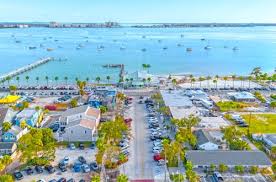
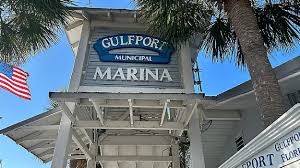
We pulled into Gulfport Marina through a very narrow opening with crab traps lining both sides, requiring us to stay carefully in the channel where the depth was only five or six feet—just enough clearance for the Aku-Aku’s approximately five-foot draft. We made our way through this narrow passage all the way in and fueled up at a cost of $1,494.15. The marina had docks available at $350 a night, but we decided against that expense. Instead, as you’ll see in one of the pictures showing boats out in the harbor, we anchored out among other vessels, mostly sailboats whose owners were staying long-term and used smaller boats to shuttle to shore rather than pay slip rental fees. We spent a very pleasant night at anchor with a nice supper and beautiful views. The next morning, we would be off again, heading for the southern tip of Florida on another overnight passage before making our way towards Fort Lauderdale.

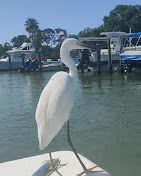
Jennifer's caught a great pic...

4-5 March Gulfport to Point South Marina, Panama City, FL

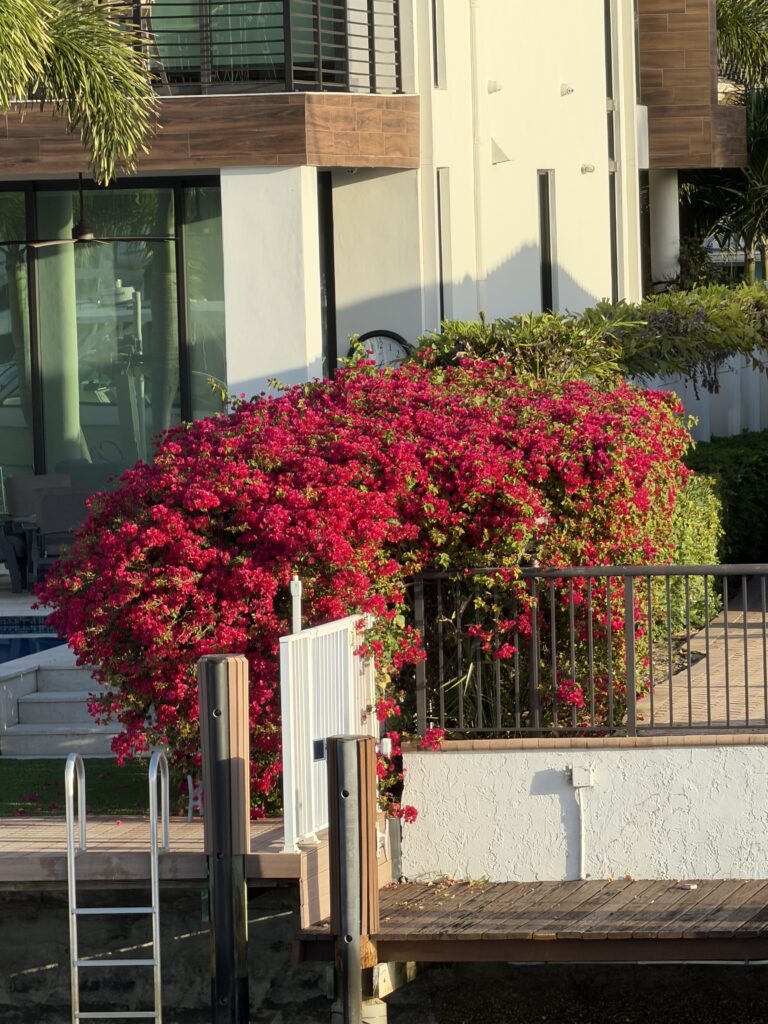
Intracostal before going out into the Gulf, beautiful houses
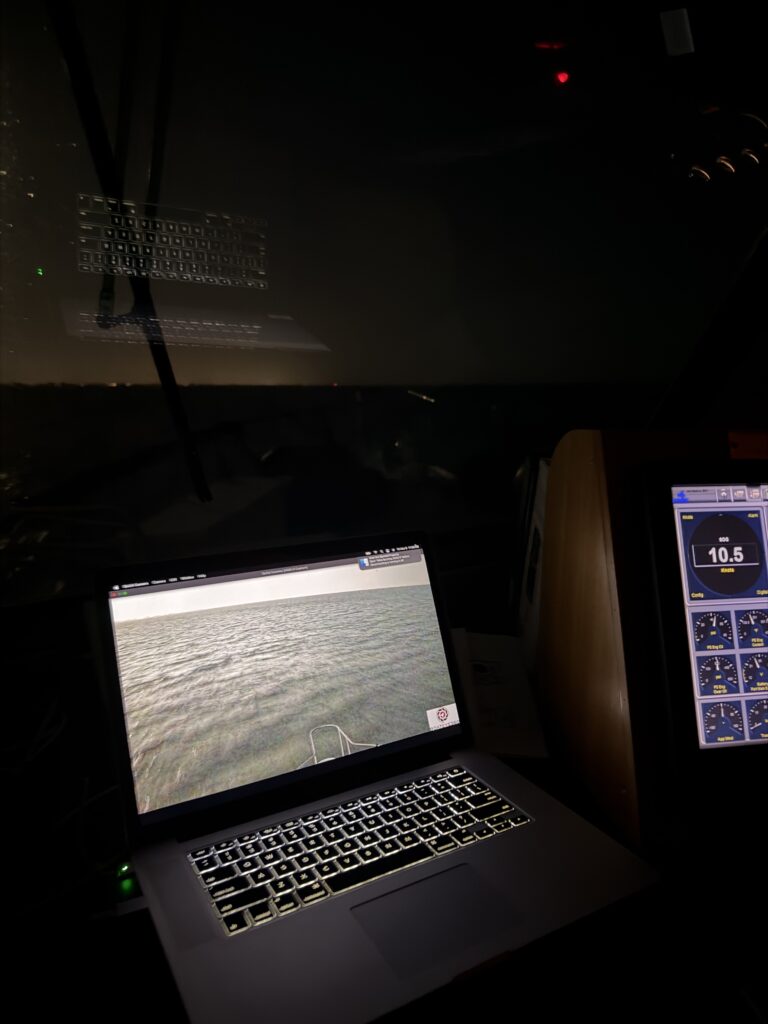
This is a new night vision camera, making sure we can see, wonderful.
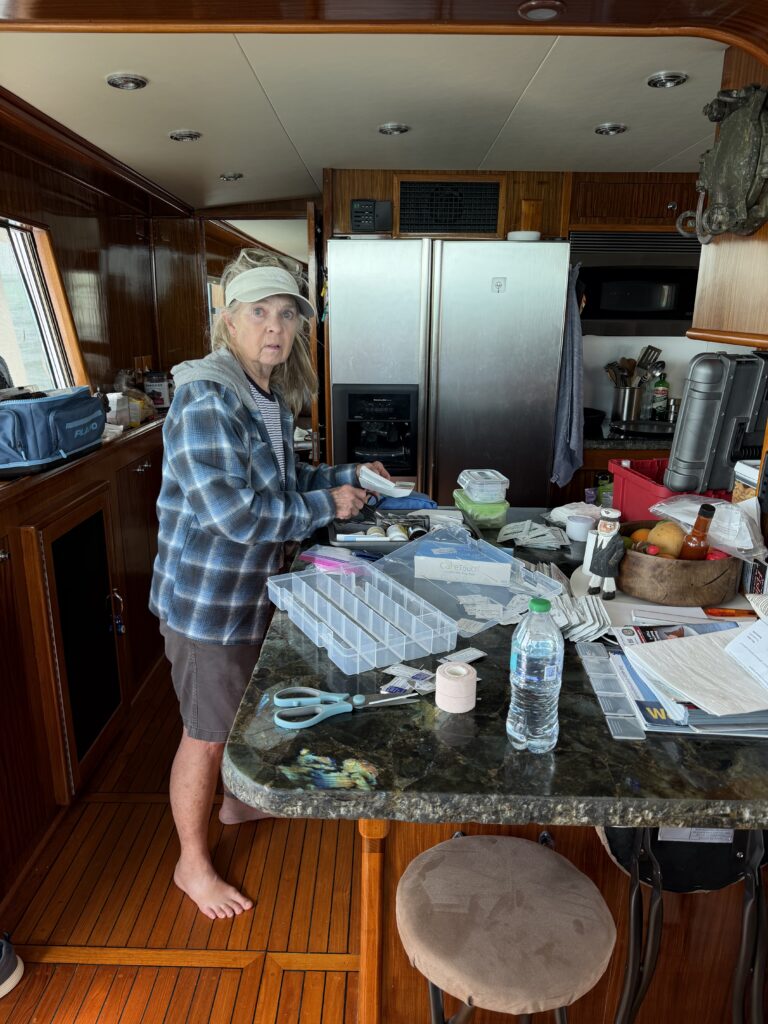
Peg, organizing the medical equipment and supplies

4-5 March Gulfport to Point South Marina, Panama City, FL

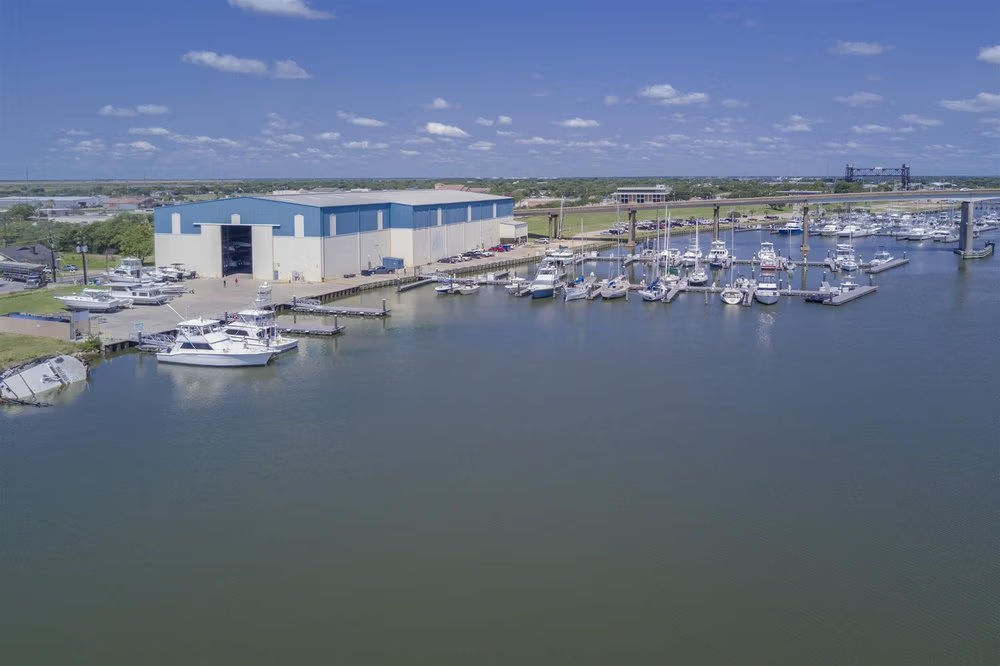
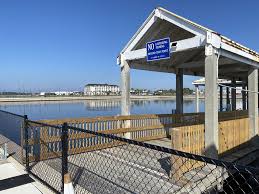
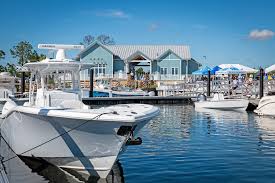
The marina was one of the nicest we had been in, very modern and well kept
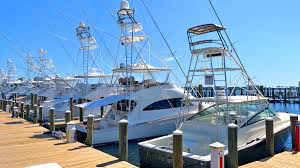
There were mostly fishing boats at this marina

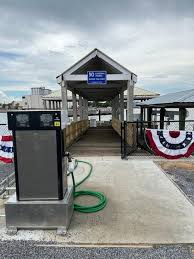
Leaving Gulfport, we headed toward Panama City, Point South Marina.  It was an all day run that involved one overnight and another full day under way before arriving at the marina that evening. We were really happy to get there and pulled in early enough that we thought we might have time to grab supper ashore. After making our way to the fuel dock, we topped off the tanks at a cost of $3,350.49. During fueling, the young lady assisting us accidentally broke the nozzle off of the handle at the starboard tank—the nozzle from the fuel hose dropped straight into the tank, leaving us more than a little uncertain what to make of the situation. Then we took off for a local restaurant to pick up some takeout as it was getting rather late. In spite of that mishap, we had a good night’s sleep at the marina, grateful for a solid rest before our planned early departure the next morning to continue on toward our next destination, Madeira Beach.

March 6, Madira Beach, Flordia

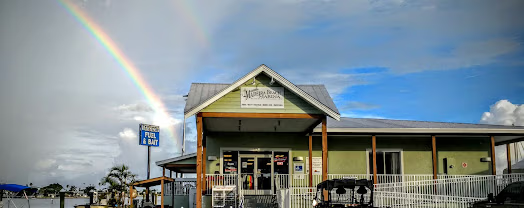
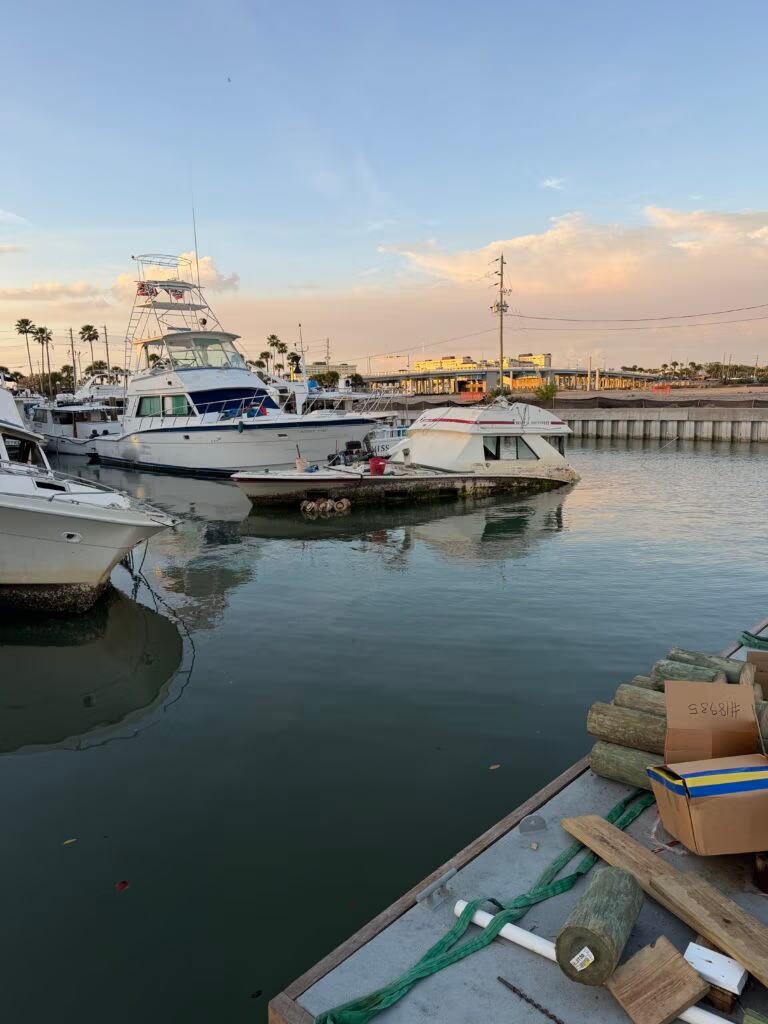
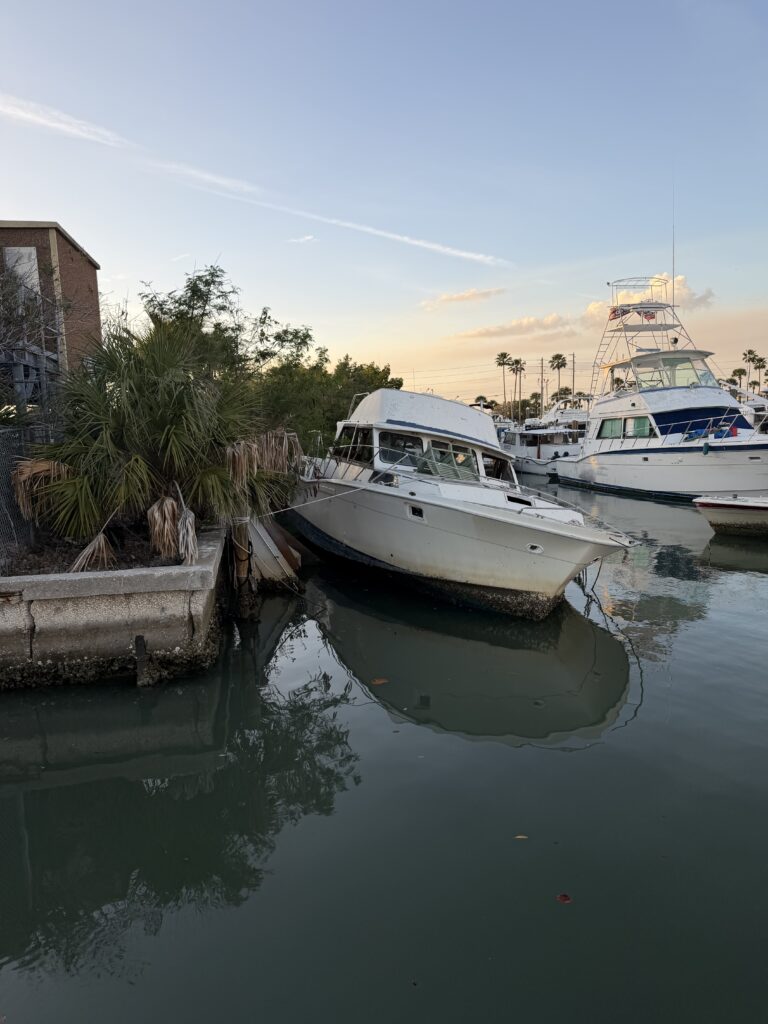
We pulled into Madeira Beach, Florida, late in the afternoon needing fuel and debating whether to stay the night before ultimately deciding to push on. The first fuel dock we tried had current that was simply too strong, and Marty had to abort the approach, so we rounded the corner and found a spot farther inside to take on fuel. While we were there and I was getting on and off the boat, I slipped and fell but, thankfully, didn’t break anything. All around the area we noticed a number of sunken boats in the water, though we weren’t sure what had caused them to be there. Topping off the tanks cost $2,970.50, and with that done, we were off again from Madeira Beach for another overnight run on our way to Fort Lauderdale—getting closer every mile.

A lot of sunken boats...

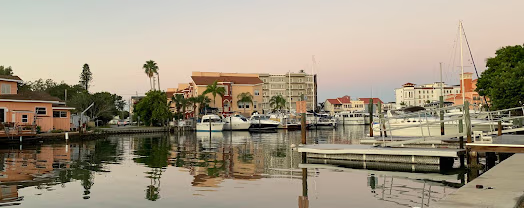
Madeira Beach, Florida, incorporated in 1947, originated from a fishing village named after the Portuguese island of Madeira, often called “Mad Beach”. The 1848 hurricane created John’s Pass, leading to development starting in the 1920s with the 1926 Welch Causeway

7-8 March, Madira Beach to Fort Lauderdale

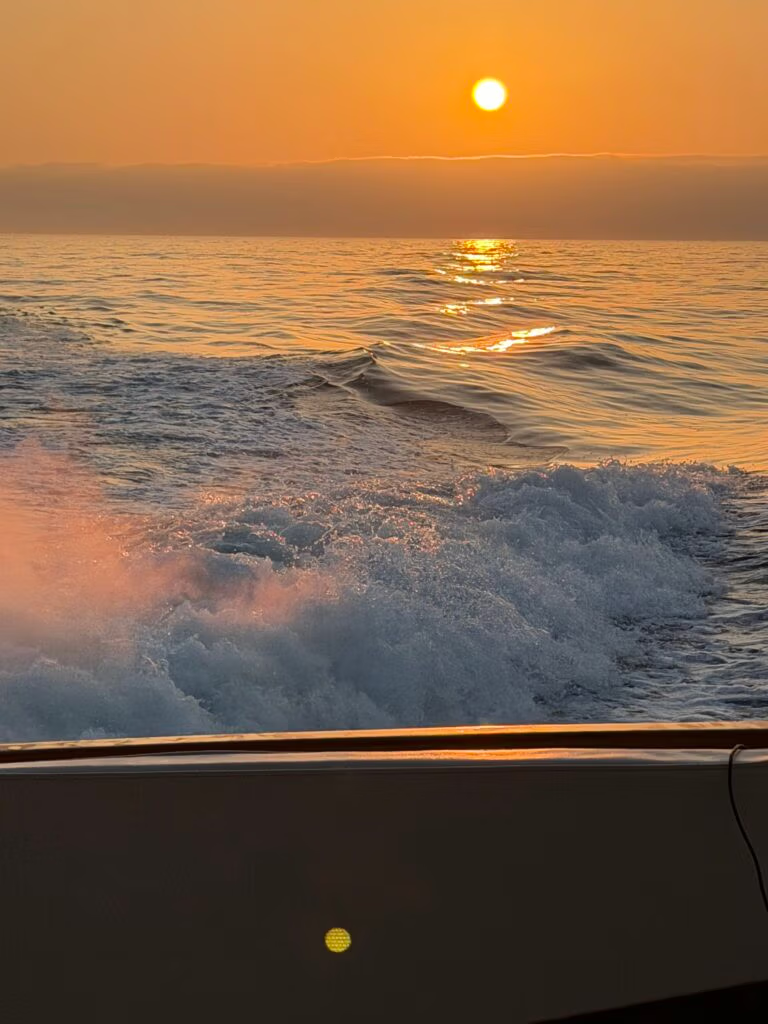
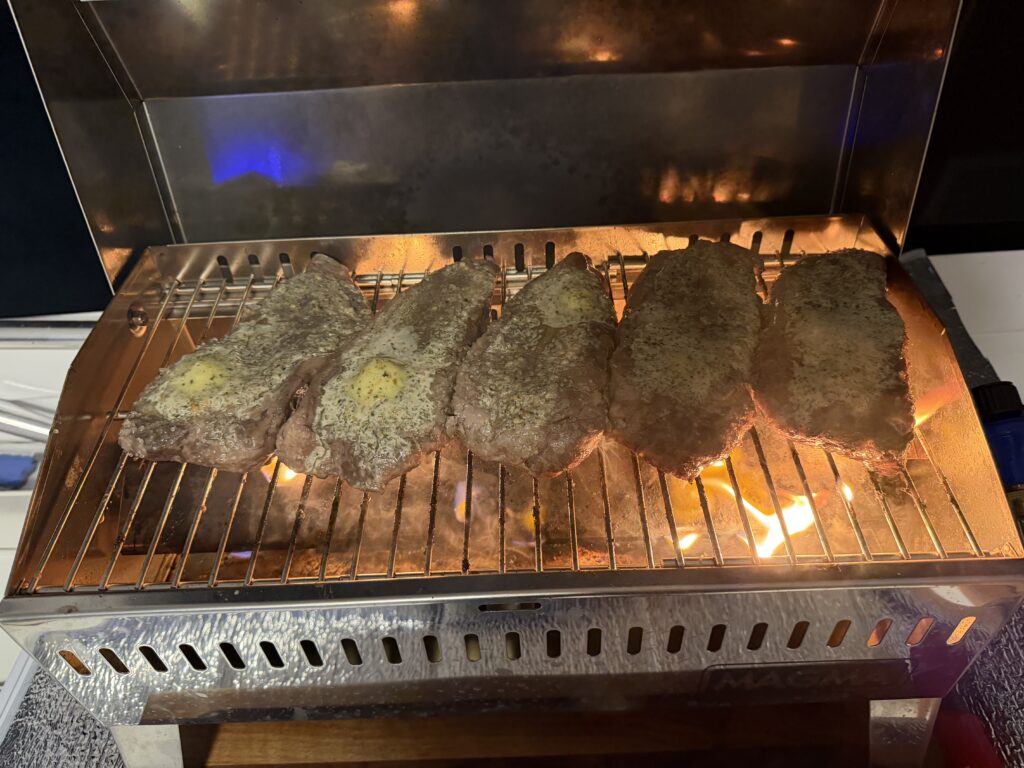
We headed out of Madeira Beach on the evening of the 7th, planning to cook supper aboard and make our way overnight on our second overnighter of the trip. The weather cooperated this time—no storms in the forecast and everything looking clear as we ran down the west coast of Florida toward the tip, then planned to cross over and up the Atlantic side toward Fort Lauderdale. Meals on board were always excellent, with Jennifer and Peg doing a great job keeping us well fed; every once in a while we even treated ourselves to steaks—once, in fact, on this leg. We looked forward to this last night on the open ocean, knowing that the next day would bring us to our final destination, Fort Lauderdale. We made it.

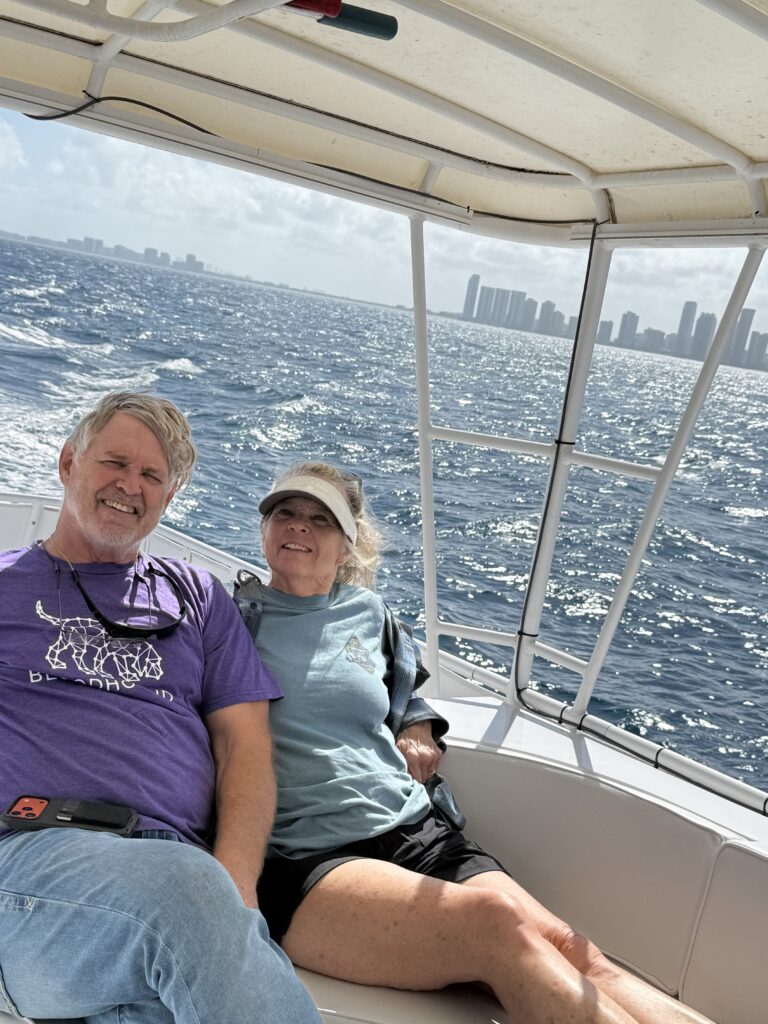
Water is getting bluer
Miami in the background

Port 32, Lighthouse Point, For Lauderdale

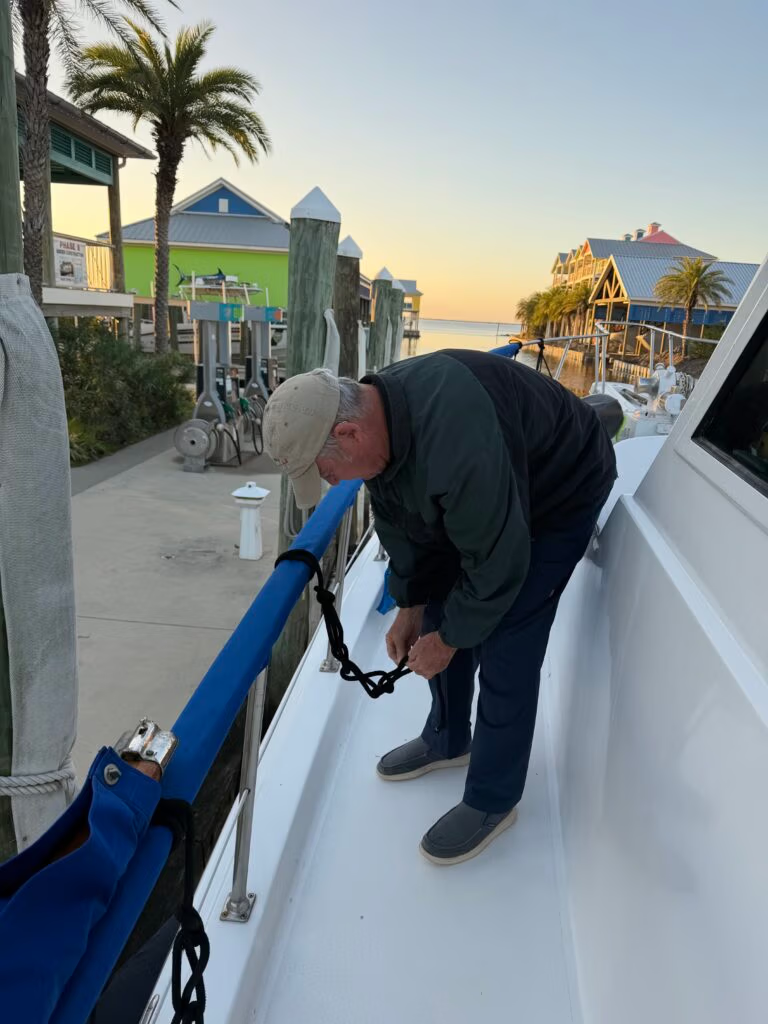
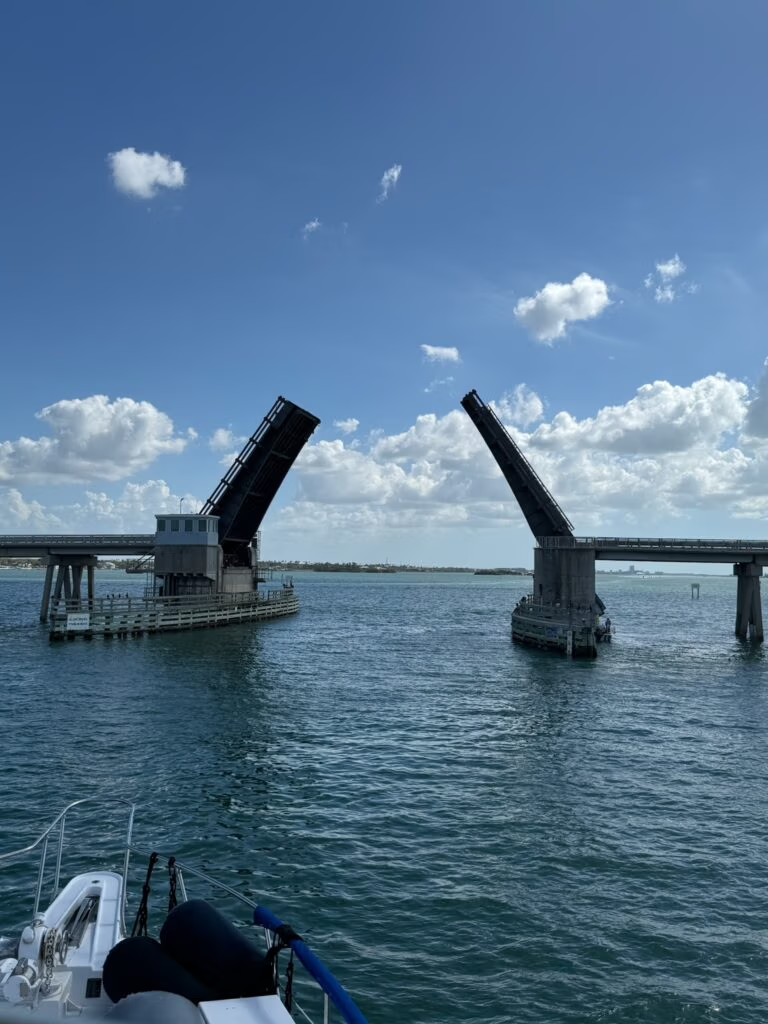
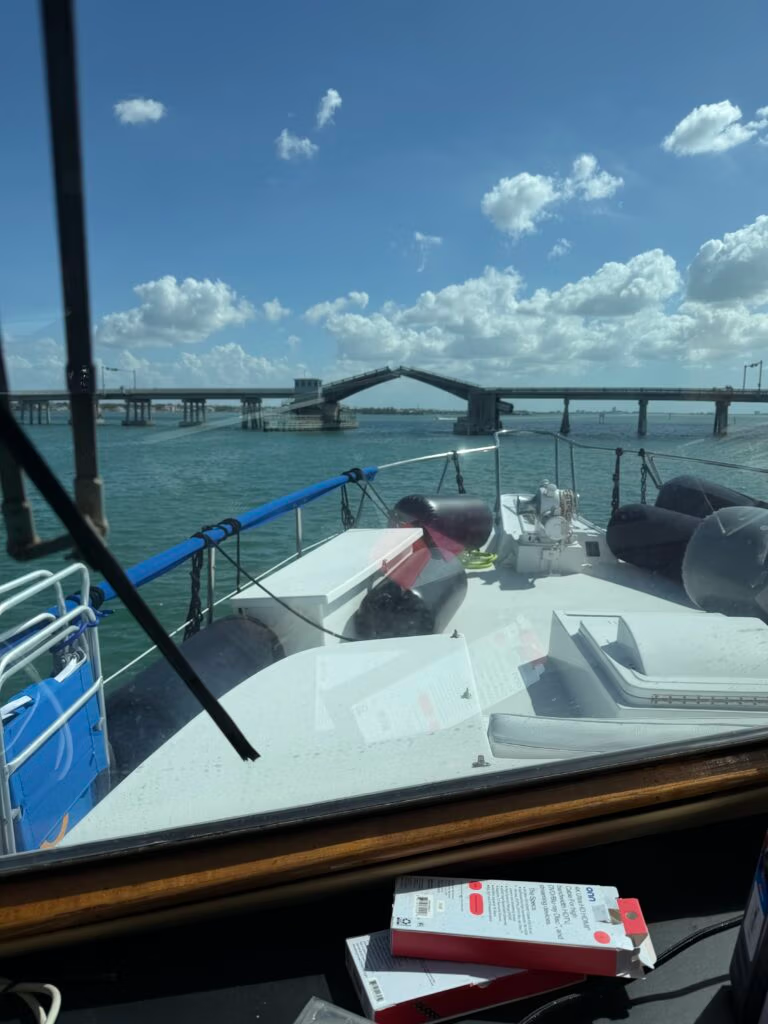
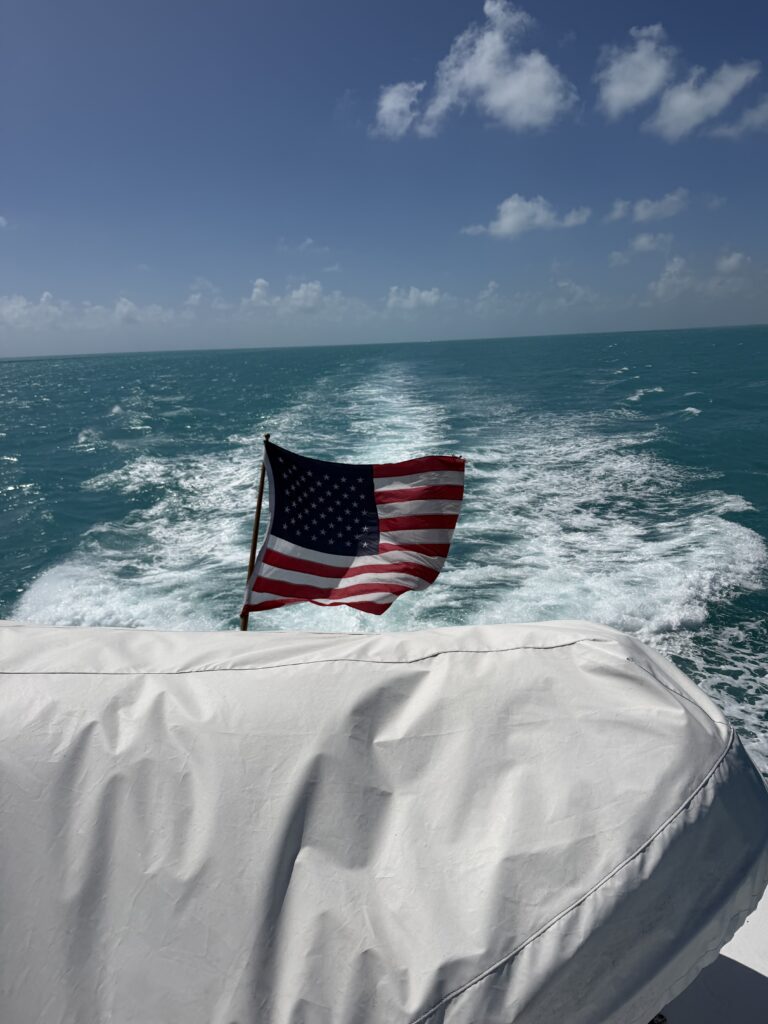
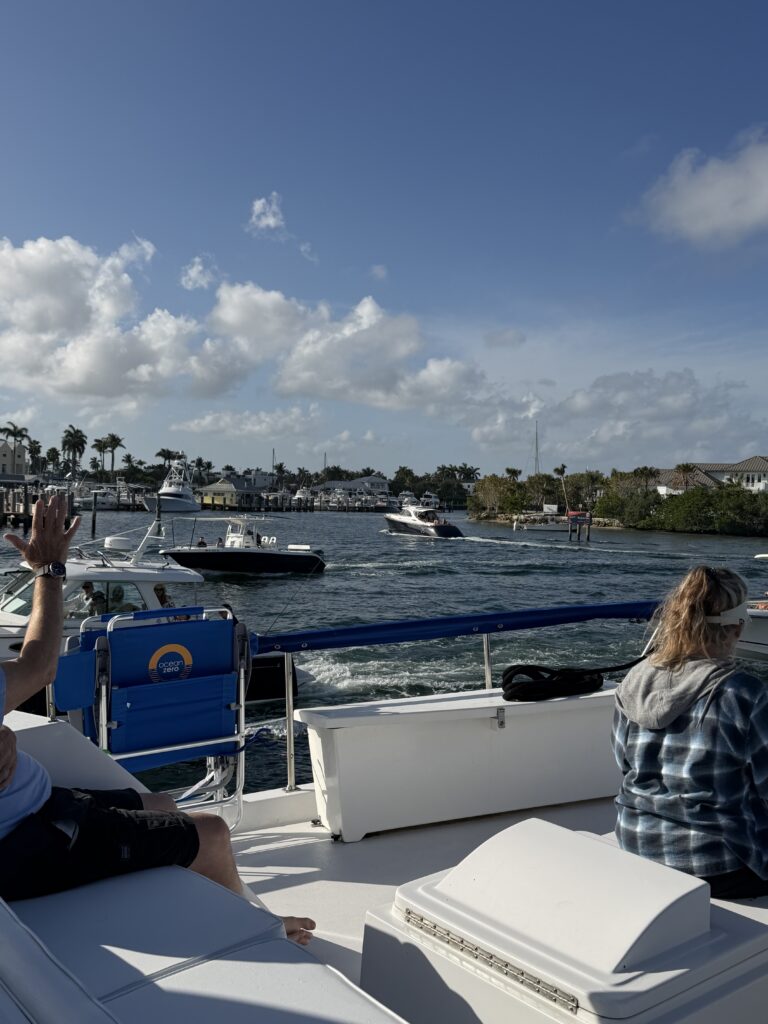
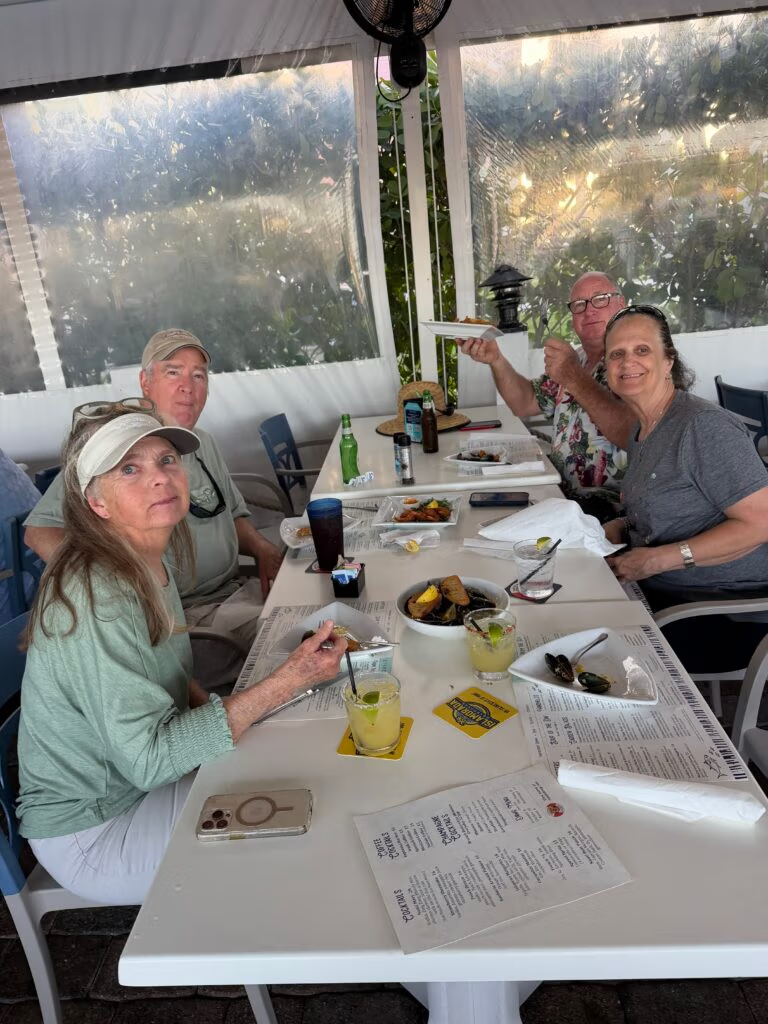
We arrived at Port 32,  Lighthouse Point, Fort Lauderdale, Florida, about mid-afternoon, after an overnight passage that went smoothly. Marty did an excellent job navigating around the tip of Florida and up the coast, and the Atlantic rewarded us with calm conditions and that mesmerizing, beautifully blue water you can see in the photos—so clear and vivid it was almost hypnotic. As we reached the east coast of Florida and entered the Atlantic side, the water was absolutely gorgeous. We drove in through an inlet and had to wait for a bridge to open across the entrance; once it lifted, we eased in, surrounded by boats everywhere, with traffic crisscrossing in front of us. We made our way to our mooring site, secured the Aku-Aku, and all breathed a heavy sigh of relief. The crew had been excellent, the boat performed well, and although we had a few breakdowns along the way, there was nothing Marty couldn’t handle. That evening we walked a stone’s throw from the boat to the Nauti Dawg restaurant for a celebratory supper, enjoying a well-earned meal right on the waterfront at Lighthouse Point. We spent the next day or so—around the ninth—simply hanging out, buttoning up the boat, and getting ready to head back to our respective homes. I couldn’t have asked for a better crew or a better time; the Aku-Aku’s second voyage was nothing less than spectacular, and it’s a trip I would highly recommend to anyone considering it. Our thoughts now turn to the next adventure: British Columbia, Canada.
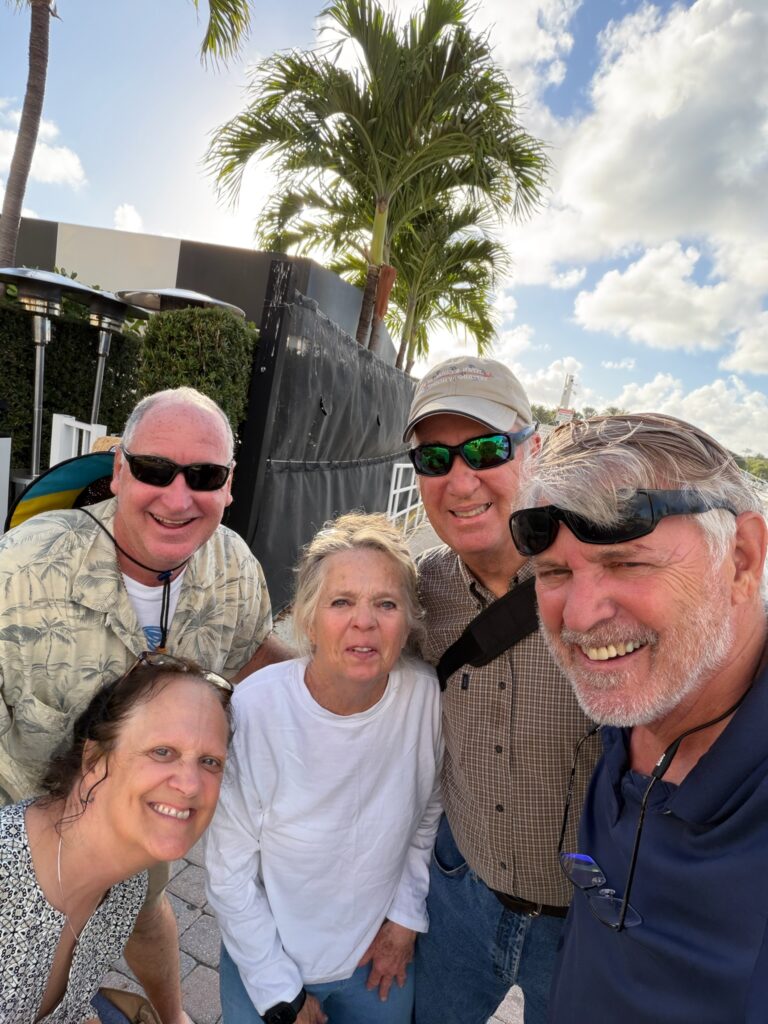
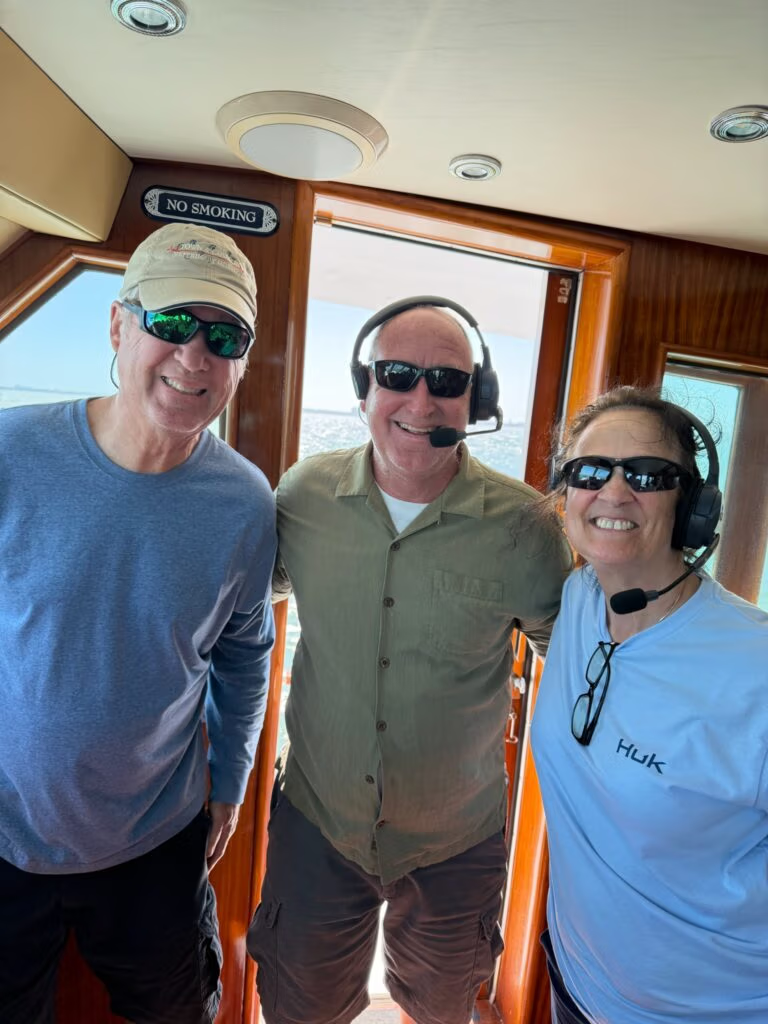


Well earned rest...

Fort Lauderdale, Flordia to Nanaimo, British Columbia

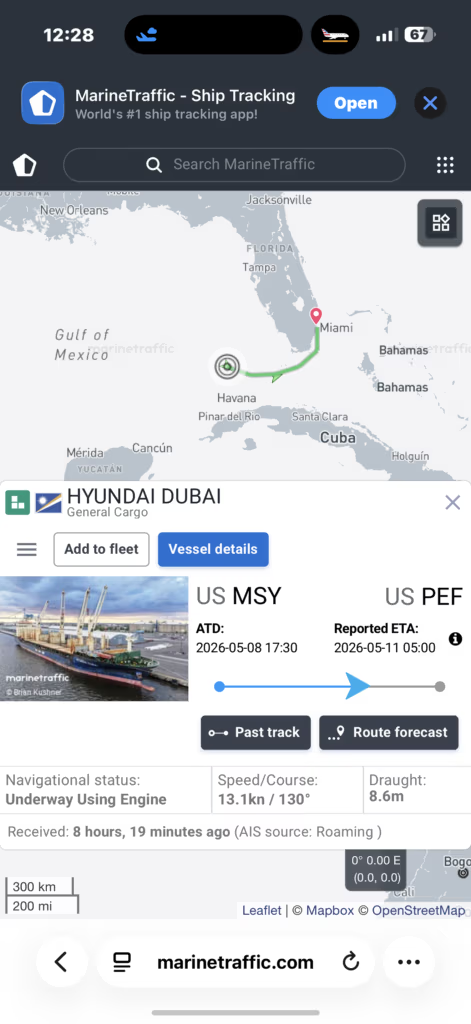
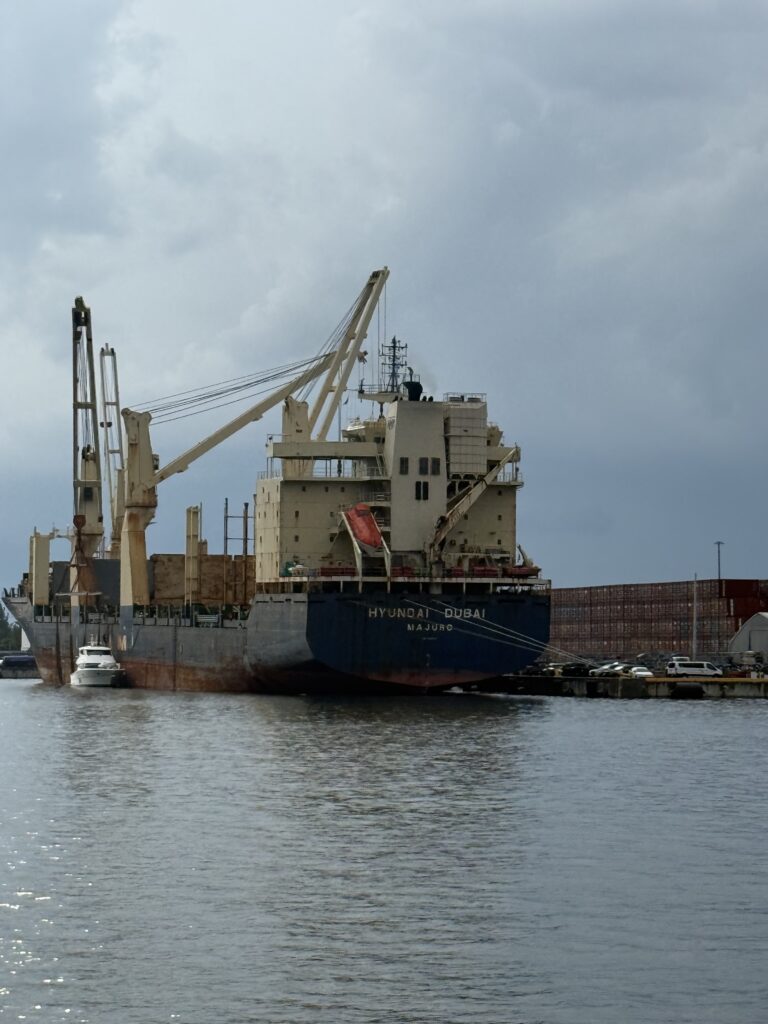
Jennifer and I left San Antonio on May 10, Mother’s Day, which meant she missed all the Mother’s Day celebrations, sorry Kelly. We flew from San Antonio to Fort Lauderdale to see our boat, after being away from the beginning of March through May. We had dealt with constant delays because of an issue with the transportation company, but we worked our way through it. After landing in Fort Lauderdale, we rented a car and headed to the boat, which was at Lighthouse Point Marina, also known as Port 32. Thankfully, the boat was just as we had left it, with no new issues. We got her up and going, all the systems worked, and the engines started that night. We were ready to load her onto a huge transport ship, the Hyundai Dubai, which had left New Orleans and was headed for Fort Lauderdale. We were so excited.

For the first two days we ate all our meals out, there is a restaurant at the Marina, called you guessed it the Nautilus Dawg.  After the second day we were done.. 


There was a tremendous amount to get done before the boat could be shipped. Once she left Fort Lauderdale, she would travel through the Panama Canal, make several stops along the way, including one in Mexico and another in San Diego, and then continue north to British Columbia. That time of year, the Pacific Ocean can be rough and unpredictable, so we had to prepare the boat carefully for the voyage.
 

Everything onboard had to be secured. Anything that could shift, fall, or break had to be taken down and placed safely on the floor. The refrigerator and freezer had to be completely emptied because the power would be off during transport. Every cabinet had to be closed, secured, and taped shut to make sure nothing came loose while the boat was at sea.

It rained steadily during most of our first two or three days in Fort Lauderdale, but it didn’t dampen our spirits. Even with all the work and the weather, we enjoyed being back aboard and had a really good time.

Moving Day

The animated movie The Secret of NIMH was released in 1982 and directed by Don Bluth. When my children were young, we watched it countless times. For us, the story always seemed to echo the rhythm of military life, with its constant moves, uncertainty, and need to adapt. If you have never seen it, you should, because that is where the title for this section comes from.

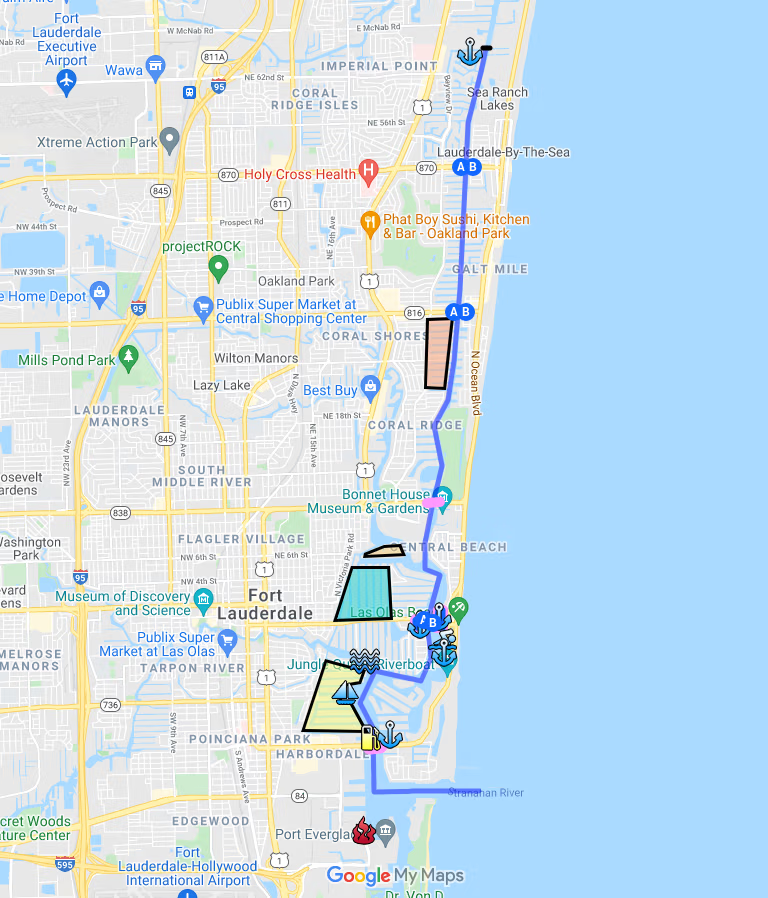
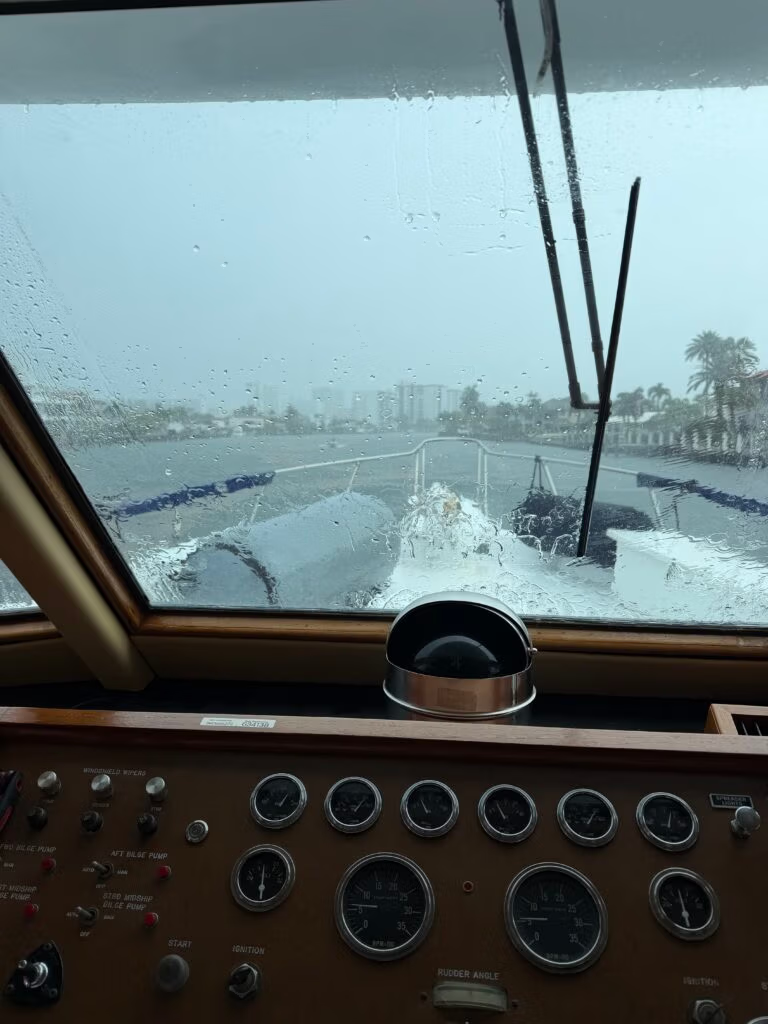
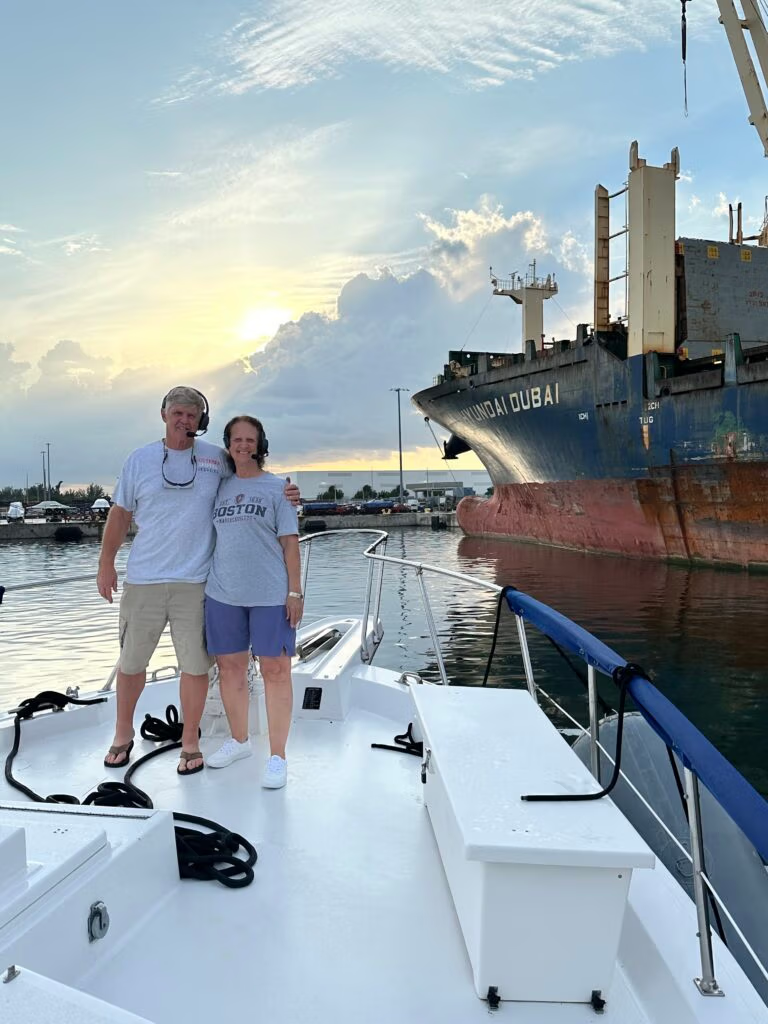
We had a 1900 show time for the boat and figured we needed to allow at least two hours for the trip, assuming everything went smoothly. The shipping company, Cross Chartering Yacht Transport, owned by Mr. Paul Harbor, did an excellent job communicating the day’s schedule and all the necessary preparations. We also hired Capt. Chris Scrimger to help show us the ropes, and he turned out to be a wonderful man. By the time Capt. Chris arrived at 1500, the boat was ready. Even though it was raining, we cast off and began the journey.  

It tied perfectly back to The Secret of NIMH. In that world of glittering buildings, massive yachts, and polished waterfront estates, Jennifer and I felt very much like field mice out of place, trying to find our way through a world much larger and grander than our own.

Let me digress for a moment. Keep in mind that neither Jennifer nor I had ever done anything quite like this before. It was our first time traveling on the Flordia Intracoastal Waterway. When we brought the boat up from New Orleans to Florida, we had taken the blue-water route out in the Atlantic, so this was an entirely different experience.

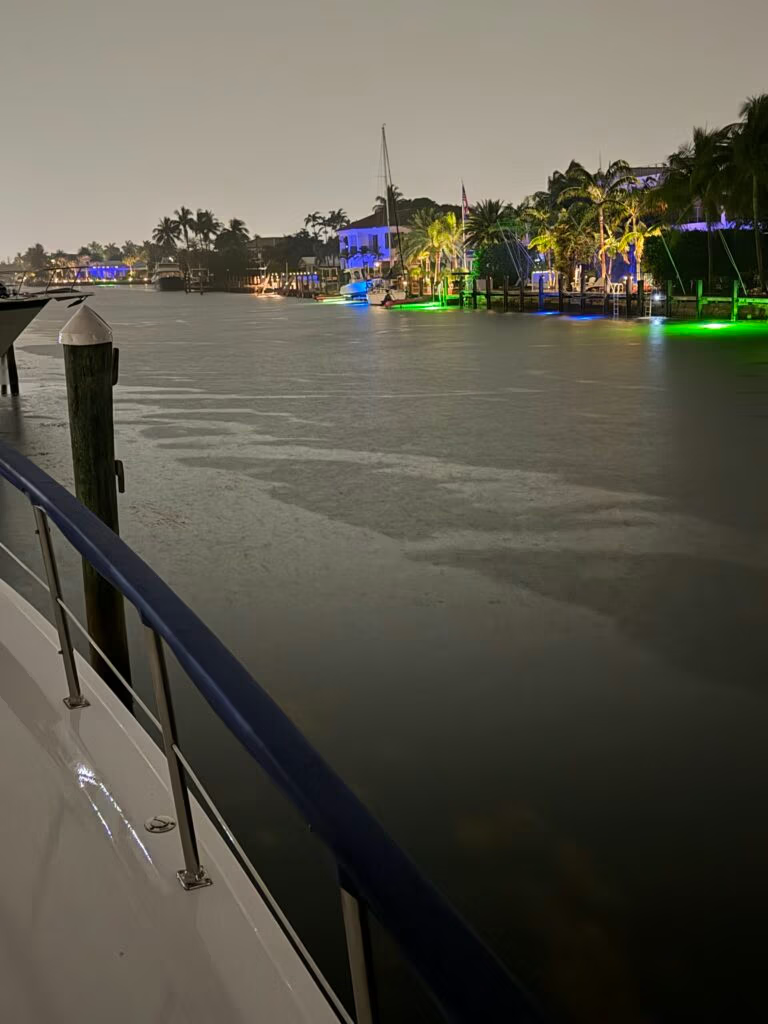
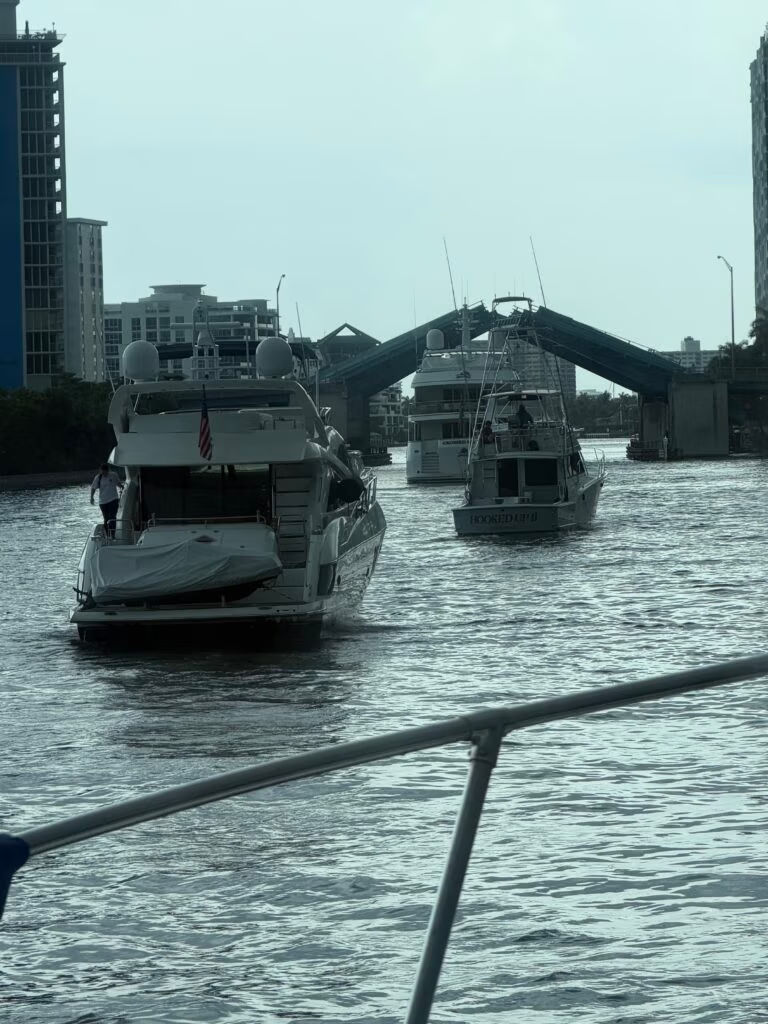
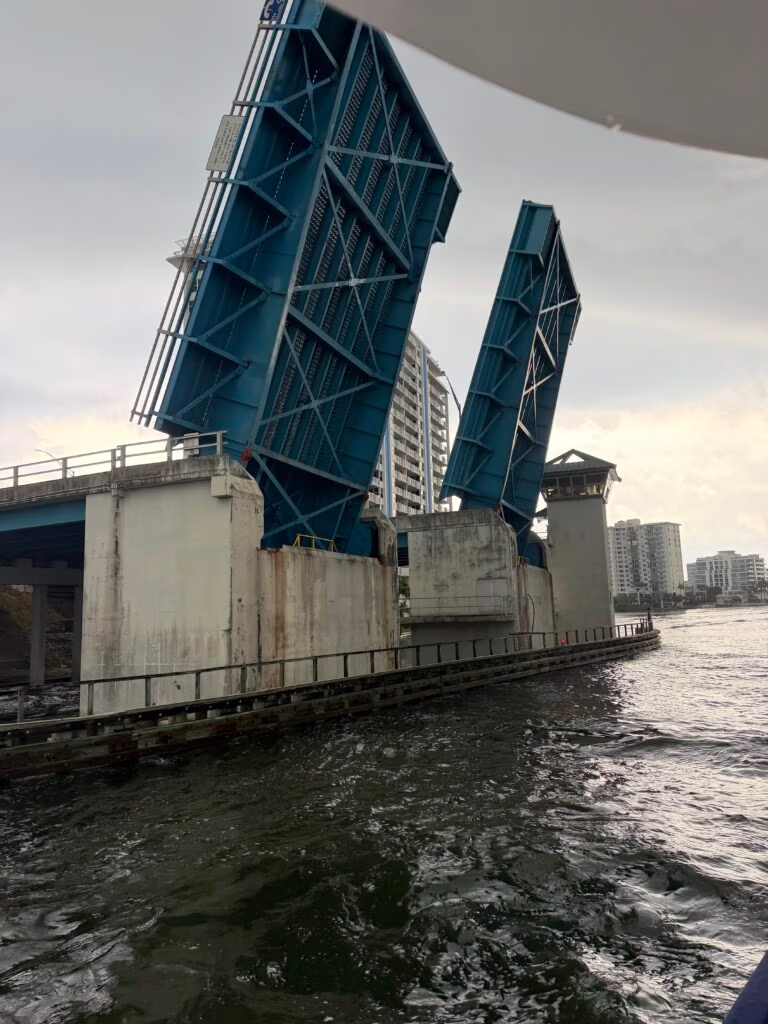
Almost immediately after getting underway, we were faced with six bridges, each one needing to be raised before we could pass. At every bridge, we had to contact the bridge tender and coordinate our passage. It rained off and on the entire time, which only added to the sense that we were learning as we went.

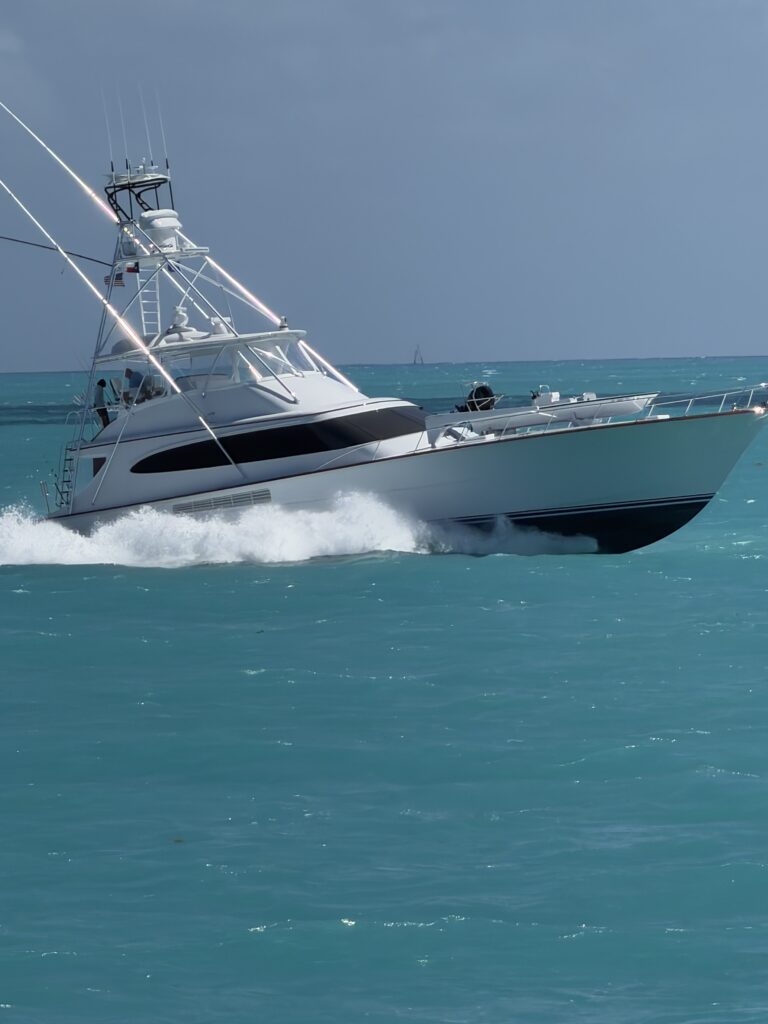
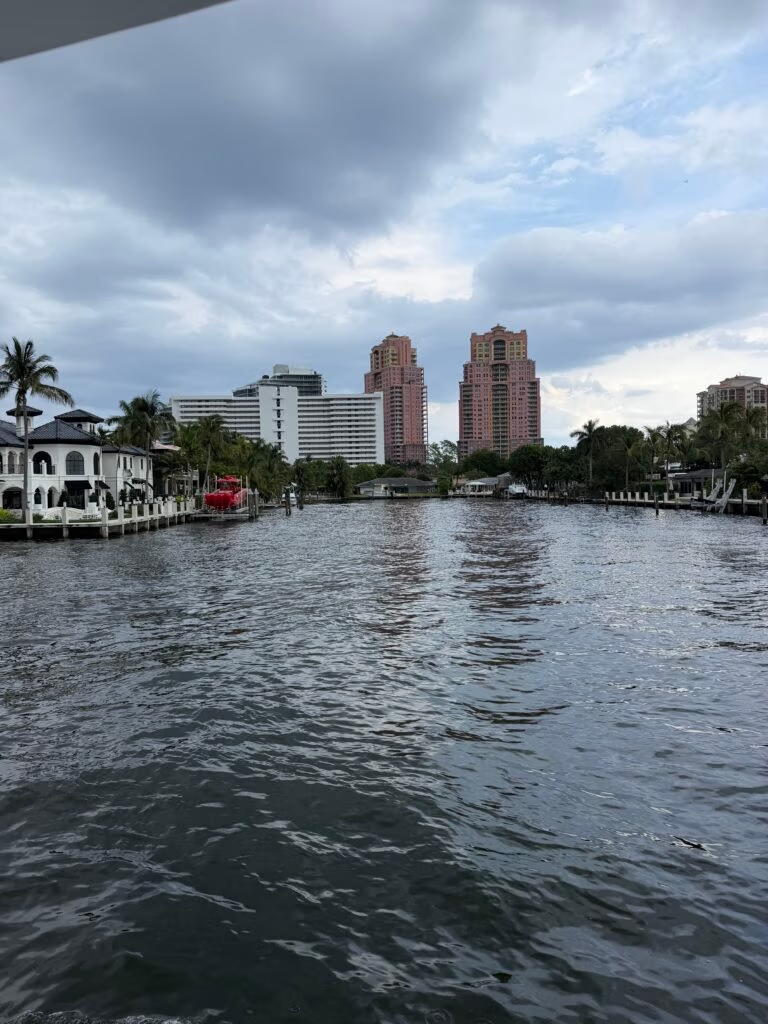
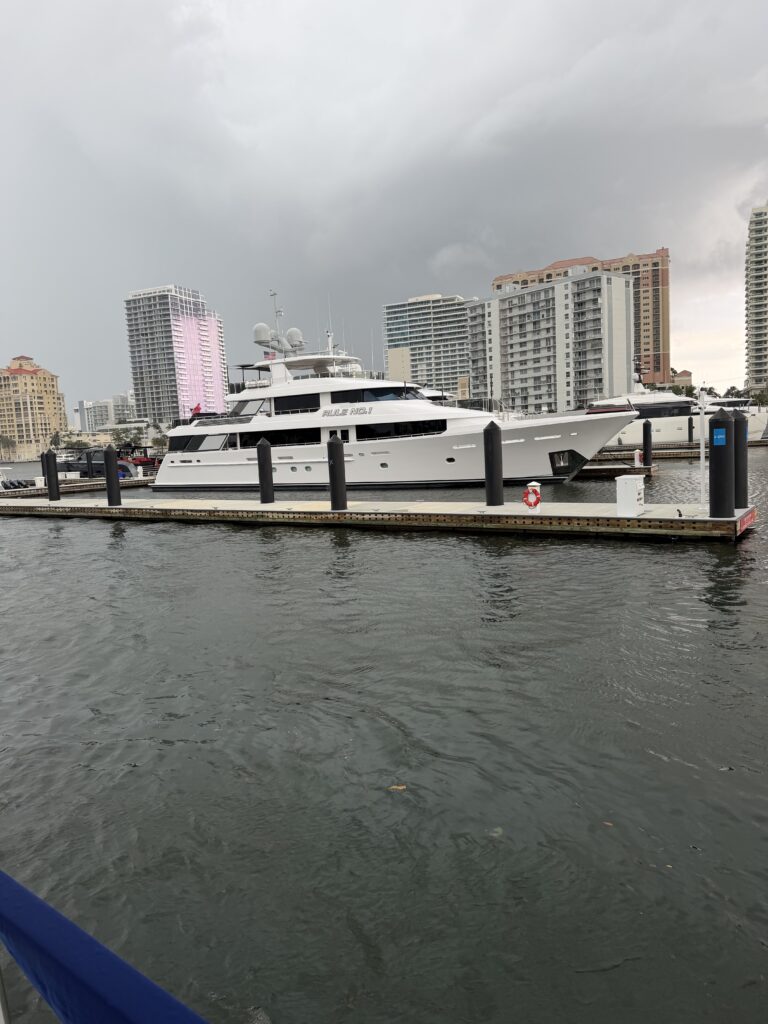
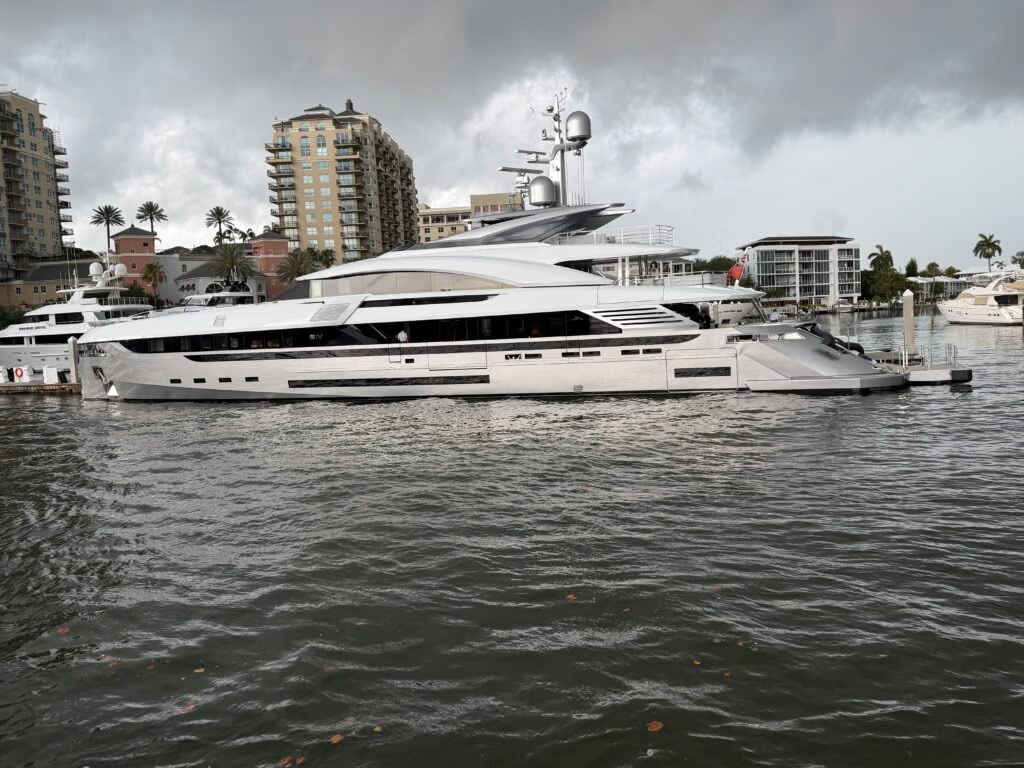
What really stood out, though, was Fort Lauderdale itself. It was a maze of towering buildings, waterfront estates, and enormous yachts, bigger and more extravagant than anything I had ever seen. Capt. Chris was kind enough to point out different boats along the way, telling us what some of them cost, 24 million, 50 million, and who owned what. Everywhere we looked there was wealth, luxury, and excess on a scale that was almost hard to take in.


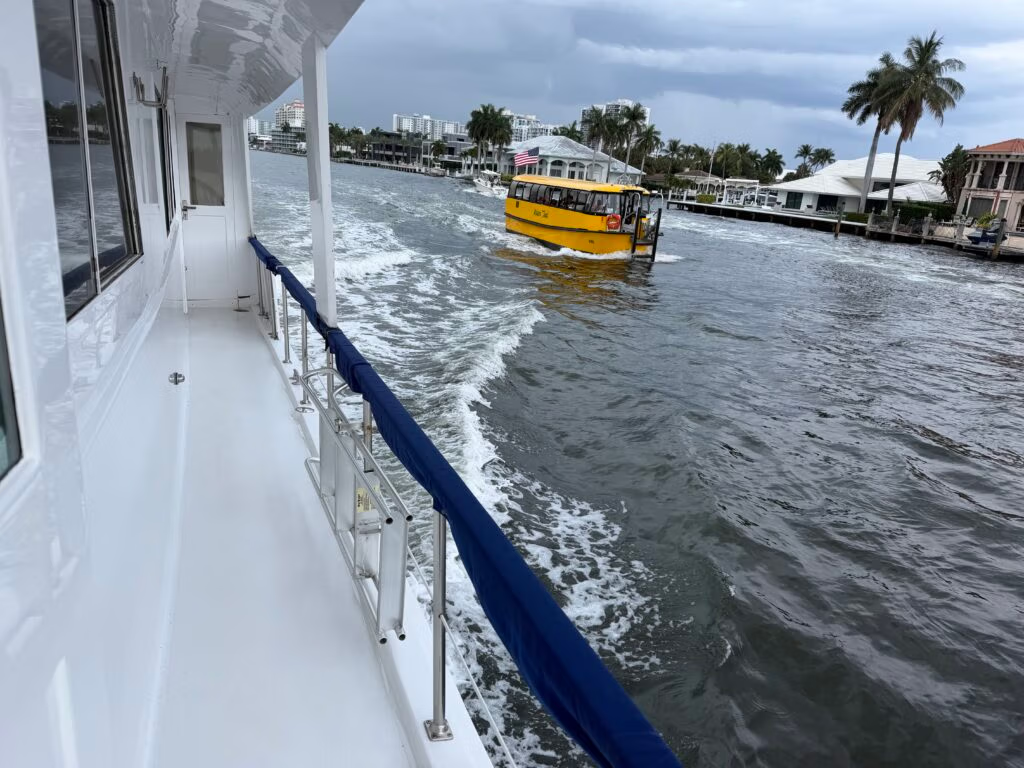
Water Taxi's were everywhere..
Just 24 million..

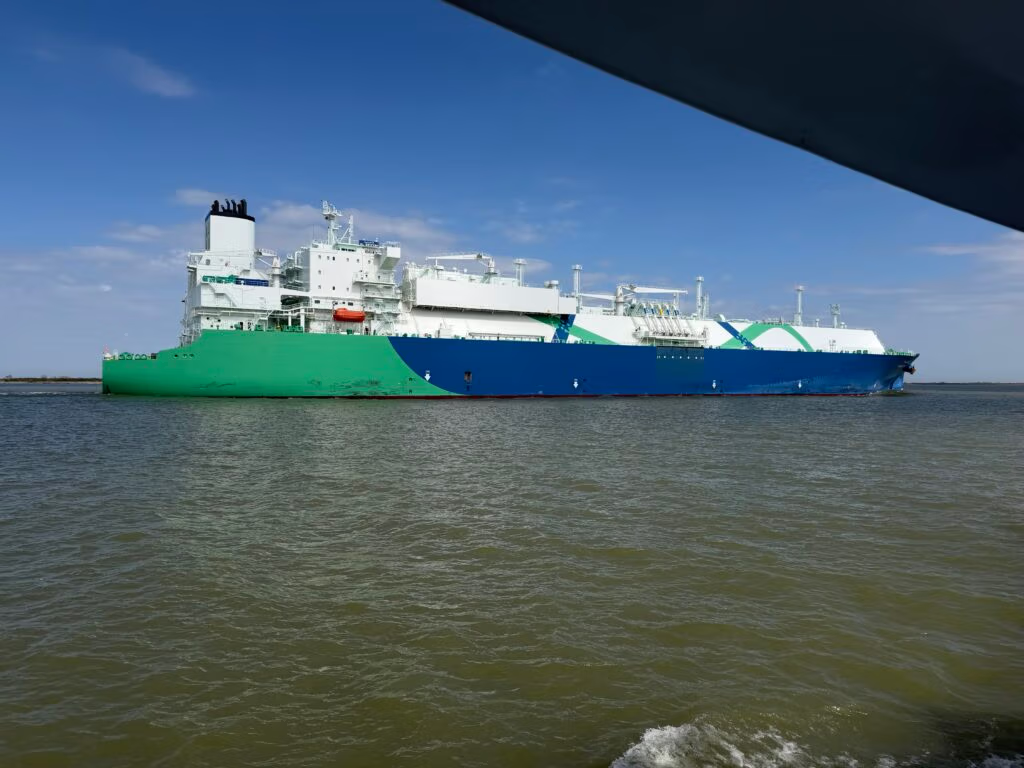
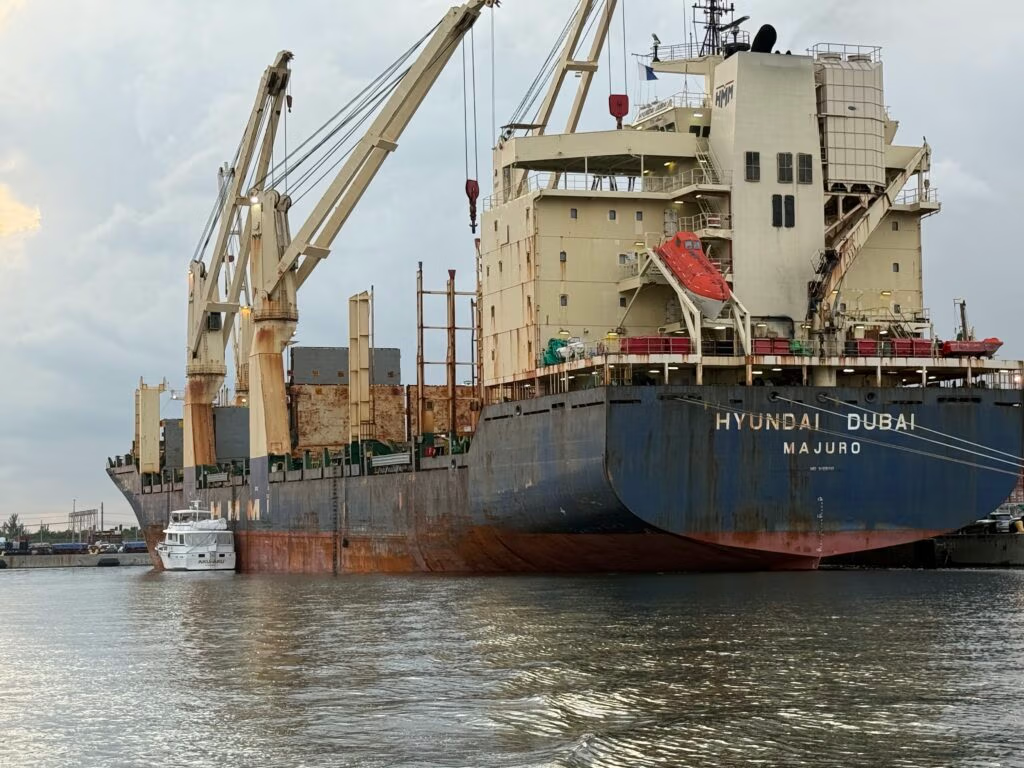
Hyundai Dubai

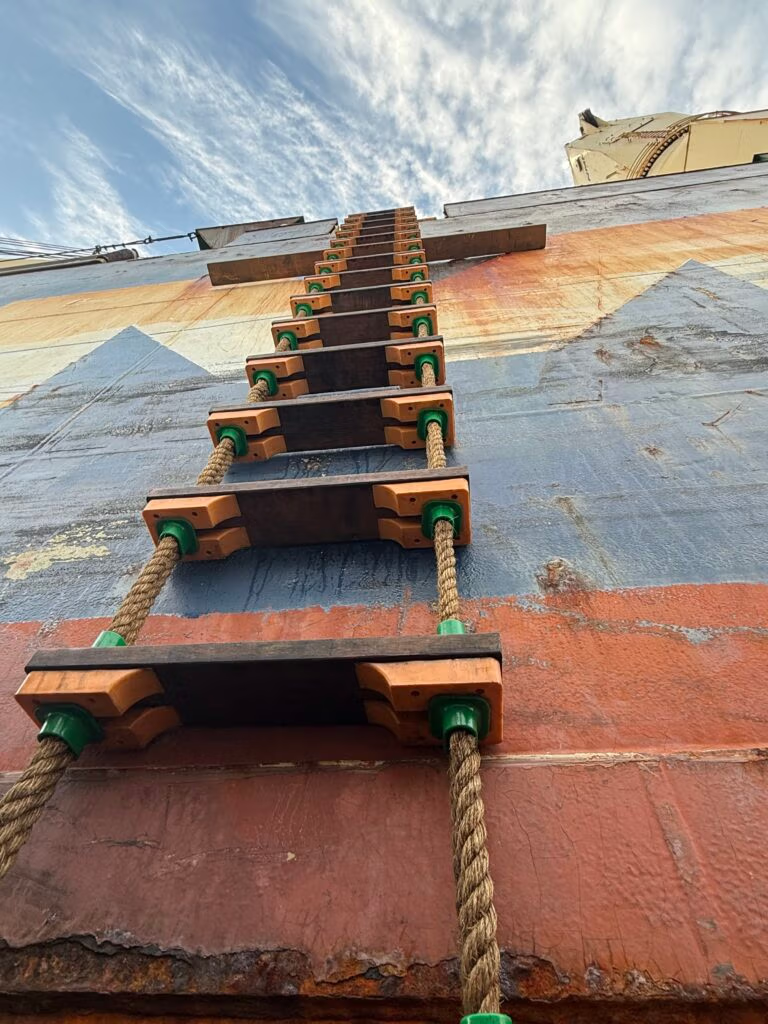
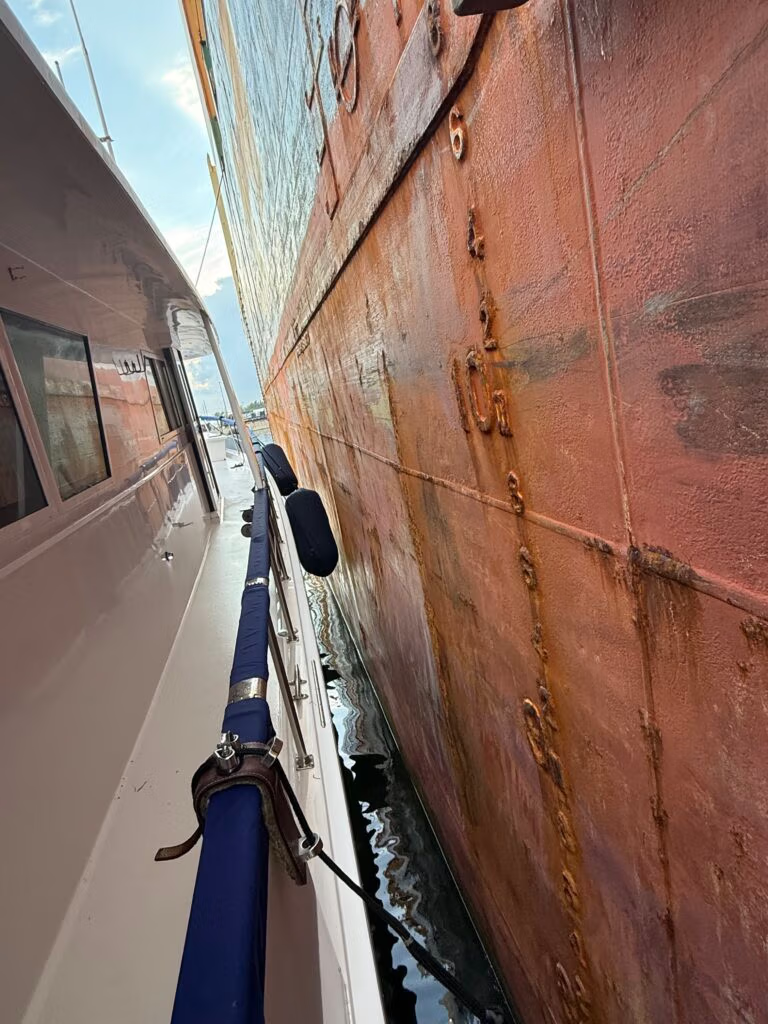
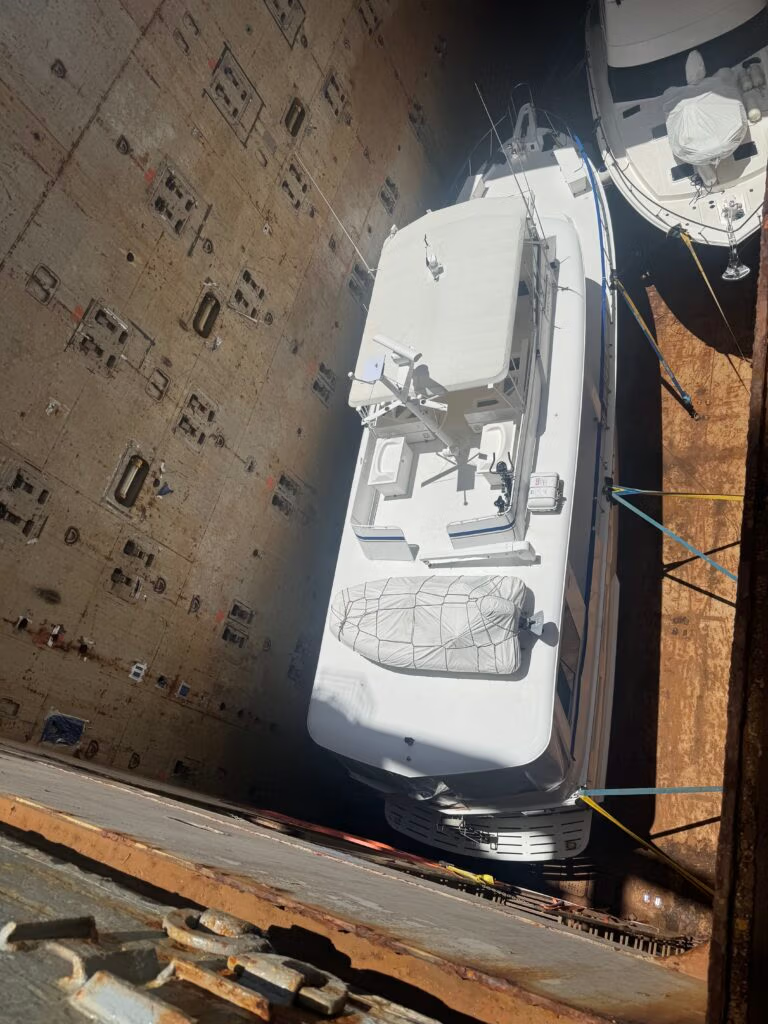
The HYUNDAI DUBAI is a 30,104 DWT general cargo/multi-purpose vessel built in 2011, sailing under the Marshall Islands flag. It measures roughly 193 meters long by 28 meters wide, with a 23,265 gross tonnage and 11.2-meter summer draught. The vessel is equipped with 5 holds/hatches and cranes for heavy cargo.
Key Vessel Particulars (as of May 2026):
  • Builder: Jinling Shipyard, Nanjing, China
  • Flag: Marshall Islands
  • Length Overall (LOA): 192.85 m – 193 m
  • Beam (Width): 27.8 m – 28 m
  • Draught: 11.2 m
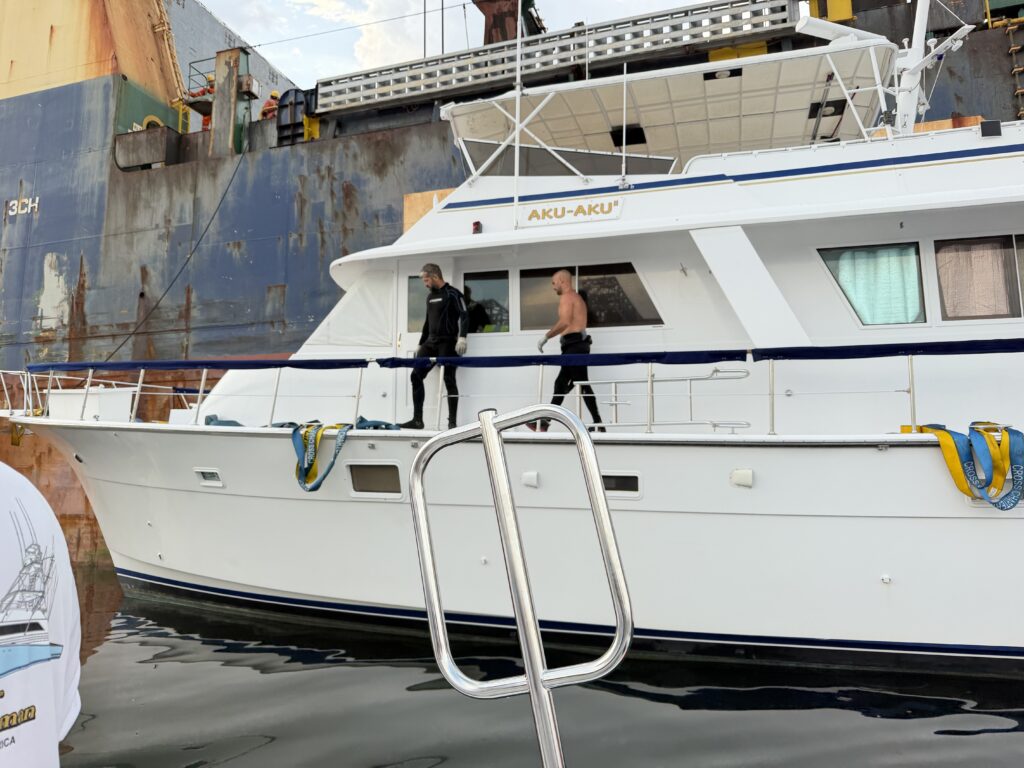
Jenn, wants these two guys for the crew, not sure why. They are the divers.
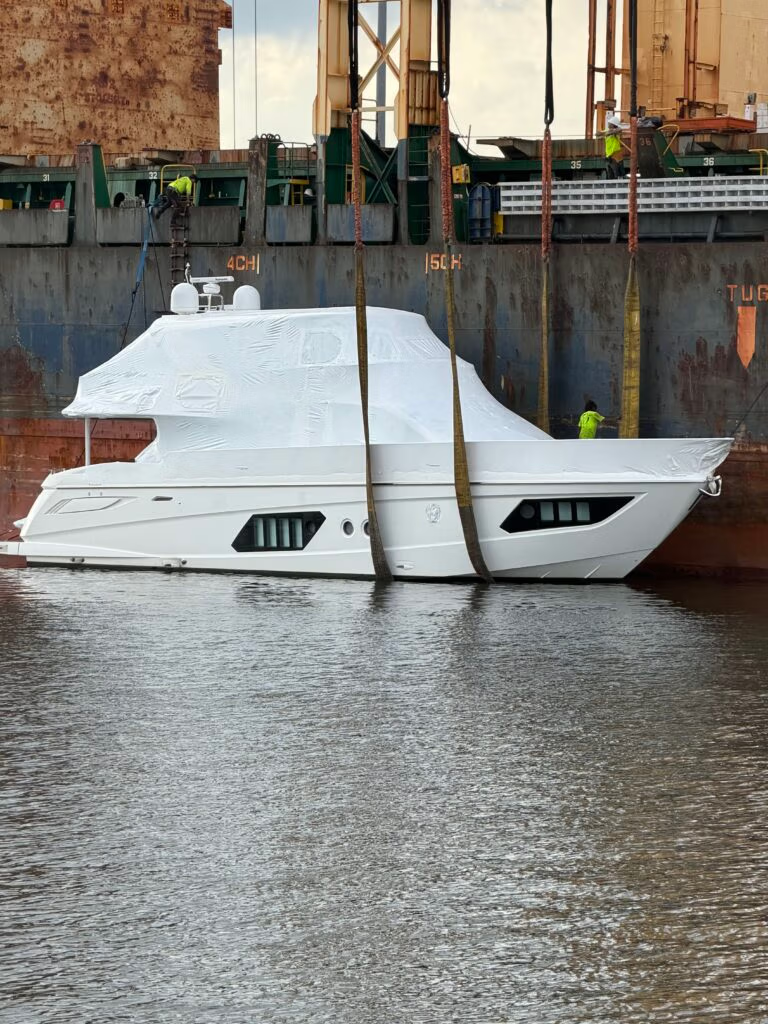
She looks so small!!
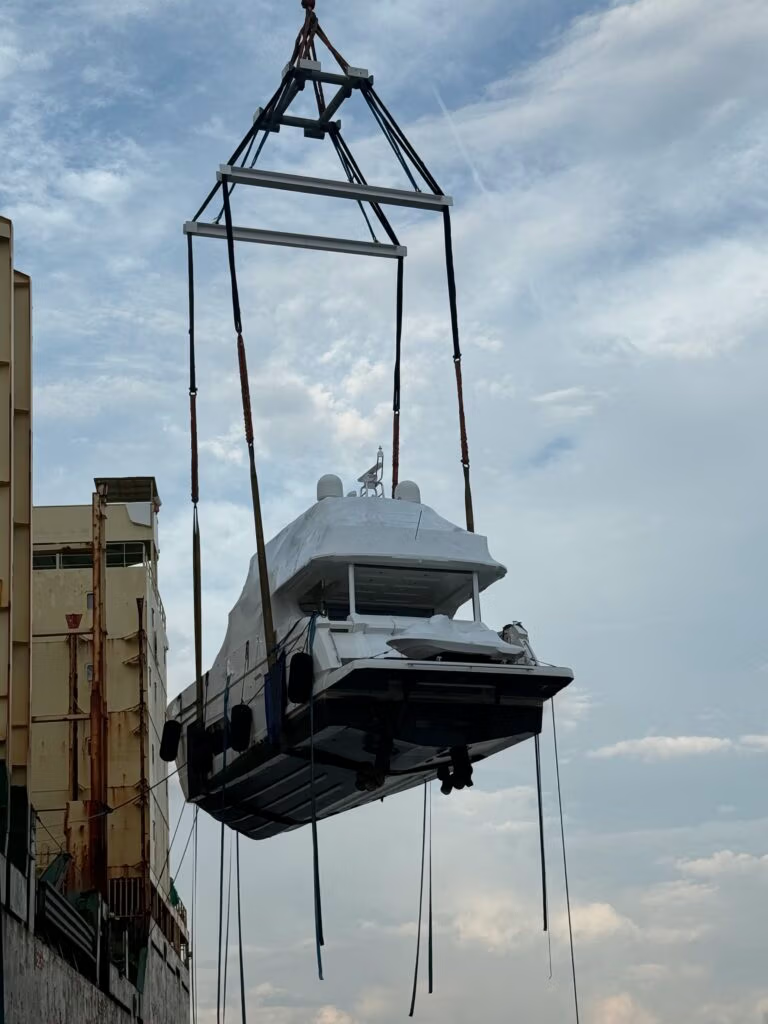
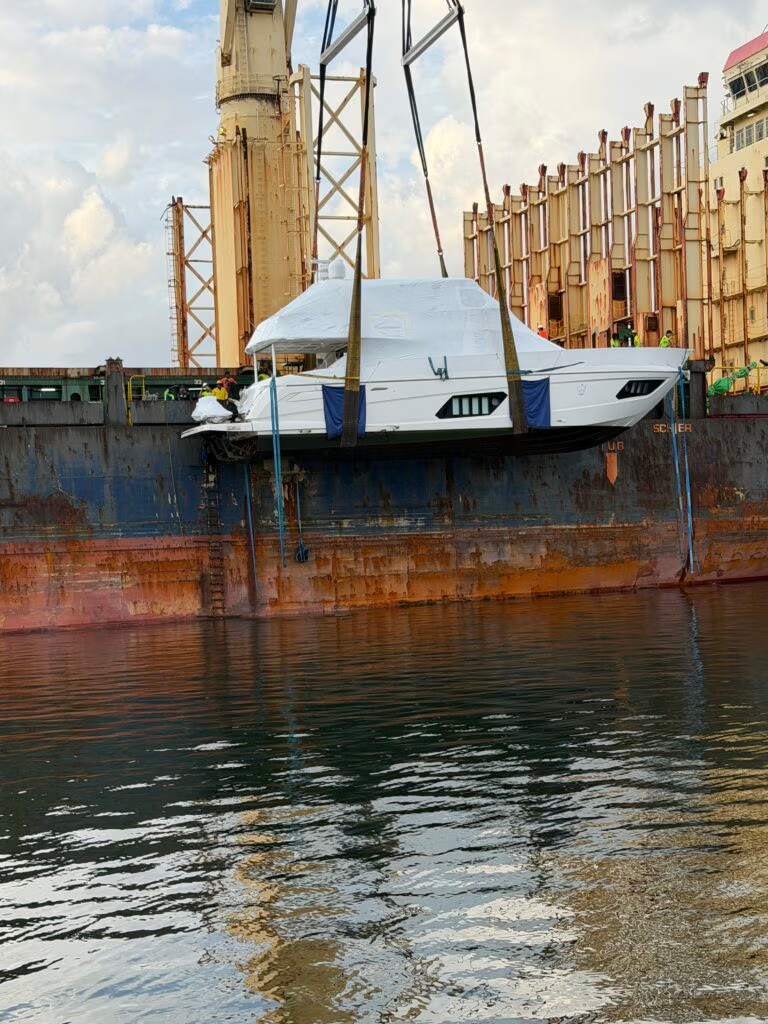
Not the Aku-Aku but you get the idea.
Here she is down in the ship... not on top, love it

See You in British Columbia