July 2026 British Columbia

July 2026 British Columbia

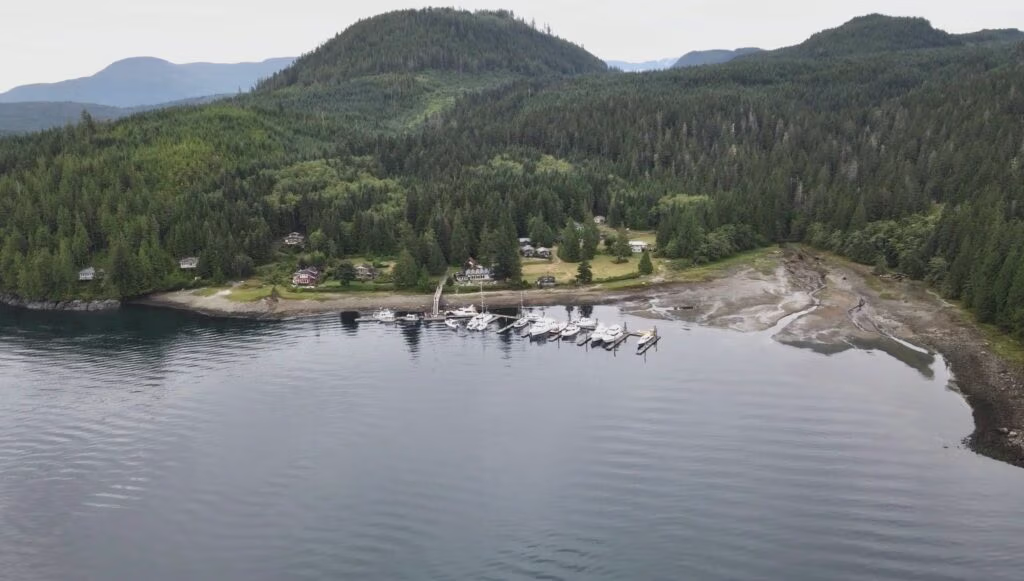
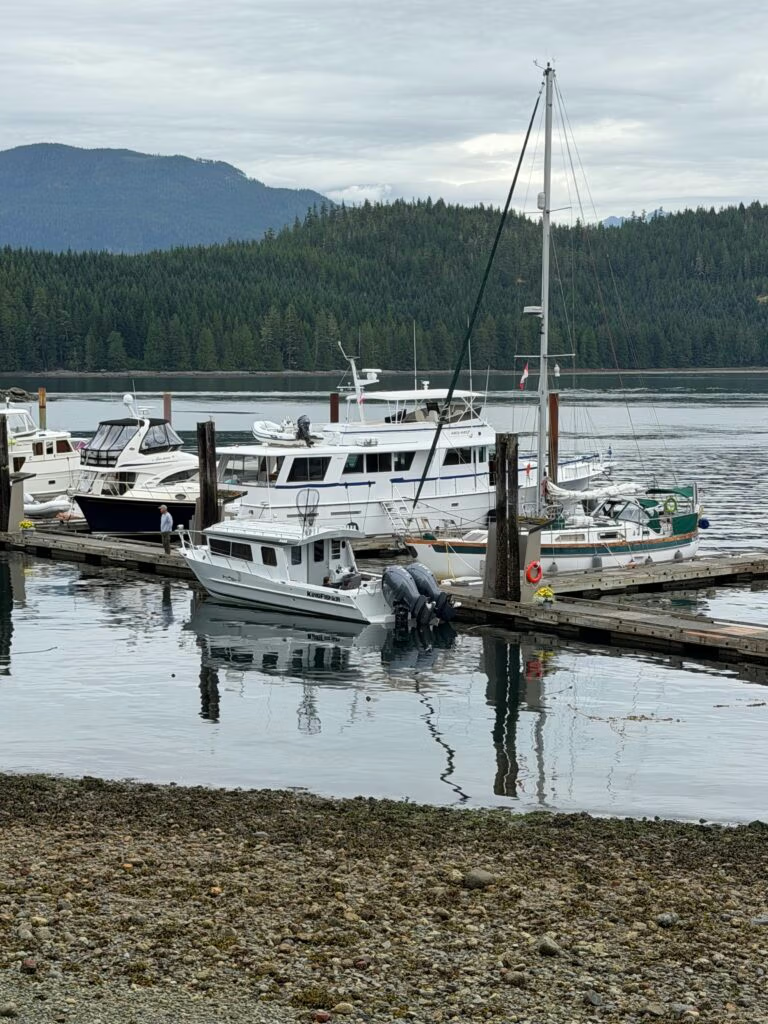
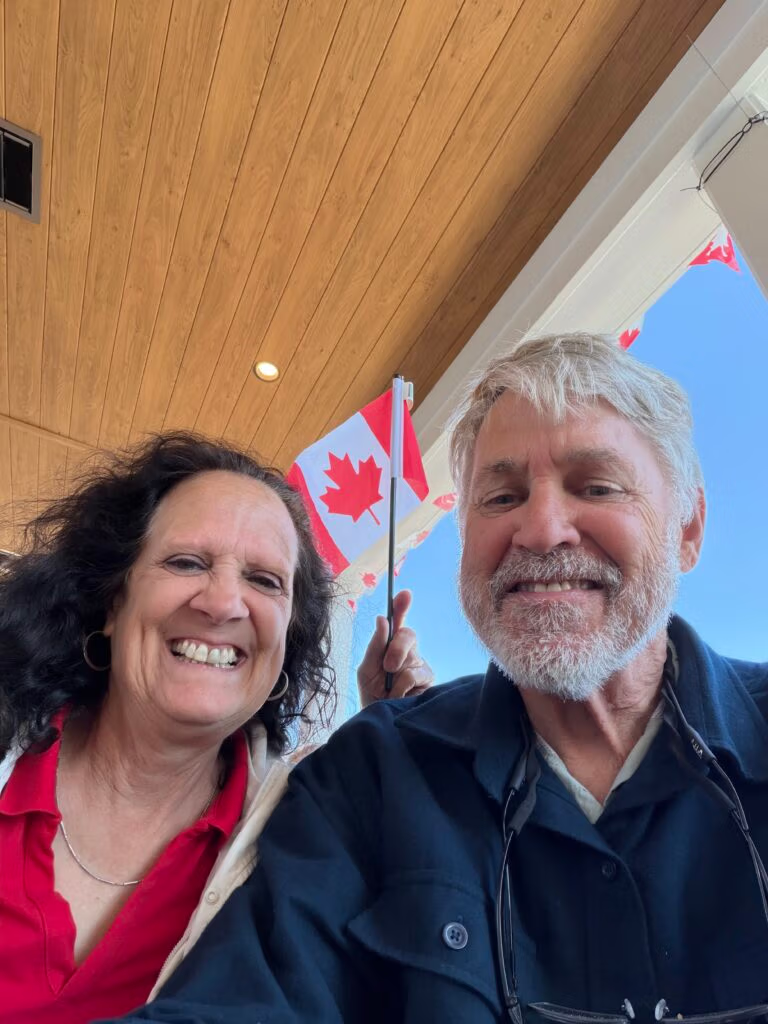
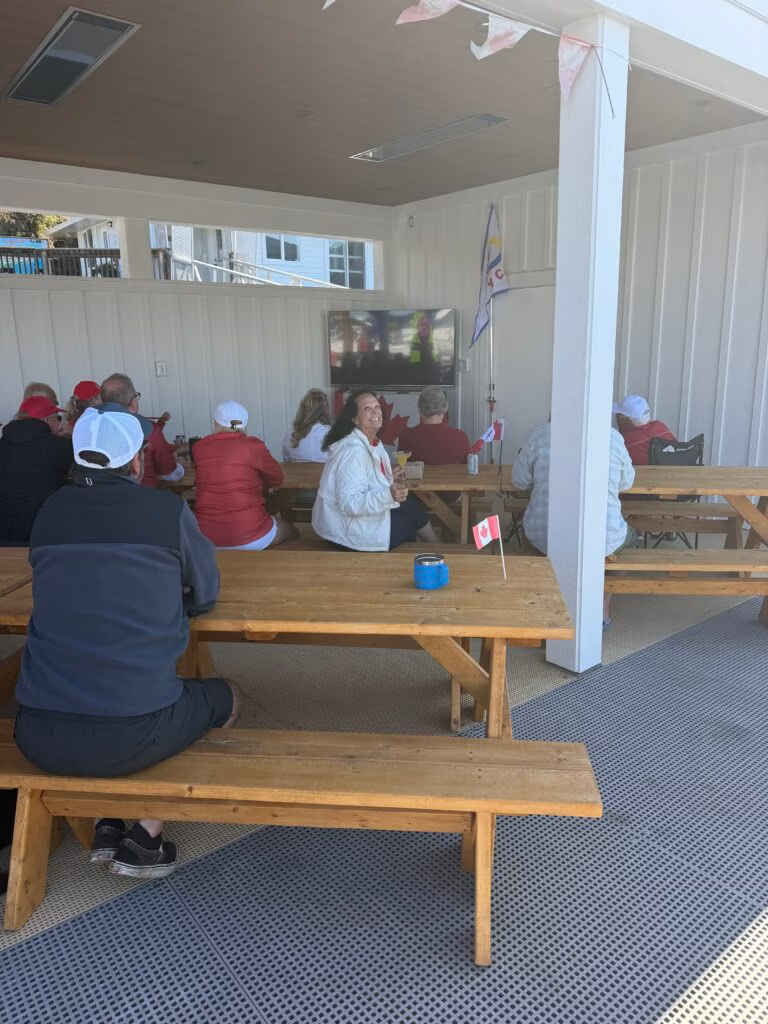
On July 4, Canada played Morocco in the World Cup Series. There was a group of Canadian boaters that came to Manana Marina and they invited us to their event on the 4th of July, Saturday morning. They cooked a great breakfast and had a big TV, and we were all watching the Canadian-Moroccan soccer match. Unfortunately Morocco beat them 3-0 and that meant Canada was done, oh well back in 4 years.  

Matt Sturdy arrived the day before; he is our first guest, so far. He settled in nicely, Stacey and Matt spent a month on the boat last year, so they were quite familiar with it. Stacey, unfortunately, had to stay at home to watch the dog; I know how that is. And Matt came this way to spend the next 3 weeks with us. Jen left on Sunday, the 5th of July, and had to go back to San Antonio to take care of some things and she’s still working for the Department of Defense. She will come back later this month. Matt’s going to fill in while she’s gone, so I can take the boat out and learn new things.

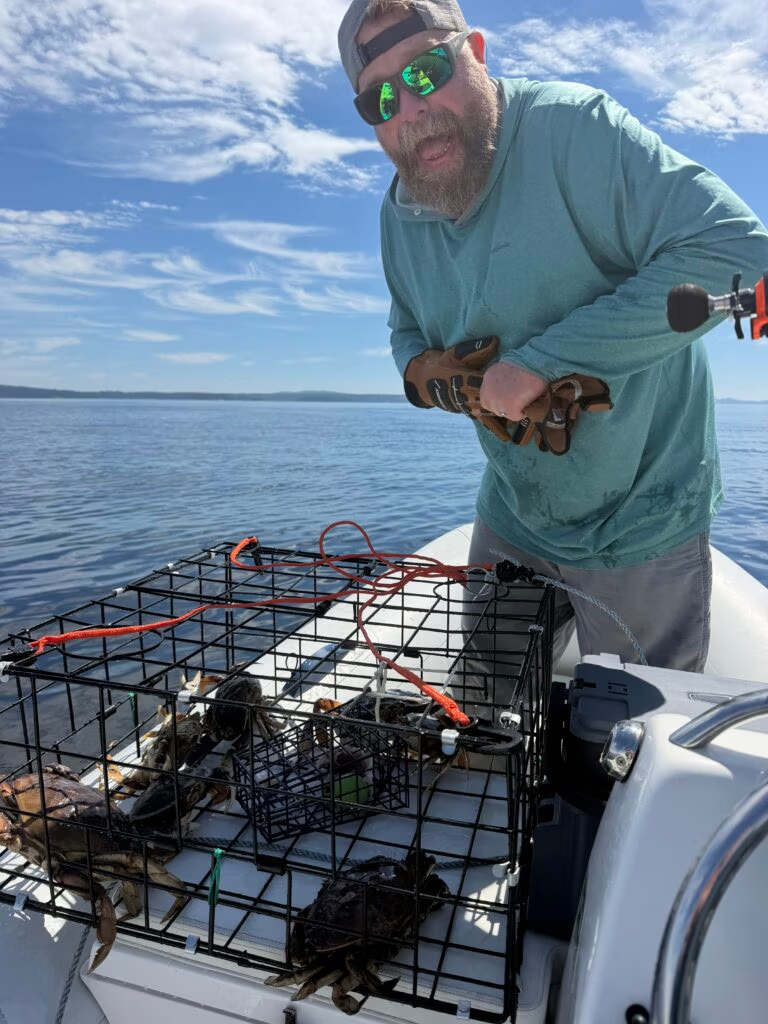
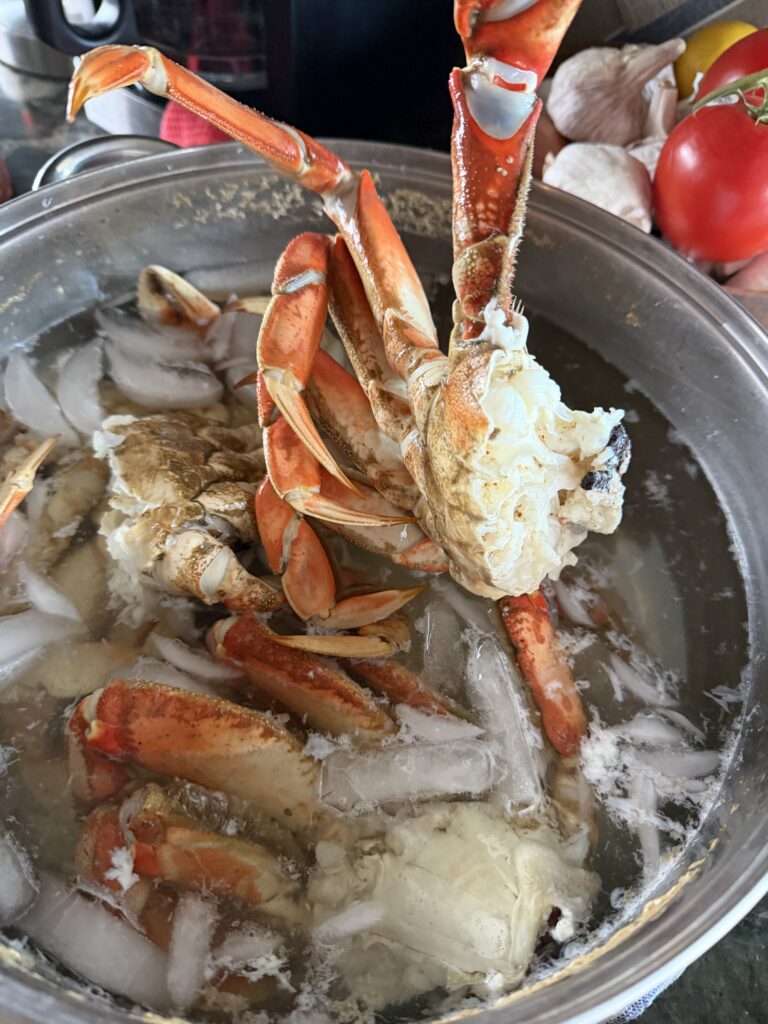
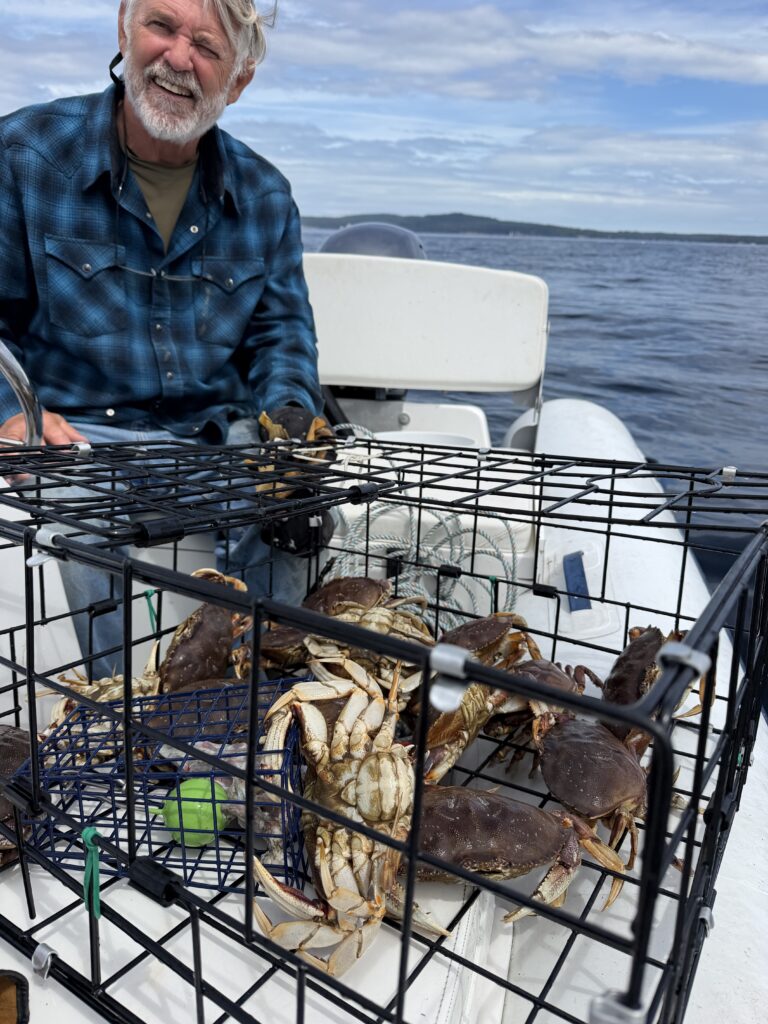
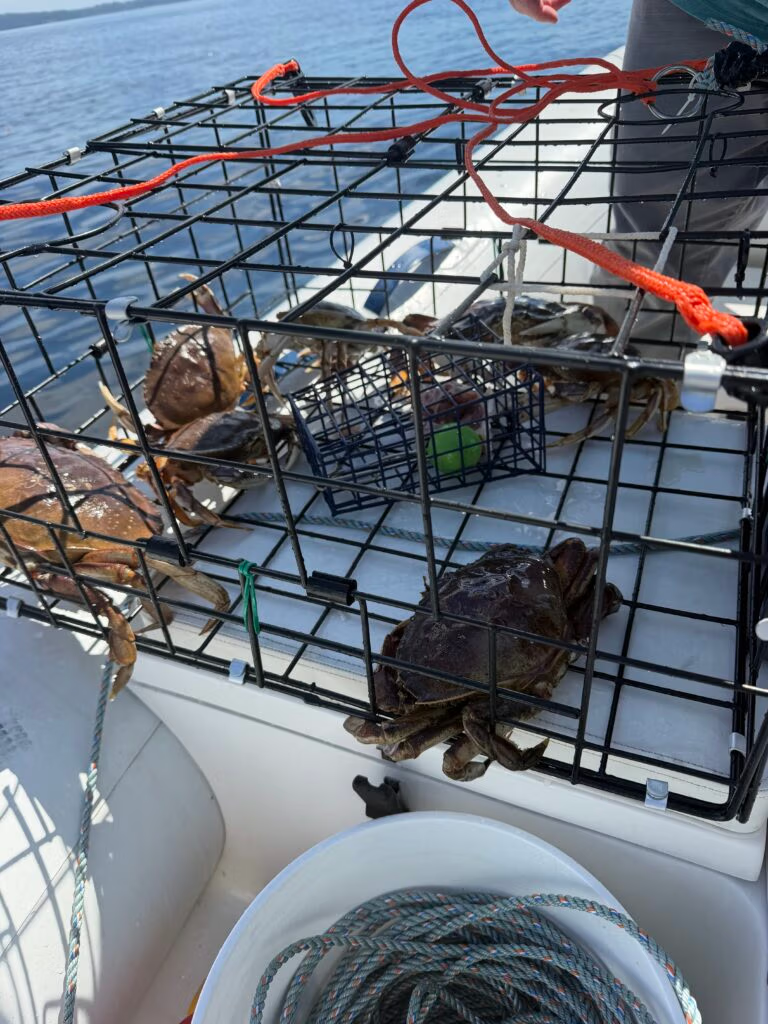
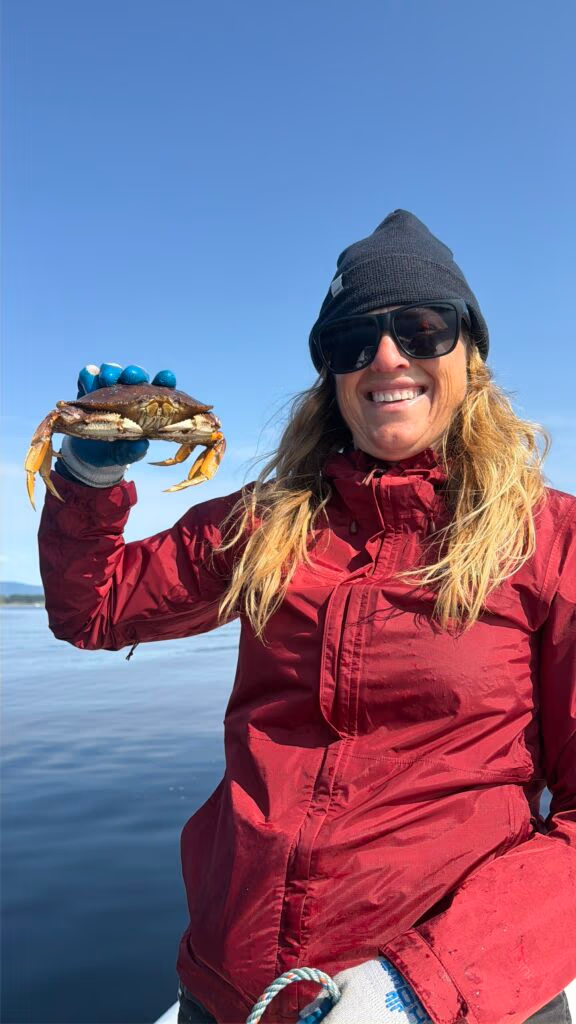
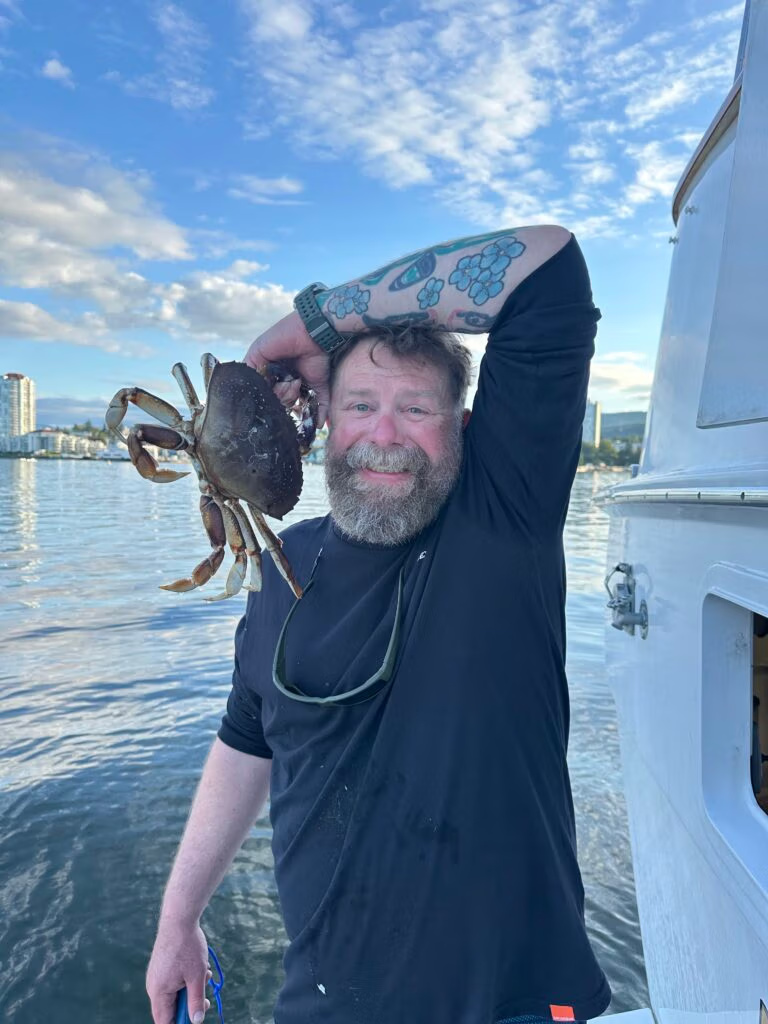
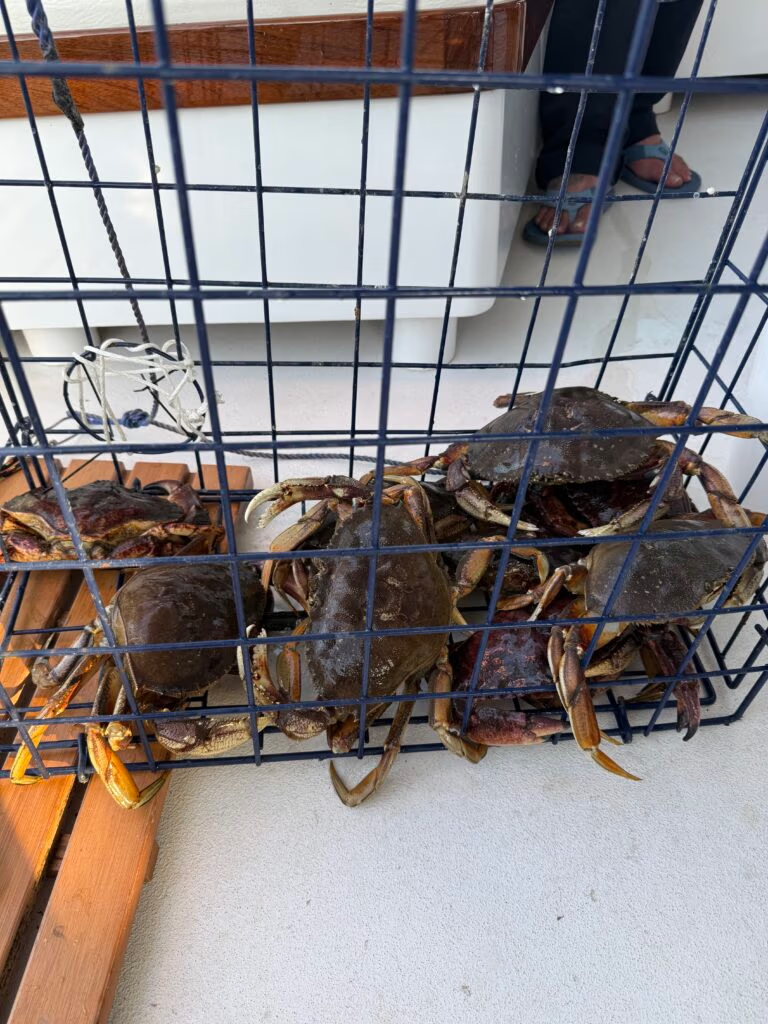
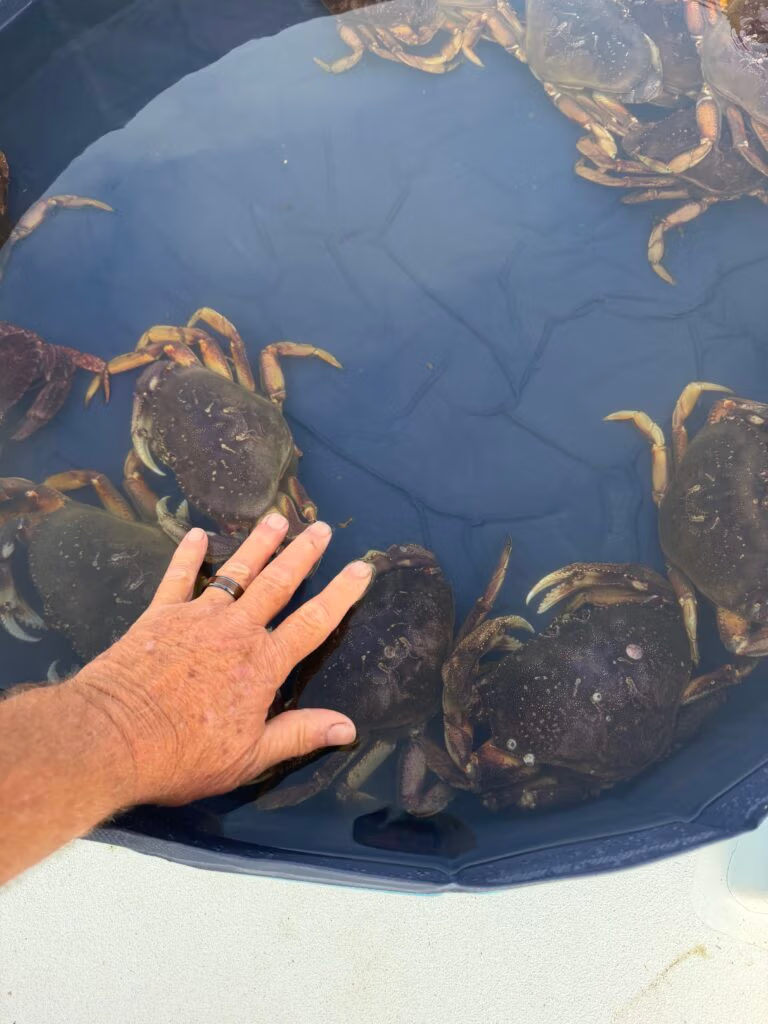
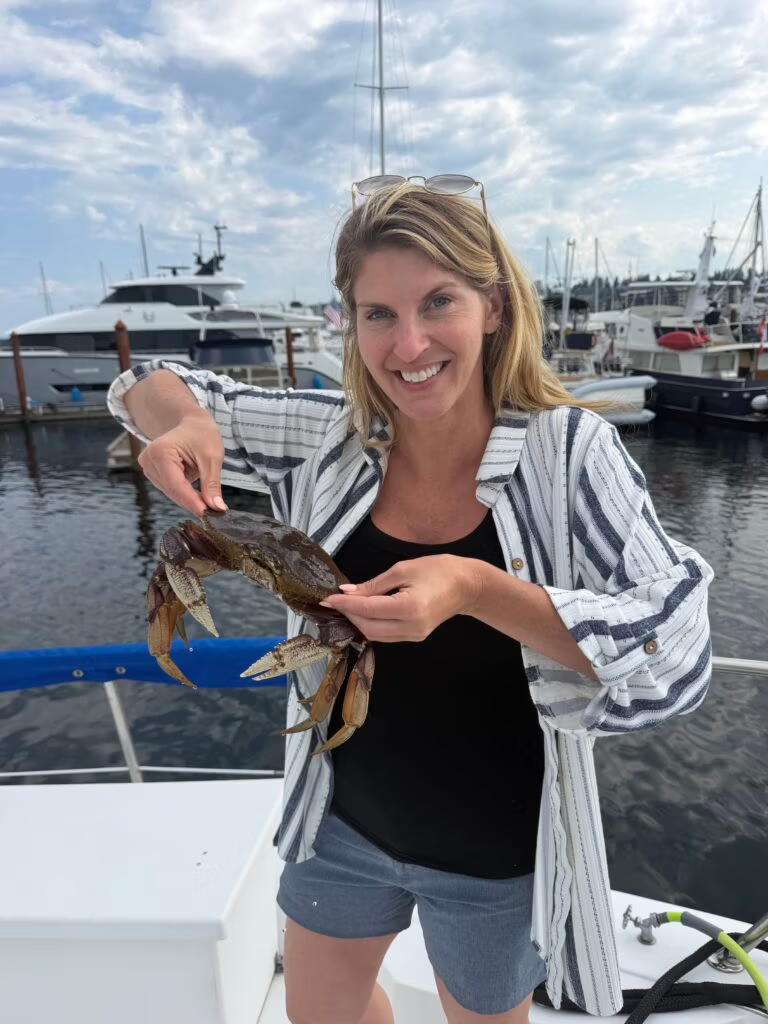
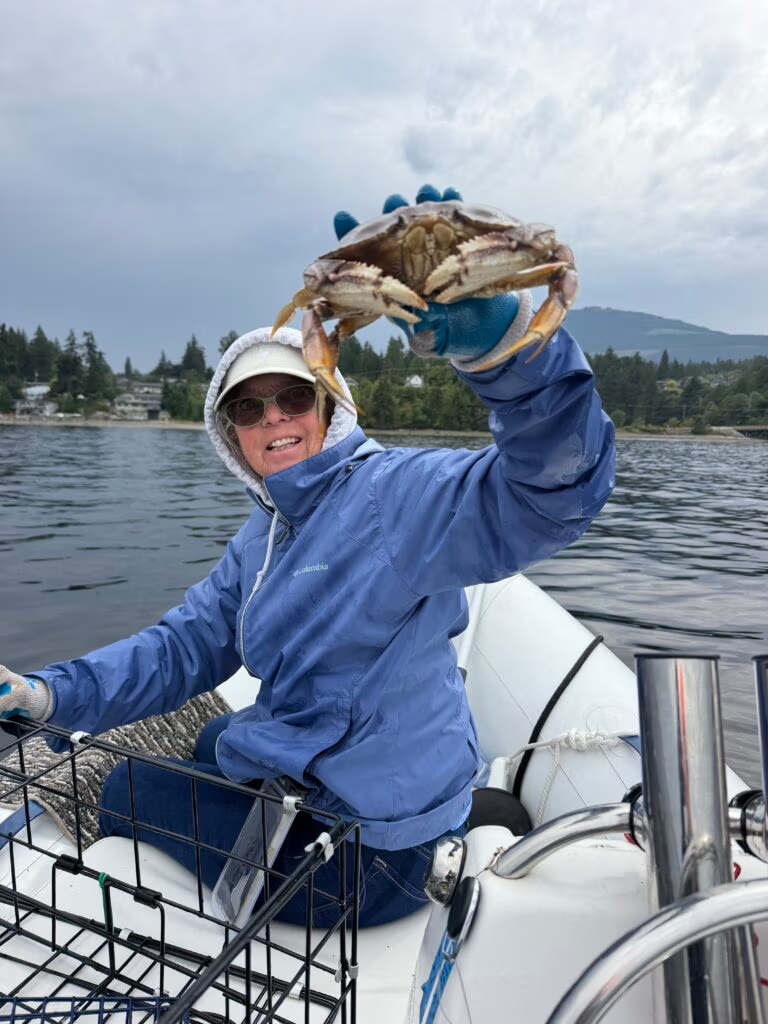
Our first crab....
Yes we can...
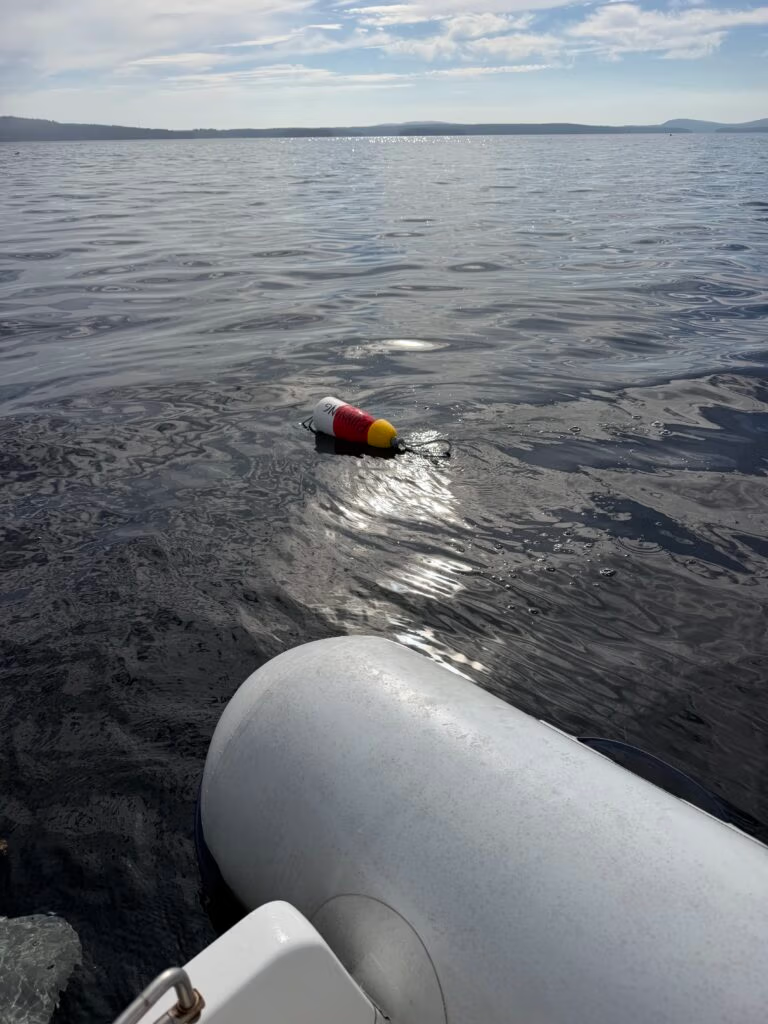
Our Bouy

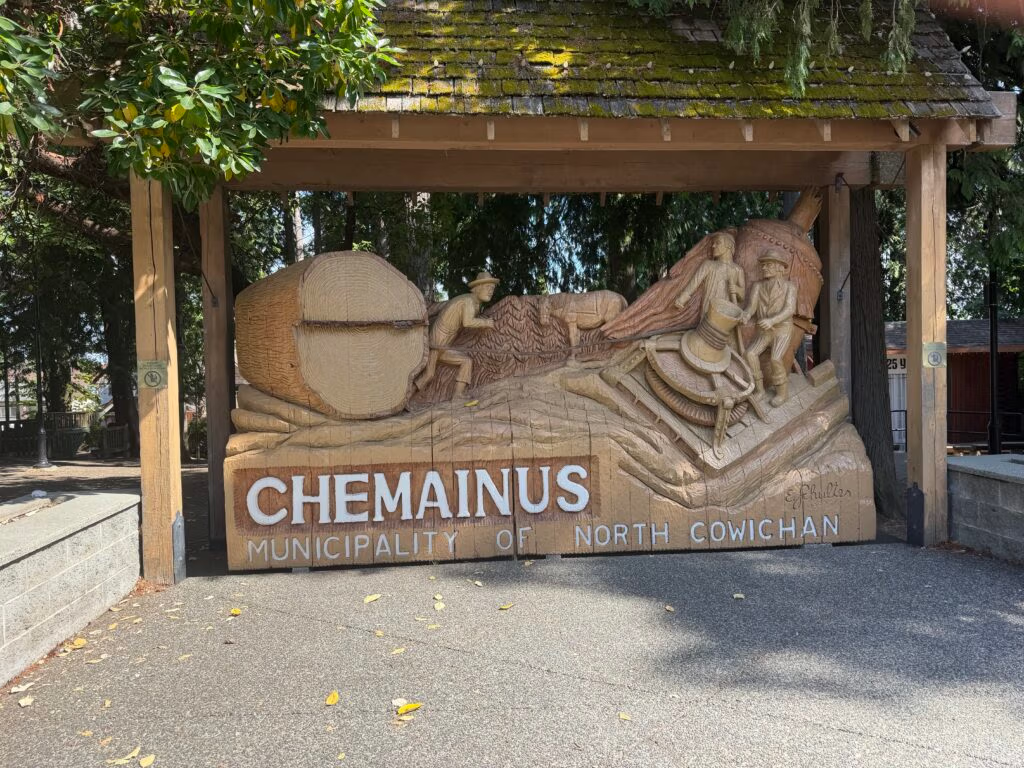
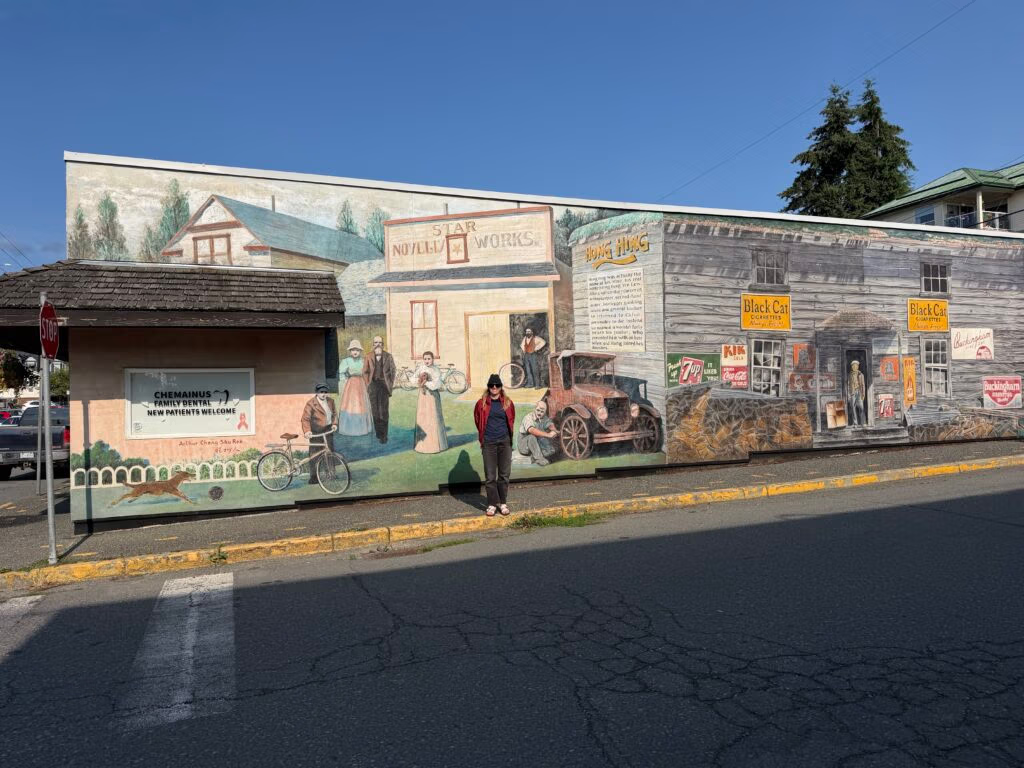
Chemainus, British Columbia

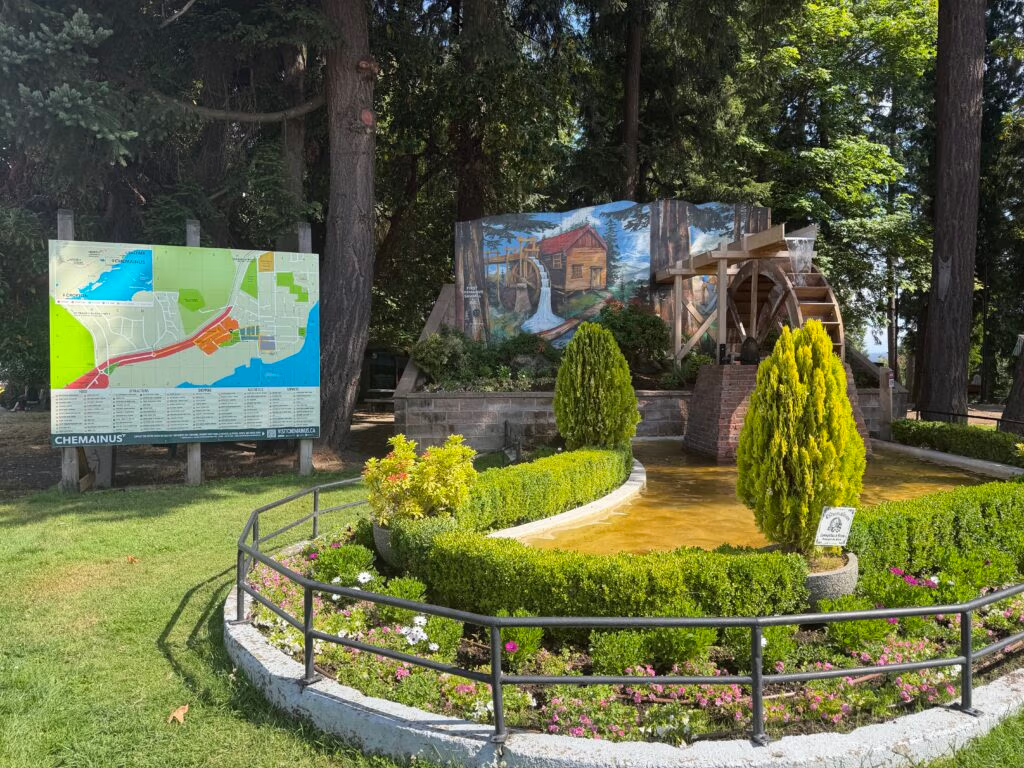
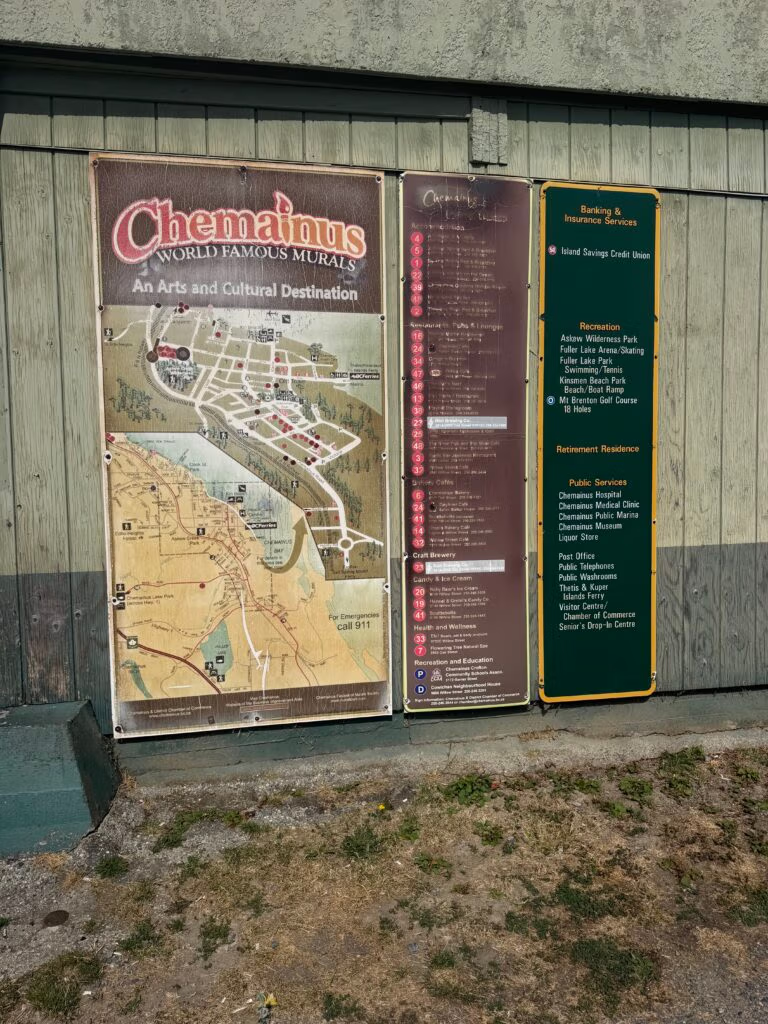
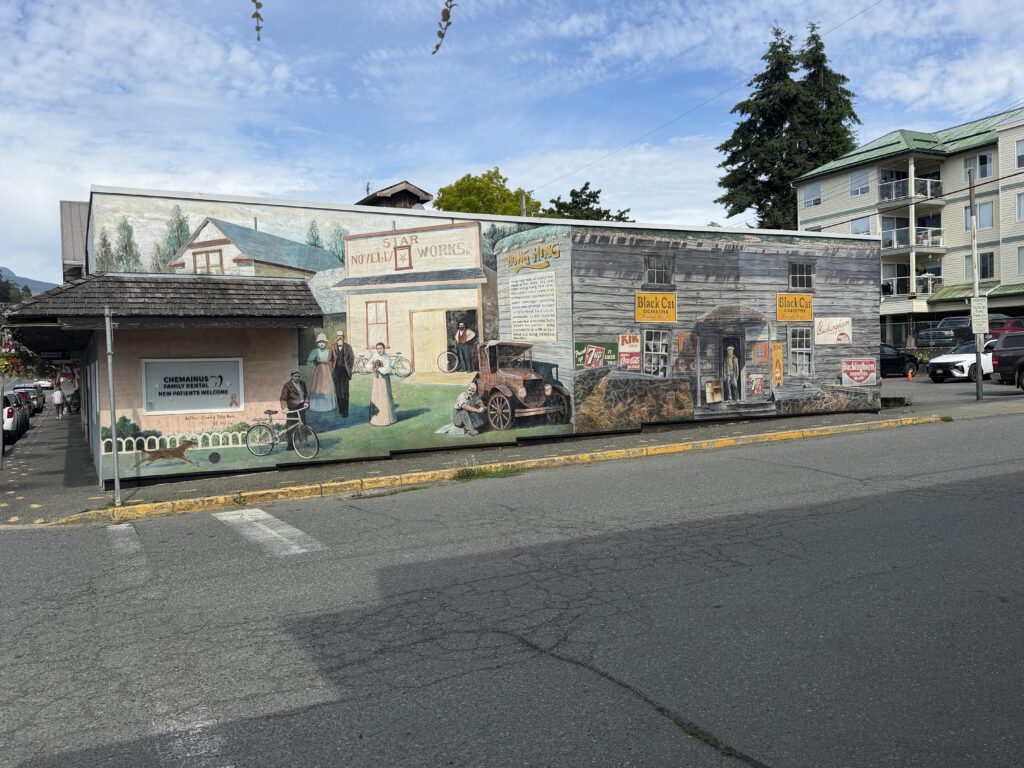
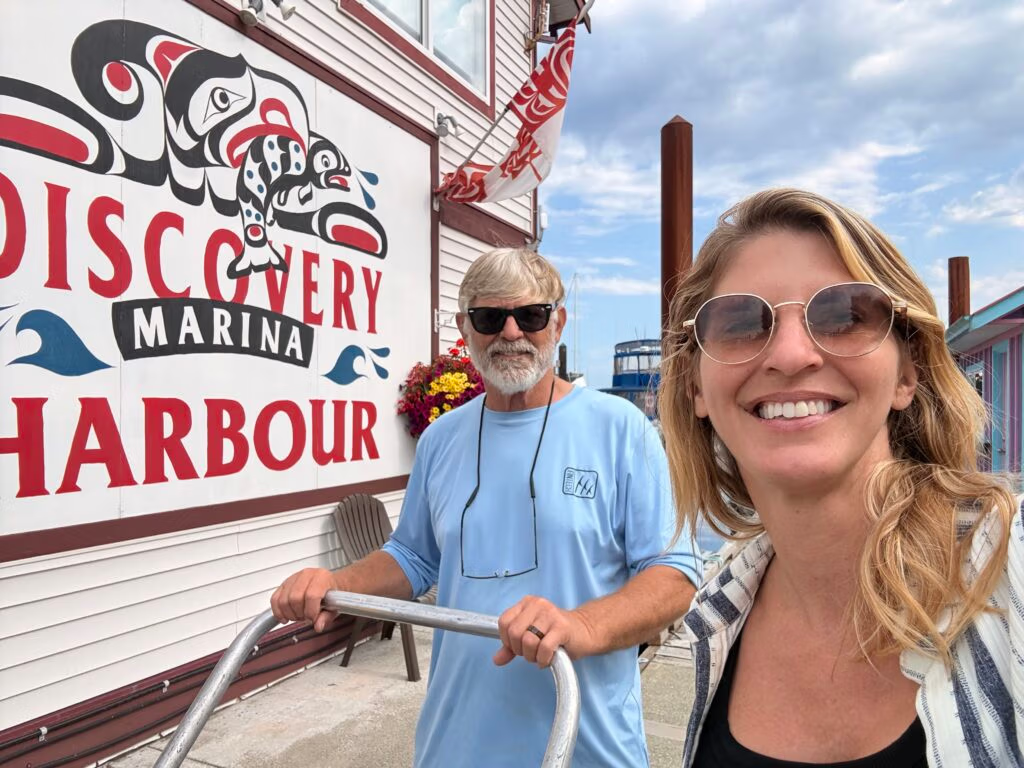
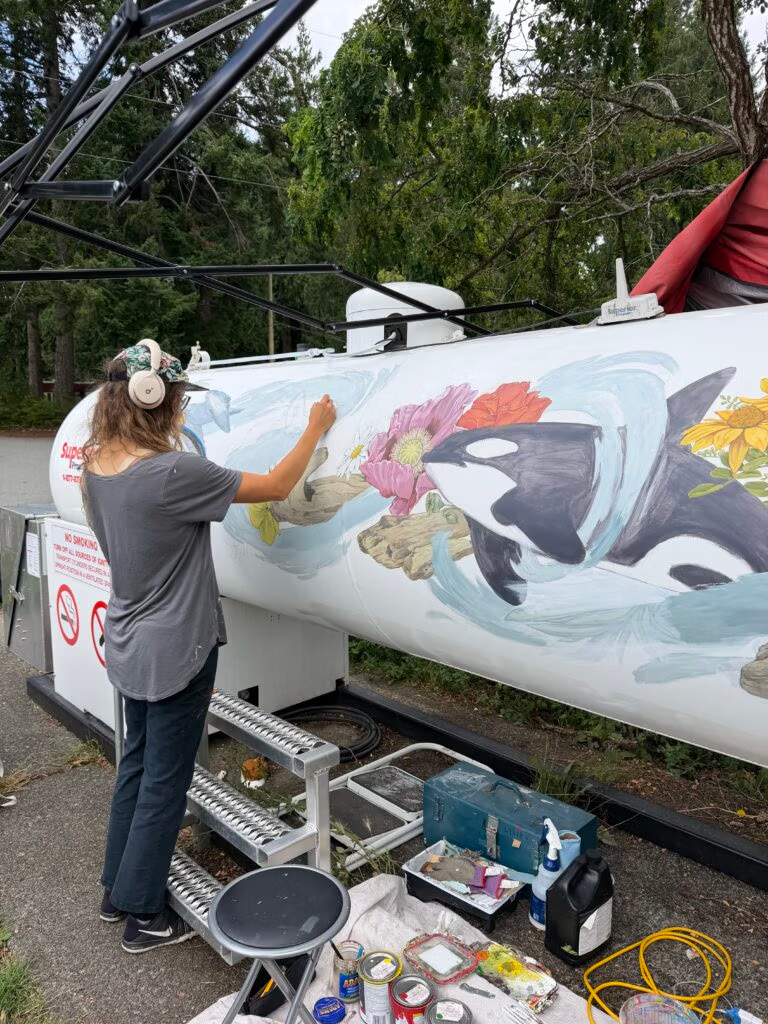
Jen and I tried to go to Chamanis, British Columbia. And the day we went, we took the yacht and headed that way, and when we got there they didn’t have any room for a boat our size, so we went on to another little bay further down and then made the trip back, but we were quite disappointed that we couldn’t go. When Matt got here, we set out the crab traps on the second day he was here, and we followed the instructions of some of our dockmates that told me where to set the traps. And we set the traps, and then we were going to let them soak, and we went around the corner of the little tip, and there lo and behold was Chamanis right there. It wasn’t but about a 10 or 15-minute ride from the yacht in the tender, had Jennifer and I known that we would have not taken the yacht, we would have taken the tender and gone. It’s a cute little town, can’t wait for Jen to get back and see it. It’s got a lot going on. They’re famous for their murals, that’s the one picture that’s here that identifies a mural.

Learning to Catch Crabs

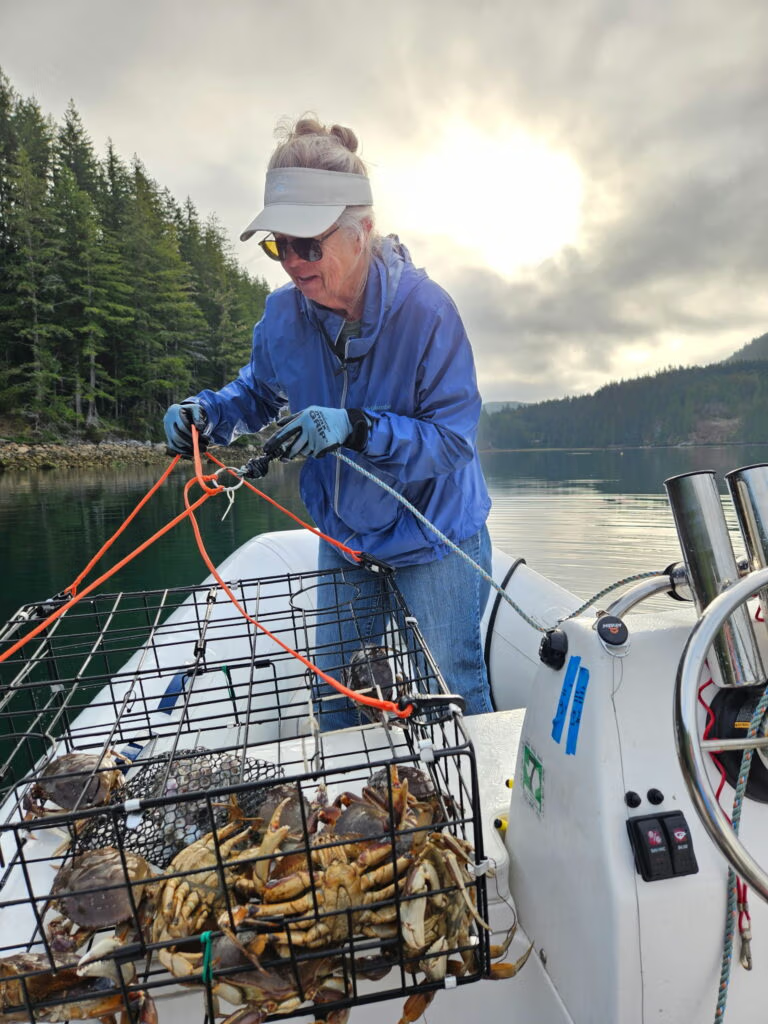
After Jenn left Matt and I worked wholeheartedly at learning how to crab, we have 4 traps and we use a chicken bone carcass as our bait. We got the traps all outfitted with the appropriate amount of lead, sinking rope, the buoys marked appropriately, and today was our second day of crabbing. We left the traps out for 4 hours, and when we came back, one trap had 16 crabs, no males. You can’t keep the females so it was a lot of crabs, but not much we could eat. The other crab had 8 in it and 1 male, so out of our trip today we only caught 1 crab. We’re looking for other spots to crab. We’ll keep you updated as we move forward. Looking forward to everybody getting here… Jenn moved her return up so she will be back around the 17th of July.

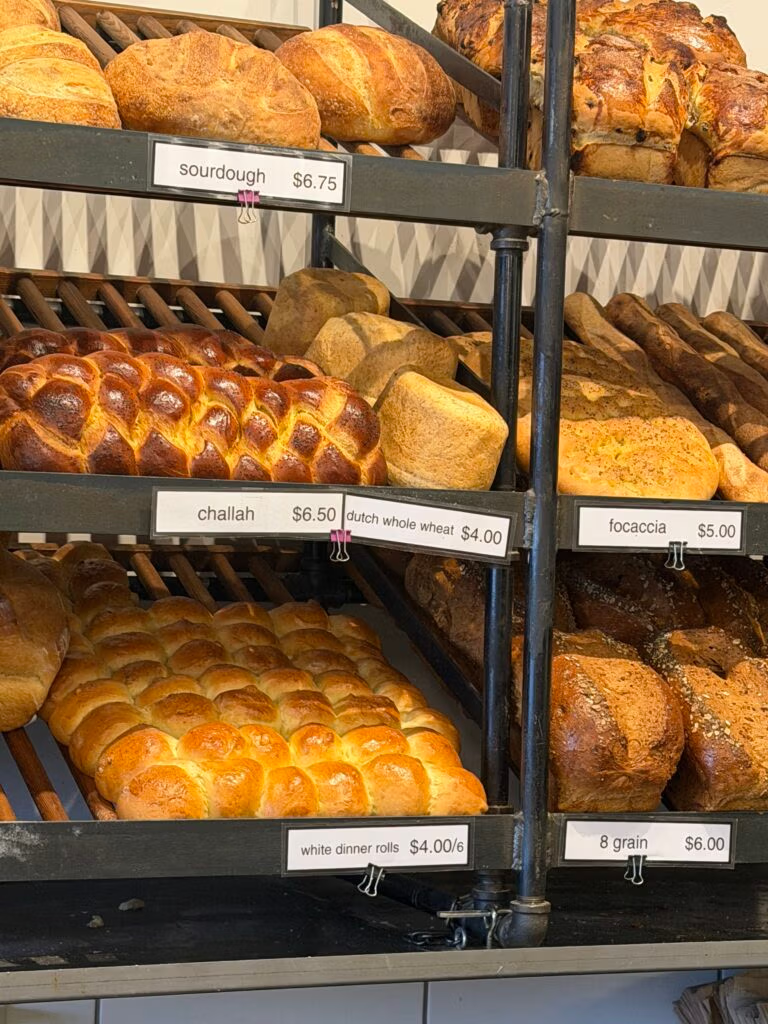
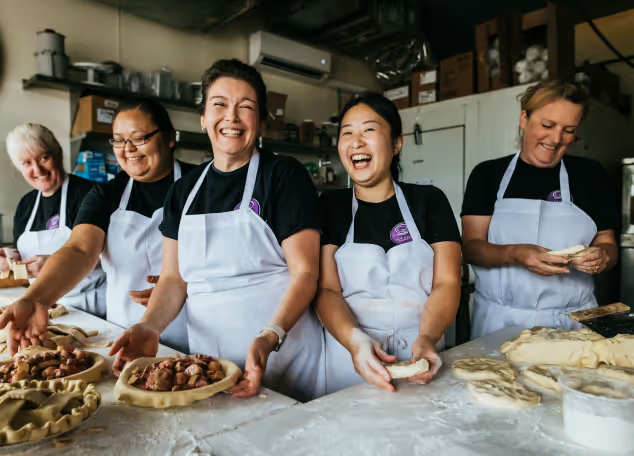
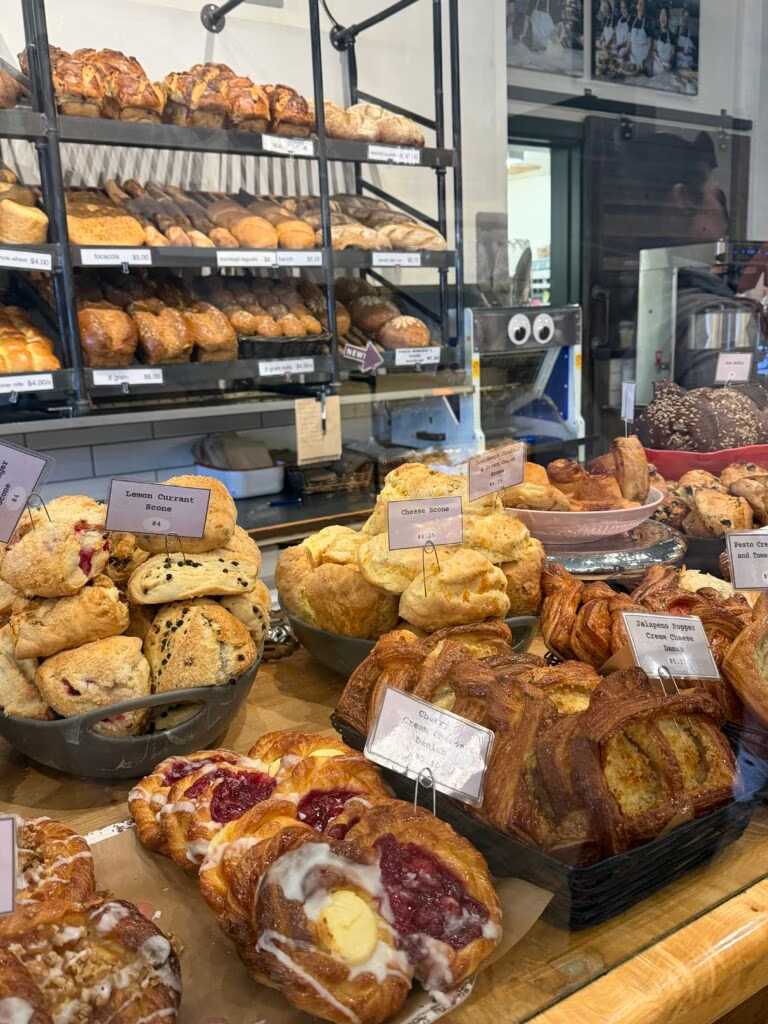
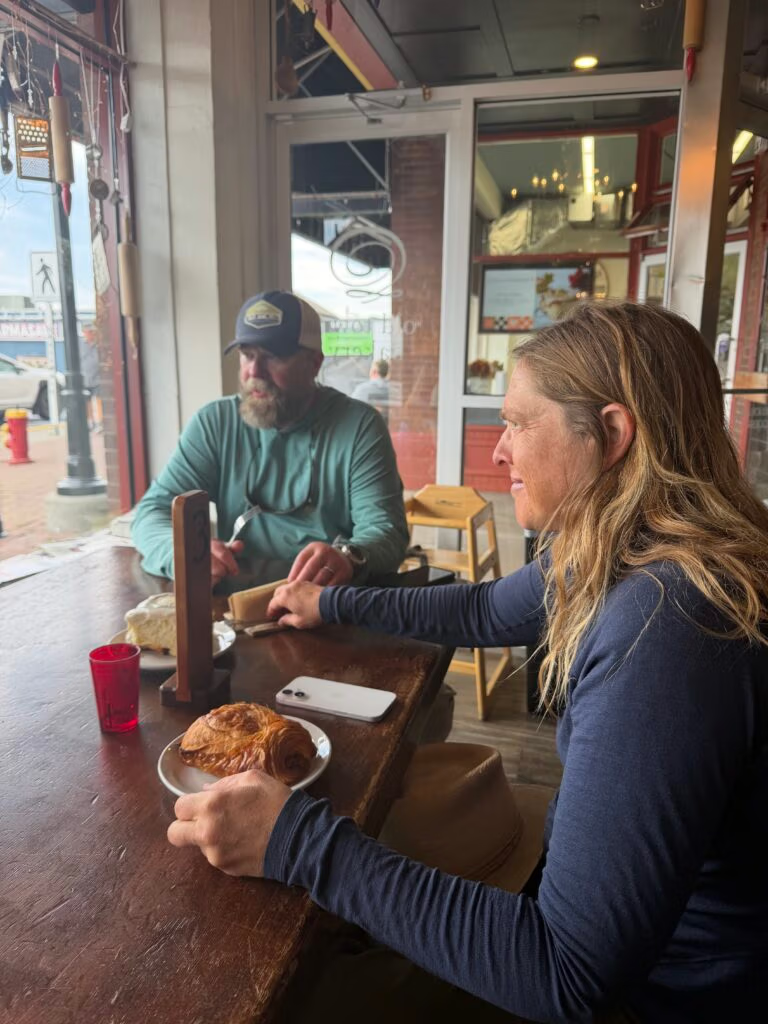
The legendary bakery at 512 First Avenue in downtown Ladysmith has anchored the community since 1932. Originally established as City Bakery, it was renamed Alexander’s Bakery in the 1950s before being purchased by Kate and Geoff Cram in 2002 and rebranded as the Old Town Bakery.
The original site began as a community hub in 1932, drawing children to the window to watch its famous mechanized donut machine in action.
Under its current ownership by the Cram family, the bakery gained widespread acclaim, with its cinnamon buns winning the Victoria Times Colonist Reader’s Choice award for “Island’s Best” in 2005. It now produces up to 96 dozen cinnamon buns on busy Saturday mornings.


The Arrival
Sarah Sturdy stepped off the bus with the dust of the road still on her shoes. She is Matt’s sister, and also the daughter of the narrator’s sister, a living link between two branches of the same family tree. Though she had grown up in California, the salt air of the coast felt familiar. 
The house was already buzzing: laughter in the kitchen, the clatter of dishes, the low hum of the music. When Sarah walked in, the room seemed to brighten. She was the newest guest, the missing piece that had finally arrived.
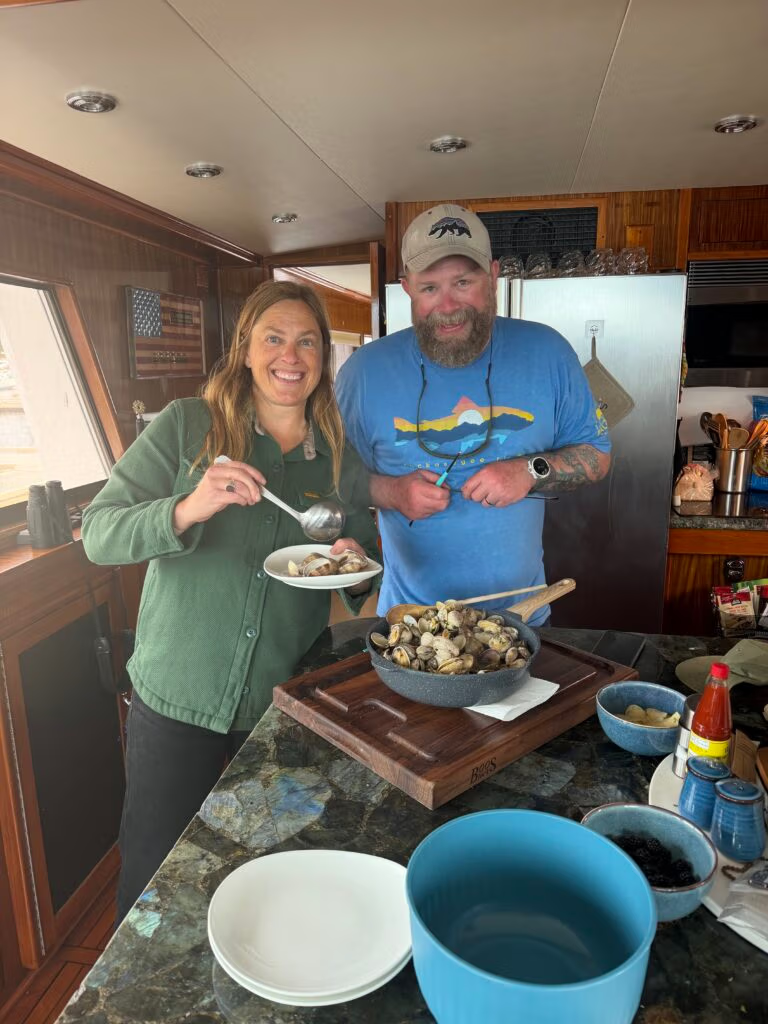
Clams and Crusty Bread for Lunch
Lunch was simple and generous. The pot of clams steamed on the stove, their shells opened like tiny mouths, releasing the scent of brine and garlic. They were eaten with crusty bread, torn off in rough hunks, dipped into the broth, and soaked up until no flavor was wasted.
 The clams came and went, the bread disappeared, and the table grew quieter, save for the soft sound of the ocean outside.
The Crab Traps
After lunch, we made our way to the tinder. The water was rougher than usual, tossing the hull with impatient hands. The sky was the color of old iron, and the wind carried a chill that found its way under coats and sleeves.
They checked the crab traps one by one, pulling them up with a mix of hope and habit. The first trap came up heavy, the second fuller, and by the third, there was a cheer that cut through the wind. They had gotten the most crabs they’d ever caught in a single outing. The bucket grew thick with the catch, claws clicking against each other, random and alive.
Back at the Boat
By the time we returned, the boat was steady again, bobbing gently in the wake of the day.  The weather had been chilly, the water rough, but the mood was warm.
Sarah stood at the edge of the deck, looking out over the water, the family conversation swirling around her. She was no longer just the newest guest; she had become part of the rhythm of the day.
Supper
This evening, the crabs would be the center of supper. The kitchen would steam again, the pots would hiss, and the table would fill with the same simple abundance as lunch. But this time, the story of the day—the arrival, the clams, the traps, the catch—would be told again and again, each detail sharpened by memory.
And as the crabs were cracked and shared, the family would feel, in that small, salty way, a little more complete.

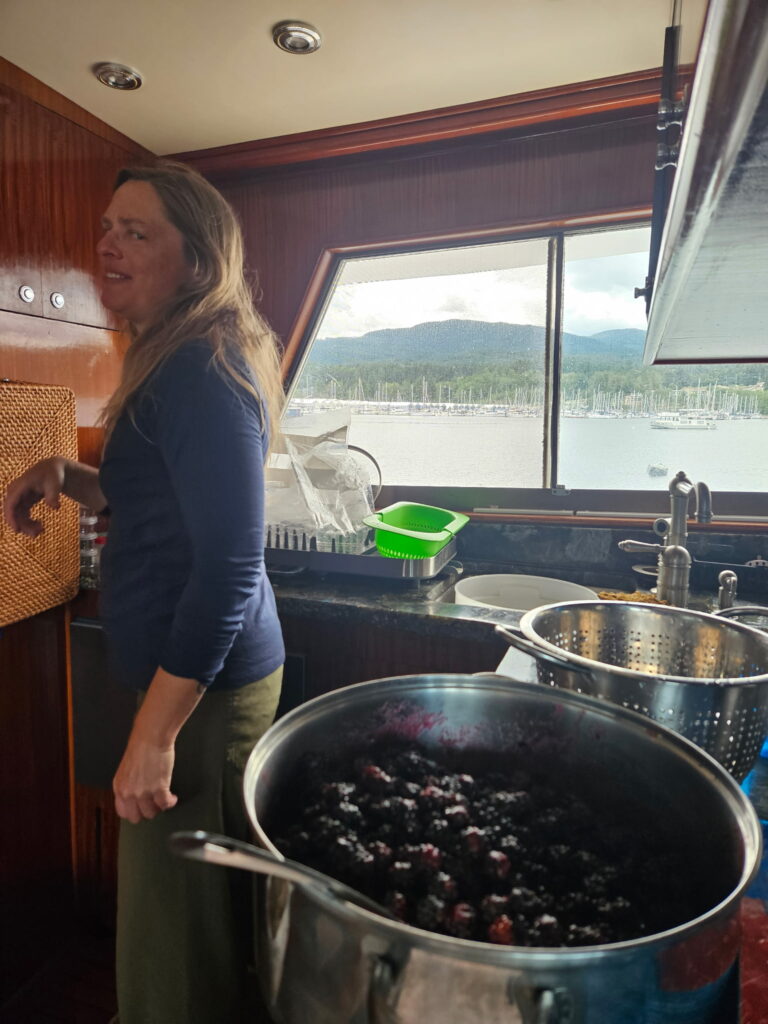
Black Berries are Ready to be Picked

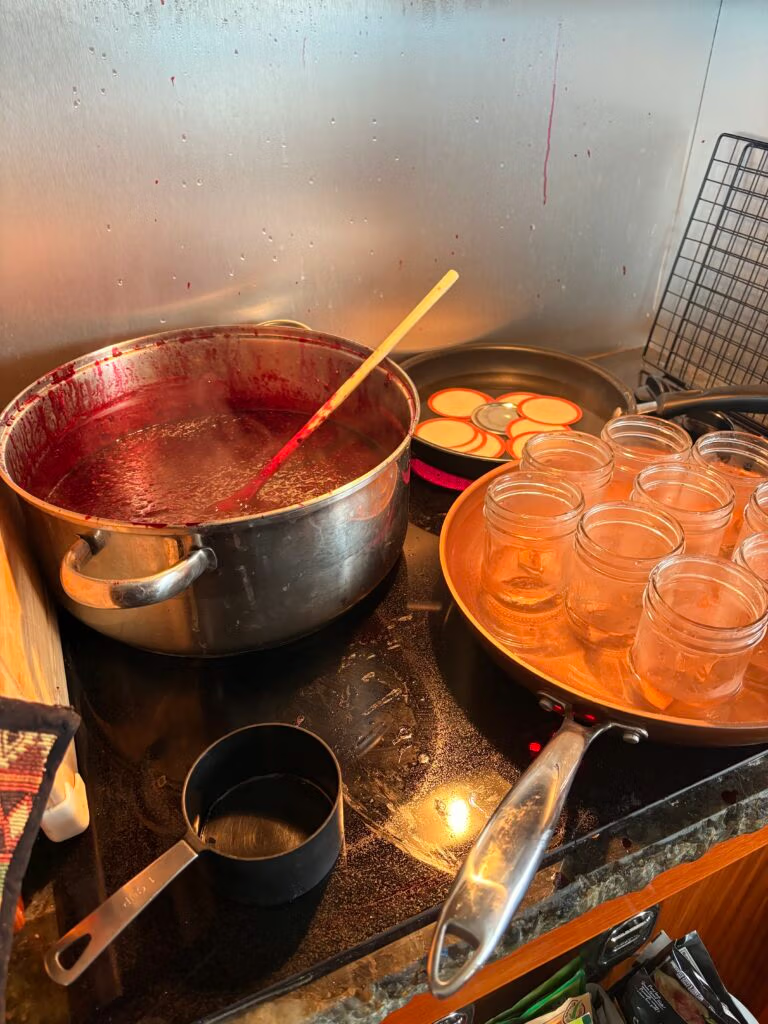
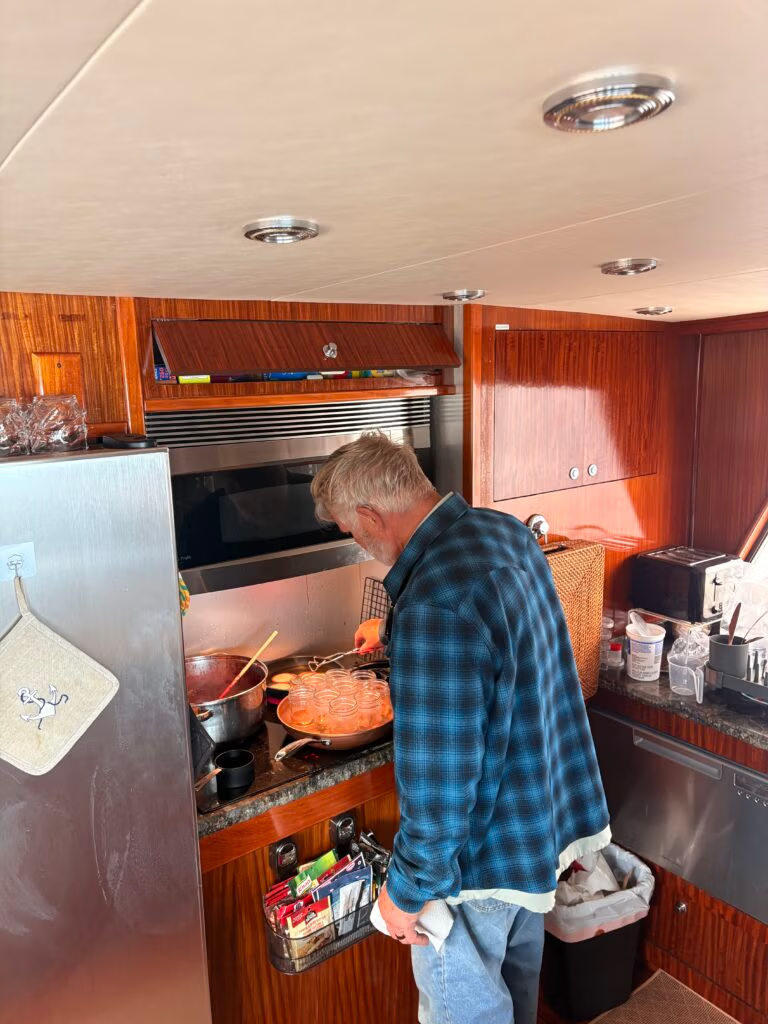
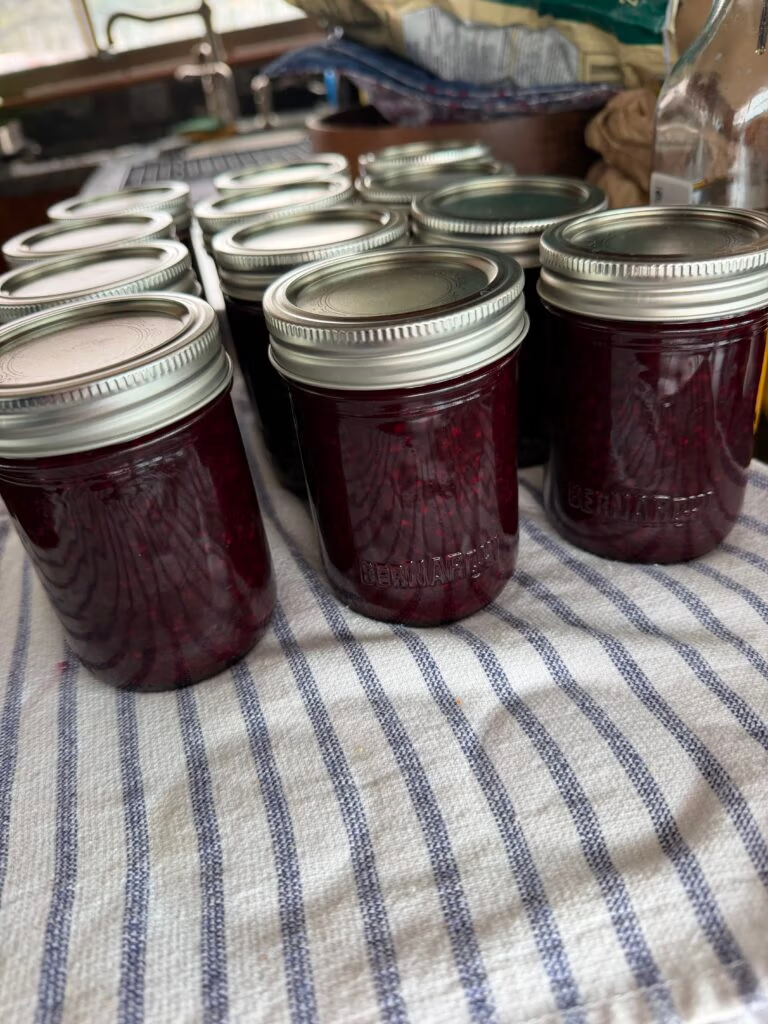
12 Jars of Jam
We pick Black Berries...Sarah made Jam
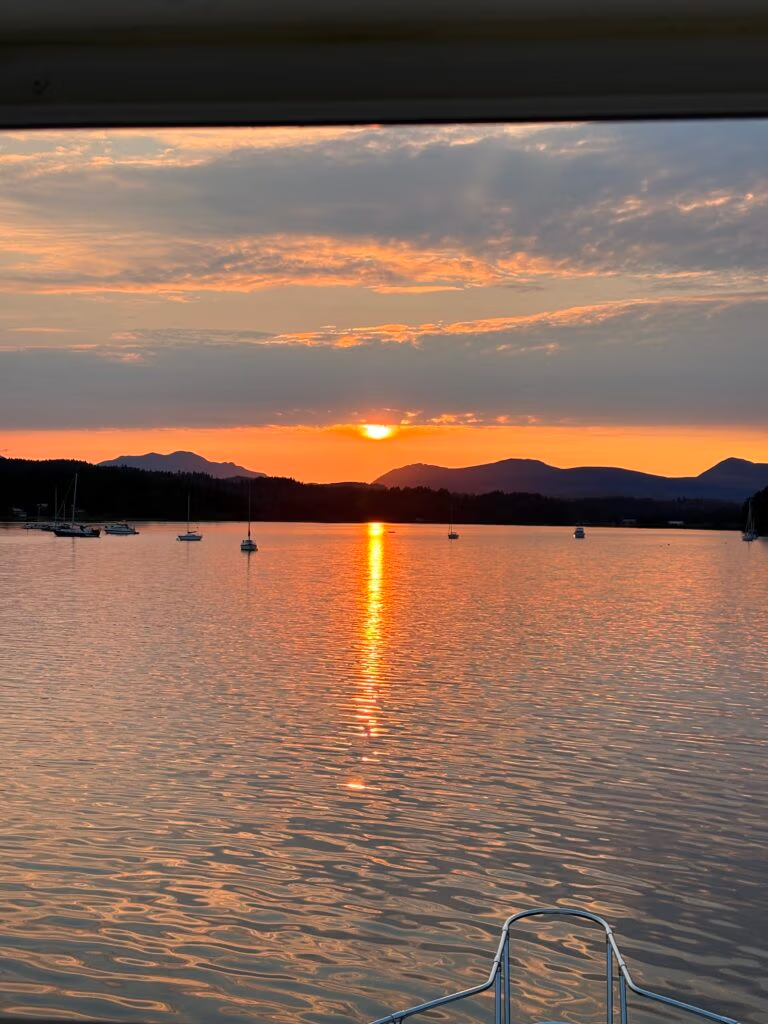
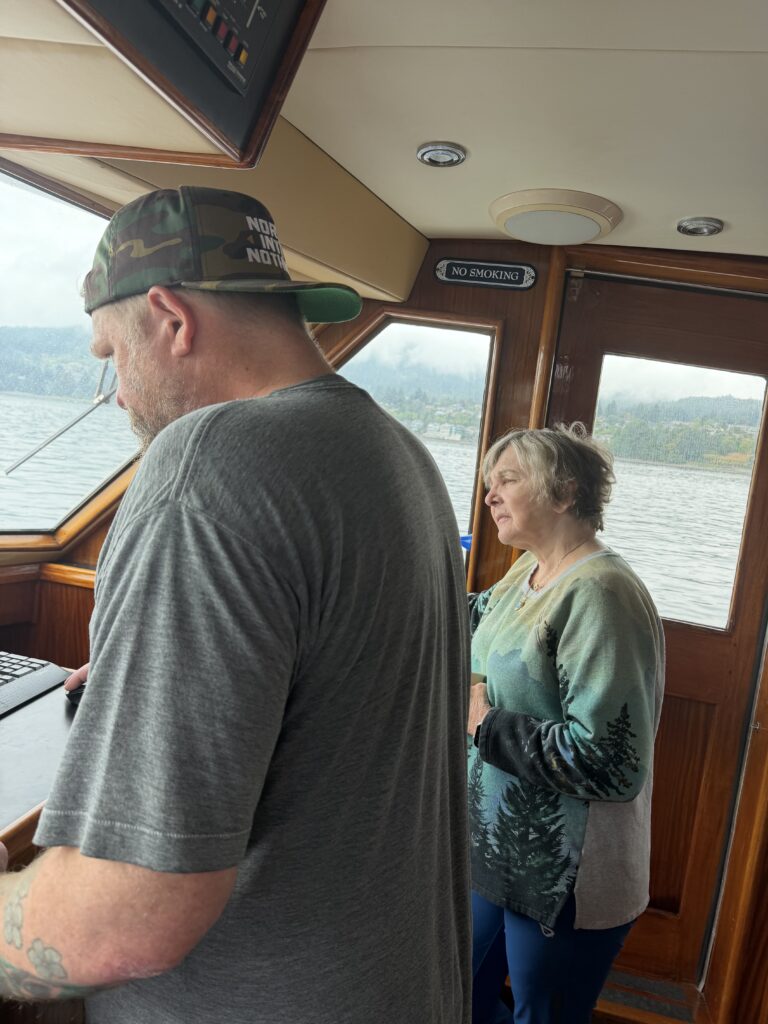
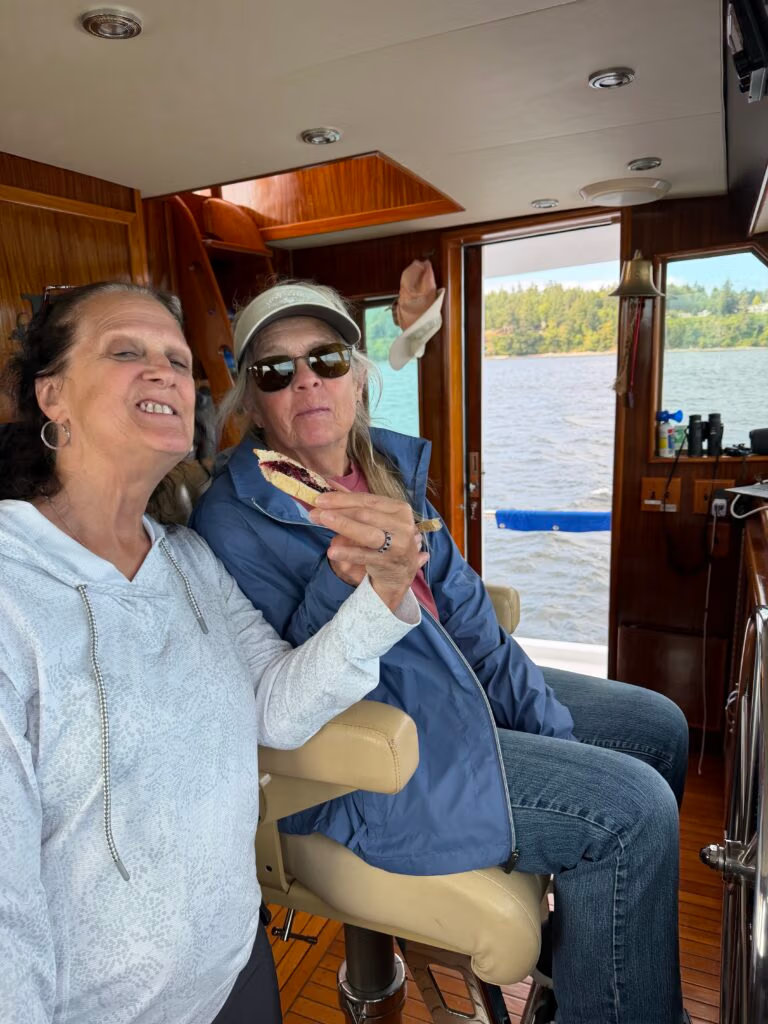
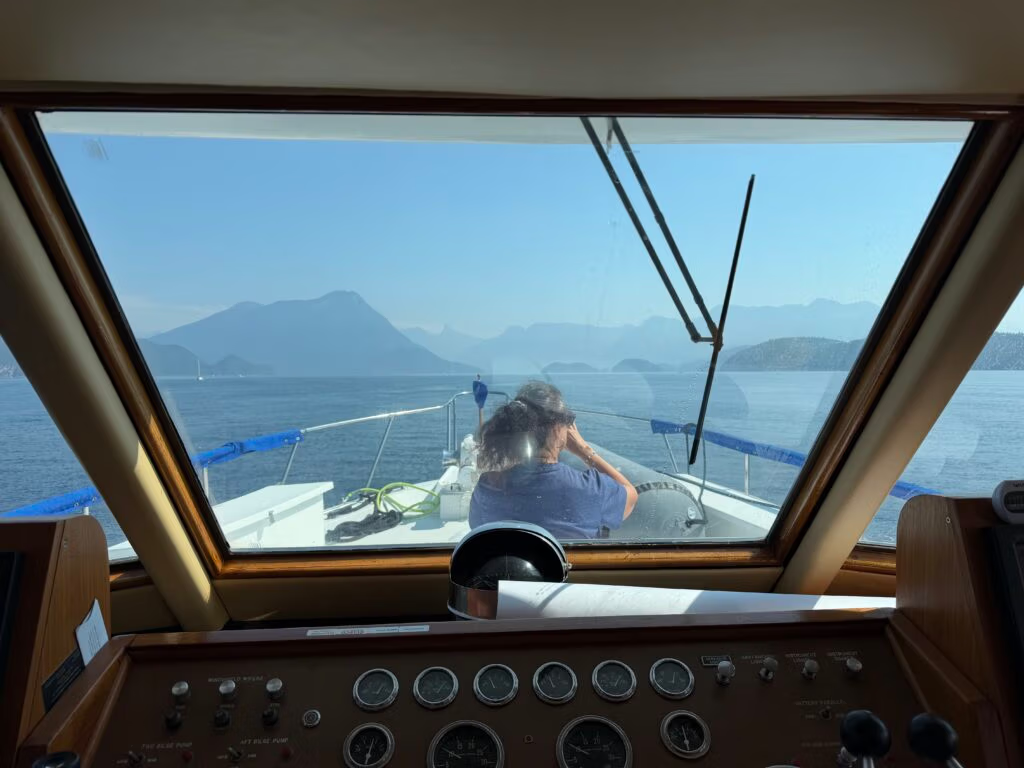
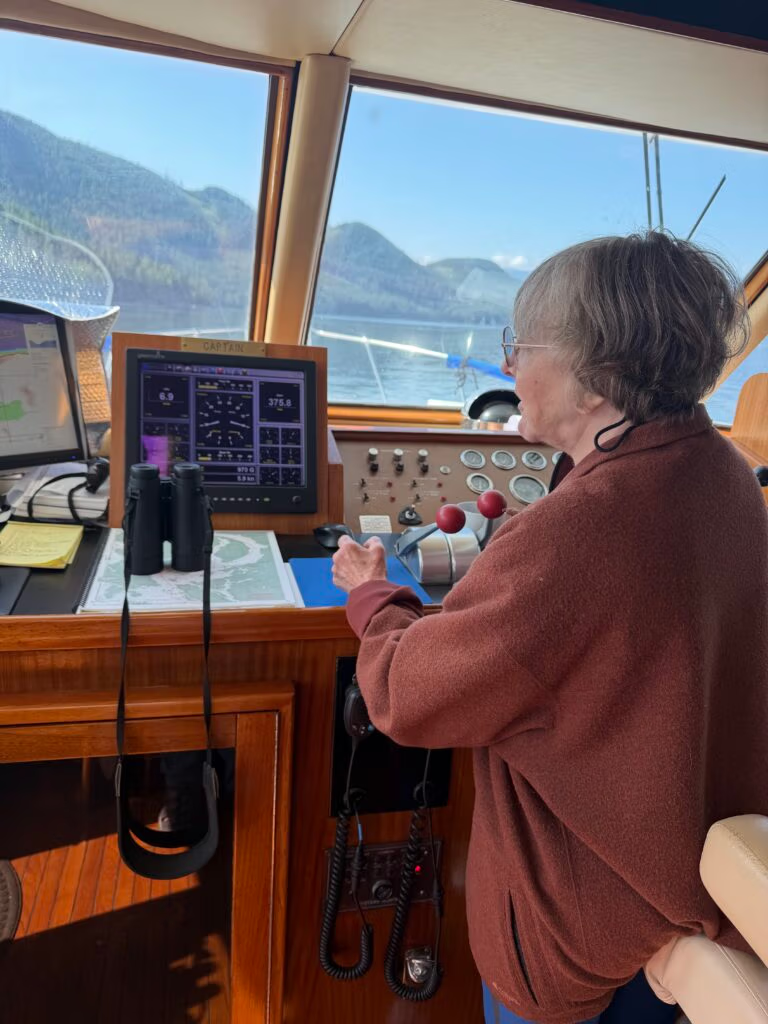
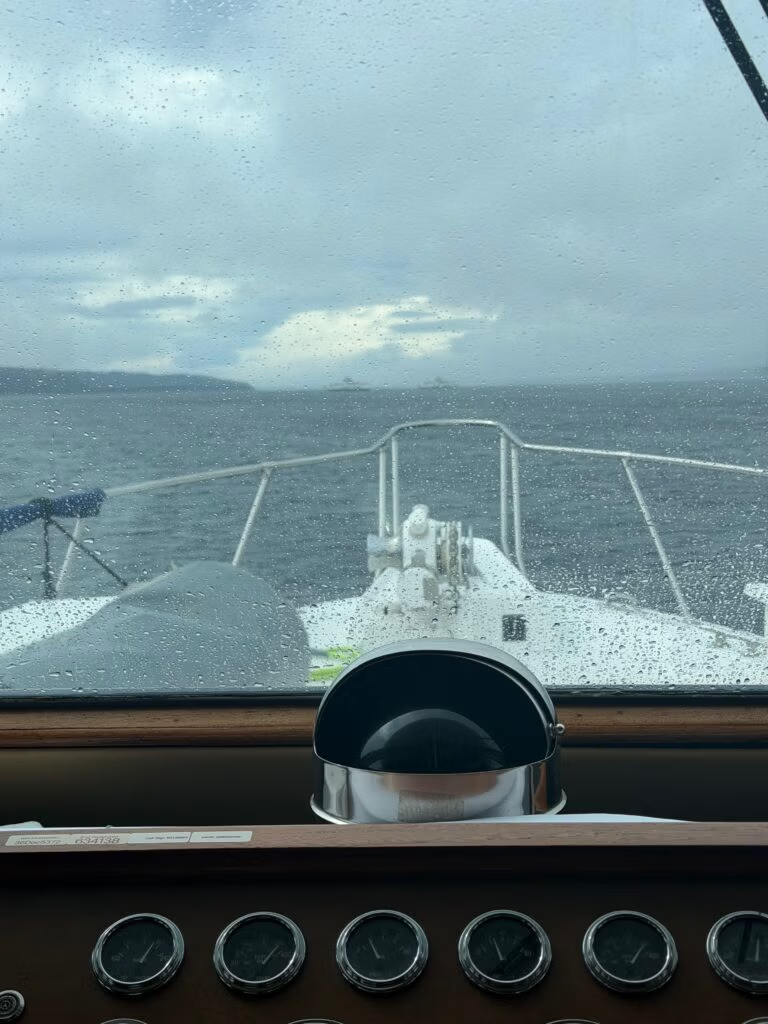
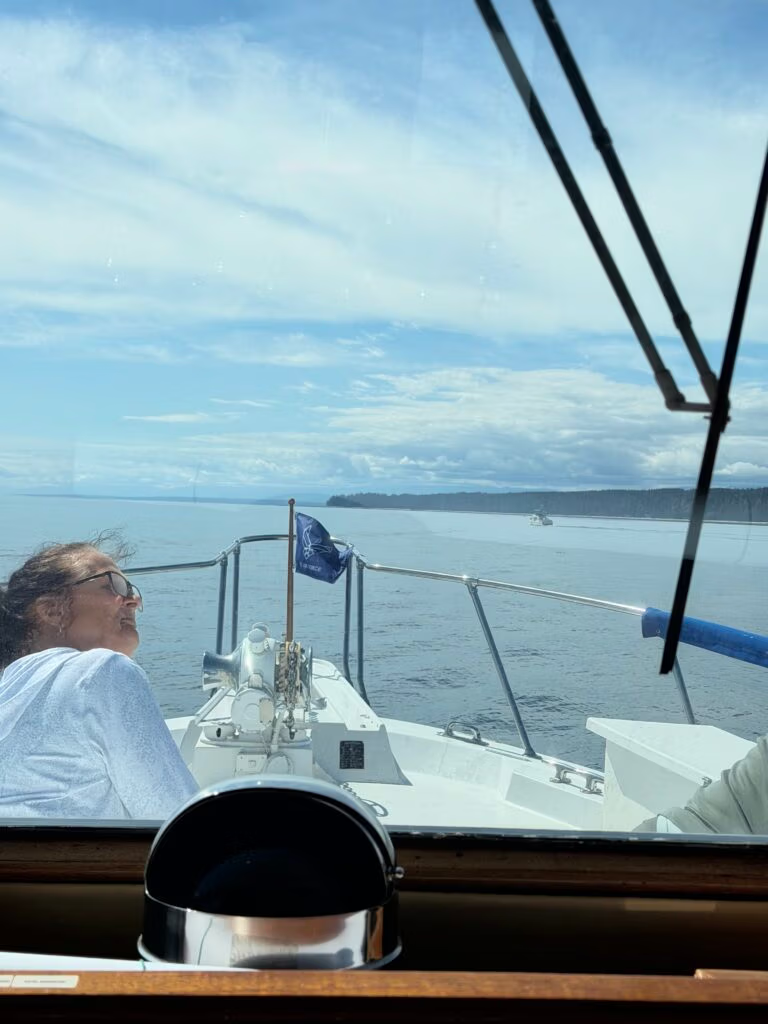
View from the upper helm..

Clam Chowder, (thanks Matt)  for supper with Sour Dough Bread, living large..

Peggy and Sharon Arrive....

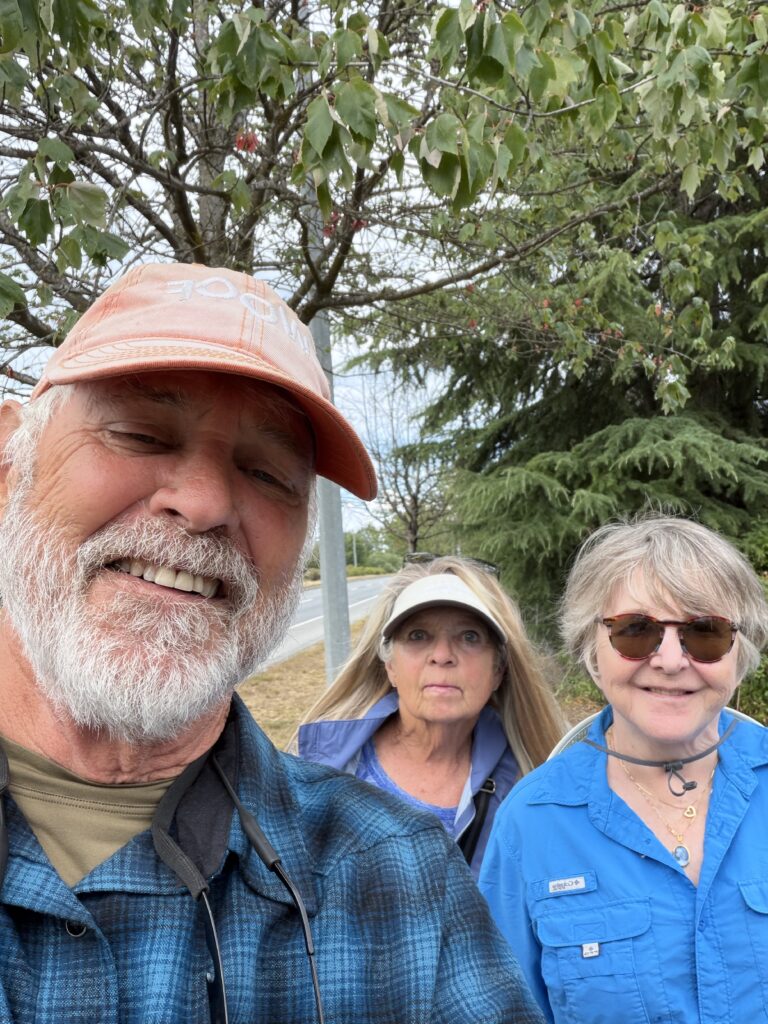
Sharon arrived first, then Peg, but it already felt like they had been in the yacht for days, simply because so much of my life had been lived with them, even when we were far apart. Sharon flew in from Canton, Georgia, carrying the quiet confidence of the oldest dressed GQ  and Peg came from Bayfield, Colorado, bringing her easy laugh and that restless spark in her eye that always meant she had plans. They had come to stay with us for 10 days, but to me it felt less like a visit and more like a piece of our shared past suddenly coming home. 
We grew up together in Port Clinton, Ohio, in a town that always smelled faintly of the lake and cut grass. Those roads had carried our bikes, our secrets, and our arguments, and for most of our younger years, that little place was the whole world. I left when I was sixteen, shoulders squared to whatever came next, and Sharon and Peg had already gone ahead of me, stepping into her own life a little sooner, as oldest sisters often do. Still, we never really left each other; the lines between us just stretched across different maps.

Through the years, the three of us built a kind of invisible scaffolding around one another. We called when things were hard, when things were good, and sometimes for no reason other than to hear the familiar cadence of a voice that had been in the background of every childhood memory. We learned how to depend on each other from a distance, to show up in hospital rooms, at kitchen tables, and in late-night phone calls.

 The miles between Canton, Bayfield, and Ladysmith BC  never quite managed to be taller than the years we shared in Port Clinton. 
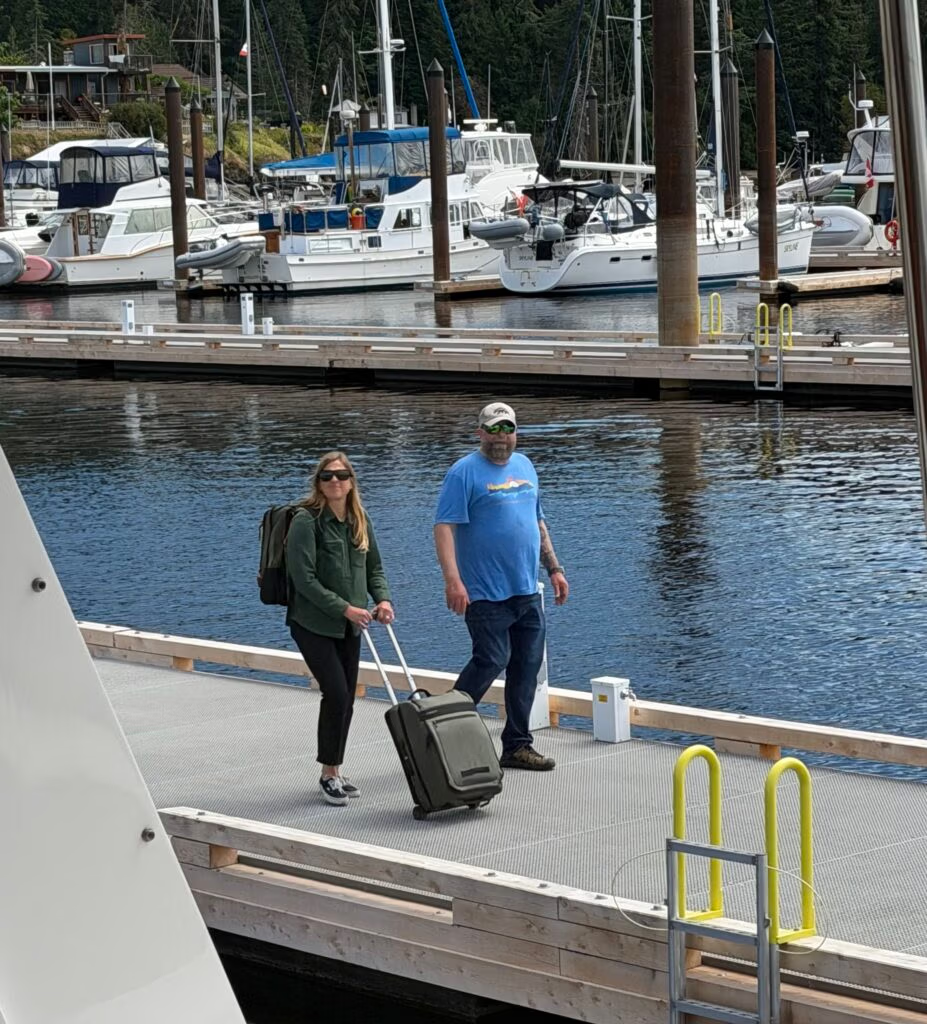
So when they walked through the door on the dock in Ladysmith, it wasn’t just luggage that arrived; it was history. Sharon, a couple of years older than me, hugged me with that steady, anchoring warmth she has always had, like she could still see the boy I had been in Port Clinton under the man I’d become. Peg, also older by a couple of years, came in right behind her, grinning, already talking about the days ahead as if we’d been planning them together for months.  The house, which had been waiting quietly, suddenly felt too small for all the laughter that started bouncing off its walls.
Peg’s first real request came as no surprise: she wanted to fish. There was a kind of urgency in the way she said it, not frantic, but full of a patient hunger—like this wasn’t just about catching something, but about doing something simple and real together. We started talking tides, places to go, and what we’d need, weaving plans the way we used to plan summer days back in Ohio: loosely, with enough space for weather and moods to change. The thought of being on the water with my sisters, with lines in the water and nowhere else we needed to be, felt like a gift I hadn’t known I was missing.
In quiet moments between the talk and the planning, I caught myself just watching them. The way Sharon tilted her head when she listened, the way Peg’s hands moved when she got excited—these were details worn smooth with time, as familiar as the streets of Port Clinton once were. We had carried each other through decades by phone calls and visits, but for these two weeks, we had something even better: time under the same roof, the chance for new stories to layer themselves on top of the old ones.
We were extremely excited they were here, and that word—“excited”—didn’t quite do it justice. It was more like relief, joy, and gratitude all braided together, the feeling you get when something you love finally pulls into view after you’ve been scanning the horizon for a long while. Whatever happened over next few days—whether we caught fish or not, whether the weather cooperated or turned stubborn on us—we would still have this: three kids from Oak Harbor, Ohio, now scattered across the continent, sitting in the same room again. And for the moment, that was enough.

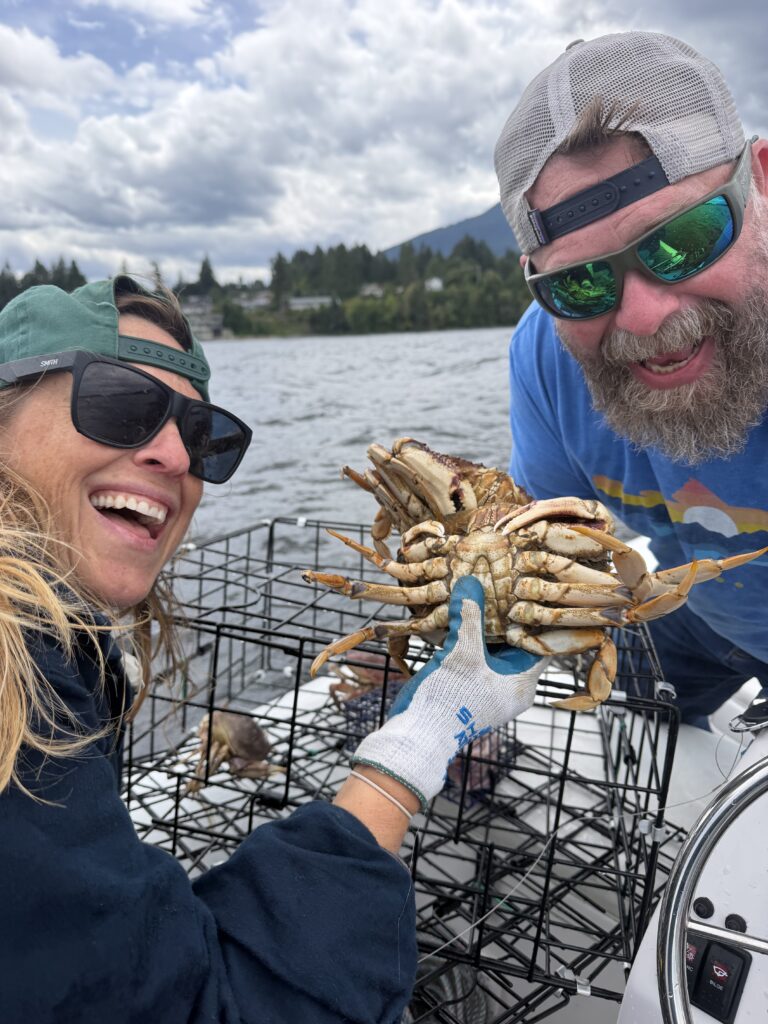
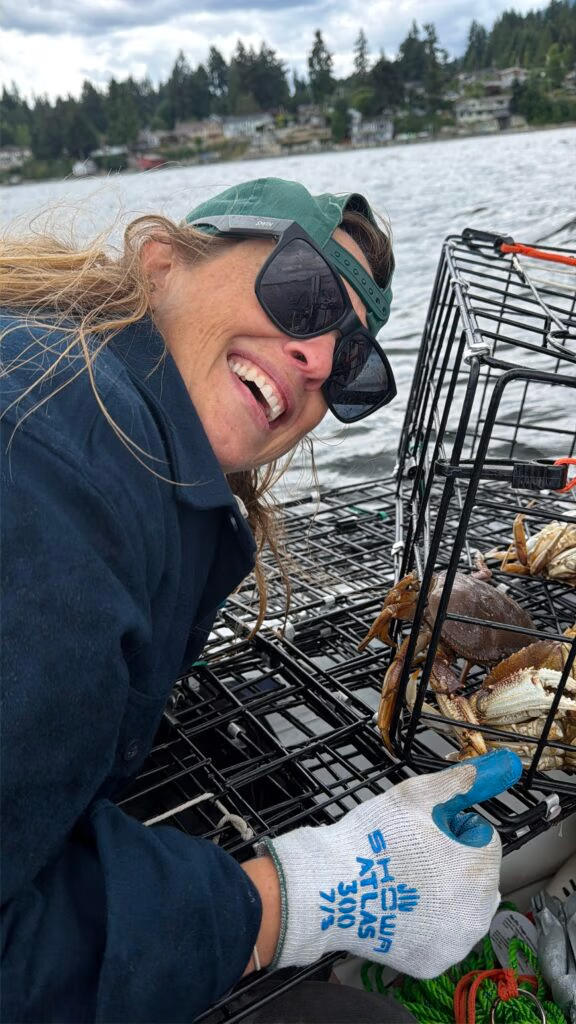
Peggy catching Crabs
Breakfast at Bakery
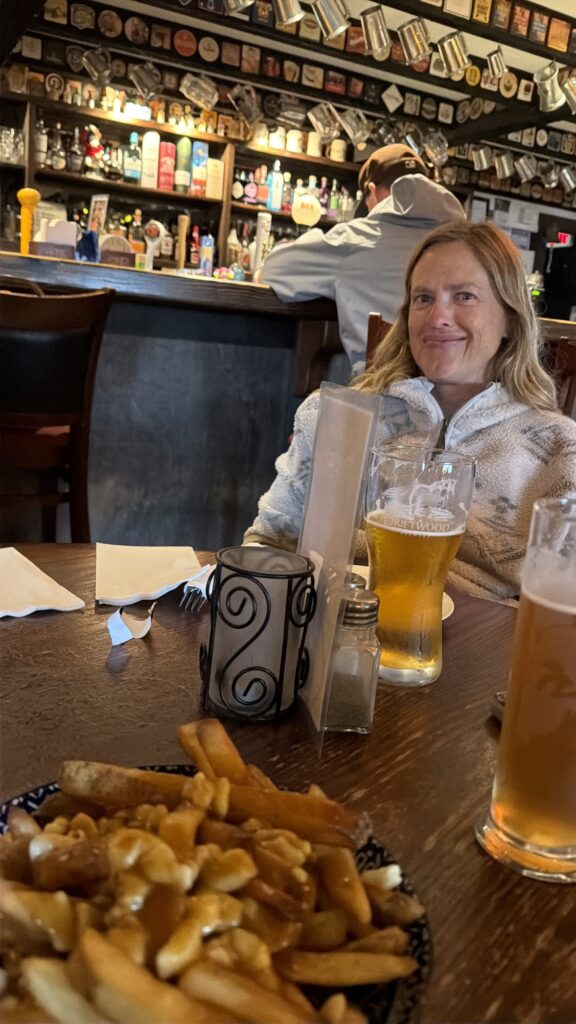
French Fries with gravy...Poutine

Ladysmith to Nanaimo via Dodd Narrows

We left Ladysmith under a pale morning sky, the kind that promises an easy day without ever quite saying so out loud. It was just after nine-thirty when we eased away, the town slipping quietly behind us as the shoreline of Vancouver Island stretched ahead.
Heading for the Narrows
The water was calm enough that the engine’s low thrum felt almost companionable, guiding us north toward Dodd Narrows, that slim, twisting gate between the Gulf Islands and Nanaimo. The land on either side blurred from houses and docks into forested shoreline, greens and greys layered against the muted sky.
We weren’t in a hurry, not really. Somewhere along the way we throttled back and tried our luck at fishing, letting the boat drift while the lines trailed behind in long, hopeful arcs. The ocean, however, had other plans. Bite after bite failed to materialize, and before long our “quick fishing stop” became a quiet interlude of gentle swells, small talk, and the soft slap of water against the hull.

Through Dodd Narrows
By the time we approached Dodd Narrows, the traffic had picked up. Boats of every shape and size seemed to converge on the same narrow slit of water, jockeying gently for position as they waited their turn. The passage itself is tight and a little intimidating the first time you see it, rock and forest closing in as the channel twists.
We watched the others slip through, one after another, and then it was our turn. The boat straightened under my hands, the current nudging us but never quite taking control. For a few focused minutes the world narrowed to the channel ahead, the tug of water beneath, and the steady progress of our bow. And then, as quickly as it began, it was behind us—the narrows opening back out into wider water and easier breathing.

Arrival in Nanaimo
The rest of the run to Nanaimo unfolded without drama, the kind of smooth passage that makes you almost forget how much attention the sea really demands. The city slowly rose ahead: masts clustered in the marinas, ferries moving steadily along their routes, and the low sprawl of buildings behind the harbor.
We slipped into the anchorage and set the new anchor, watching it bite and hold with a confidence that felt almost like a small victory of its own. The boat settled back on the rode, turning gently to face the breeze, solid and sure. With the hook well set and the harbor spread around us, we climbed into the dinghy and headed for town, leaving our floating home rocking quietly in our wake.
Evening in the Harbor
On shore, the day unfolded in that pleasantly unhurried way that only seems to happen after you’ve already accomplished the important part—getting there. Nanaimo offered its usual mix of working harbor and island charm: the smell of salt and fuel near the docks, the scattered sounds of seaplanes and ferries, the hum of people going about their business along the waterfront.
By the time we made our way back to the boat, the light had softened, the harbor beginning to glow with the first hints of evening. The anchor still held firm, the boat resting easily in the gentle chop, as if it had been here for days. We settled in for the night, the motion of the water a slow, familiar cradle.
Somewhere in the quiet, with Nanaimo’s lights flickering across the water and the promise of Jennifer’s arrival tomorrow, the day arranged itself in my mind: a good departure, an honest try at fishing, a busy but uneventful transit through Dodd Narrows, and a safe anchorage at the end of it all. It hadn’t been spectacular or dramatic—just successful, steady, and quietly satisfying. Exactly the kind of day on the water you hope for, and the kind you remember.

Peggy wasted no time in getting fishing...
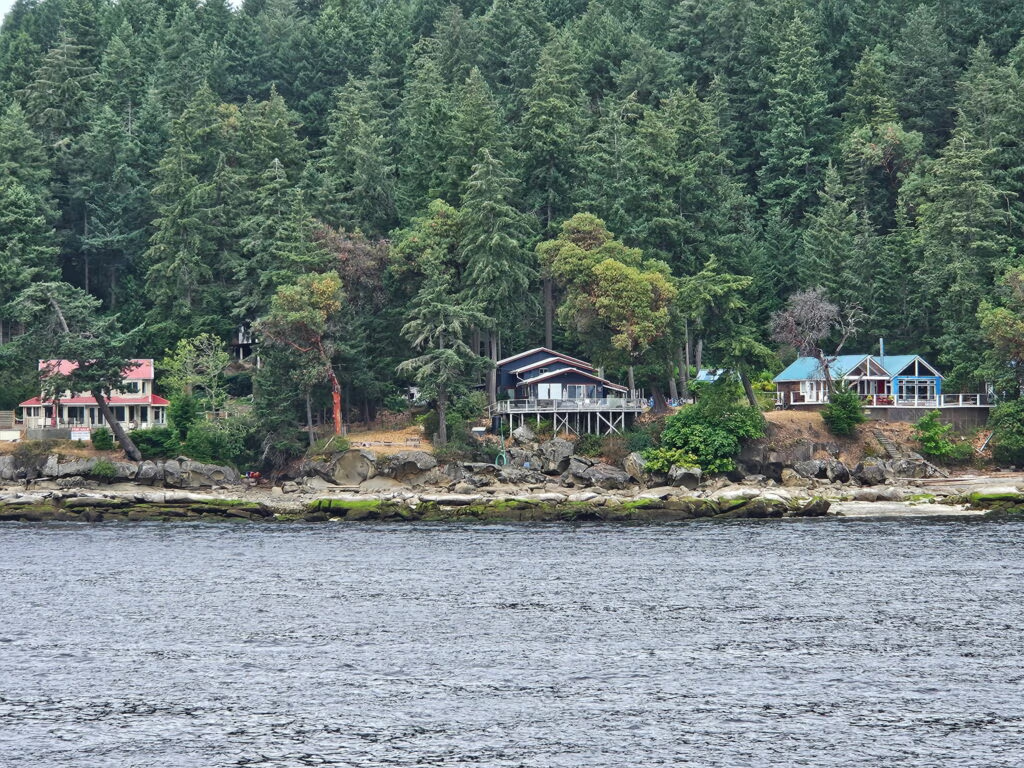
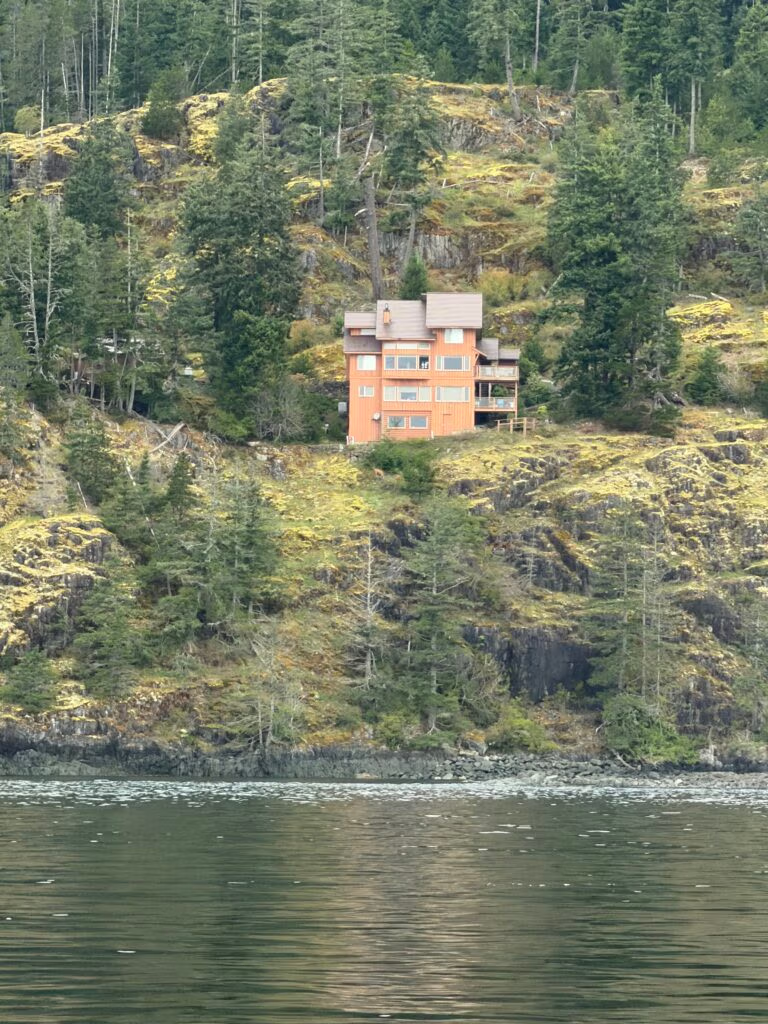
Beautiful Homes Lined the Shore
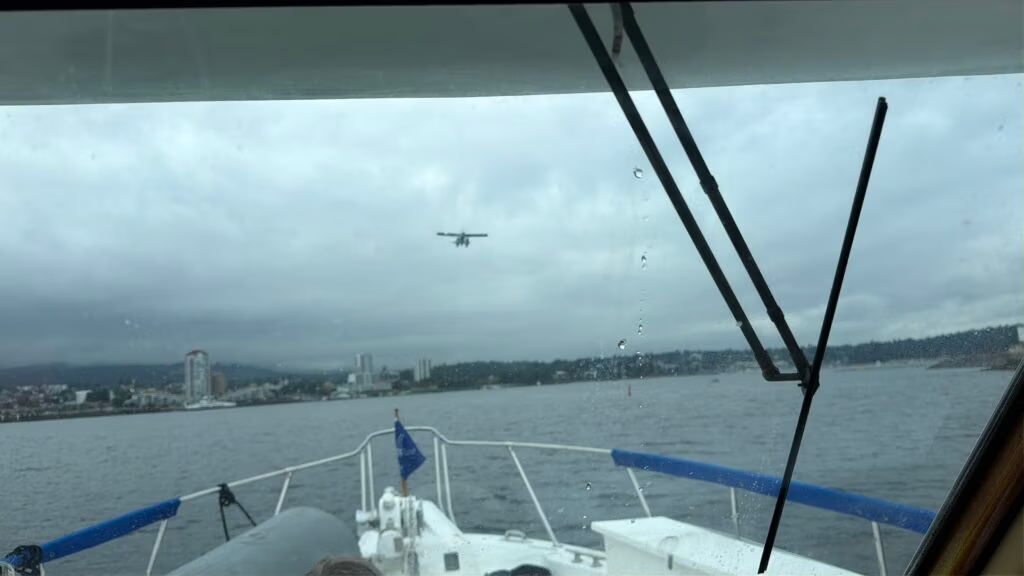
Sharing and Water Airport with our Boat
Dodd Narrows

Sarah Leaves and Jennifer Arrives

We’d been scattered for a long time, all of us orbiting the same family but never quite in the same room. When it finally came together, it felt a bit like we’d snuck in a miracle while no one was looking.
Matt hadn’t seen his sister Sarah in five years, which in family time feels like a couple of lifetimes. Sarah and her mom, my sister Sharon, had gone a couple of years without seeing each other too, and you could feel that gap in the way they hugged—long, quiet, like they were holding on to every missed birthday and holiday at once. The first evening, we were all a little tentative, trading updates about jobs and cities and the small, practical details that are safer than feelings. But slowly the stories started to loosen, and the laughter followed.
I watched Matt and Sarah find their way back to being siblings. At first they were careful with each other, asking polite questions, testing the water. Then some shared memory surfaced—an old joke, a ridiculous argument—and suddenly they were both laughing so hard they could barely talk. The years shrank down to the size of a pause, and you could almost see the distance falling away between them. Sharon just sat there and smiled, the kind of tired, relieved smile a mom wears when something she’s secretly worried about starts to heal in front of her eyes.

Sharon, Matt and Sarah

The days blurred together in that easy way good visits do. We ate simple meals, told big stories, and filled the quiet moments with small talk that somehow felt important because we were finally saying it in person. Every now and then I’d catch myself just looking around the room, counting the faces and silently noting, “Here. They’re here.”
And then, as it always does, the last day showed up. Sarah had to leave today. We helped her gather her bags, doing that thing where you joke and fuss over logistics to avoid the heavy part. At the boat, the goodbyes came in layers—one more hug, one more photo, one more “text when you land.” When her car finally pulled away, the house felt suddenly larger and emptier, as if it had been holding its breath the whole time she was here. Sadness settled in, not dramatic, just a quiet weight in the room.
But life has its own rhythm, as Sarah was leaving, Jennifer came back. The energy shifted again—suitcase in the hall, new stories spilling in, that familiar comfort of another loved one folding back into the day. We didn’t have much time to sit with the sadness, because tomorrow we take off from the Nanaimo  and head north.
Now the house is a mix of packed bags and half-finished conversations. There’s a kind of nervous excitement in the air: the maps laid out, the mental checklists running in the background, the quiet hope that the weather, the road, and life itself will cooperate. Underneath all of that runs the echo of this little reunion—a reminder of how fragile and stubborn family bonds can be at the same time.
Tonight, as we get ready to leave, I find myself holding both feelings at once: the ache of watching Sarah go and the thrill of pointing the nose north and seeing what waits for us. So here we are, between departures and arrivals, luck and uncertainty, love and distance—doing what families do best: saying goodbye, saying welcome back, and moving forward anyway.

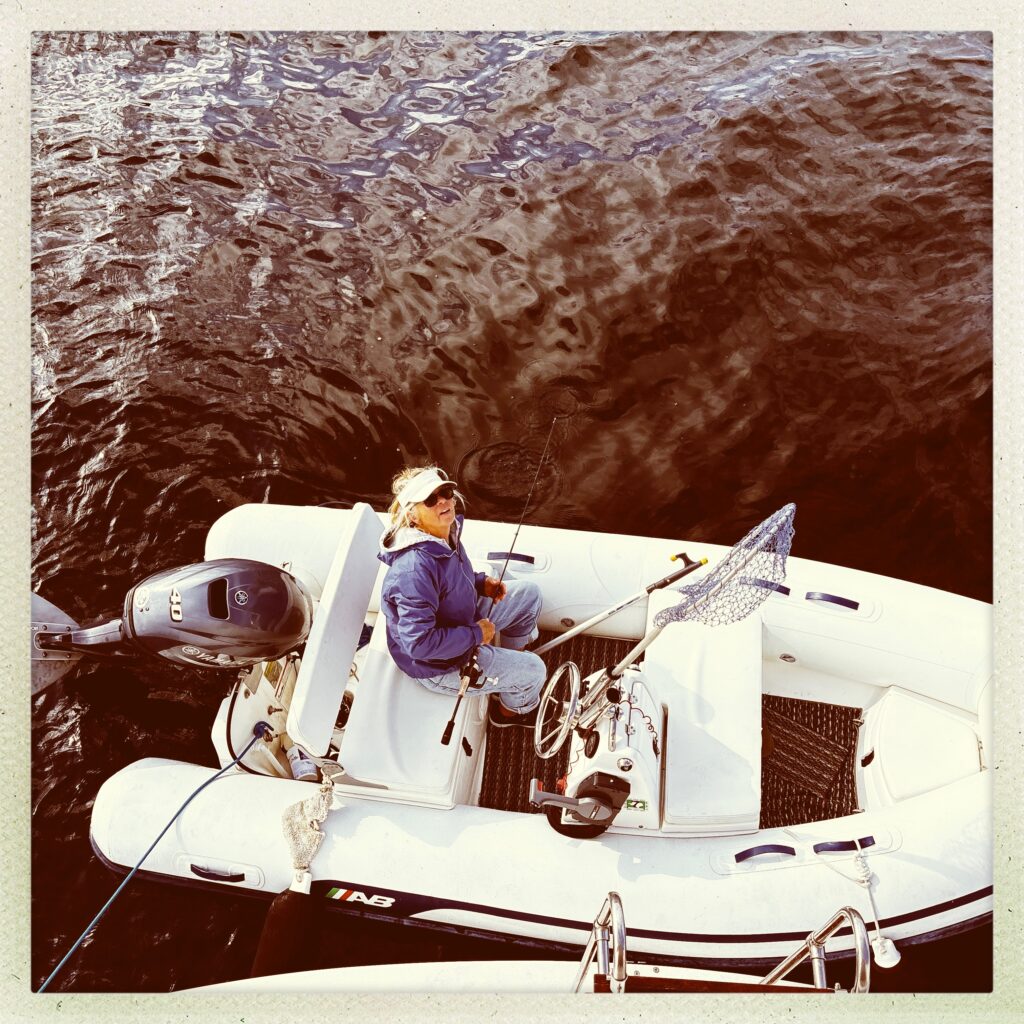
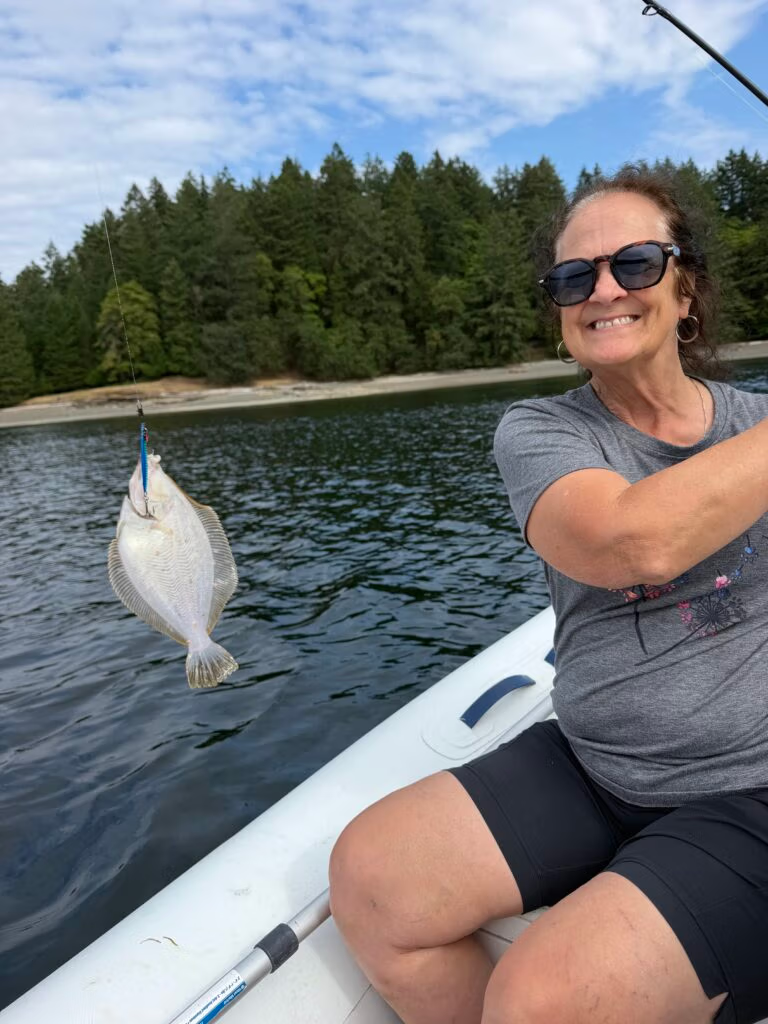
Jennifer's First Fish in BC

Nanaimo to Hornby Island

Black Berry Jam....
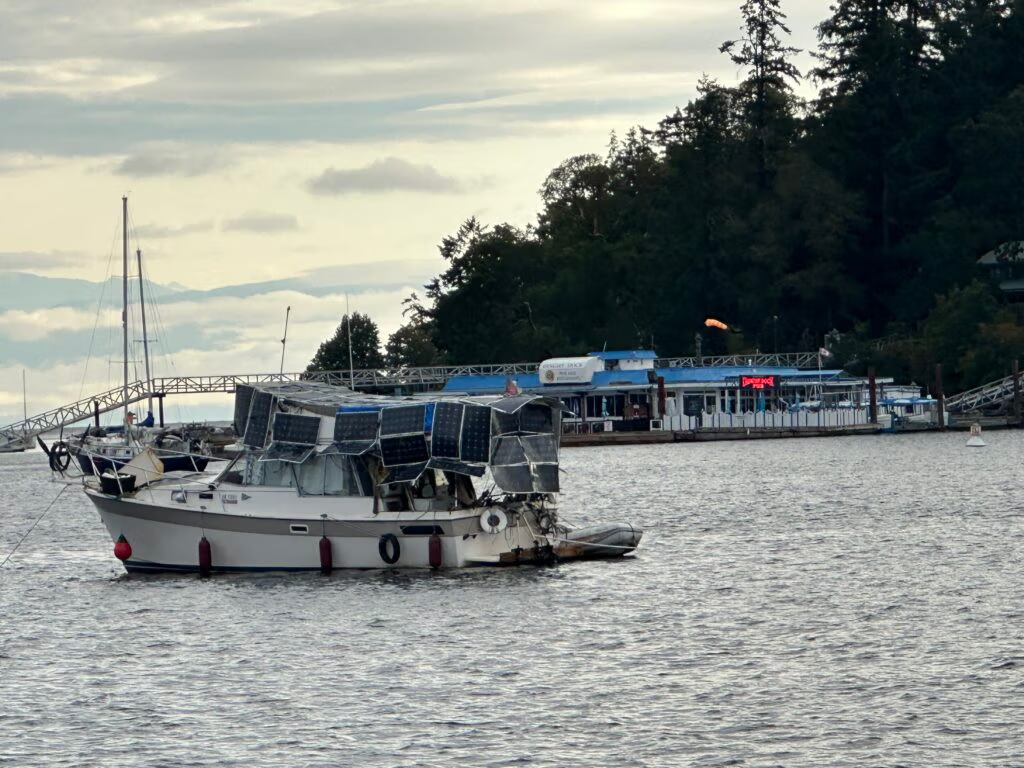
Solar Boat
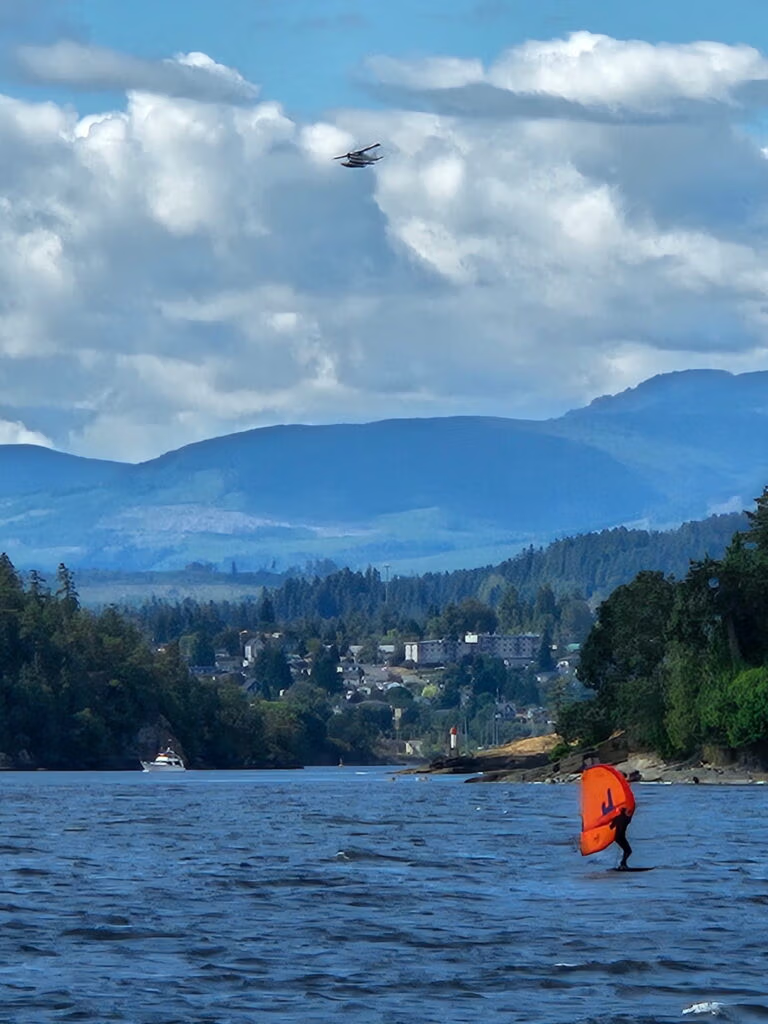
Wind Surfers and Airplane
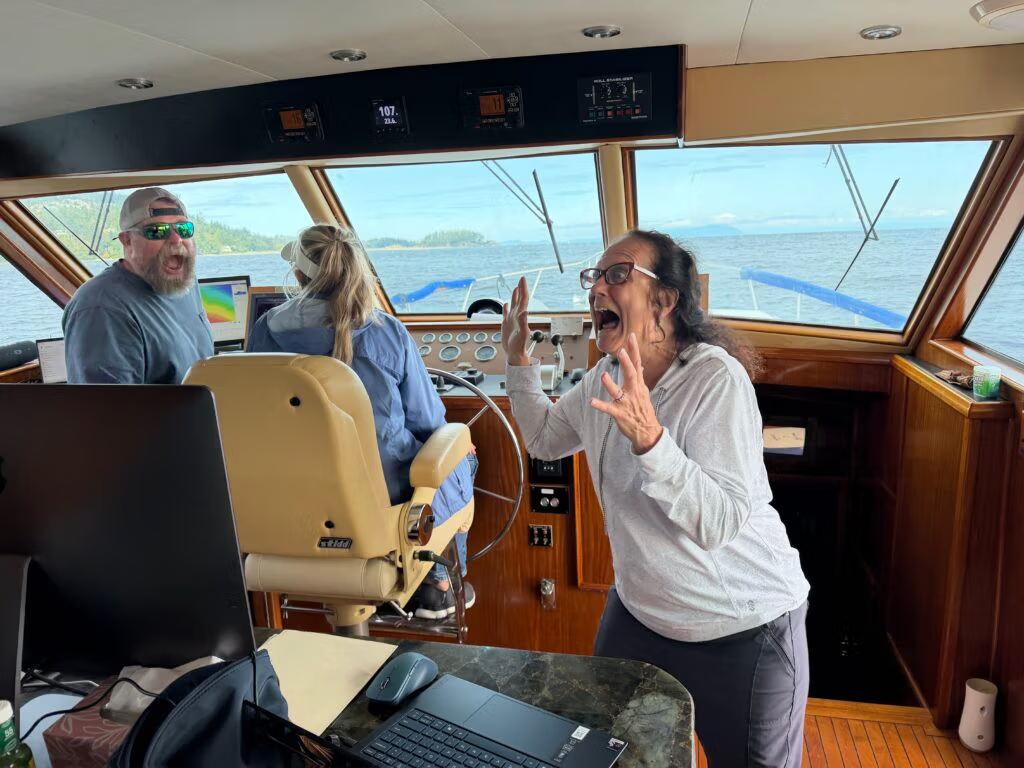
Peggy Driving for the first time ..
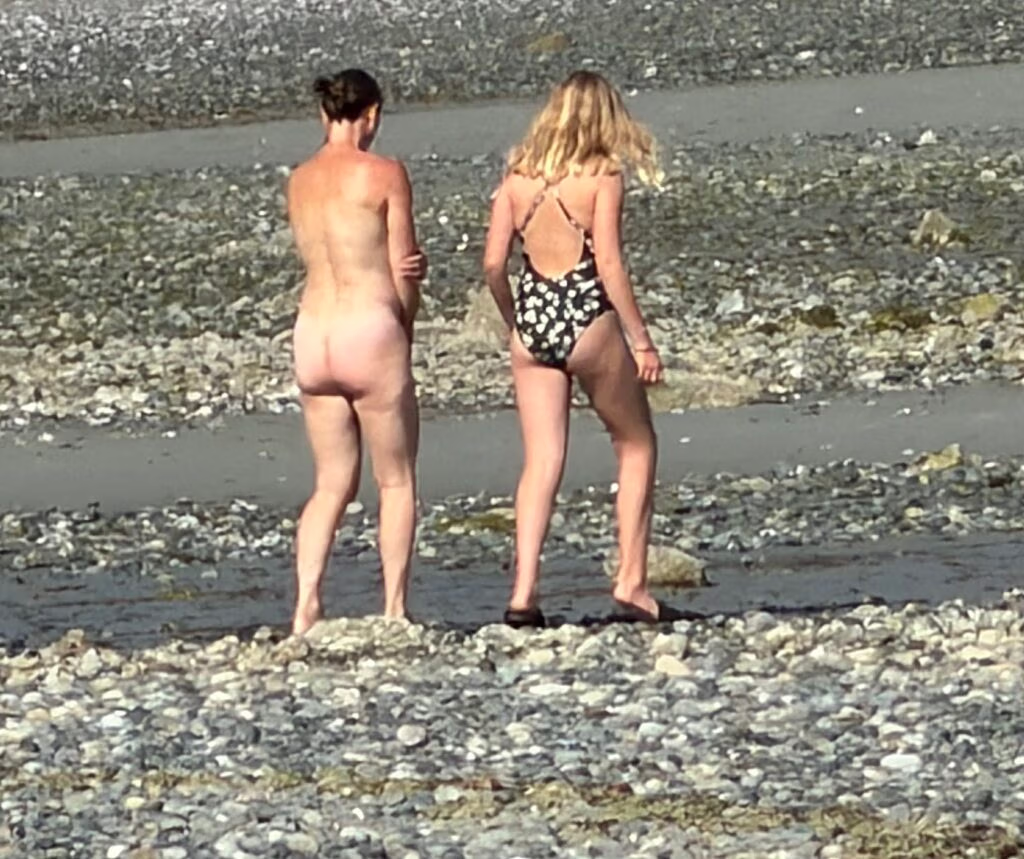
We landed the tender on a nude beach.
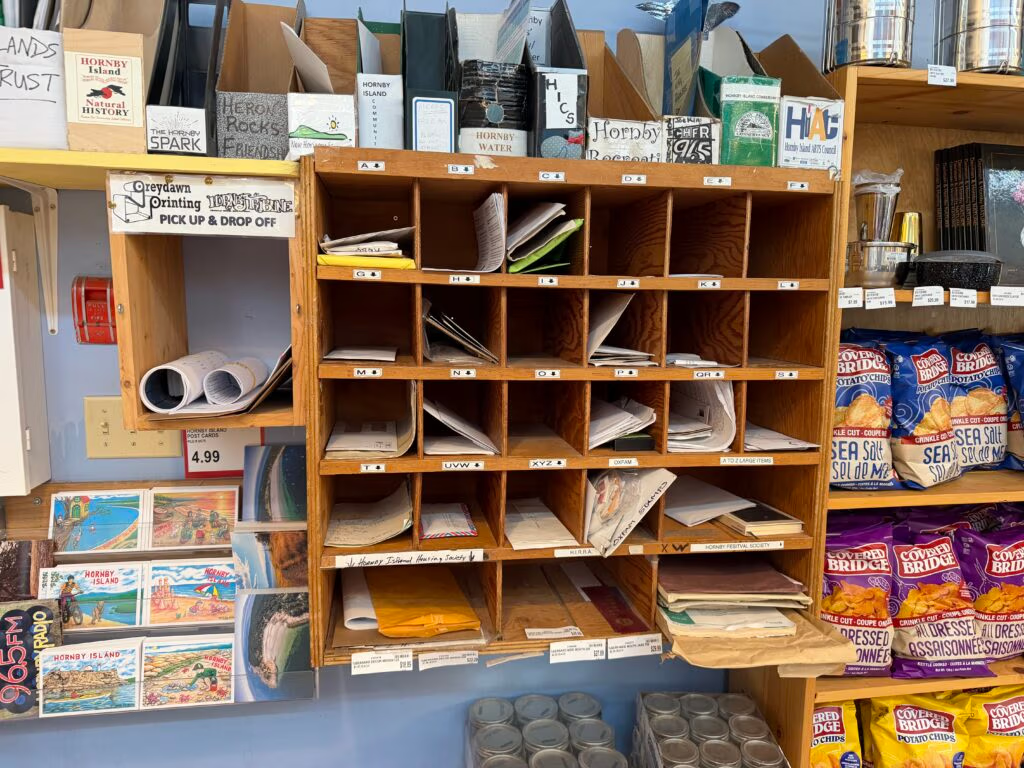
Post Office at Hornby Island

The Day’s Run from Nanaimo
We slipped out of Nanaimo late in the morning, somewhere between nine‑thirty and ten, with the kind of wind that makes you pay attention but doesn’t quite cross the line into trouble. The breeze sat steady at fifteen to twenty knots, pushing against us as we eased out the south entrance, first angling east into the Strait and then curling north. The water had a hard, restless look—four‑foot waves, rolling swells, whitecaps shearing off the tops—never quite angry, but definitely not calm. It was the kind of day where the boat felt alive under your feet, responding to every gust and every lift of the sea.
The crew for the day was family: my sister Sharon, my sister Peg, Sharon’s son Matt, and Jennifer. The mood on board was light and easy, everyone in good spirits despite the rougher water. Matt spent part of the trip with his head in the electronics, sorting out a couple of computer issues and coaxing the stabilizers into proper working order. Once they came online and started doing their job, the ride settled into a more comfortable rhythm, the boat shouldering through the swells instead of rolling with them. It felt like we’d gone from bouncing across the surface to carving our way steadily forward, and the tension in everyone’s shoulders eased a notch.
Out on the Strait, the world narrowed to wind, waves, and scattered signs of other people making the most of the day. We saw windsurfers cutting across the chop, their sails leaning hard against the breeze, bodies balanced in that precise compromise between speed and control. They looked like bright, moving punctuation marks on the grey‑blue of the water, darting across the whitecaps as if the conditions were made just for them. There wasn’t much in the way of wildlife—no whales, no porpoises, just a few seabirds riding the air currents—but the absence of animals didn’t take anything away from the day. The sea itself was the main character.
The run took four and a half to five hours, a slow unfolding of miles and moments rather than a dash from point A to point B. By the time we eased into the bay, the wind felt less like a challenge and more like background noise, just part of the texture of being out on the water. We set the anchor, took that deep breath you always take when the engine goes quiet, and then shifted into “shore mode.” Peg, Jennifer, and I climbed into the tender and pointed toward land, ready to see what the place had to offer.
We found out pretty quickly that our landing spot was…unexpected. By sheer accident, we came ashore on a nude beach, stepping out of the tender into a scene we hadn’t planned for at all. It wasn’t dramatic, more amusing than anything—one of those moments where you suddenly become very aware of where you’re looking and how obviously you’re trying not to stare. We laughed, did our best to move through like we belonged there, and then carried on into town.
Town itself was quiet, almost subdued. There wasn’t a lot going on—no big events, no crowds, just a handful of people and the everyday rhythm of a coastal community doing what it always does. We walked around, took in the small details, and let the day slow down after the energy of the crossing. Some of the pictures and notes from the trip helped fix it in my mind: the choppy water, the whitecaps, the windsurfers, the family clustered on the boat, the odd little detour onto the nude beach, and the stillness of town afterward.
By the time we made our way back to the boat, the bay had settled into evening calm. The anchor held us steady, and the motion of the water shifted from active to gentle, like a hand resting instead of pushing. We were set to spend the night right there, the boat rocking softly, the lights of shore flickering in the distance. It had been a day of small surprises and steady progress—good company, challenging but manageable conditions, a bit of comedy on the beach, and the quiet satisfaction of ending up safely anchored with nowhere we had to be until tomorrow.
Overall, it was a great day: a solid run on the water, a family crew in good spirits, and one more story added to the log of this trip north.
Hornby Island to Grace Harbor

We left Hornsby Island in the morning around 9 or 9:30 and headed north into a day of light winds, gentle surf, and calm water. The harbor at Hornsby had been a little open, but it gave us a beautiful and peaceful night, and we were grateful for the stillness before setting off again.
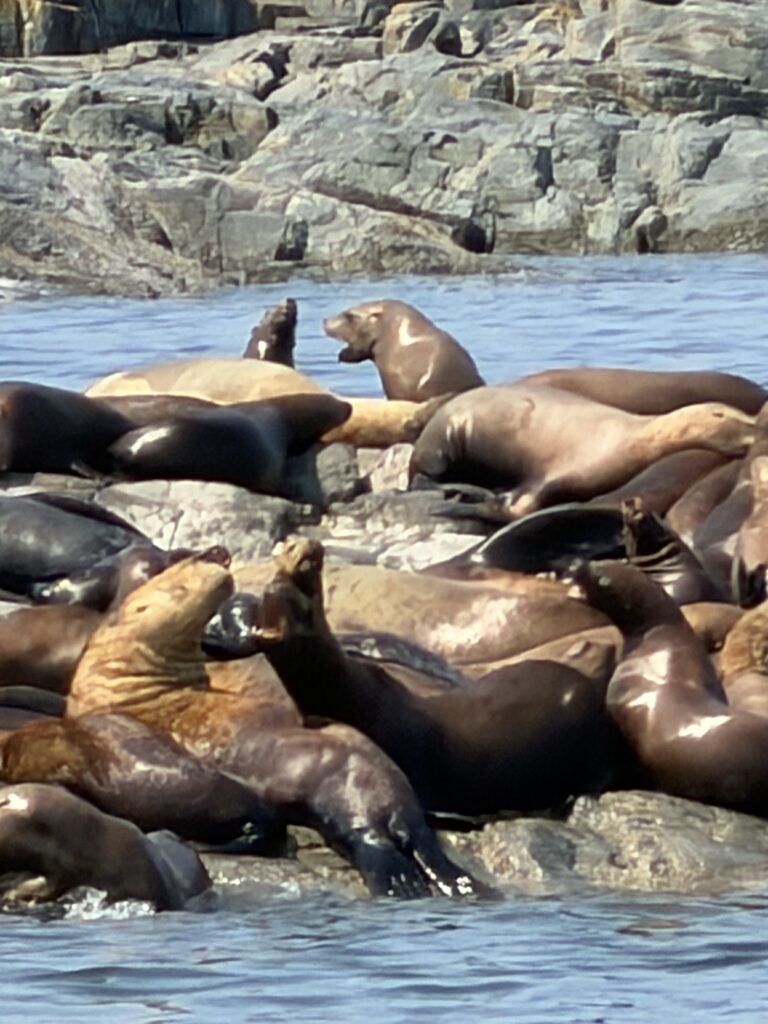
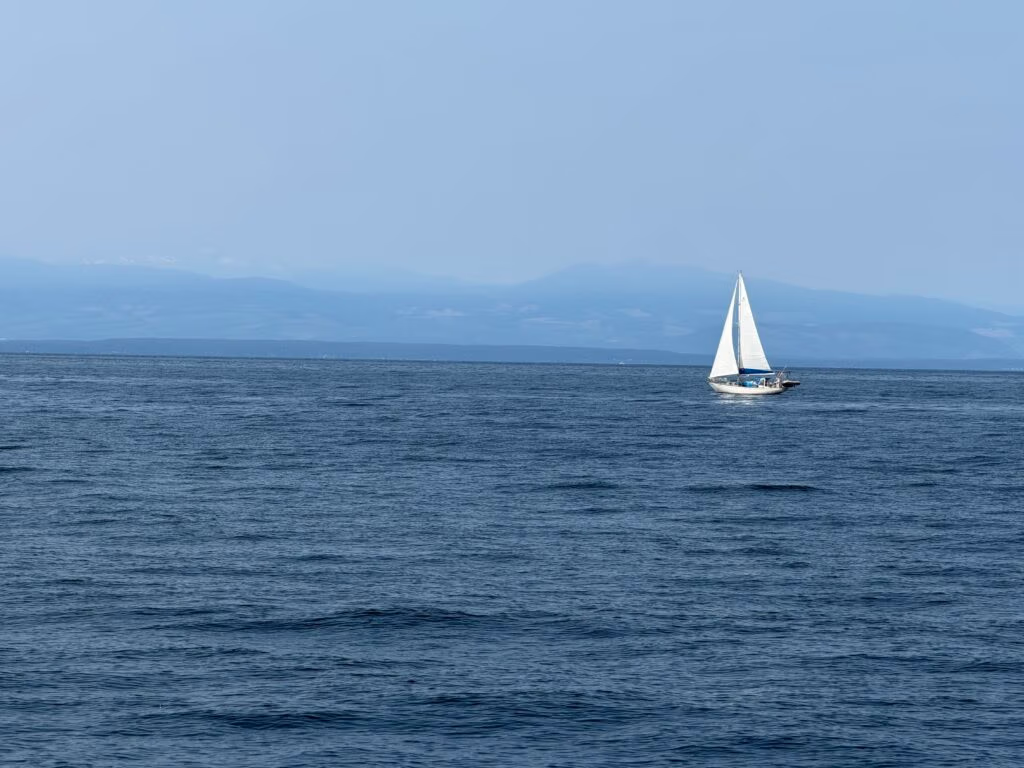
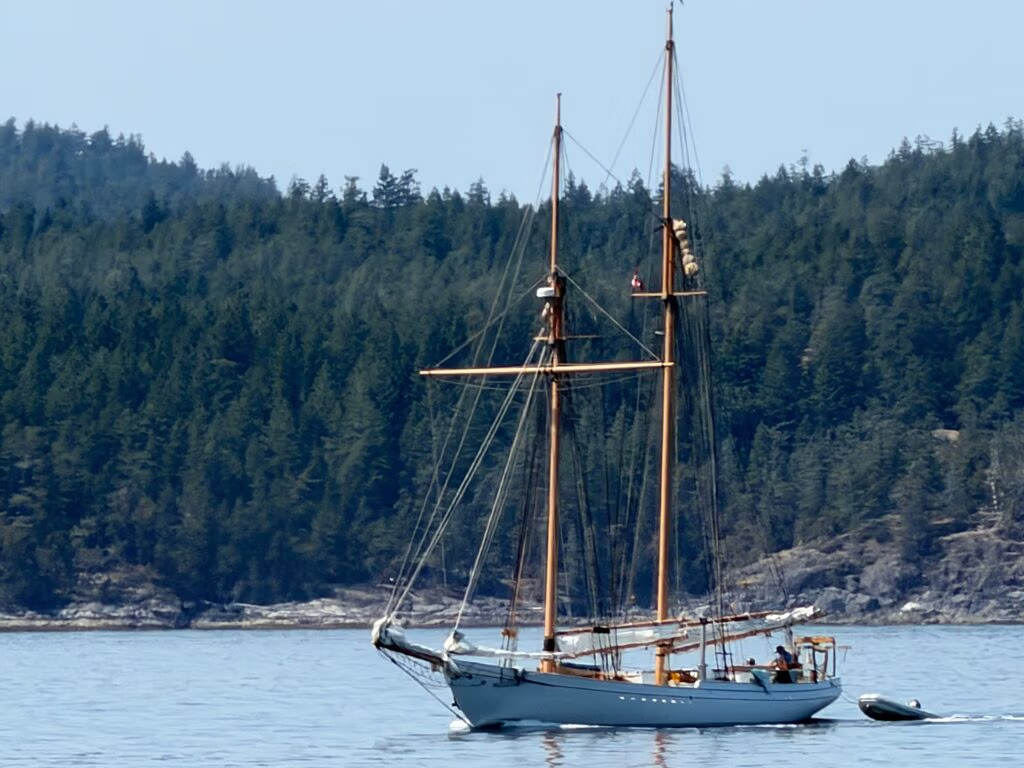
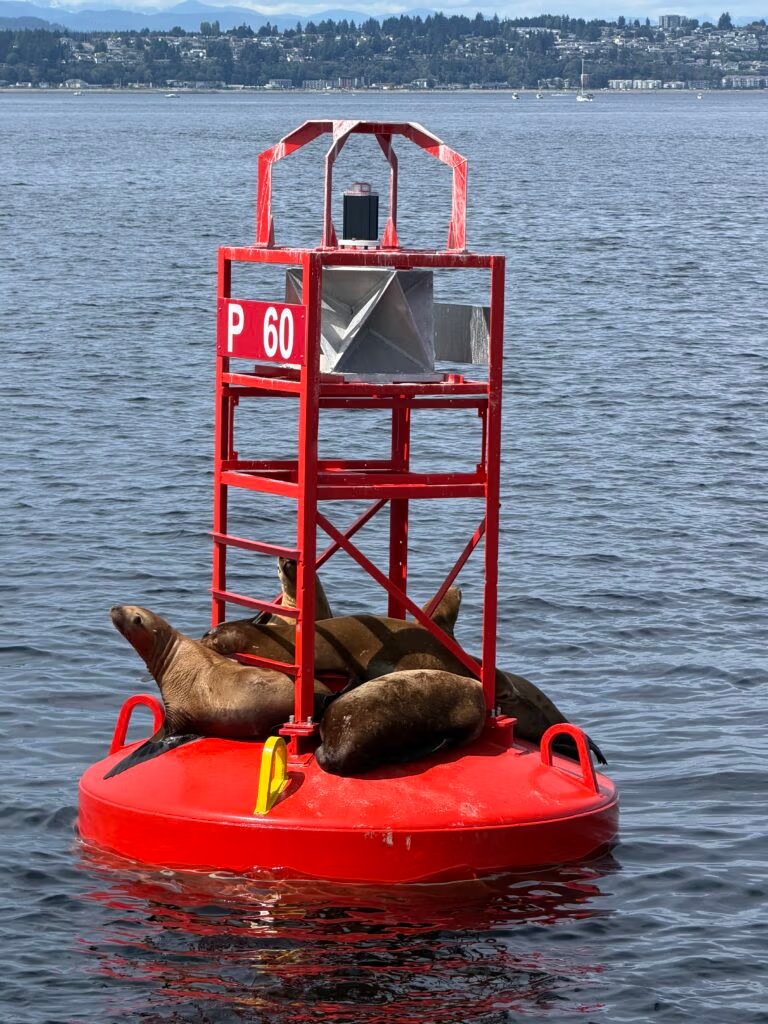
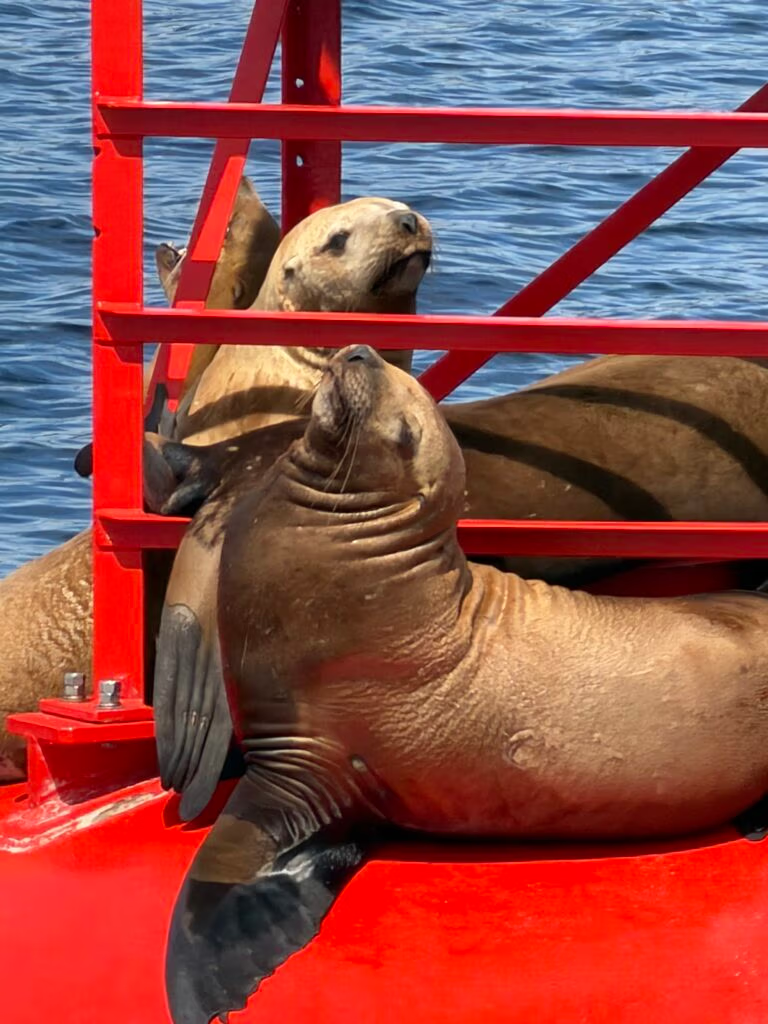
The run to Grace Harbor took about four and a half to five hours, with plenty to see along the way. We paused briefly near an island to watch sea lions lounging on the rocks and sparring with each other, a lively little show in the middle of an otherwise calm day. The scenery was unforgettable: sailboats gliding by, some with two masts, mountains capped with snow in the distance, and that quiet, wide-open feeling that makes a trip like this so special.
When we reached Grace Harbor, it was picture-perfect—a small cove with other boats already tucked in, all of us sharing the same protected little haven. This was the first time we did a stern tie, and while it wasn’t pretty, we got it done. A stern tie, for those who may not know, is when you secure the stern of the boat to shore after anchoring, which keeps the boat from swinging and helps everyone fit more comfortably in a crowded anchorage.
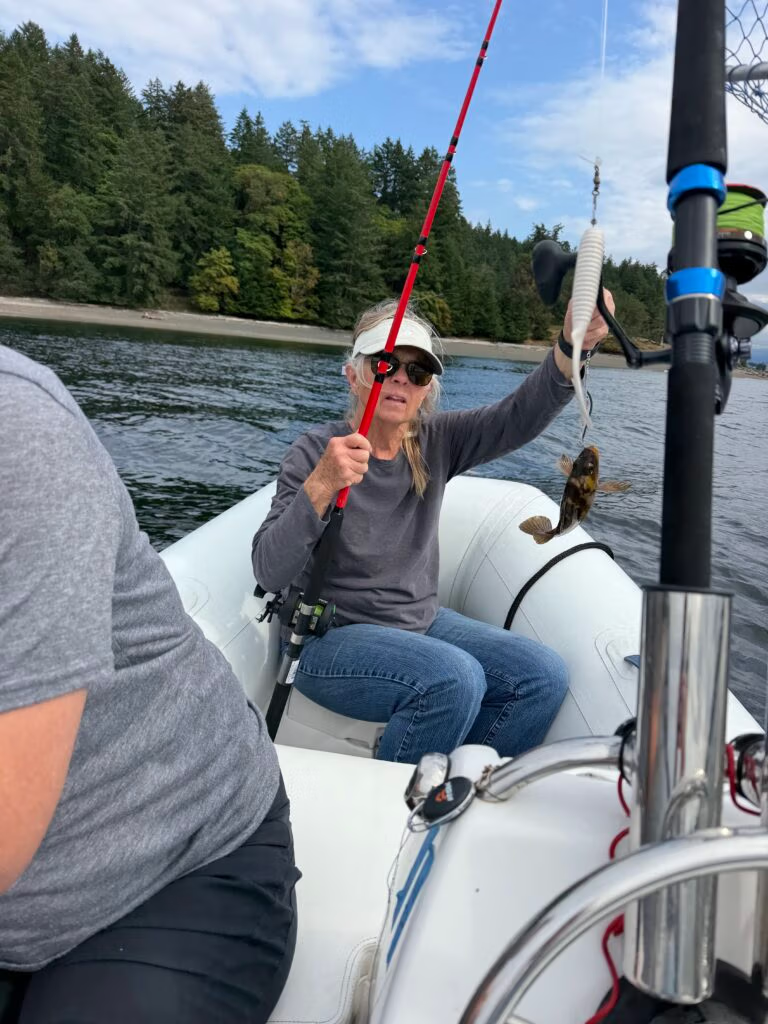
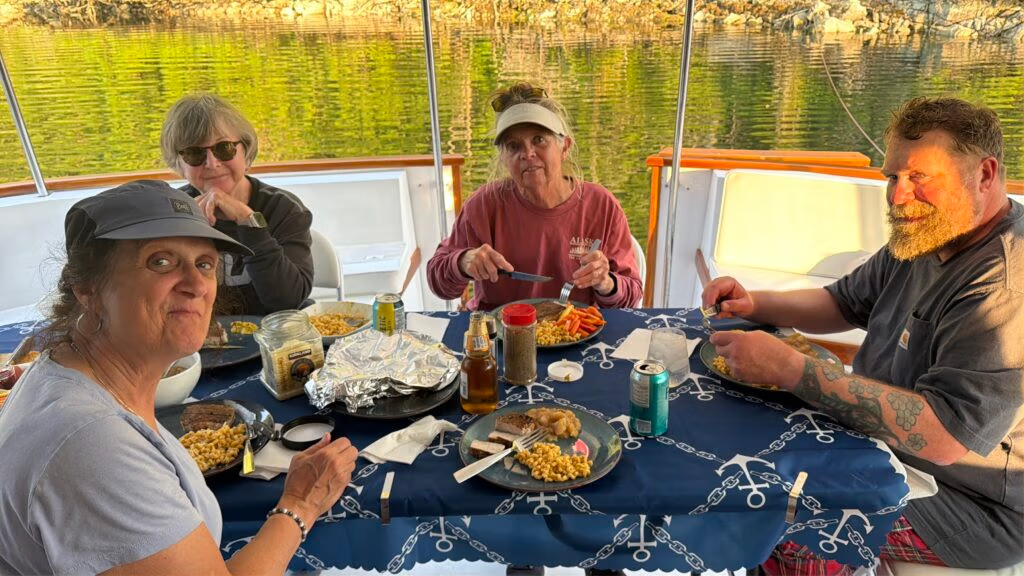
We kept the generator off to night so we wouldn’t disturb the other boats, and settled in for a wonderful meal of pork chops, homemade applesauce, and a rich mac-and-cheese-style dish that was even better than it sounds. Earlier, Peg, Jennifer, and I went fishing for a while and brought in a couple of rockfish, which tasted excellent. The girls also made a beautiful little charcuterie tray, and it turned into one of those days that feels simple, satisfying, and completely memorable.

First Stern Tie
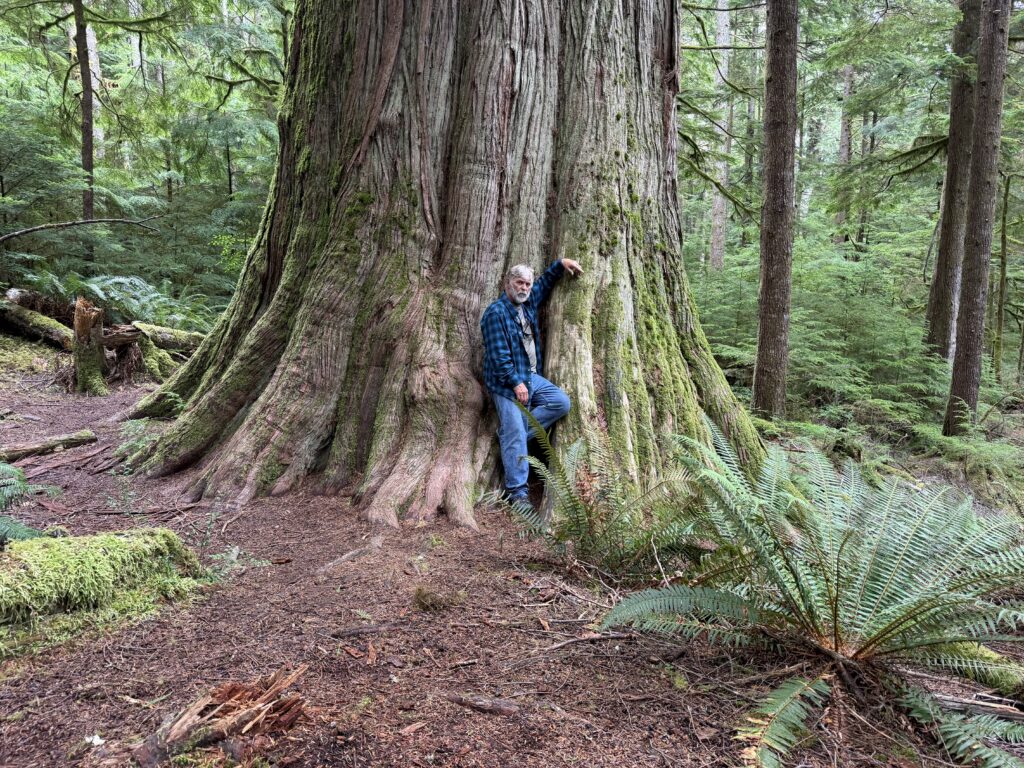
Jennifer and a Giant Redwood

Grace Harbor - Refuge Cove Marina - Prideaux Haven

We left Grace Harbor early this morning, around 8:15, with a full day ahead of us. The morning run to Refuge Cove was short and easy, taking about an hour and a half, and gave us a chance to settle into the rhythm of the day.
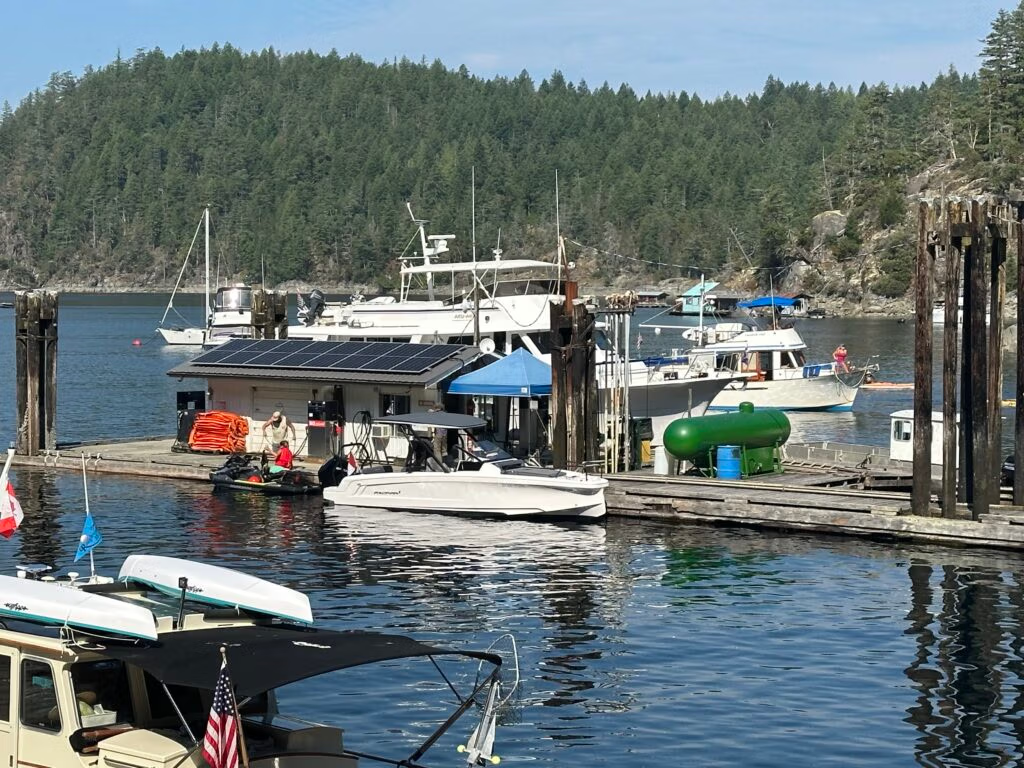
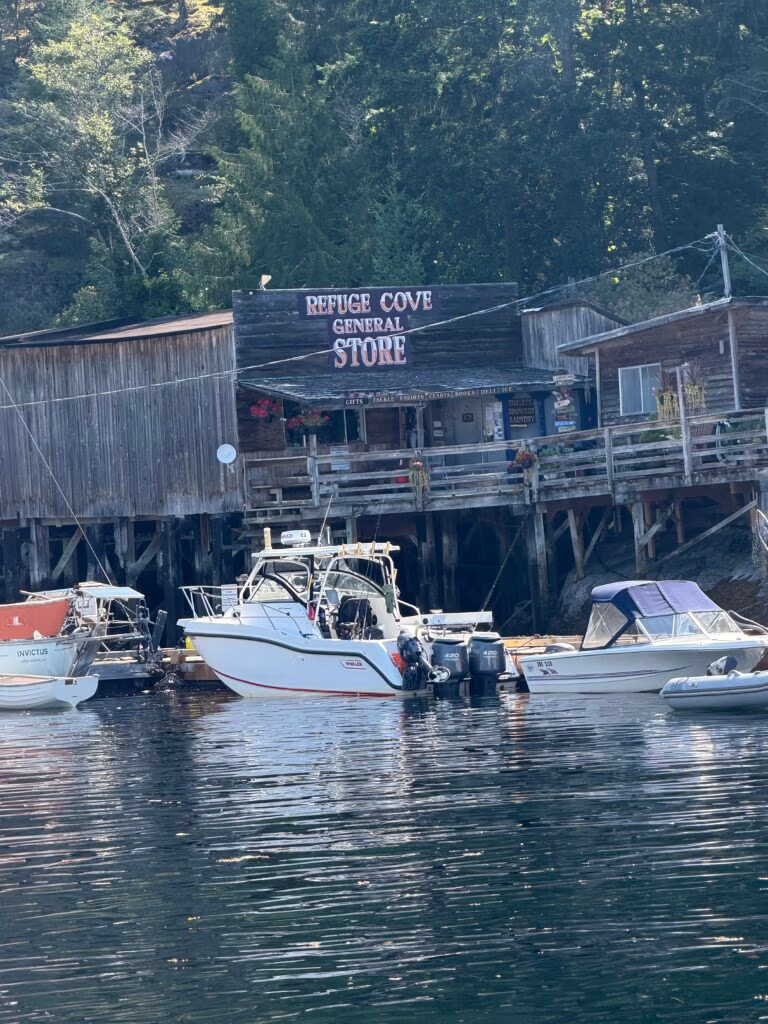
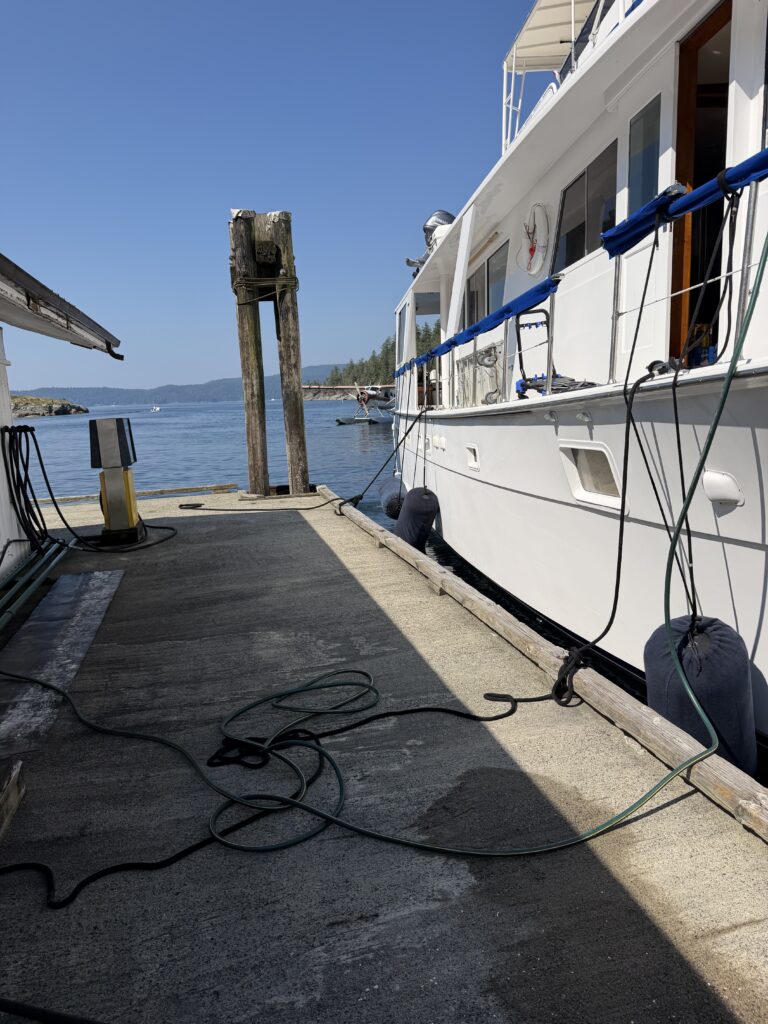
Refuge Cove was every bit the quaint little place we had heard about. We had to wait a bit to get alongside the dock for fuel, but eventually we managed to take on diesel, gas, and water. Water, in particular, felt like a real commodity here; it is not always easy to get, and not every place offers it.
We also had to make a decision about trash. They wanted two dollars a pound to take it, so we chose to keep ours aboard and move on. It was one of those small but memorable moments that travel at sea seems to bring, where practicality wins over convenience.
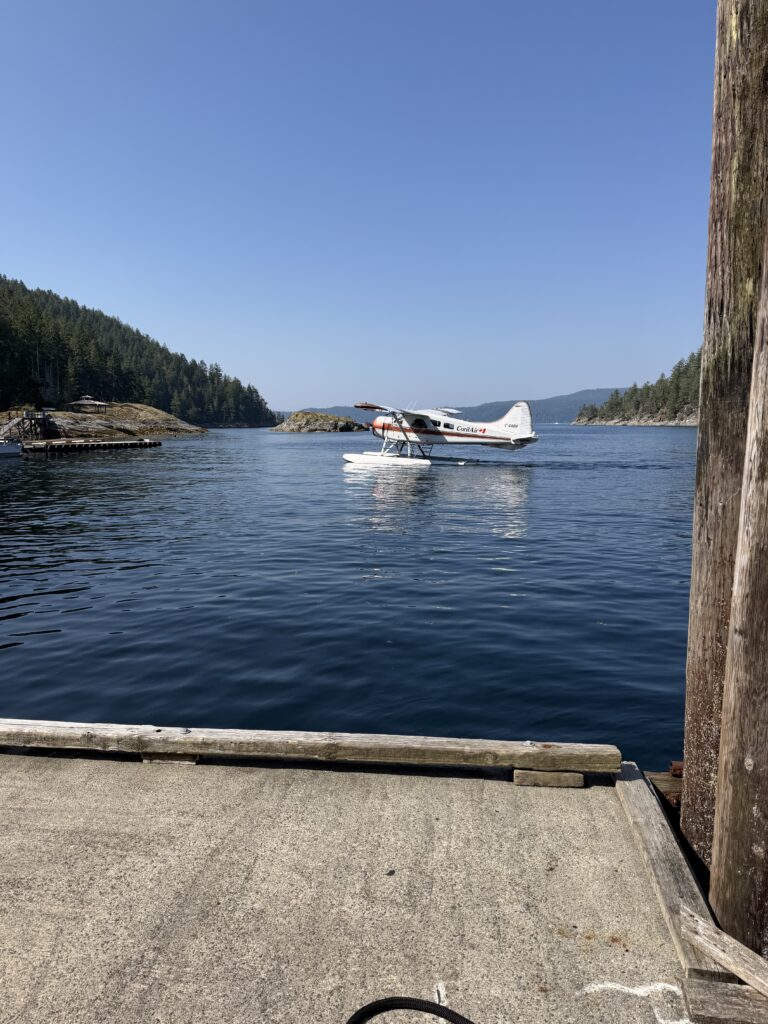
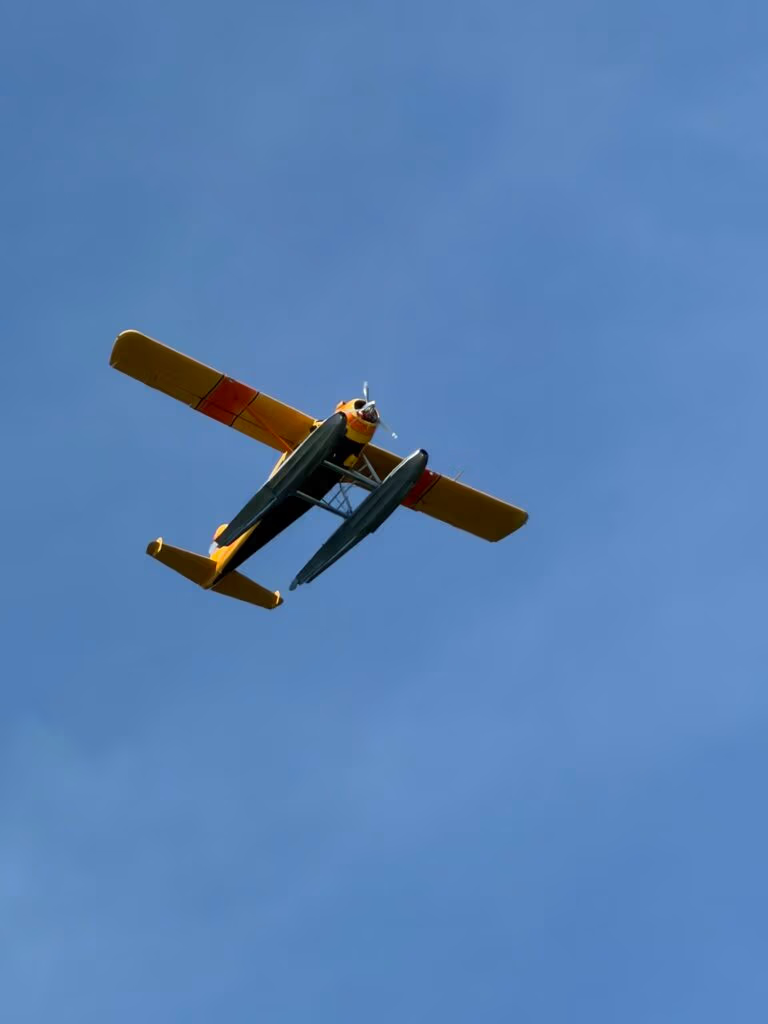
While we were there, a float plane came in startlingly close, within about 20 meters of our yacht. It was the kind of moment that makes you stop and look twice, and it will definitely be one of the photos from the day.
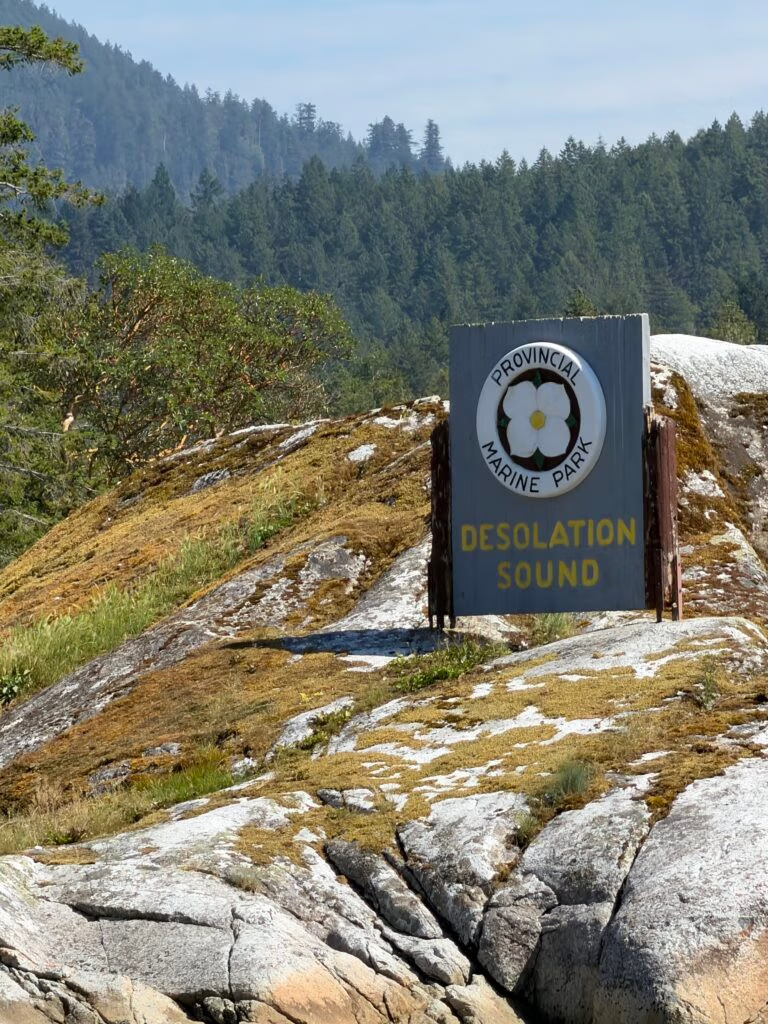
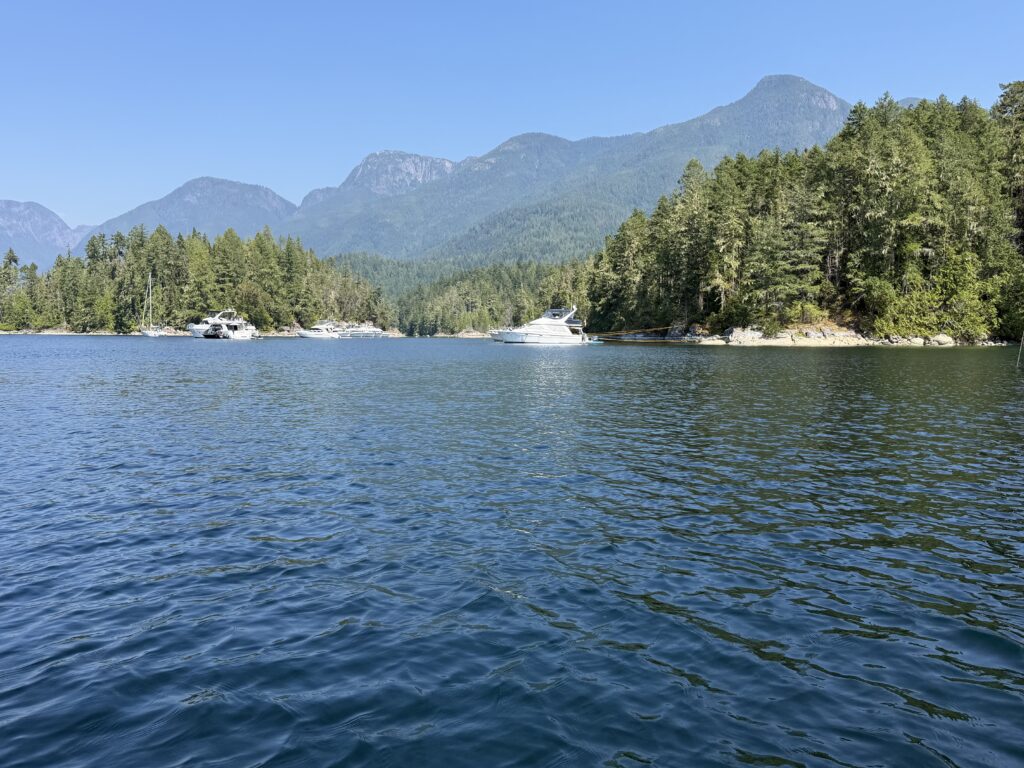
From Refuge Cove, we continued on to Prideaux Haven, a place Peter Cox had recommended to us. It turned out to be an especially beautiful spot, though we were hardly alone there. By the time we arrived, there had to be more than 200 boats in the harbor, all tucked into the scenery together.
Even with the crowd, the afternoon was wonderful. We got in around 12:30, stern tied again without any trouble, and soon found ourselves visiting with some very nice people from Ladysmith. We shared a bottle of wine with them (Richard and Jane from Ladysmith), which made the day feel even warmer and more companionable.
Later, Matt and Peg went out fishing in the evening, but the fish weren’t interested. Still, it was a beautiful night on the water, and they saw a lovely sailboat that will likely be another favorite picture from the day.
Supper was simple and good: chicken wings, French fries, and three bean salad. It was one of those meals that fit the day perfectly, and it all came together into a lovely evening. Life continues to be good, and there was a strong sense of gratitude for the chance to see this part of the world the way it is meant to be seen.

Refueling, cost 6 K to fill..
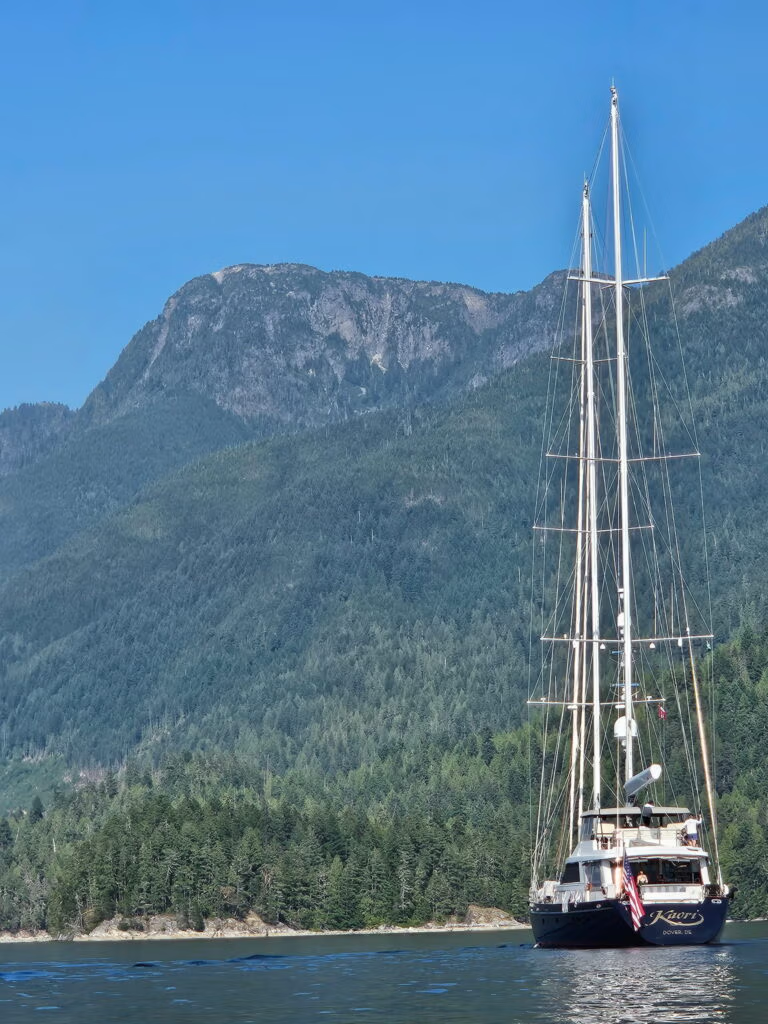
Beautiful Yacht
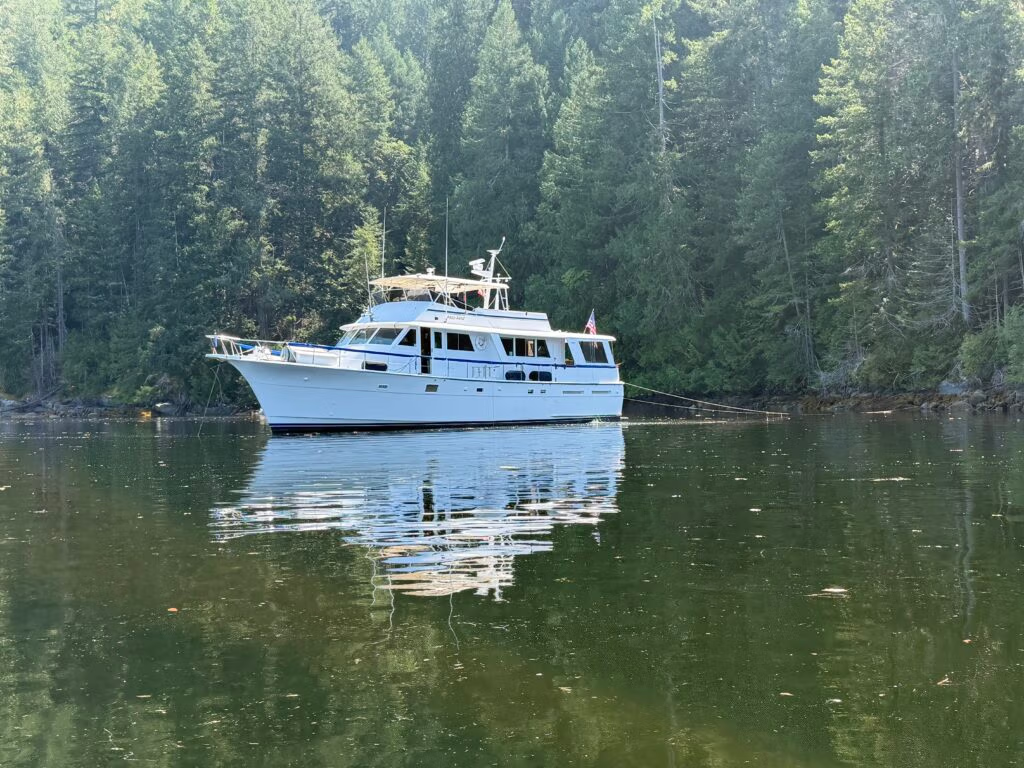
Our Spot
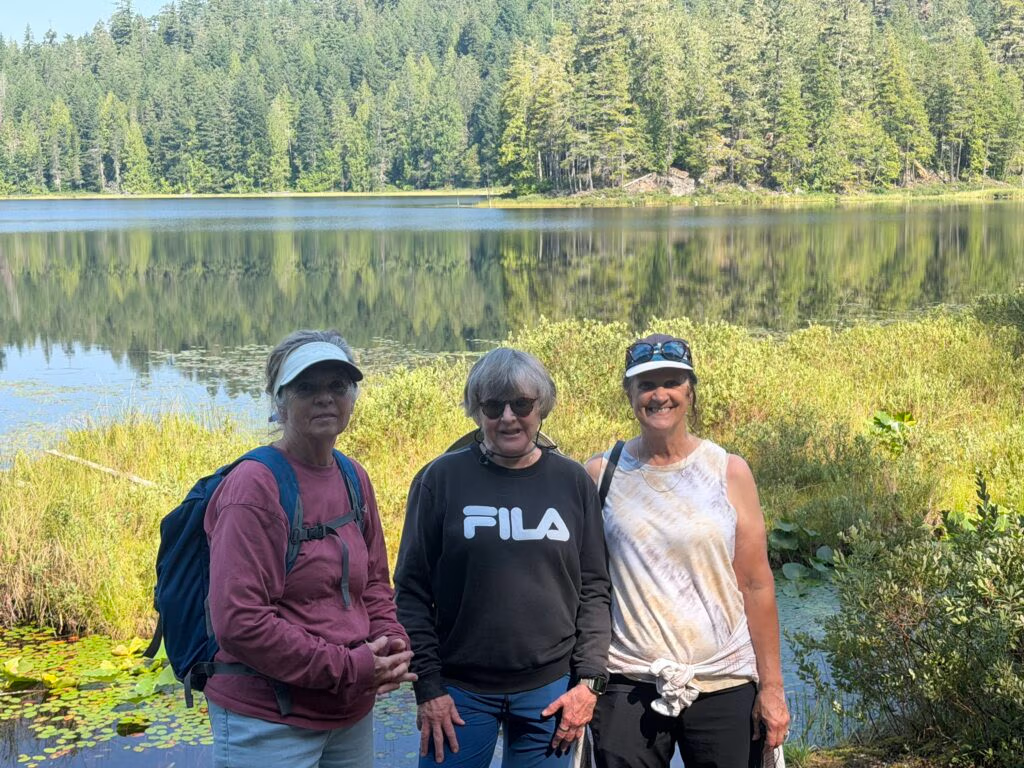
Peggy, Jennifer and Me exploring

Prideaux Haven - Hole in the Wall - Owen Bay

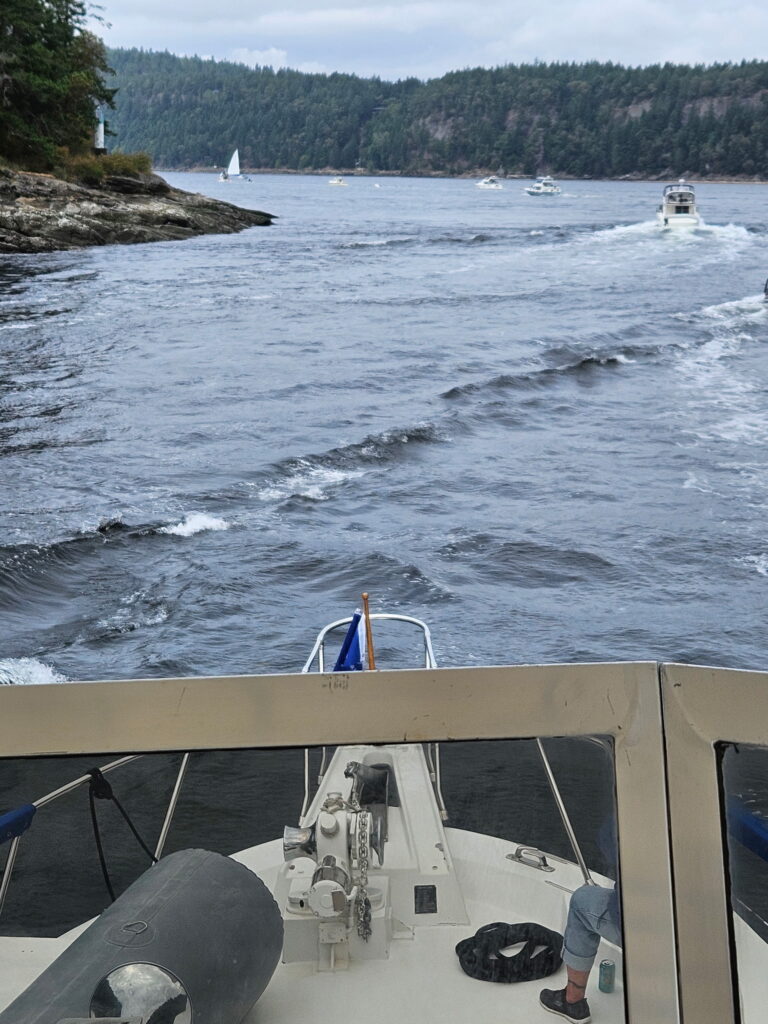
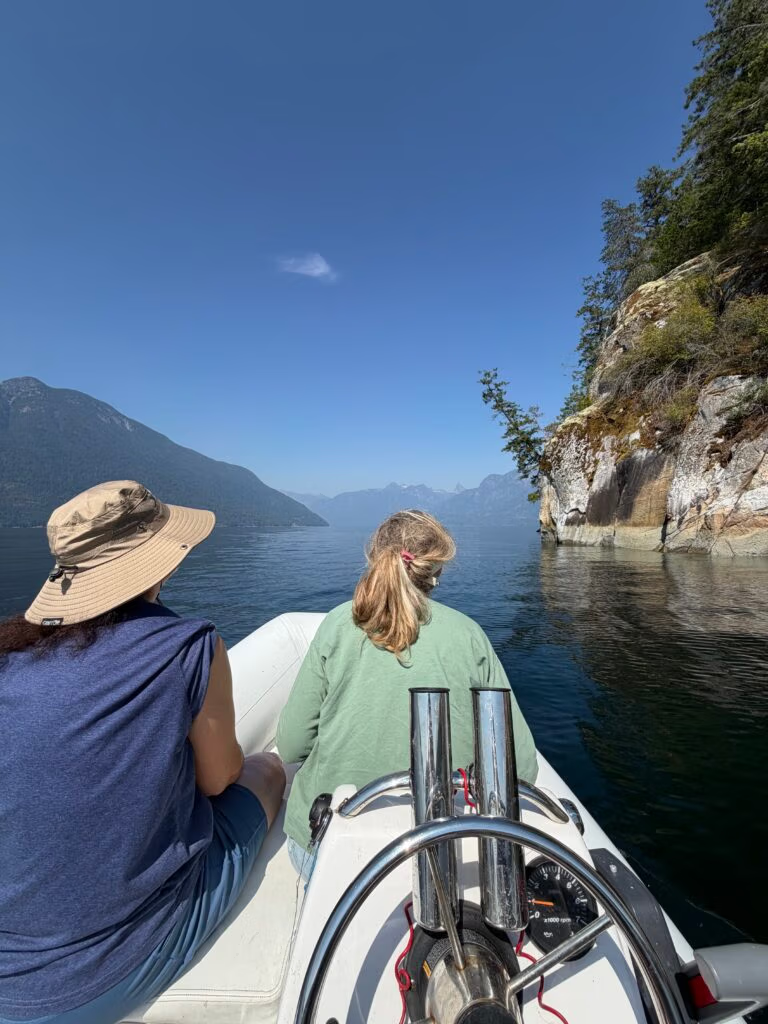
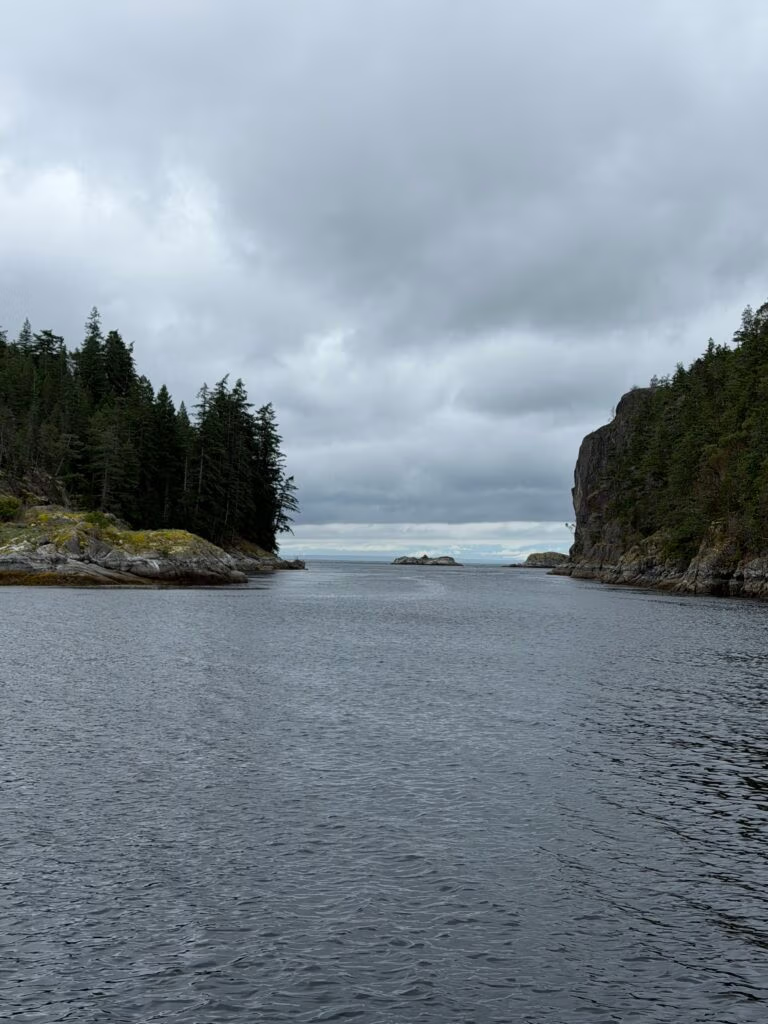
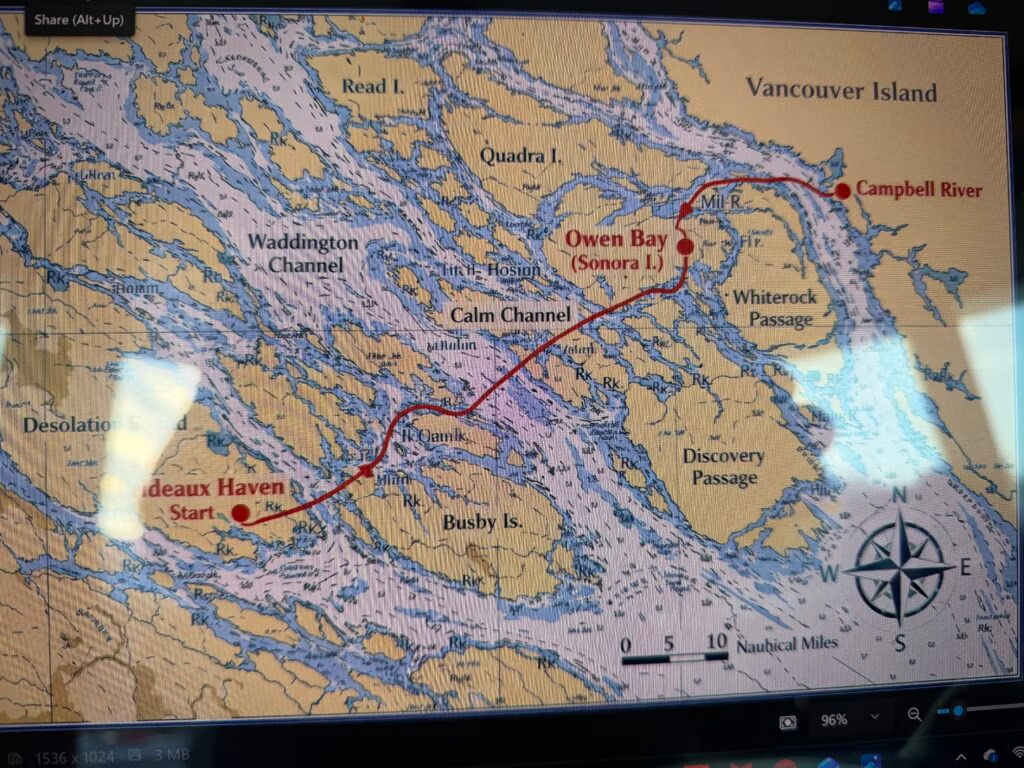
We rose early and slipped out of Prideaux Haven just as the morning was coming alive. Ahead of us lay Owen Bay, but first we had to face the place everyone had warned us about: Hole in the Wall, with its fierce tides and narrow, fast-moving water.
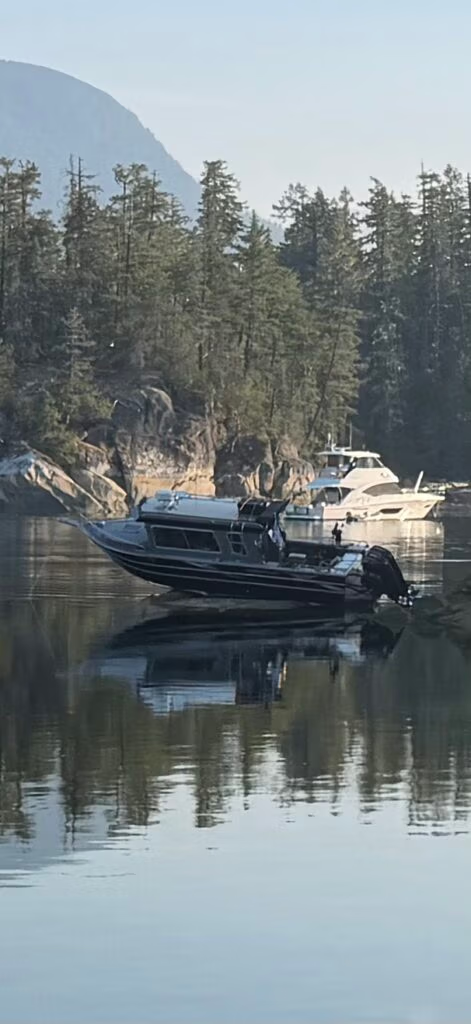
At the entrance of Prideaux Haven, we found a boat that had met the rocks and been left stranded when the tide fell. It was a sobering sight, a reminder of how quickly the water there can turn on a boater. Beyond that, the open water stretched out beautifully in the morning light, and for a while it felt like the day might be all calm and promise.
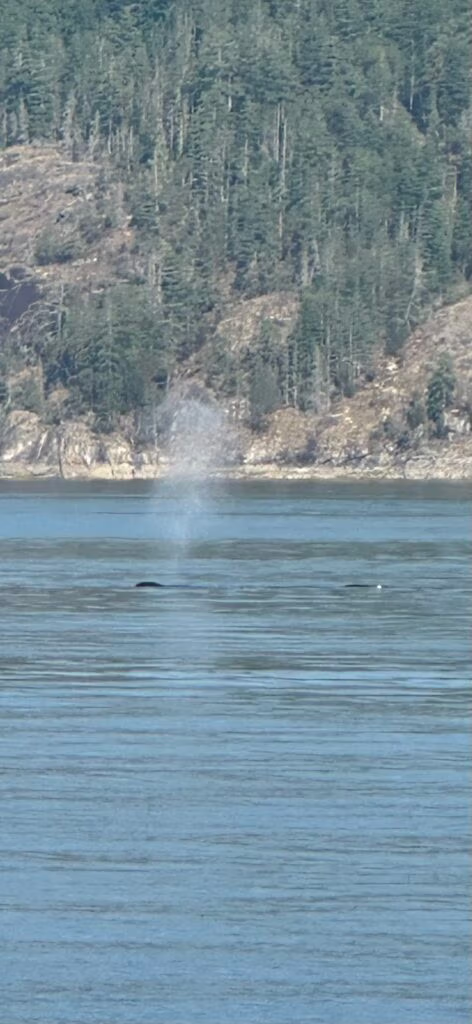
Then Jennifer spotted a whale off to starboard. We eased off, slowed down, and stopped to watch, taking in the moment as the animal moved through the water. But when we edged a little closer, a voice on the VHF radio scolded us to keep our distance, and we backed away and let the whale have its space.
The next challenge was getting through Hole in the Wall. We had hoped to go around it, but the route left us no choice. We had crossed narrows before, including Dodd Narrows, yet this one carried a reputation that made everyone cautious. We checked with people nearby, asked what the conditions were like, and almost everyone gave us the same answer: wait for slack tide and go through fast.
We even called Peter Cox for advice. He didn’t get back to us right away, but when he did, he confirmed exactly what the others had said. So we trusted the local wisdom, went through a little early, and made the passage safely and well.
Once inside Owen Bay, we had a small puzzle to solve: where to anchor. The information we had wasn’t always current, and we had to try twice before we found the right spot. But in the end, we settled into an anchorage we were pleased with, ready to enjoy the night.
While the anchor held, Peg and Matt set the crab traps before supper. Jennifer and Peg prepared dinner, and it turned out to be one of those meals that makes a day feel complete: chicken, mashed potatoes, salad, and bread. It was simple, generous, and exactly right after a long day on the water.
Later, Matt and Peg checked the traps and came back with a perfect result: a full limit of male crabs of the proper size. It was a fitting finish to a day that had started with caution and ended with abundance.
Over the past ten days, you had shared a stretch of adventure, teamwork, and changing tides. There was sadness in knowing Sharon, Peg, and Matt would be leaving soon, but also gratitude for the time together and excitement for the new people joining the voyage as the journey continued north.
There She Blows
Boat on the Rocks
Days Map
Hole in the Wall Entrance
Matt is ready for Hole in the Wall
Leaving Hole in the Wall
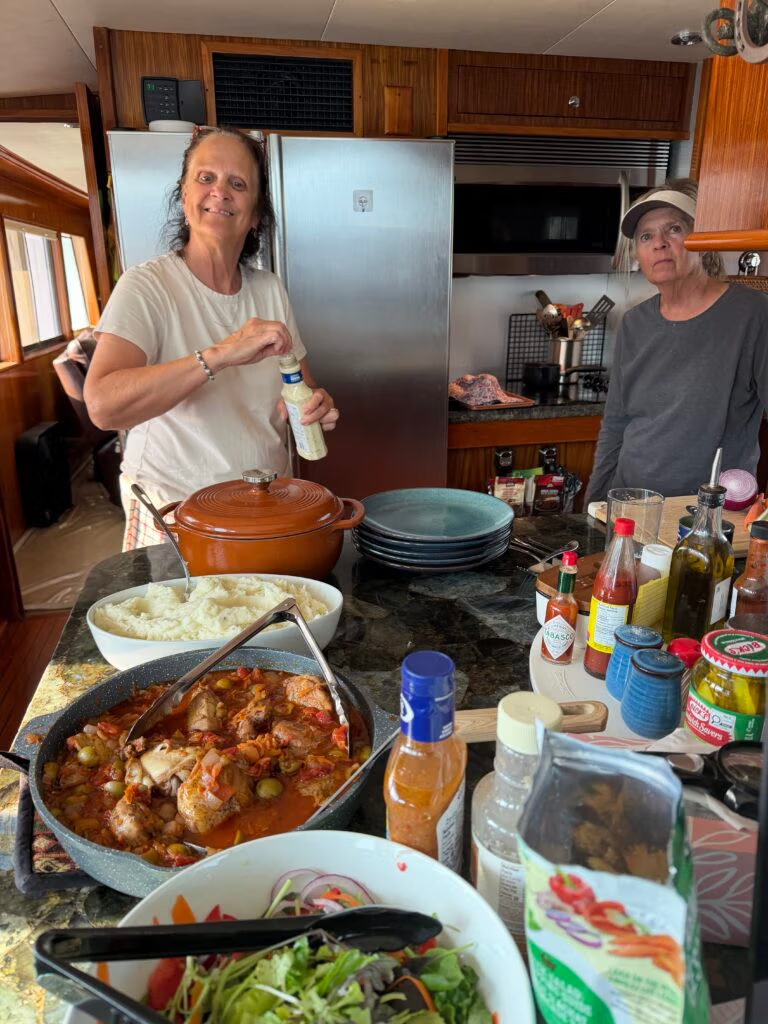
Chicken Cacciatore, Garlic Mashed, Salad and Bread
Yum Yum Deadliest Catch

Owen Bay to Campbell River, Abbey Arrives

The morning began in an almost sacred hush. Peg and I both heard the looms sounding off in the early light, and there was something surreal and special about the stillness as she called me while she was out with Matt pulling up the crab traps.
From there, we weighed anchor and headed out, leaving the quiet behind us and heading toward Campbell River. Just outside Owen Bay, we decided to try our luck with prawn traps. I set two of them without realizing how quickly the current would turn against us, and before long both traps were lost to the shifting tide.
For a tense minute or two, worry took hold as we searched for them and the water began to move with alarming speed. I soon realized the current was running at eight or nine knots, faster than we normally ever move, so I pushed the engines and got us clear. We were towing the tender too, which made things a little precarious, but in the end we got away safely and everything settled down.
As we continued along, another challenge waited ahead. I hadn’t fully taken in from the night before that we still had to cross Seymour Narrows, where the rapids can be unforgiving. We pulled up to the narrows, checked the tide charts, and saw that we had a couple of hours to wait. A voice on the VHF radio told me we could make it, but I decided to be cautious and hold back.
That patience paid off. About an hour later, another boat came through, and we followed in its wake. The crossing was smooth and uneventful, and before long we arrived in Campbell River without issue. Seymour Narrows is known for powerful currents, so waiting for the right window was the right call.
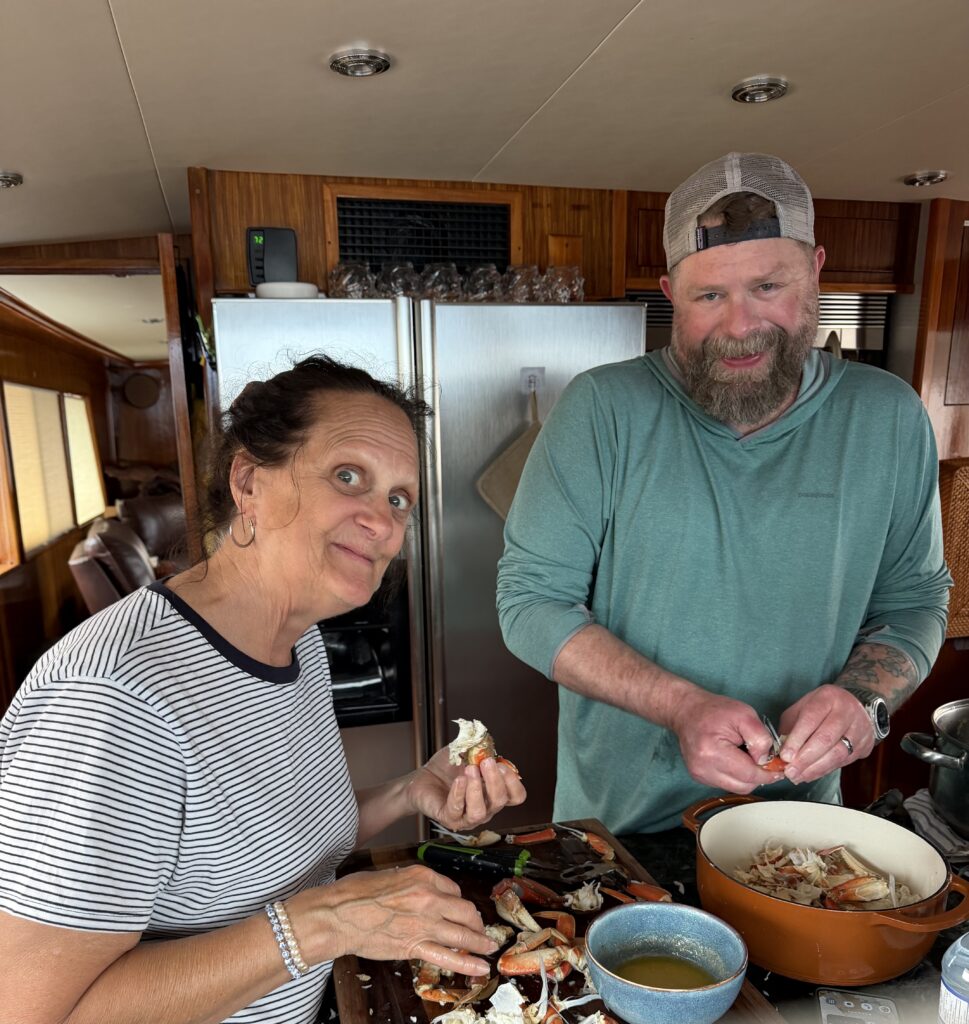
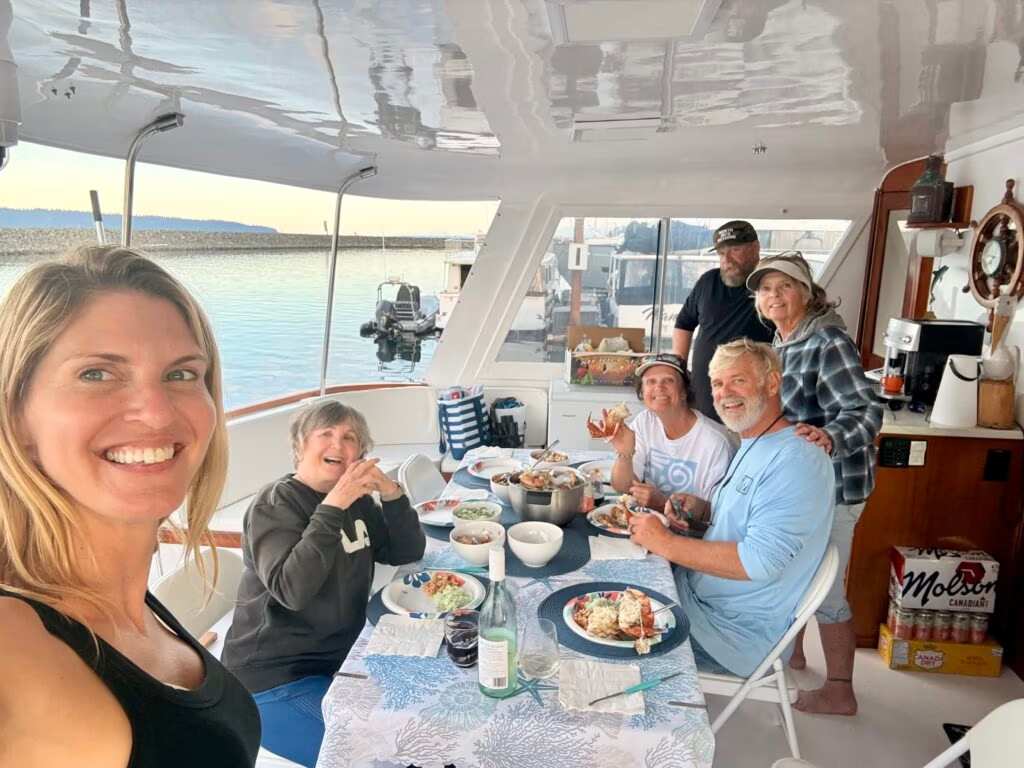
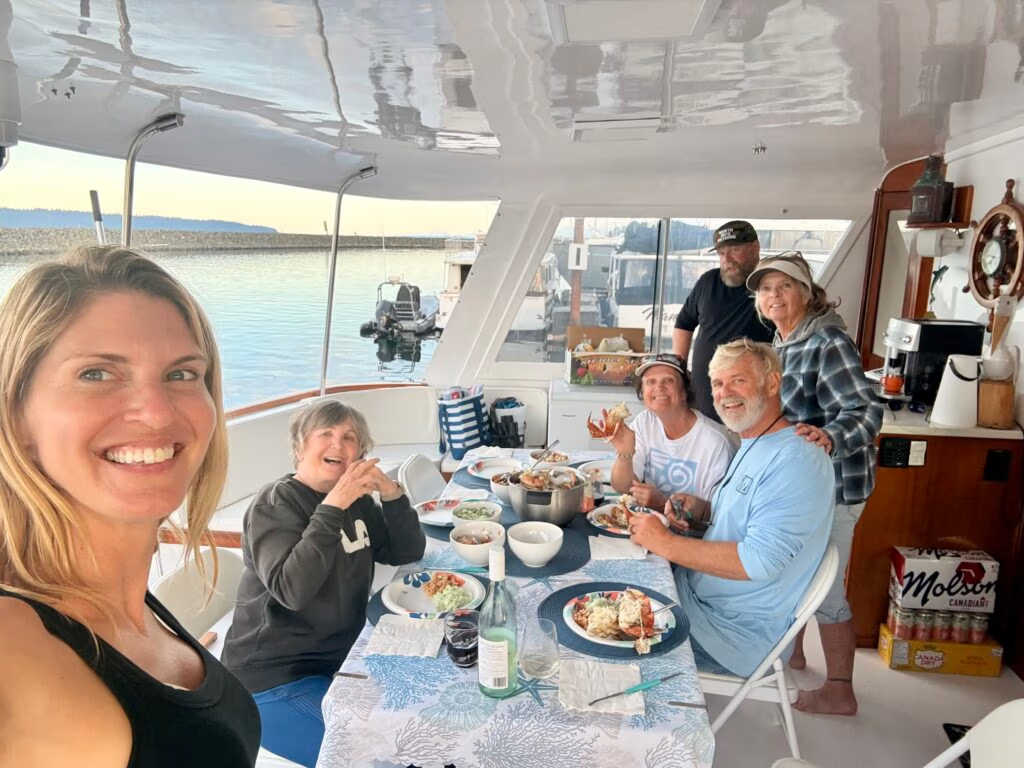
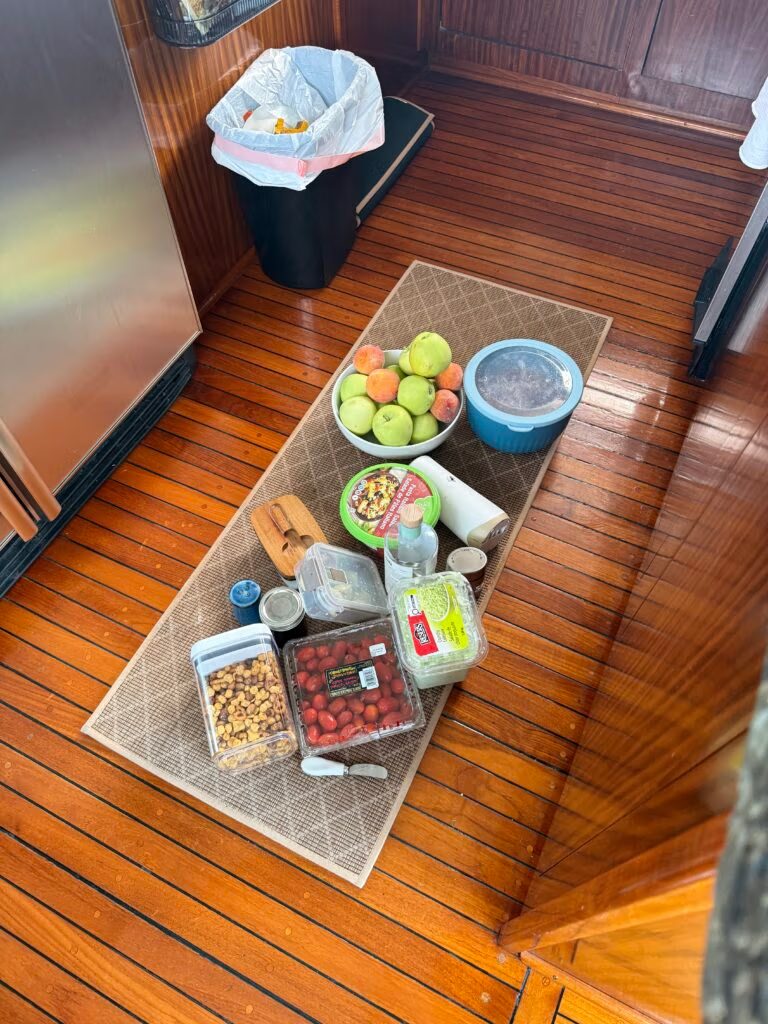
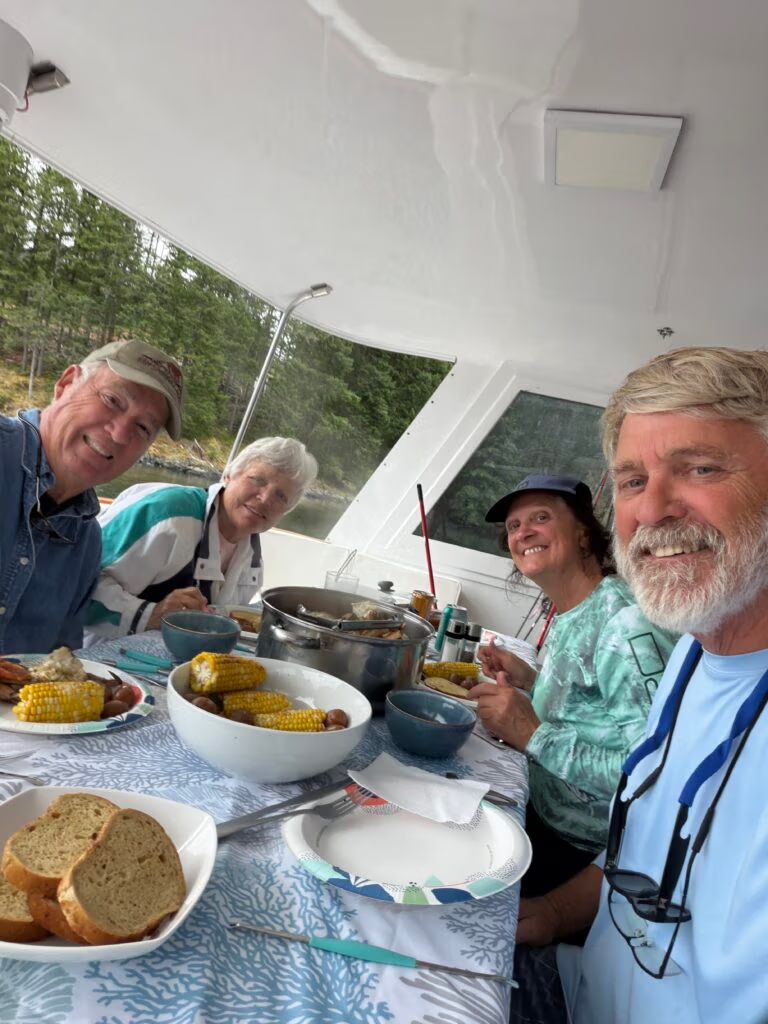
When we got there, Abbey came to meet us with fruits and vegetables from the Creston, British Columbia area, and her arrival made the day feel complete. We shared crab for dinner, gathered around the table, and spent the evening talking, laughing, and remembering the road that had brought us there.
Now the rhythm shifts again. Tomorrow, Sharon, Peg, and Matt leave, and Abbey heads off as well, which makes the goodbyes feel heavy. Soon Robert and Chris Spillers will join us, and although so many arrivals and departures can be emotional, there is still comfort in knowing more days lie ahead.
We’ll spend another five days in Desolation Sound before Jennifer leaves, and then the journey continues north. The quiet morning, the nervous crossing, the reunion at dinner, and the constant movement of people all become part of the same story: a summer on the water, full of beauty, challenge, and change.
Sharon Driving
Abbey and the Crab
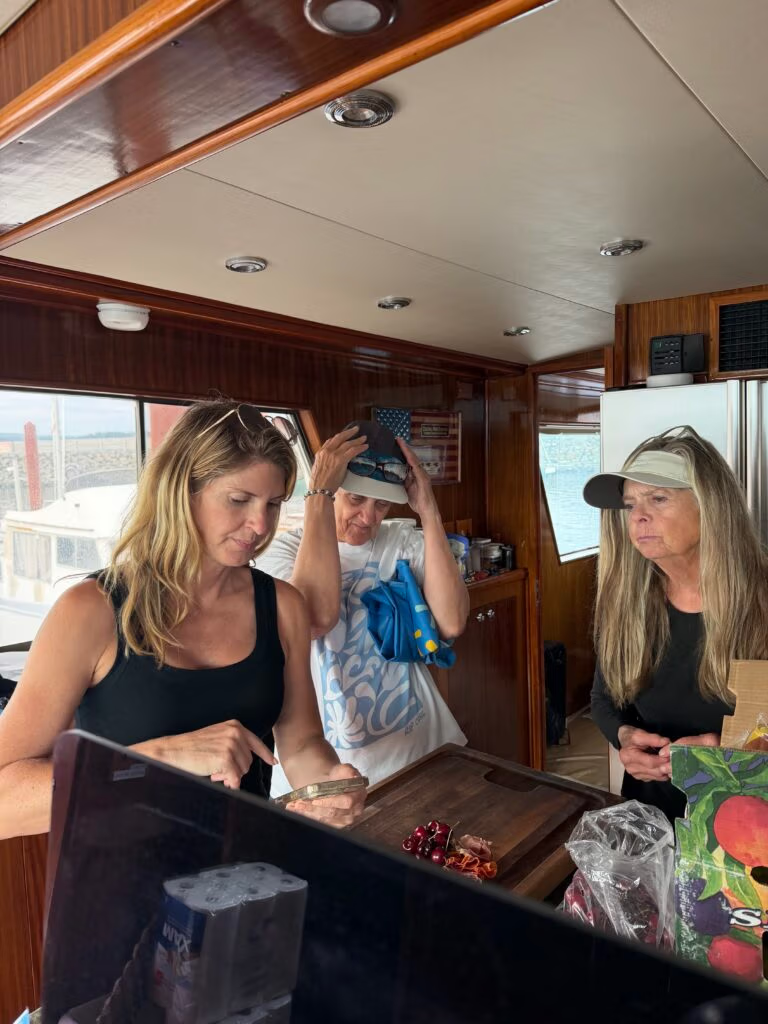
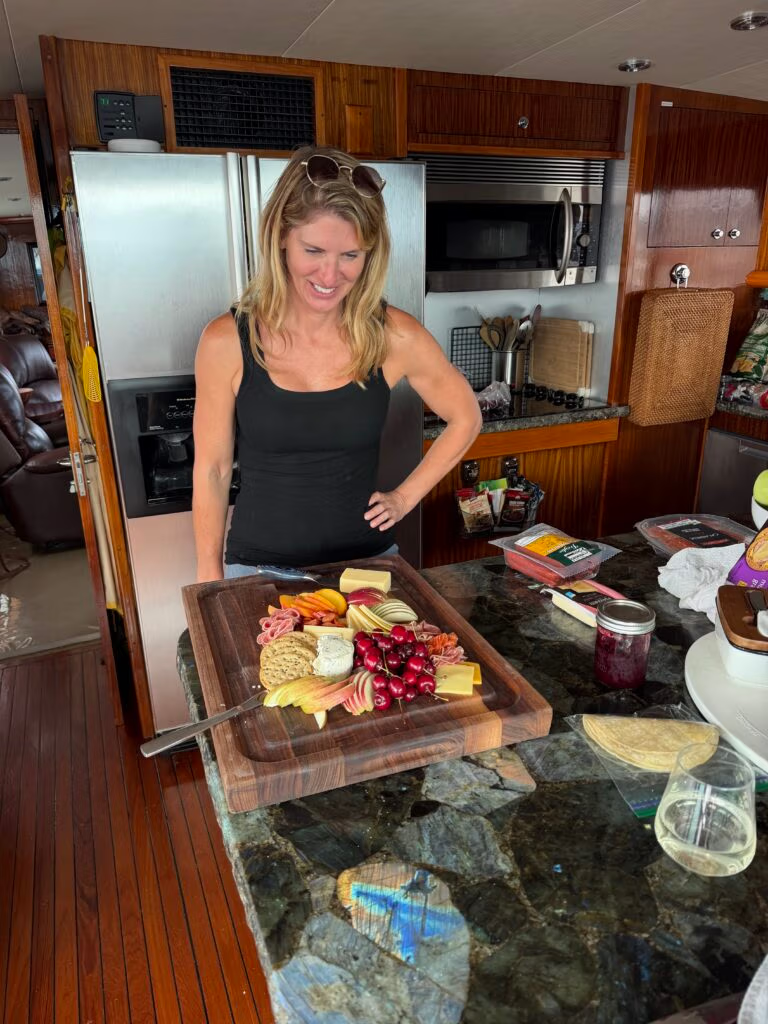
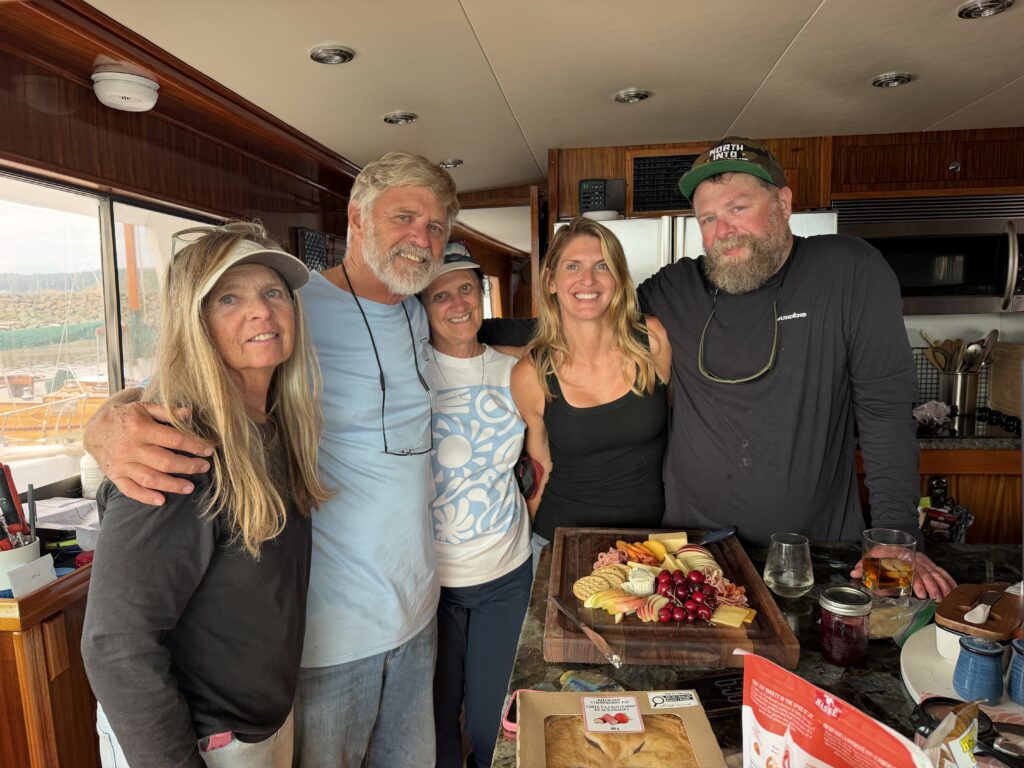
Abbey put acharcuterie board together ... so good, she came with fruits and veg too..

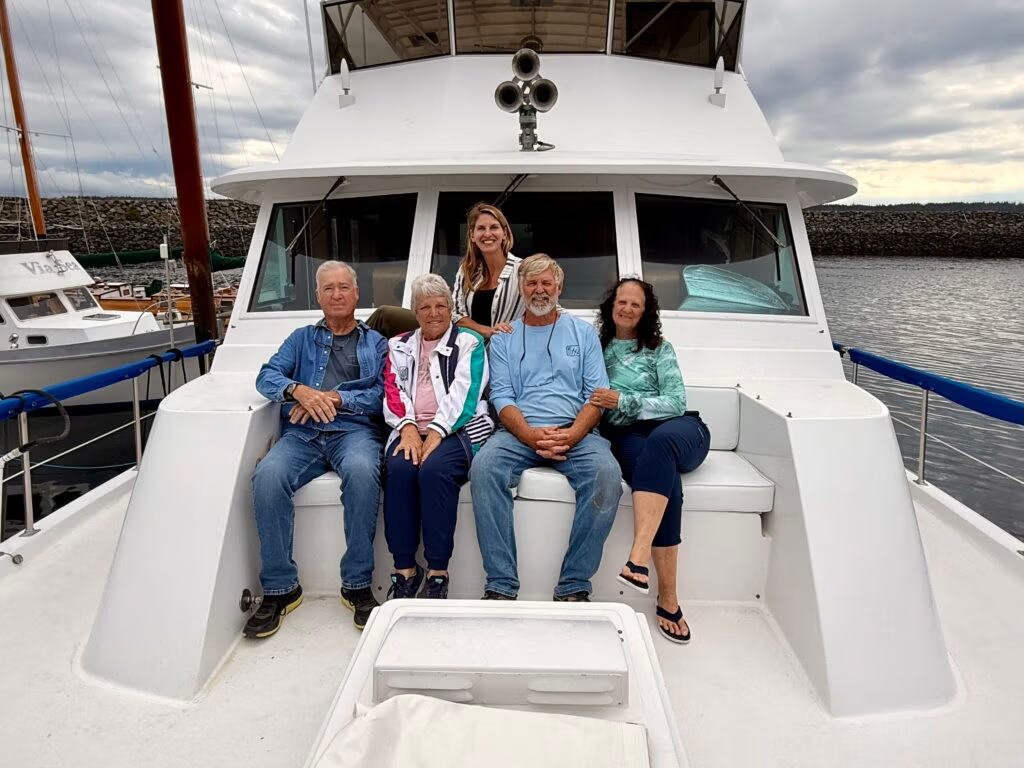
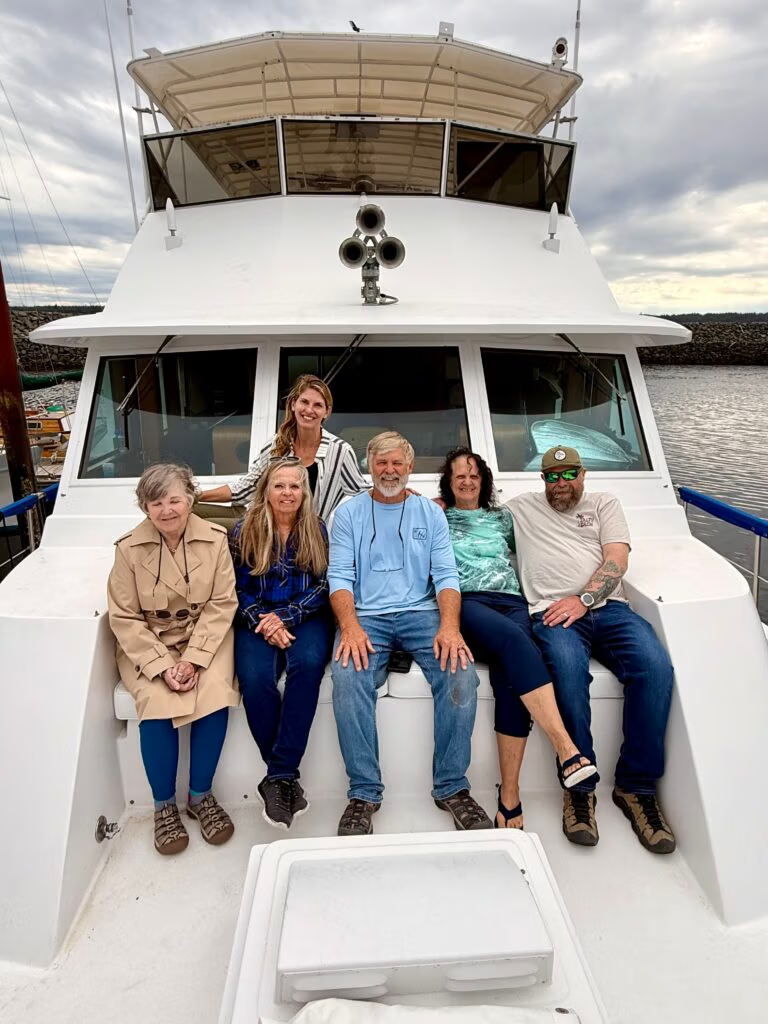
Abbey, Peg, Matt and Sharon take off and Robert and Kris Arrive

We had a great time… fishing, crabbing, eating our way North.
Abbey's Art

From Campbell River to Gorge Harbor- NOT - April Point Cove

We left Campbell River around 12:30 or 1:00 in the afternoon, eased out of the harbor, and turned south around Mudge Point with Gorge Harbor in mind. It was supposed to be about a two-hour run, but the water had other ideas.
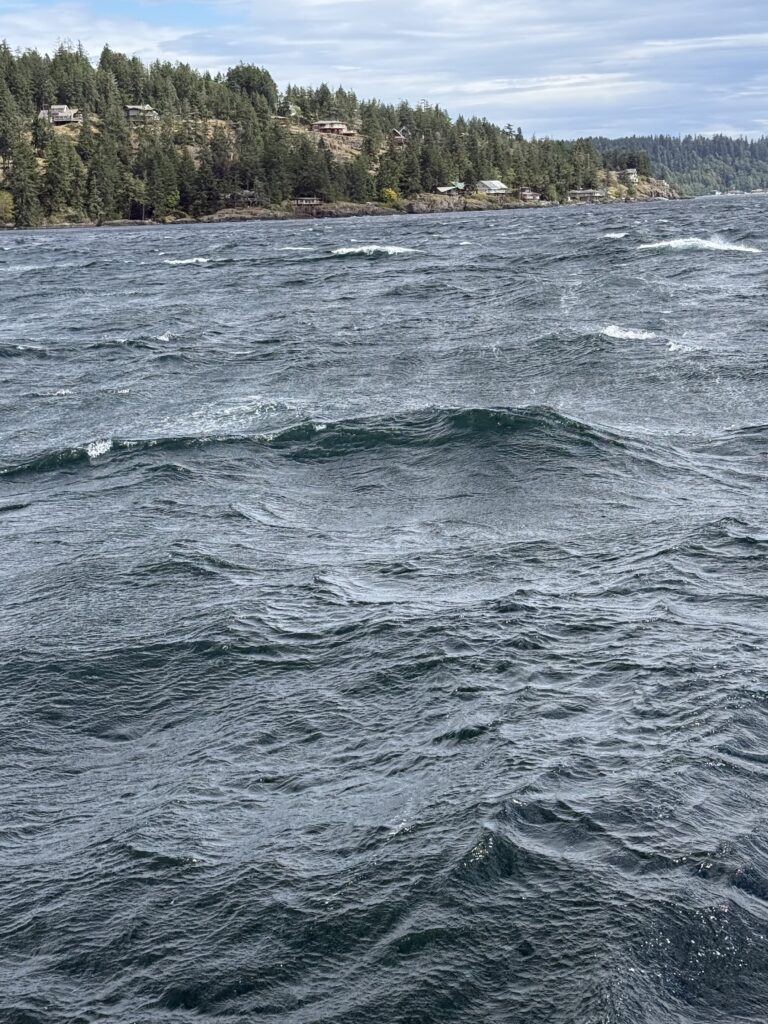
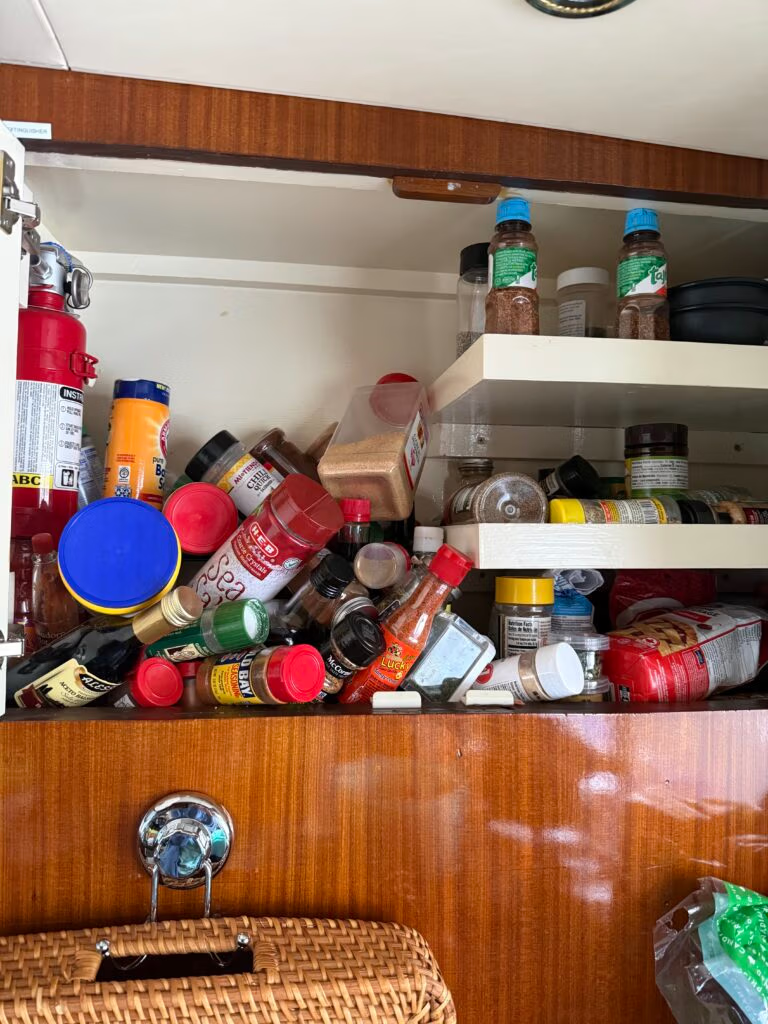
At first, the wind was already kicking up, gusting around 20 to 25 knots. Before long, the boat began to rise and fall harder and harder, as if the sea were breathing under us. The waves seemed to be building into the 5- to 7-foot range, and every time the bow lifted, it would slam back down with a jolt that shook the whole boat. Cabinets flew open. The refrigerator popped open. Dishes crashed to the floor. Counters were suddenly cleared by the force of the motion, and anything not secured seemed to move at once.
That was the moment we knew we had made the wrong call. Instead of pushing on, we turned back and headed toward April Cove Marina. We worked our way closer to Campbell River and found some calmer water, which gave us just enough relief to keep going north. By the time we pulled into April Cove Marina at about 5:36, the wind had climbed to 30 or 35 knots and was still blowing hard.
Getting tied up safely felt like the reward at the end of a long, humbling day. We had made it back without injury or damage to the boat, and that alone felt like a win. But the bigger lesson stayed with us: we had underestimated how fast the conditions could change. We knew the wind forecast, but we hadn’t checked the weather thoroughly enough, and we hadn’t accounted for how the waves would build up through the Georgia Strait. It was a hard lesson, but an important one, and we knew we would never make that mistake again.

There was a little mess after the waves...
Frig came open....
What crab again...
We had a snow day, we stayed put as the wind and rain blew in.

April Point to Gorge Harbor

Exit to the Bay
This is a settlement with an airplane...

Gorge Harbor to Heriott Bay, 27 July

Now all I need is a boat!

Heriot Bay to April Point Marina

We waited until the weather turned in our favor before leaving Heriot Bay that morning. The air was still, the seas calm, and the crossing was as gentle as anyone could hope for. We had been hoping to find a slip at Fisherman’s Wharf in Campbell River, but when word came back that nothing was available, we changed course and headed instead for April Point Marina for the second time.
It was a pleasant place to tie up, though a bit out of the way for what we needed. Getting to Campbell River for supplies, pickups, and drop-offs was more of a challenge than we would have liked. Still, the day had gone well, and by evening the marina was quiet, the water serene, and the whole scene felt peaceful.
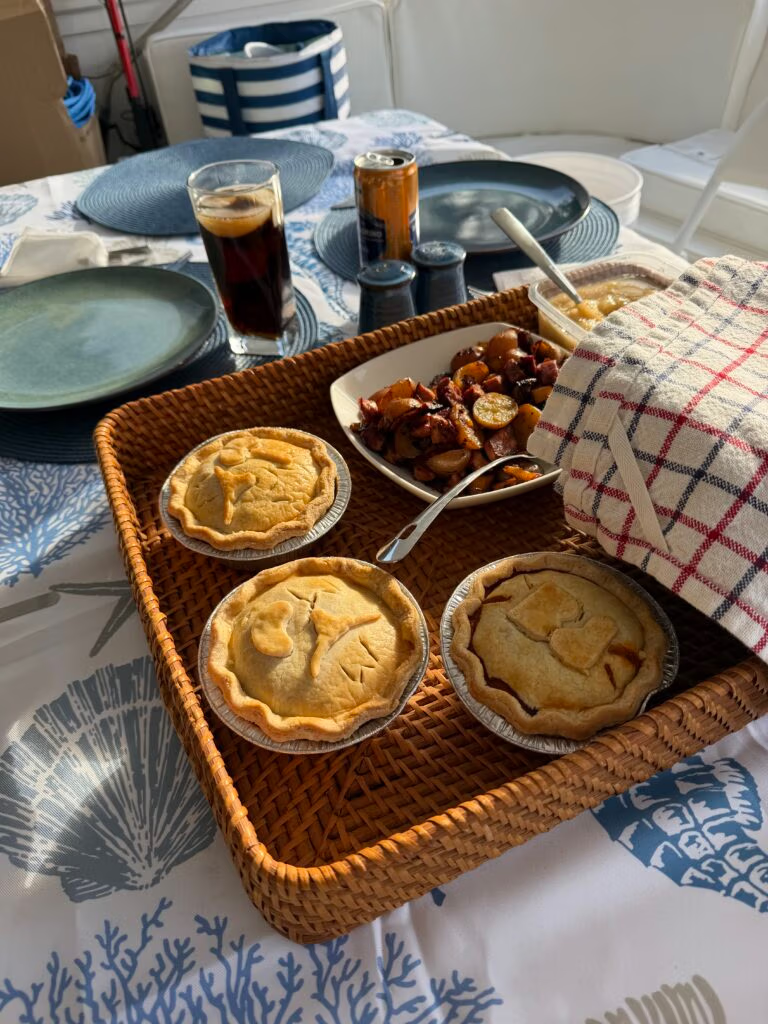
Dinner that night was especially lovely. We had three different kinds of pot pies, all of them excellent, along with homemade applesauce made from the apples Abbey had brought. Jennifer also put together a dish of potatoes and sausage, which rounded out the meal perfectly. It was the kind of supper that felt simple, comforting, and just right for the setting.
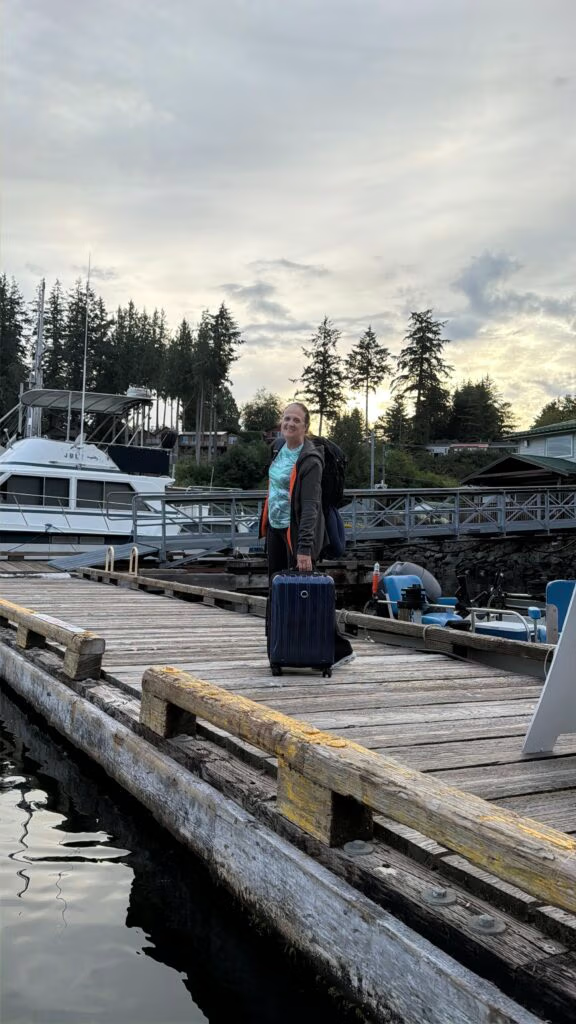
Jennifer leaves tomorrow, and I’ll take her over in the tender to the ferry, about two miles away. I’m sad to see her go. We’re also waiting for Peter Cox to arrive tomorrow, and after that, we’ll head north at last. I’m very excited for what comes next.

The salmon are running but no luck yet !
Jennifer cooked dinner, yum

We were up before dawn, while the world was still quiet and the water was holding its breath. Jennifer had to catch the ferry back to San Antonio, and I did something I don’t think I’ve ever done before: I took her over in the tender from the yacht, running about two miles south along the coast across from Campbell River. We went at dead slack, the kind of timing that makes all the difference out here. The second time felt easier than the first, because I’d already done a practice run the night before.
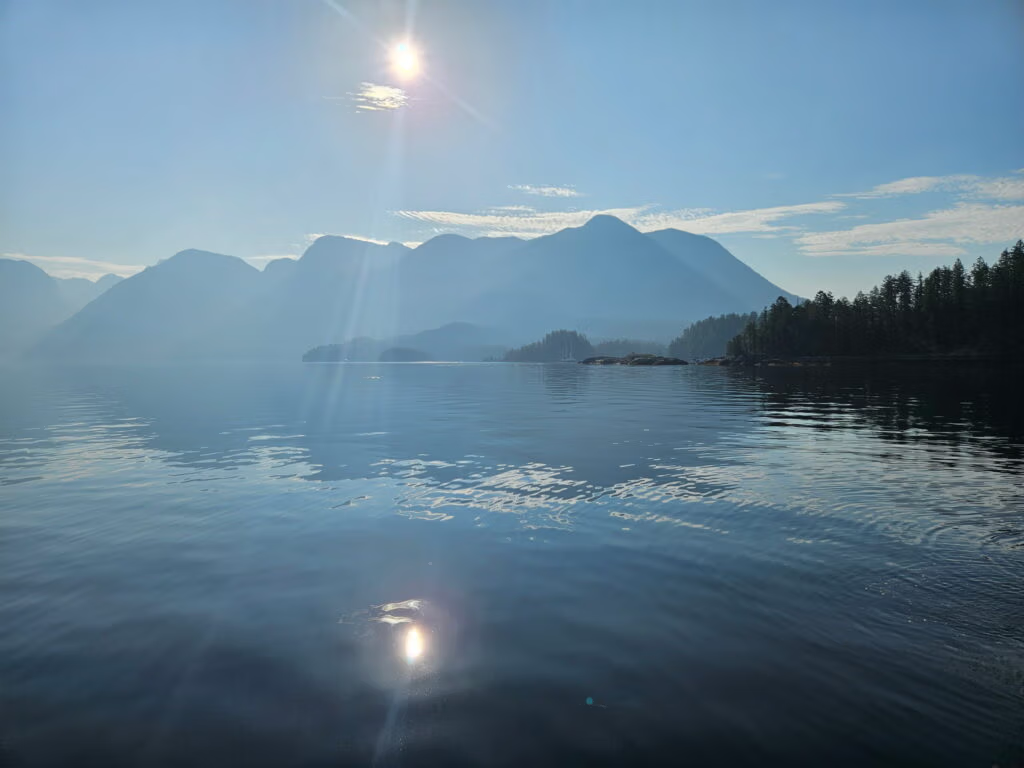
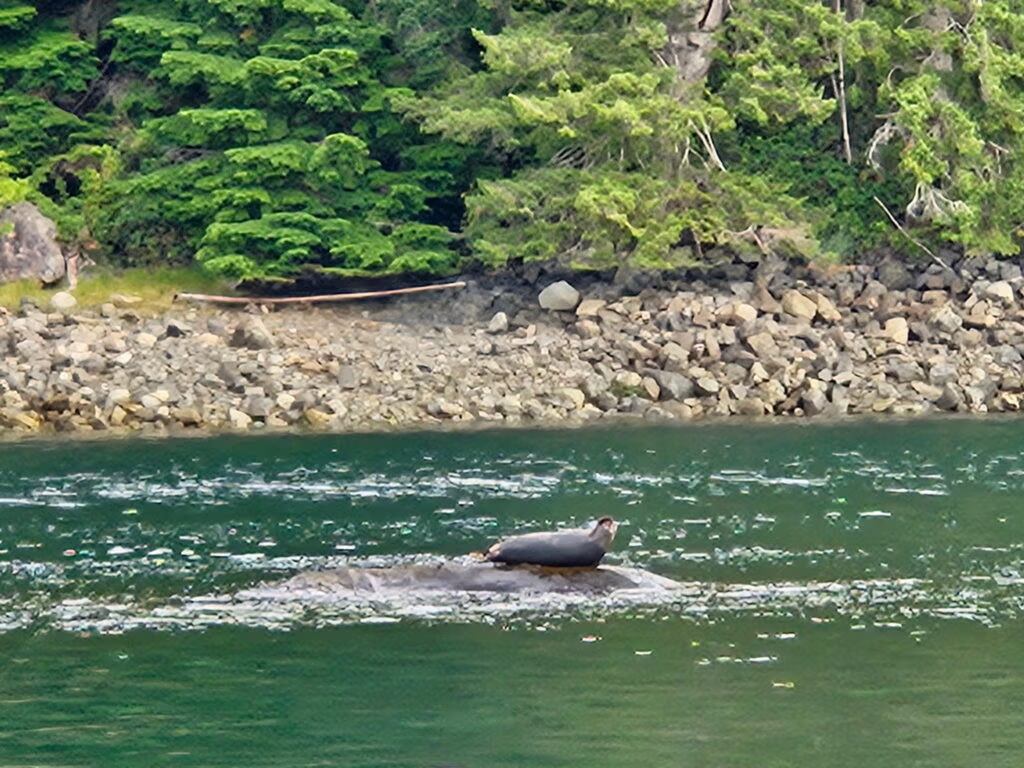
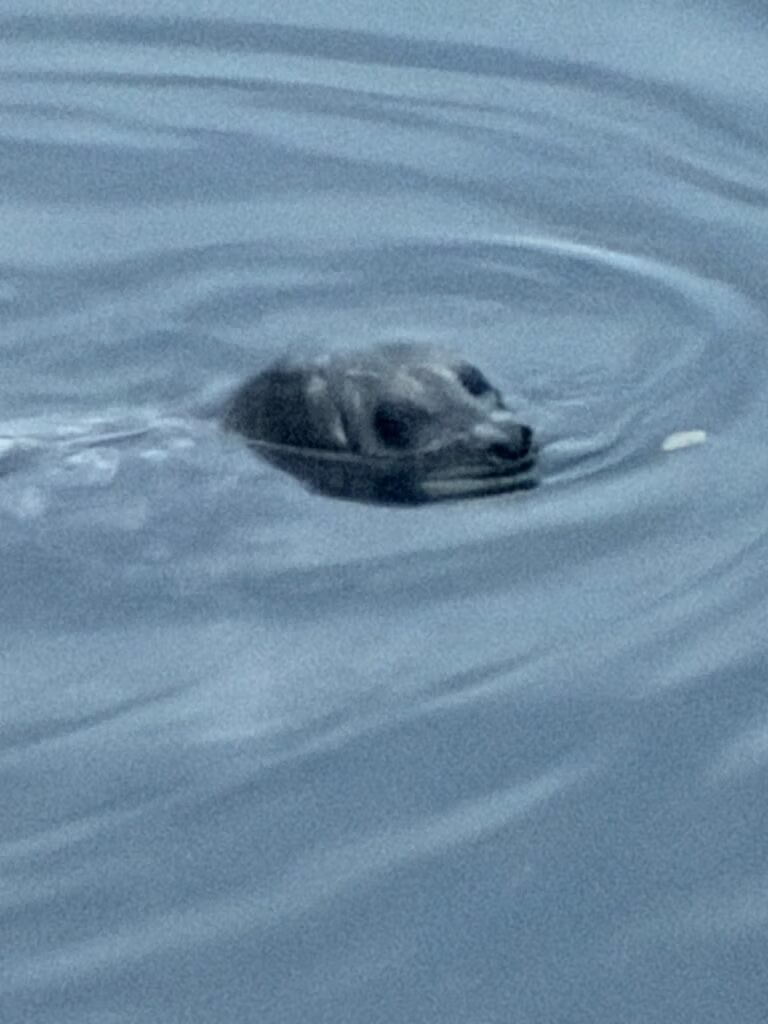
Last night the water had been wild, tumbling and boiling, alive with the kind of force that reminds you how small you are. But this morning it was calm, almost unreal. Jennifer and I had spent the evening before sitting on the dock, watching the water, and a seal had come up to watch us back. It was one of those quiet moments that settles into you without asking permission. The air was crisp, maybe 55 degrees, and the whole morning felt clean and still.
The ride over was surreal. So was the ride back. There was a hush to everything, a kind of peace that made even the practical business of ferrying someone feel larger than life. I hated to see Jennifer go, but that’s part of what I’ve learned out here: life on a boat is a constant swinging door of hellos and goodbyes. People come. People leave. The rhythm never really stops, and somehow you keep living inside it.

What surprised me most was how much I noticed the silence. On the boat, even when you’re surrounded by beauty, you’re rarely truly alone. This morning, coming back by myself, I felt the absence of company more than I expected. In another life, especially back in San Antonio, I got used to long stretches of my own company. And now, after all this time, I realize how much I miss those moments of quiet reflection.

But if I’m honest, the serenity here is almost too much to take in at once. The pictures don’t do it justice, and the words don’t either. You have to be here, in the soft light and the still water, with the shoreline laid out around you, to understand it. The real gift is in the pauses: when you stop, look out, and let yourself appreciate where you are and what you’re doing. That’s when it gets through to you. That’s when it becomes more than scenery. It becomes memory.  

Till you return Jennifer I will keep Aku-Aku headed North but we will not be whole till you return.  


Jennifer leaves and Peter arrives, 30 July

After dropping Jennifer off at the ferry, I returned to the Aku-Aku, where the mood settled into something quiet and melancholy. Peter Cox, a longtime friend of mine and Jennifers, was due to arrive later that afternoon, and while the day carried a touch of sadness, there was still work to do.
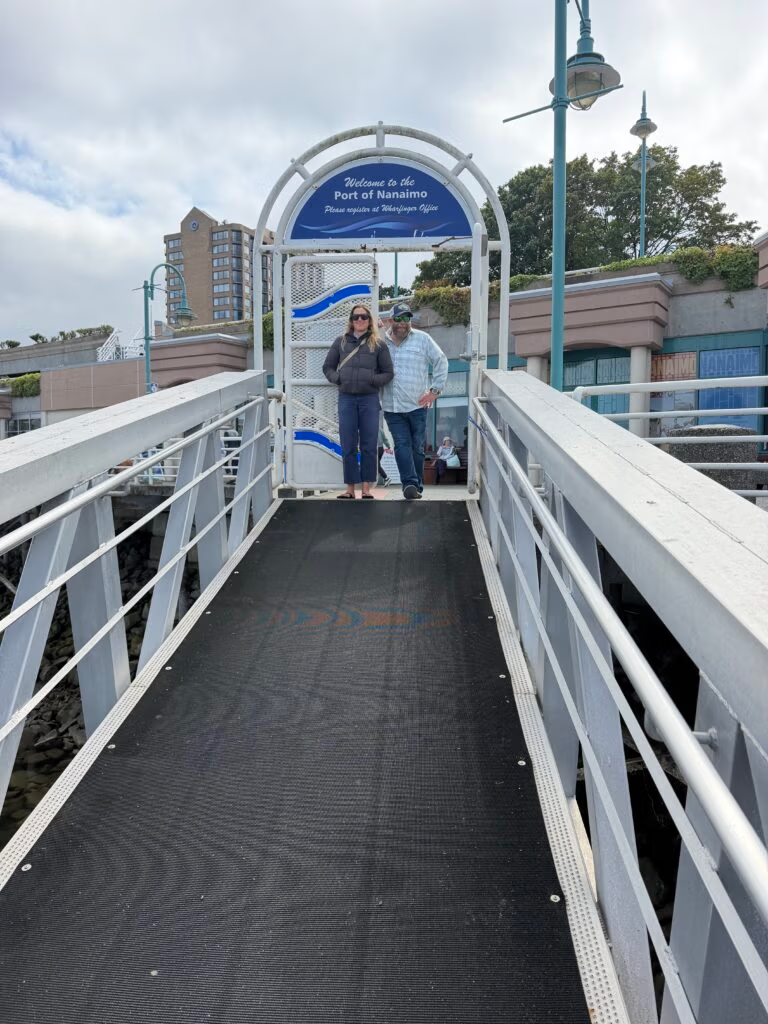
I took Robert and Chris back to the ferry in the tender, and the three of us crossed together to handle some shopping and gather the things we needed. We moved through the errands with that familiar rhythm travel brings, part practical, part anticipation. At a marine supply store, Peter met me, and from there we headed back aboard the ferry.
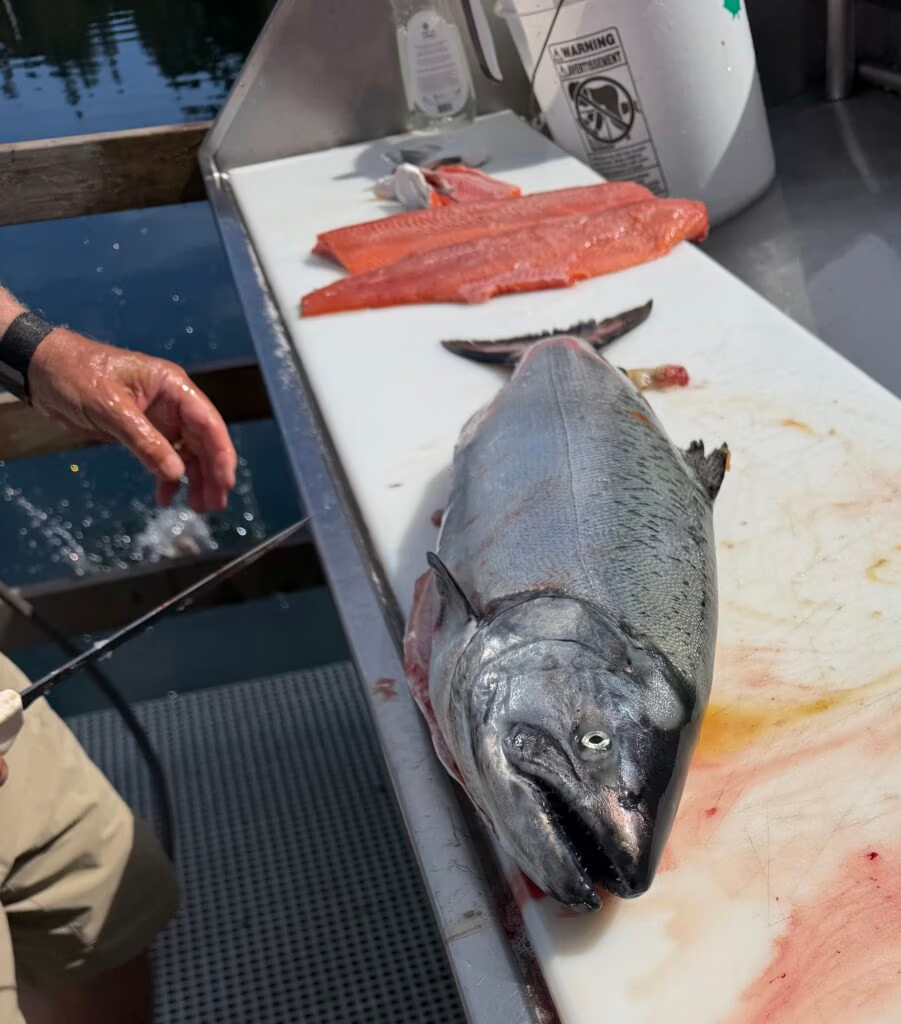
I brought Peter to the Aku-Aku, then later returned for Robert and Chris once they had finished their shopping. That evening we settled in to a simple, satisfying meal of salmon with squash, homemade corn, and applesauce, with thanks to Abbey for the supplies. It was a good evening, made warmer by the company and the comfort of a meal shared after a long day.
Later that night, a gentleman who had parked behind us said he would come over, and we ended up talking about traveling north. As we spoke, we both had the strange feeling that we knew each other from somewhere, but couldn’t quite place it. Then it clicked: Jennifer and I had met him in Nanaimo while watching the Aku-Aku being unloaded, and now here we were again, only this time he was headed south and we were headed north.
He had a wealth of knowledge about fishing, shrimping, and crabbing, and we talked with him for an hour or more, enjoying the easy exchange of stories and information. When his wife finally came to the door to tell him it was time to go home, the evening came to an end. It was one of those surreal travel moments that stays with you: sad to see Jennifer go, glad to see Peter arrive, and happy to finally be heading north, a direction I had been looking forward to for a long time.
By morning, around 6:30, we were ready to leave again, carrying with us the memory of that day and the promise of the road ahead.

Seymour Narrows and Johnstone Narrows

The day began with a mix of excitement and tension, the kind that comes when the water ahead is known for testing even the most experienced mariners. Our route would take us into Seymour Narrows, a place famous for its fast currents and unforgiving timing, so every decision had been made carefully to catch the slack tide just right.


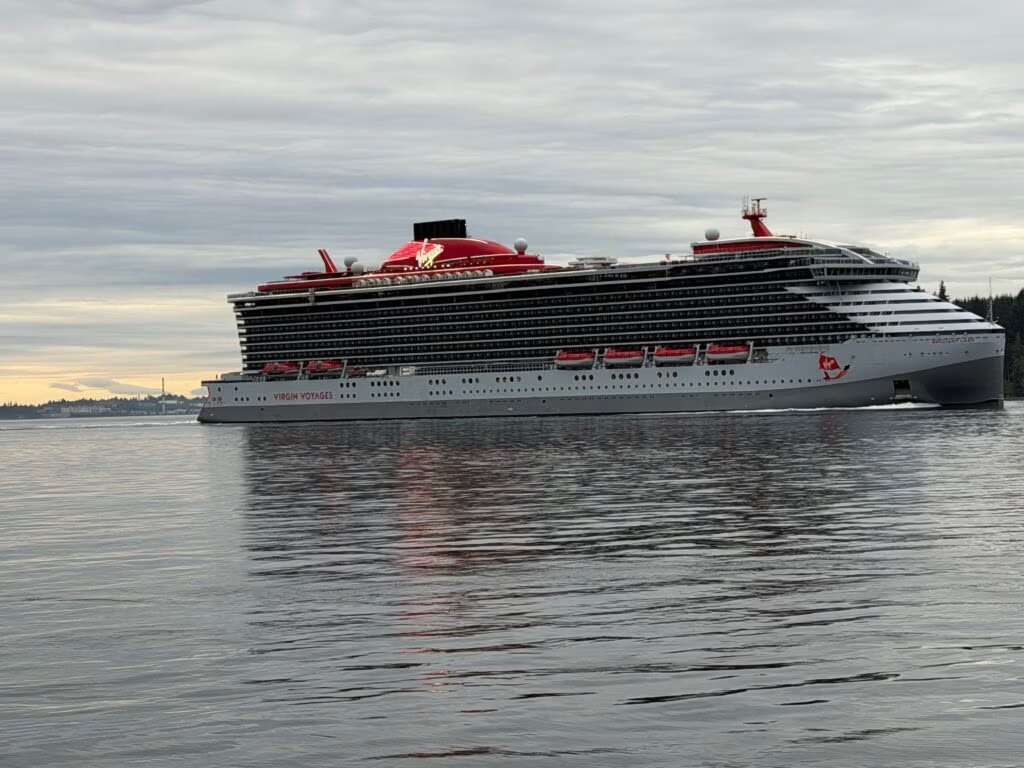
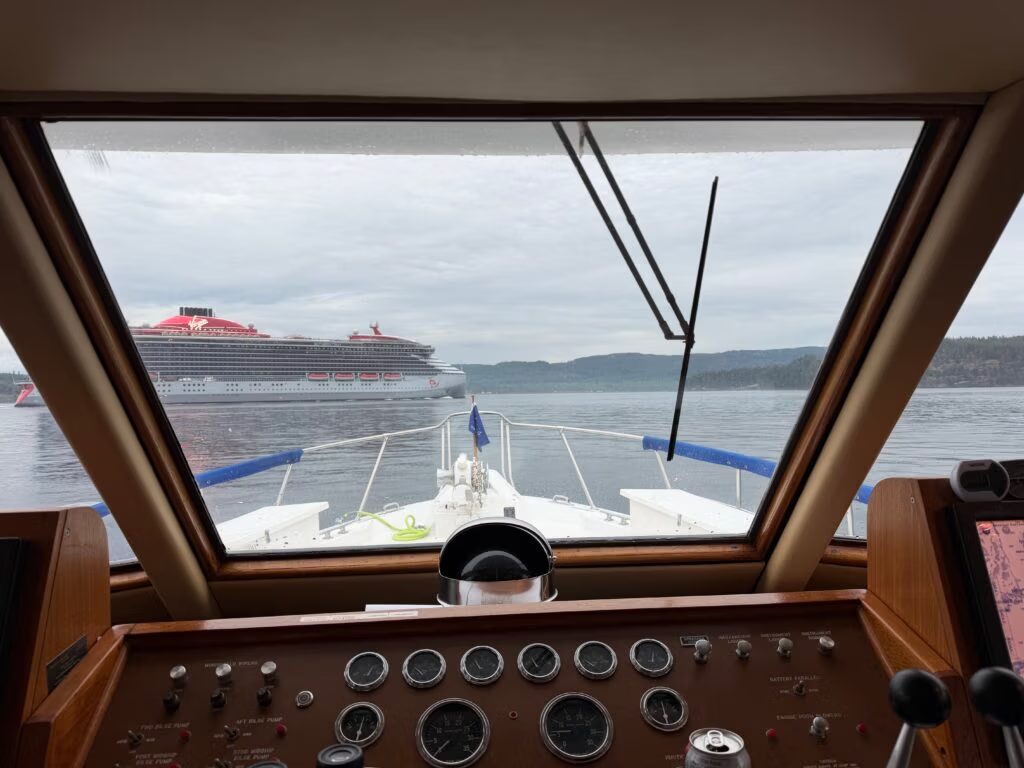
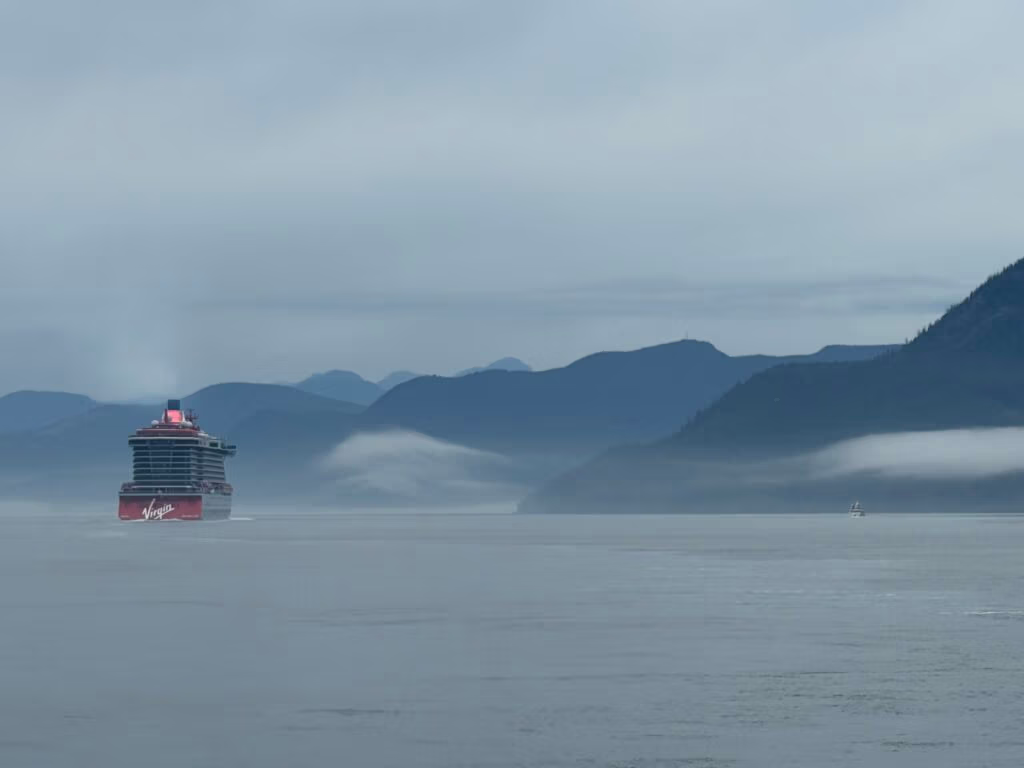
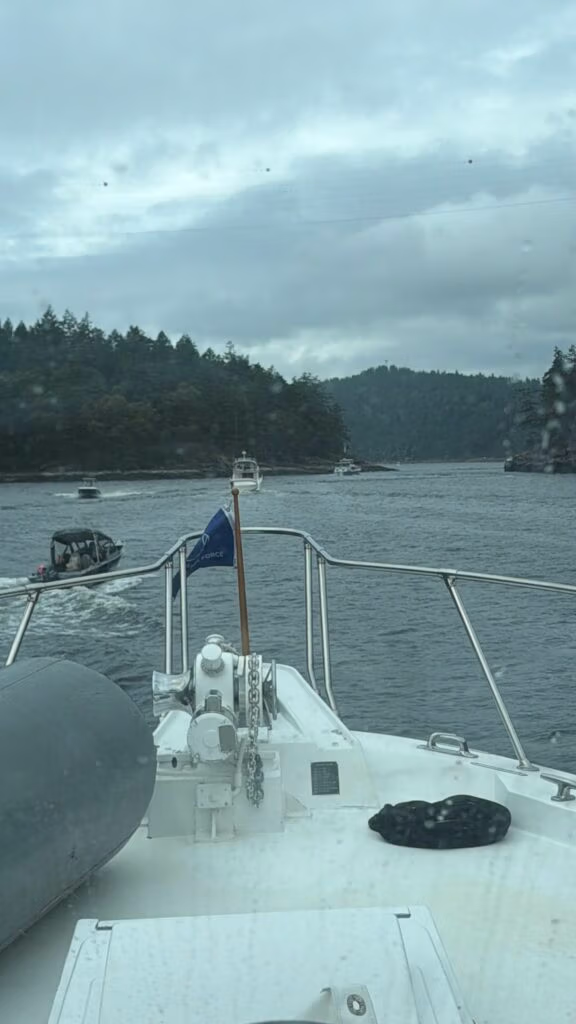
As we approached, we got an unexpected call over the radio from behind us. It was Brilliant Lady, a massive cruise ship, and her captain called our boat by name. I spoke with him briefly, and he asked if we would give him a little room. I couldn’t help but find that funny — our modest boat being asked to make way for a floating city — but of course I moved over to starboard and let him pass.

The rest of the day felt almost like a reward for the careful planning. The water behaved, the passage held steady, and the scenery opened up around us in all directions. It was one of those trips that stays with you: a little bit of suspense, a little humor on the radio, and a lot of beauty in the end.                                                   We were making about 7 knots, and Brilliant Lady was moving at 13, so she slipped ahead of us with impressive ease. It was quite a sight to watch that huge ship glide through the same narrow waterway we were about to enter. Once she was clear, we pressed on into Seymour Narrows and then into Johnstone Strait, and everything went smoothly from there.

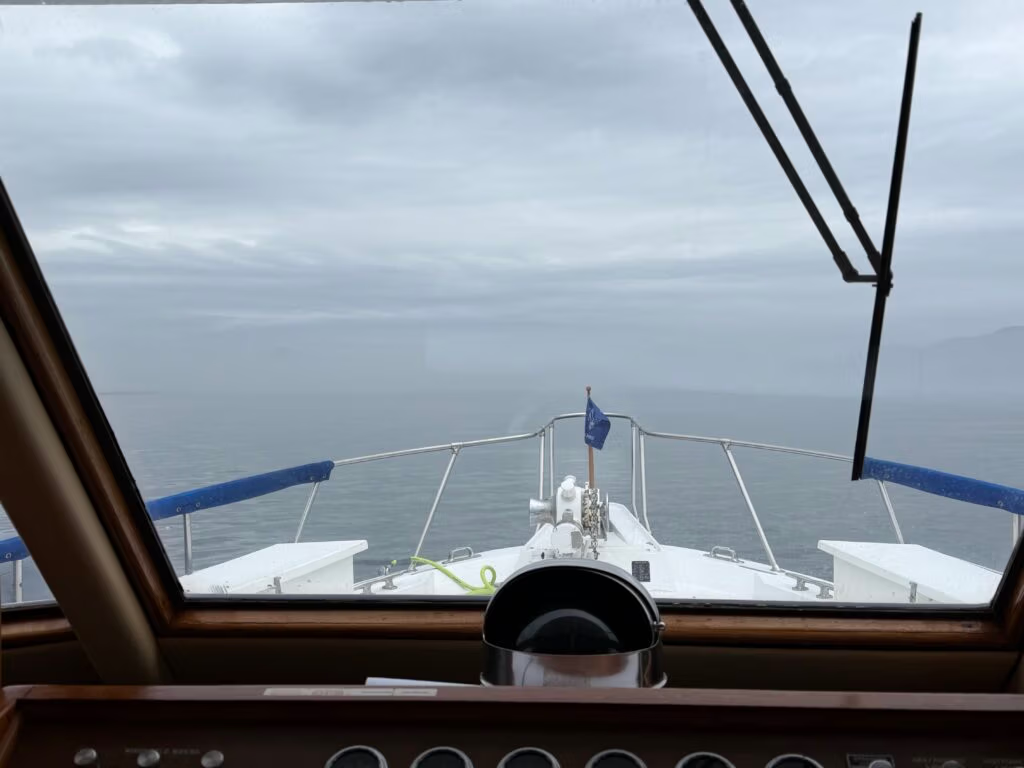
We carried on through the narrows and up into Johnstone Strait, and the day seemed to keep changing its mind. One moment the water and sky were bright with sun, then clouds rolled over us, then rain came and went, and before long fog was slipping in and out around us as if the strait itself were breathing.
For a little while, everything felt still. The world quieted down, and it was easy to believe we had finally reached the place we had been imagining all along. The farther north we went, the more everything felt right — not just the coastline and the water, but the feeling in the air, like the trip was settling into the shape we had hoped for.
It was one of those rare moments when travel stops feeling like movement and starts feeling like arrival. Out there, with the shifting weather and the open strait around us, it seemed as though a long-held dream was coming true.
And through all of it, one thought stayed close: just wishing Jennifer had been there to see it too.

Blind Channel for the Night

We did not think we were going to make it!!

Blind Channel is a Wonderful Place

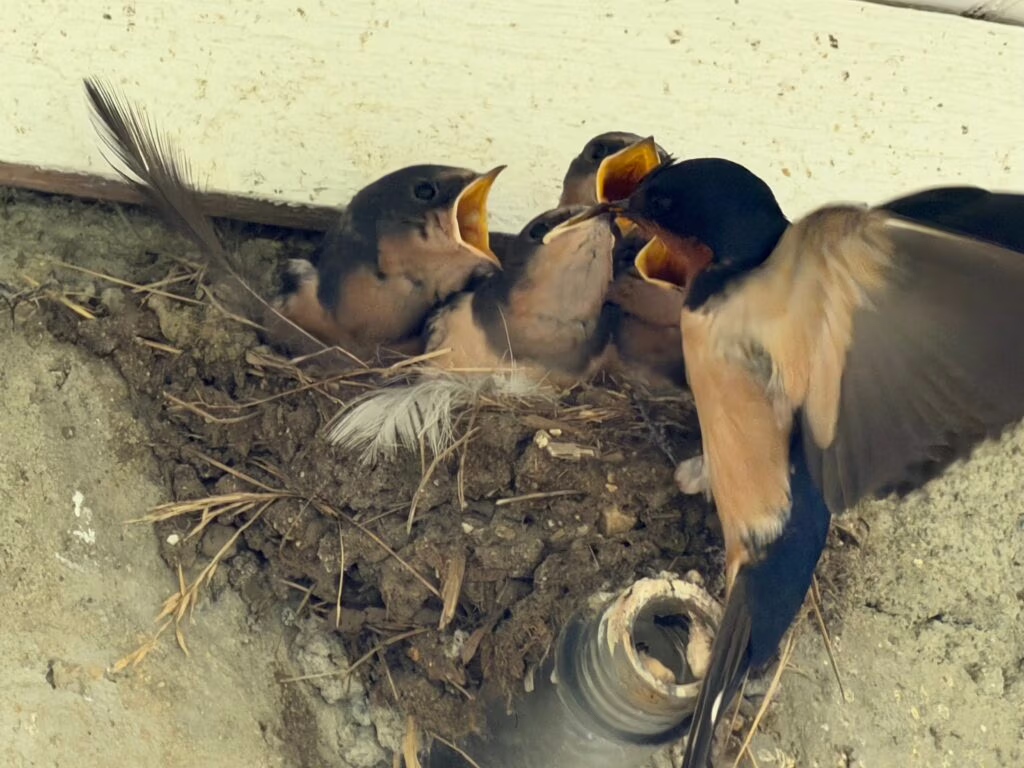
Nature is everywhere.
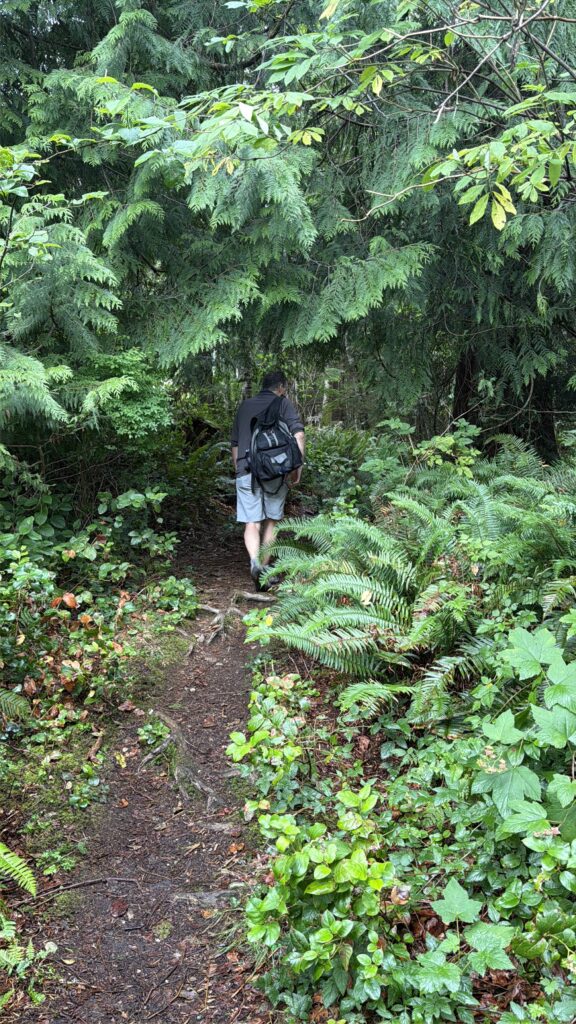
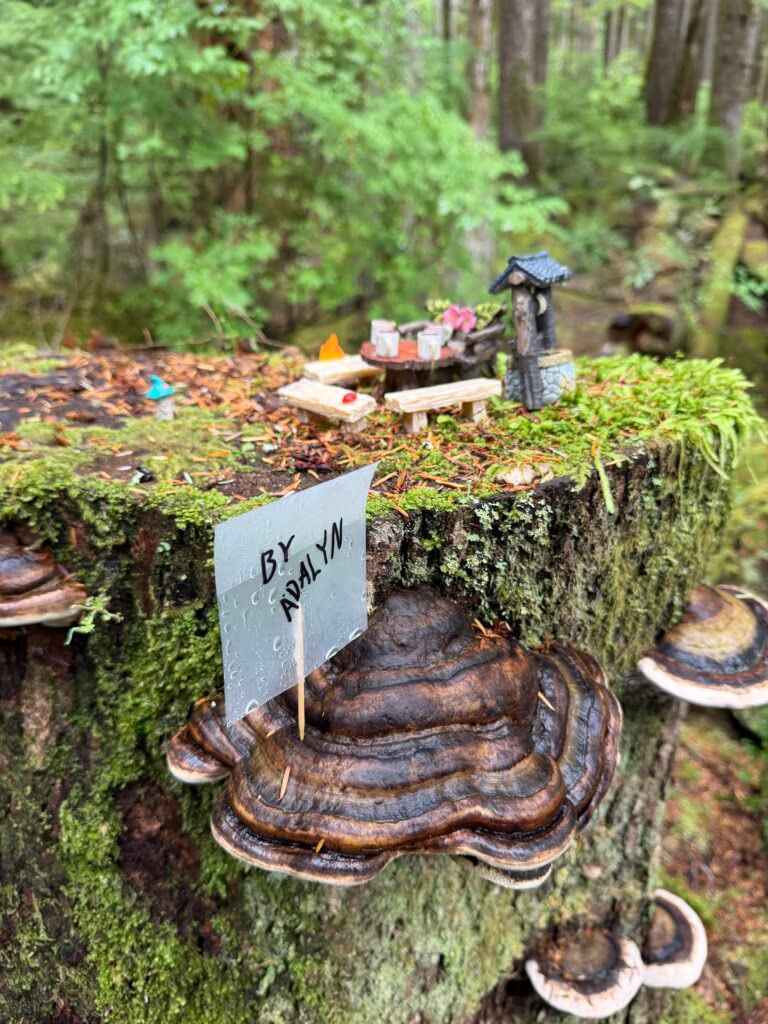
These were set up all along the hiking trail.
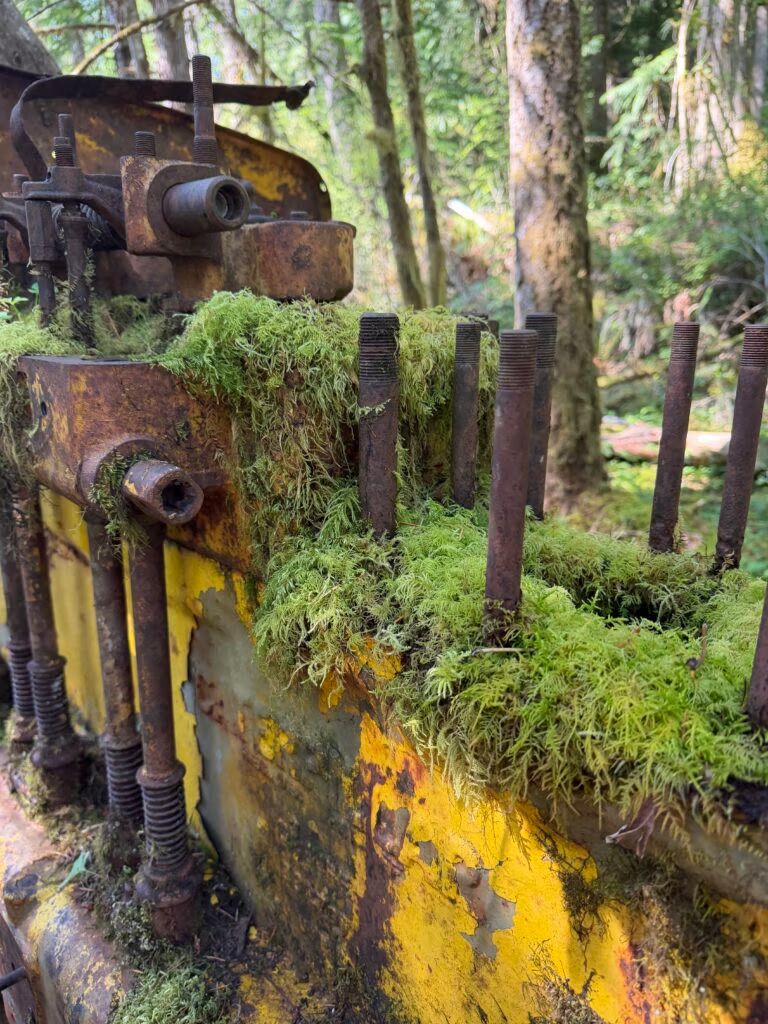
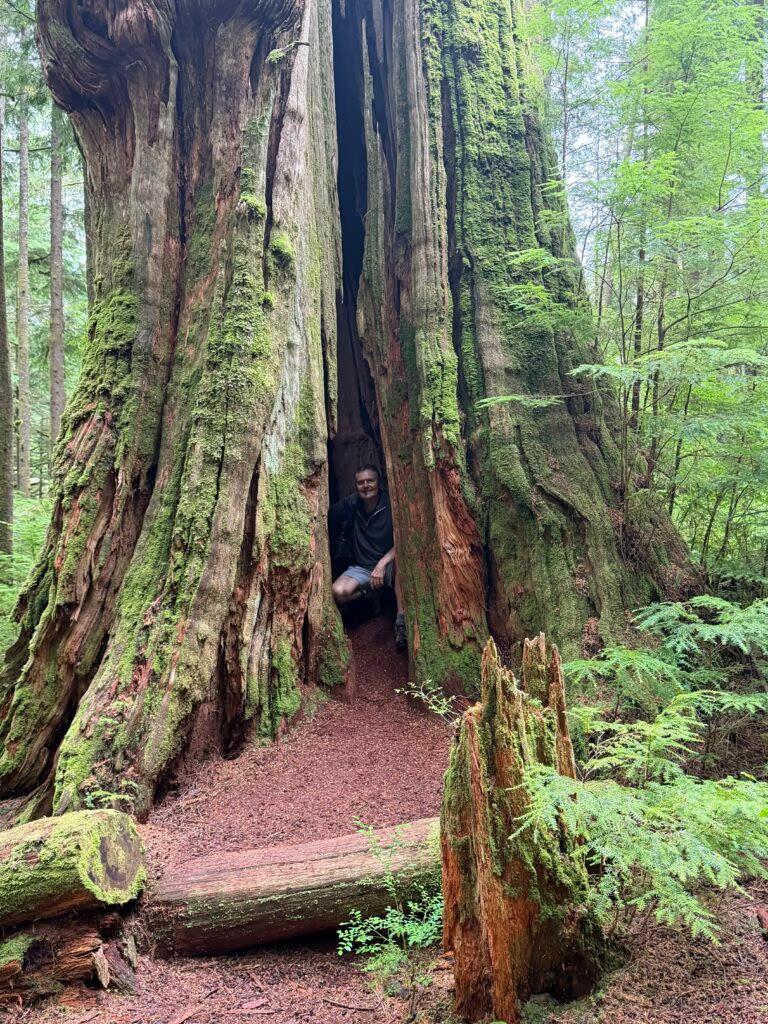
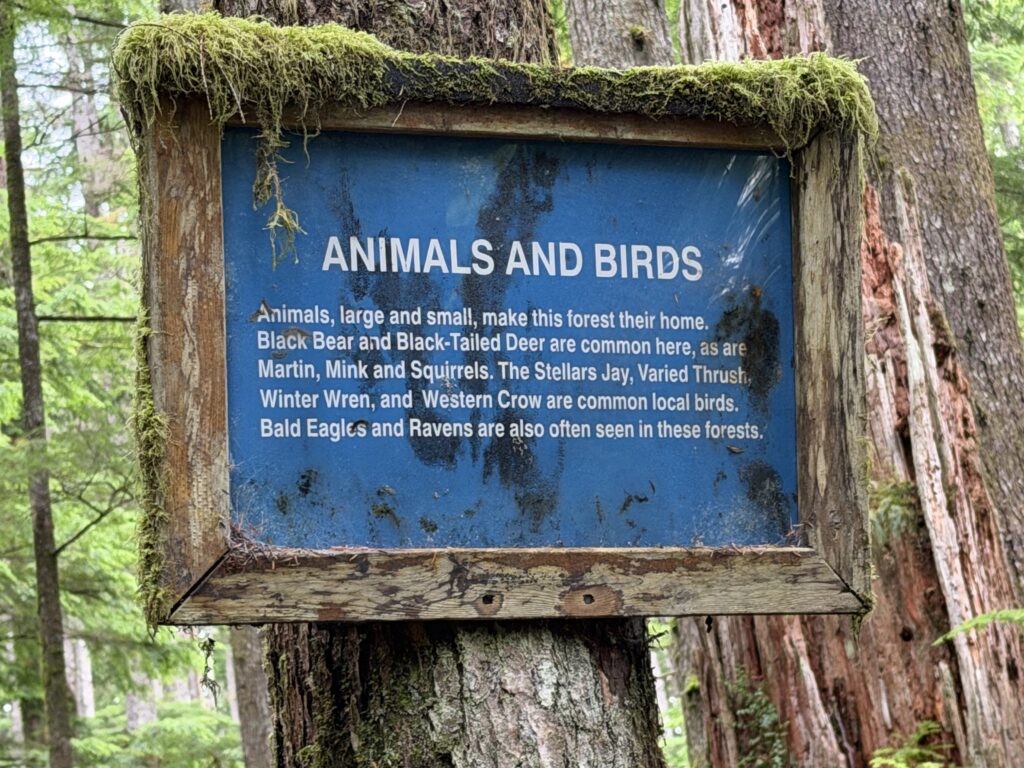
This sign was along the hiking trail, forest is always trying to take what ever man does back.

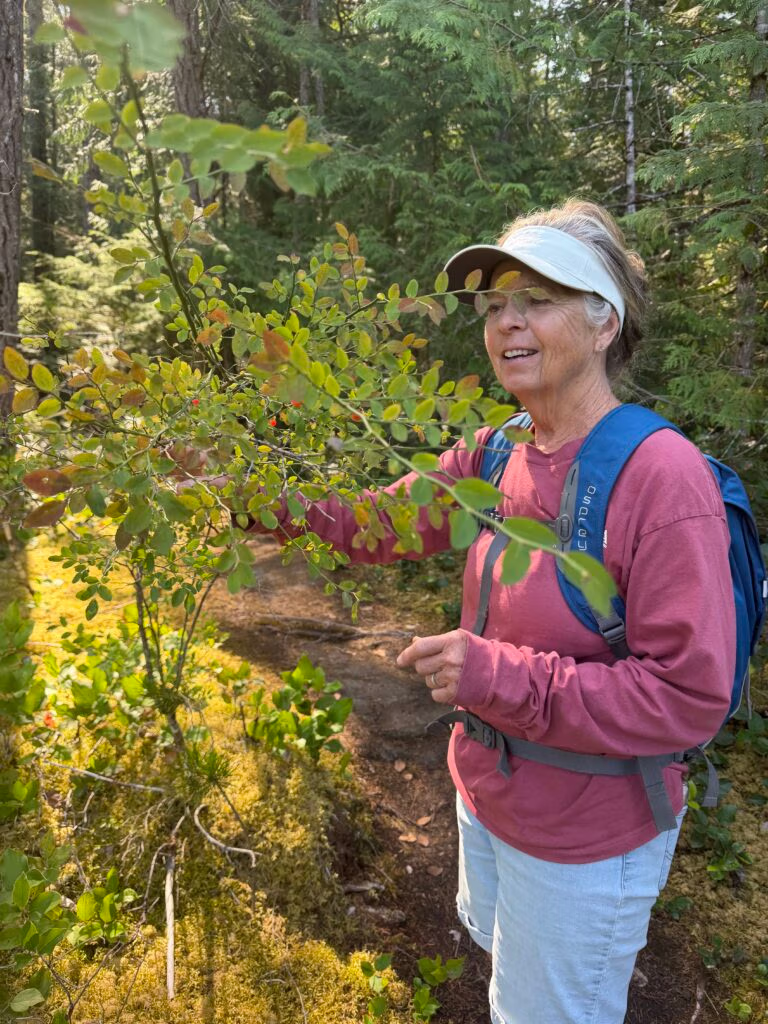
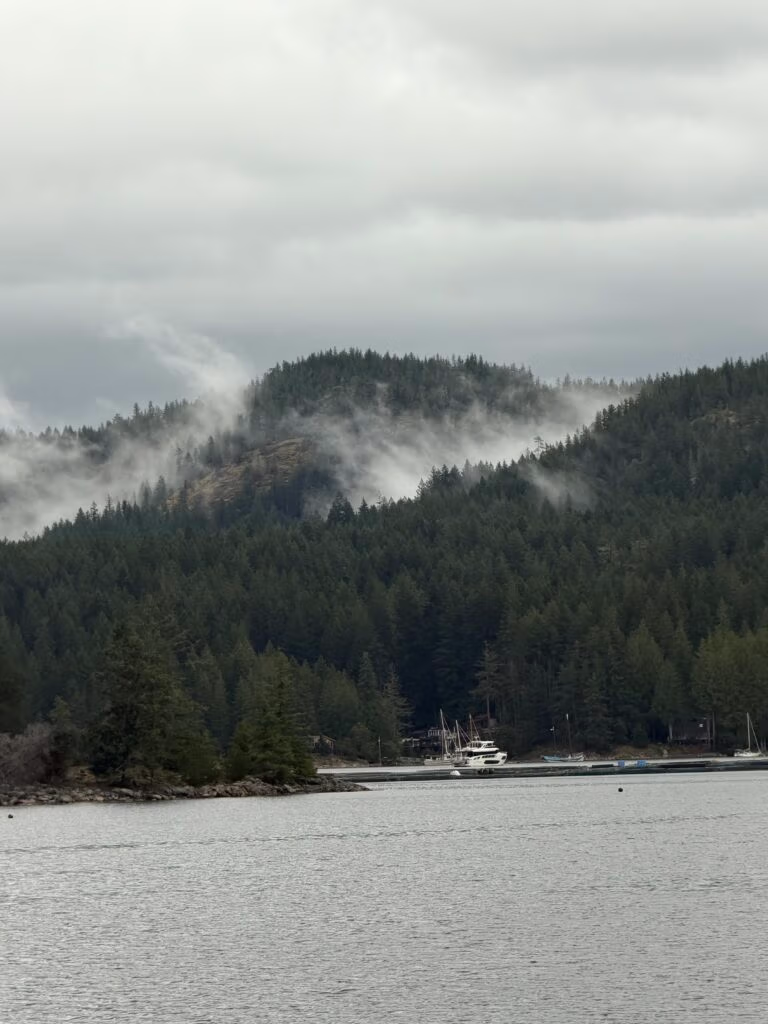
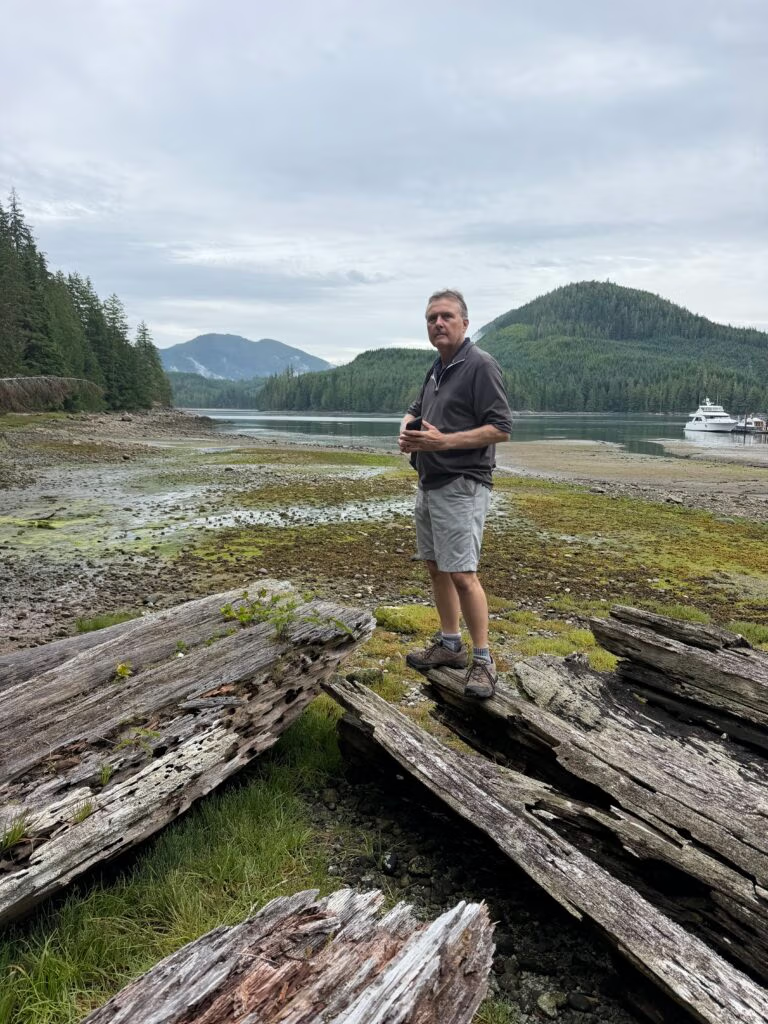
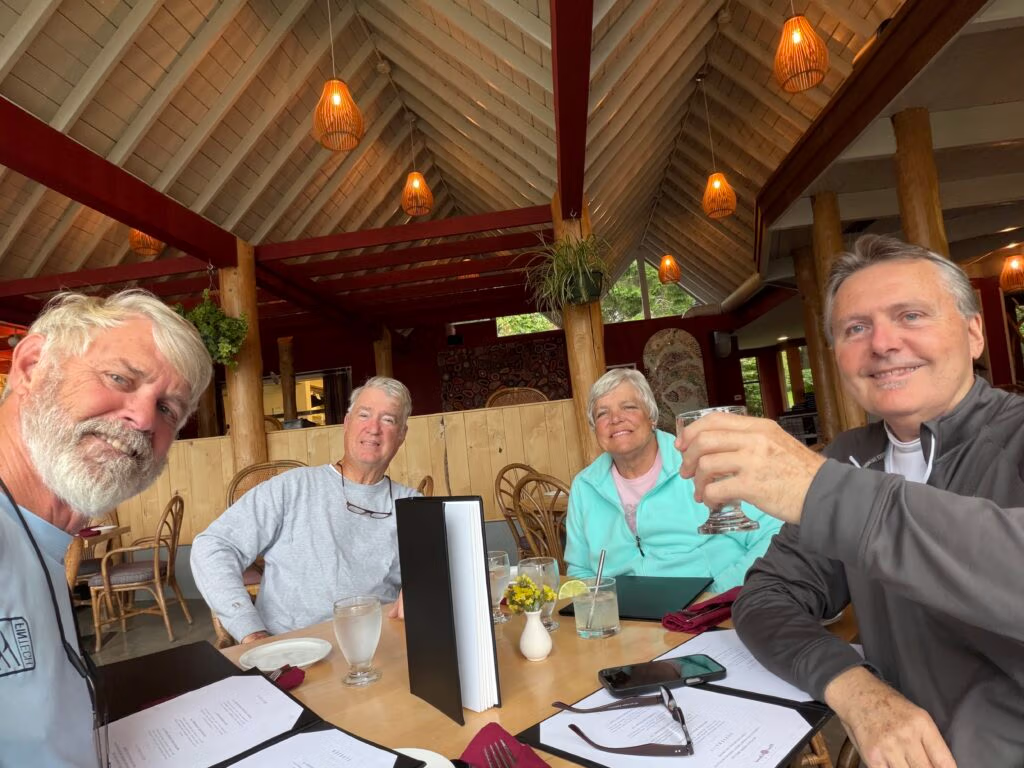
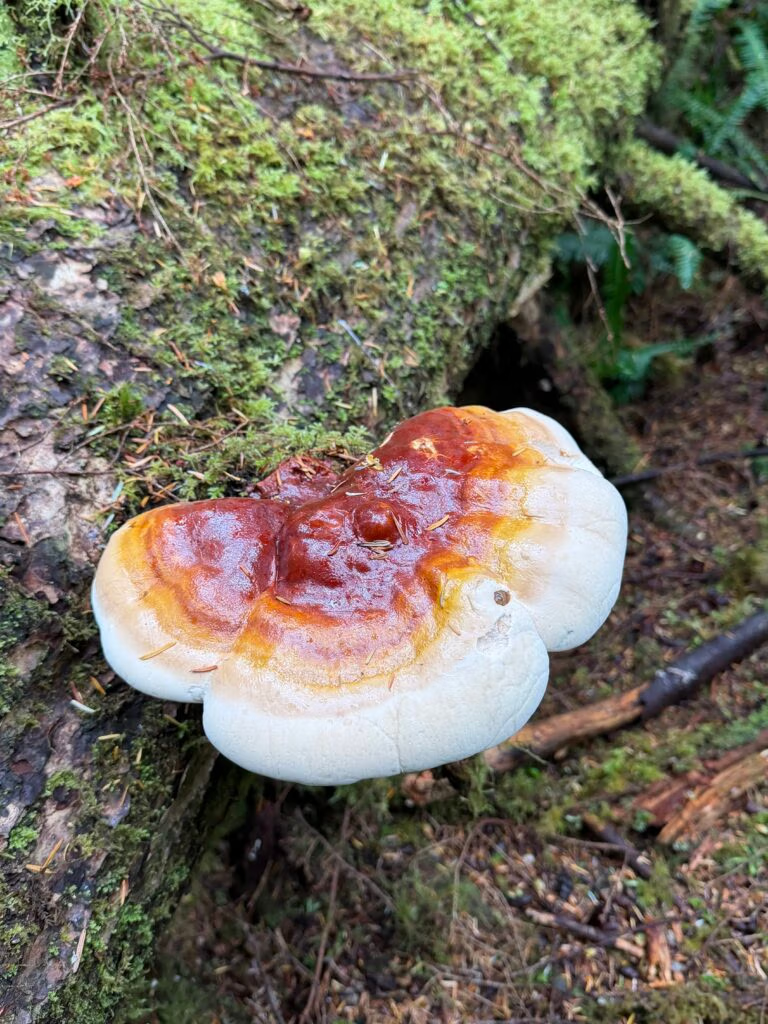
At Blind Channel, we found a surprising little world tucked away in the wilderness. There were walking trails, nature hikes, a store, and a restaurant — just enough of everything to make it feel like a tiny oasis in the middle of nowhere. It was the kind of place that reminded us how remote the coast can be, and how welcoming a stopover can feel when you least expect it.

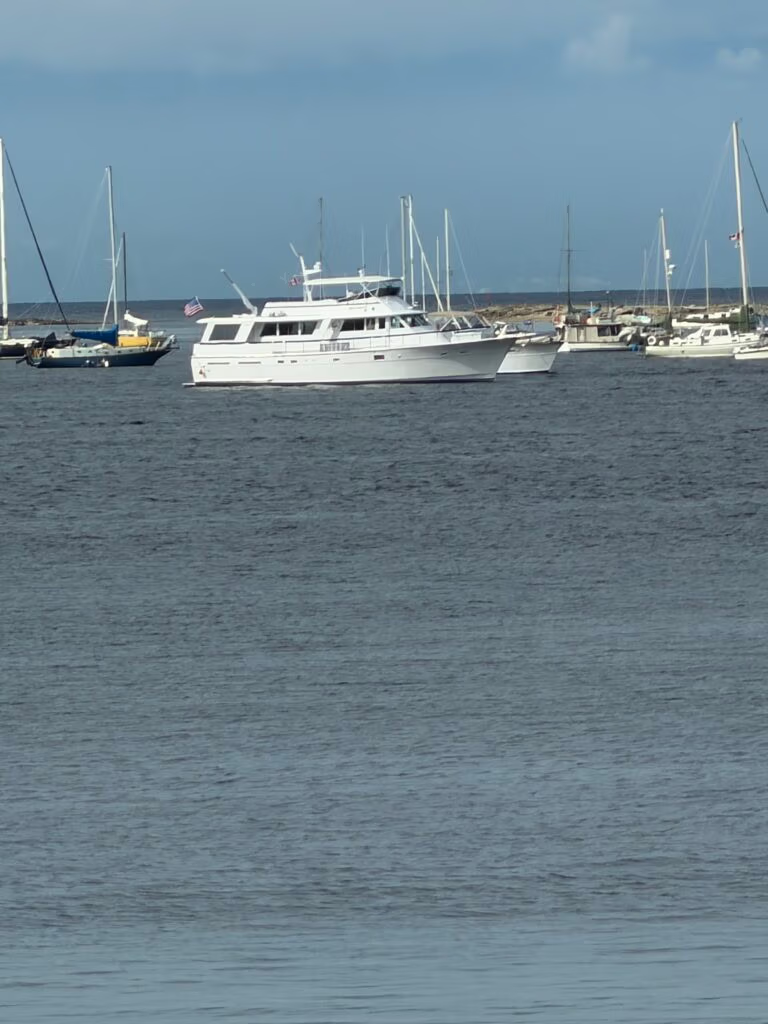
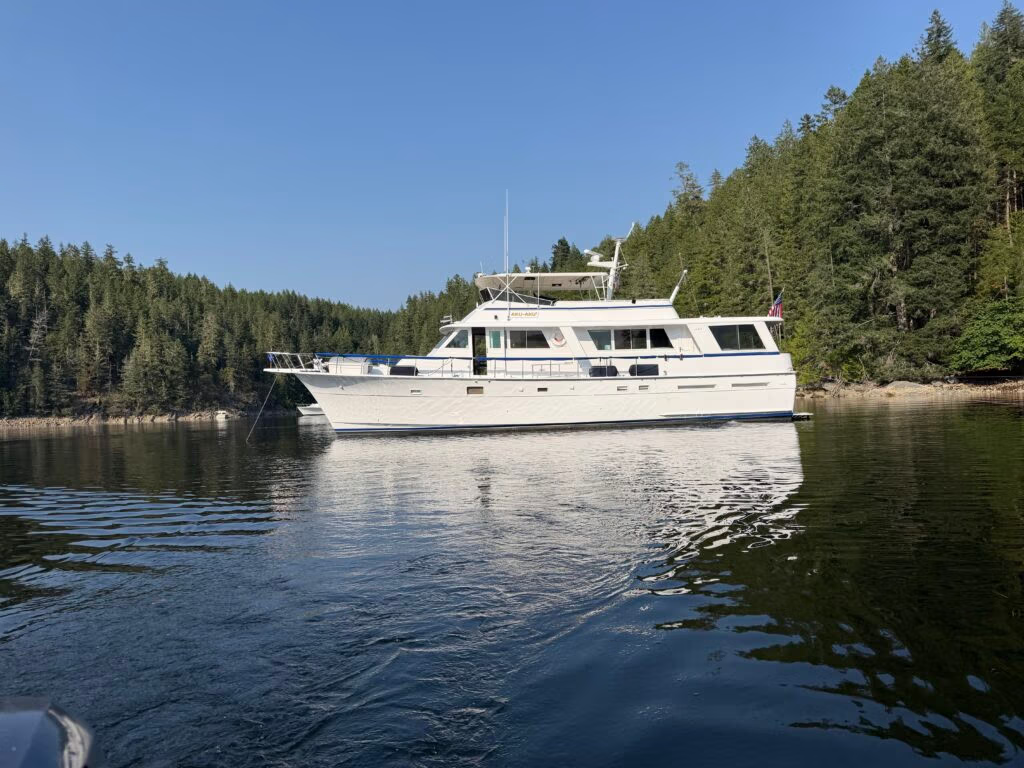
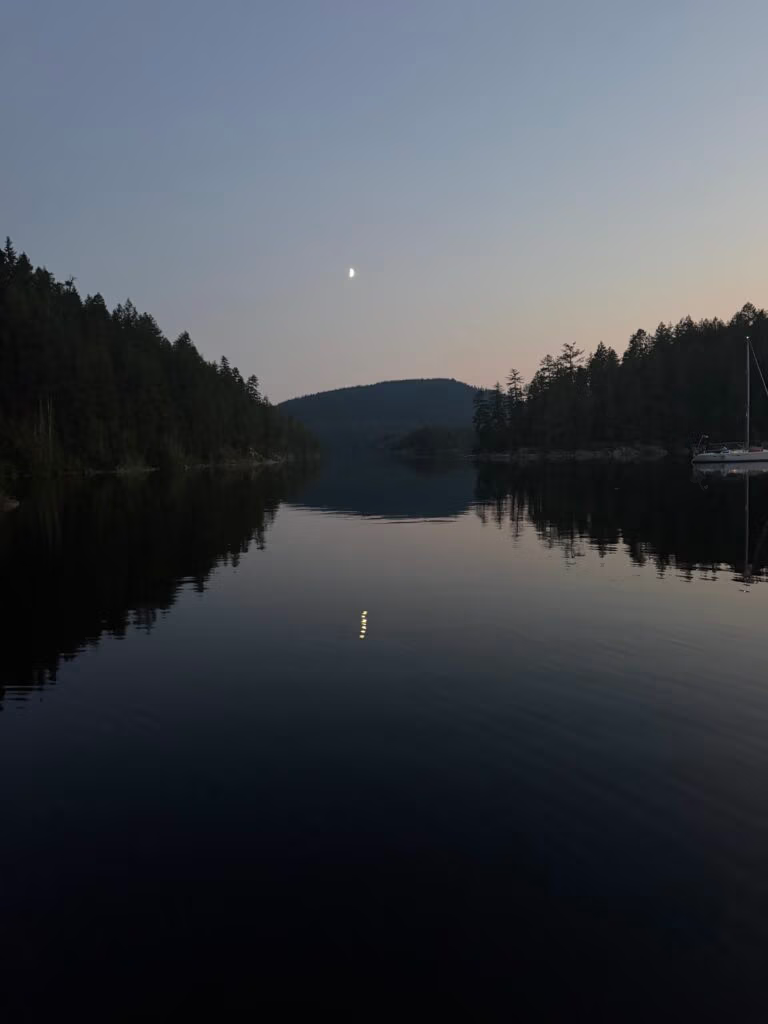
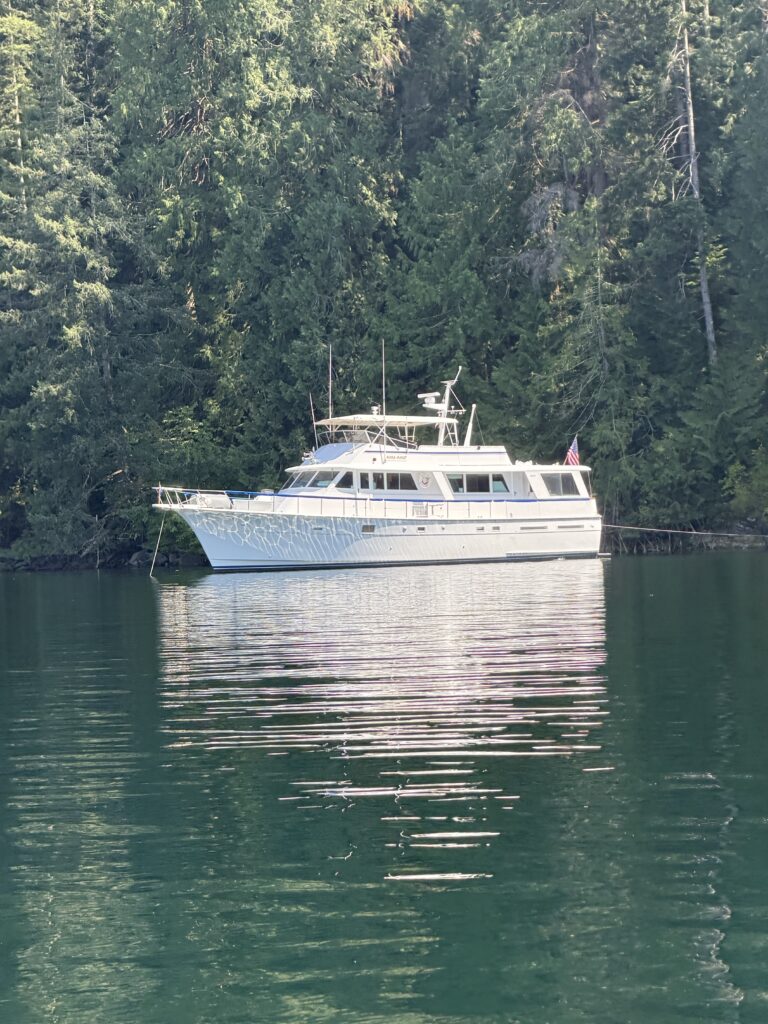
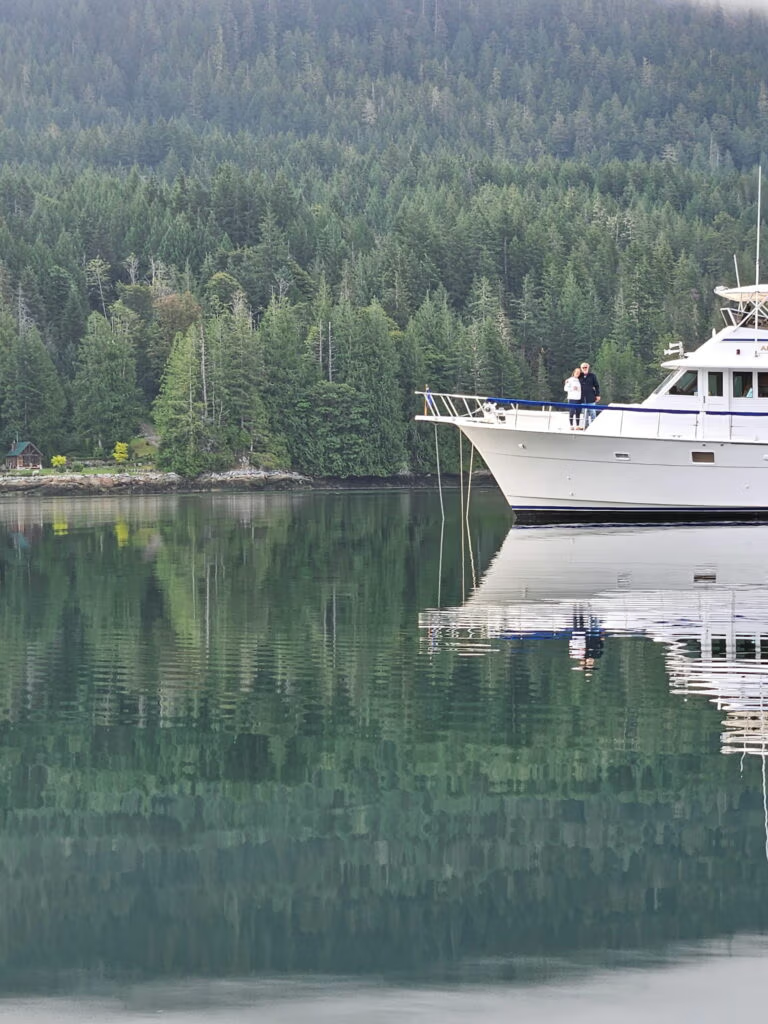
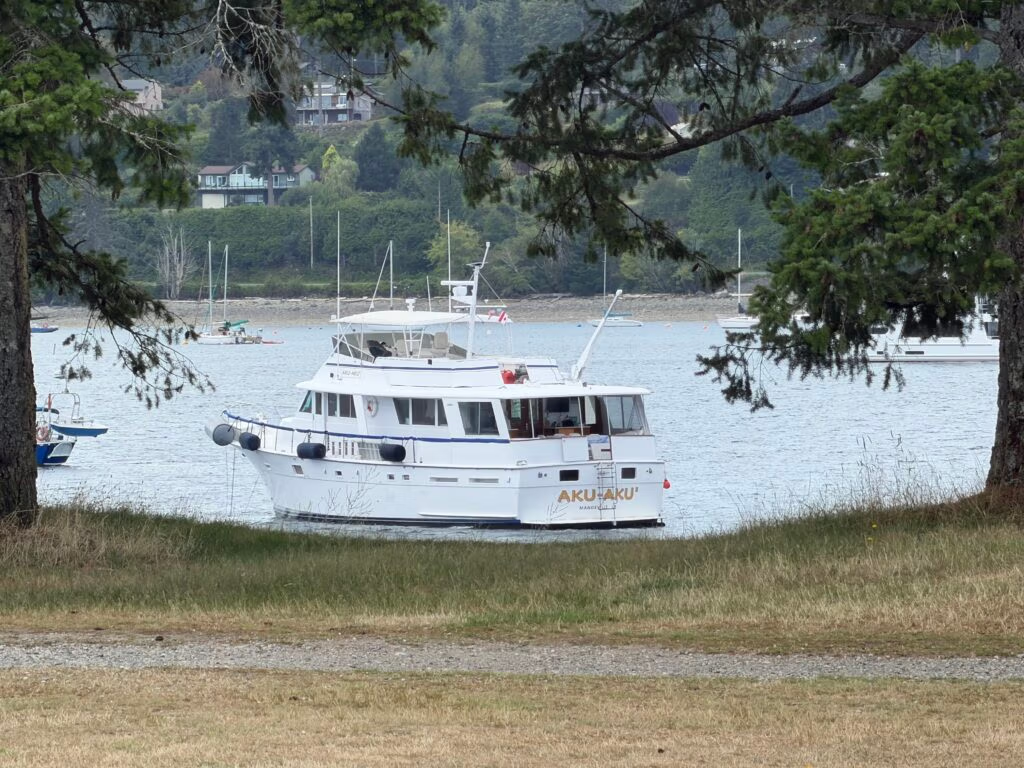
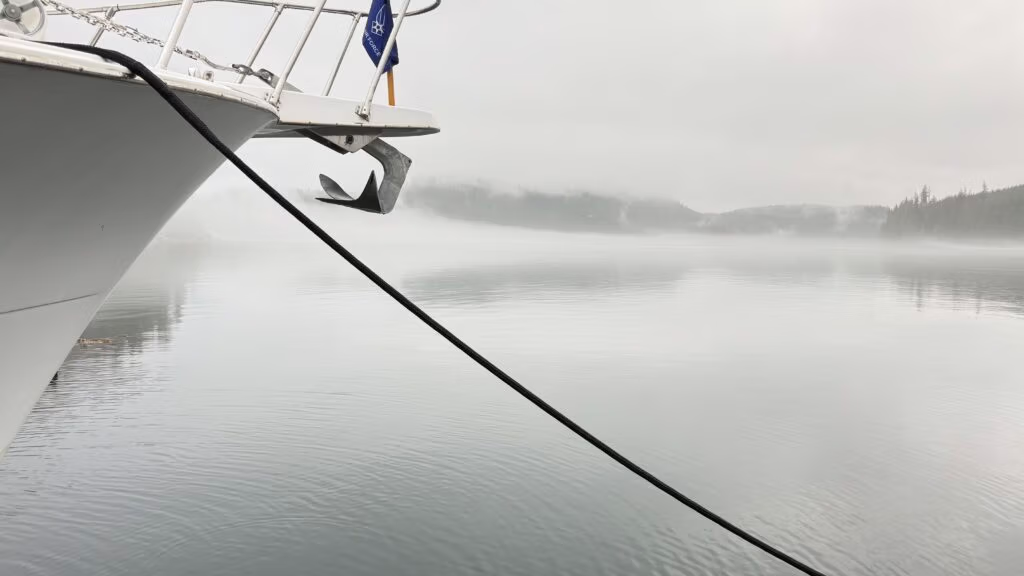
Aku-Aku tucked away for night . Photo Peter Cox