August 2026 British Columbia

August, British Columbia 2026

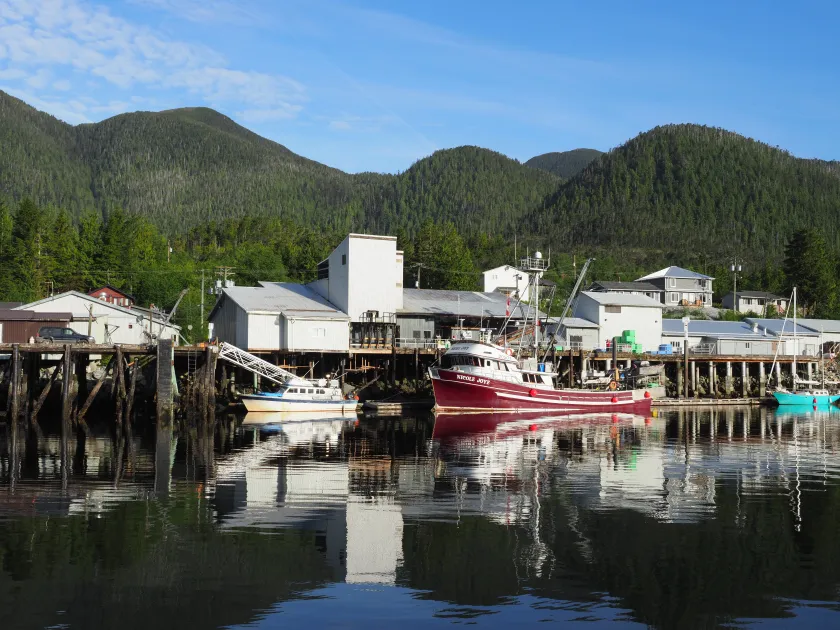
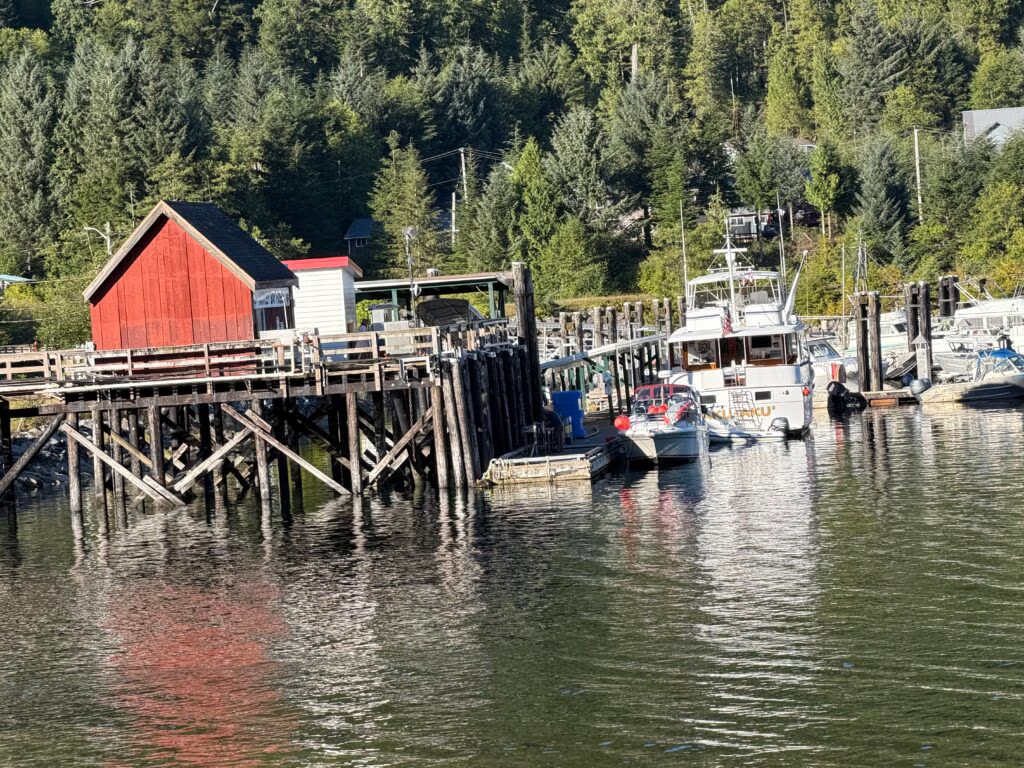
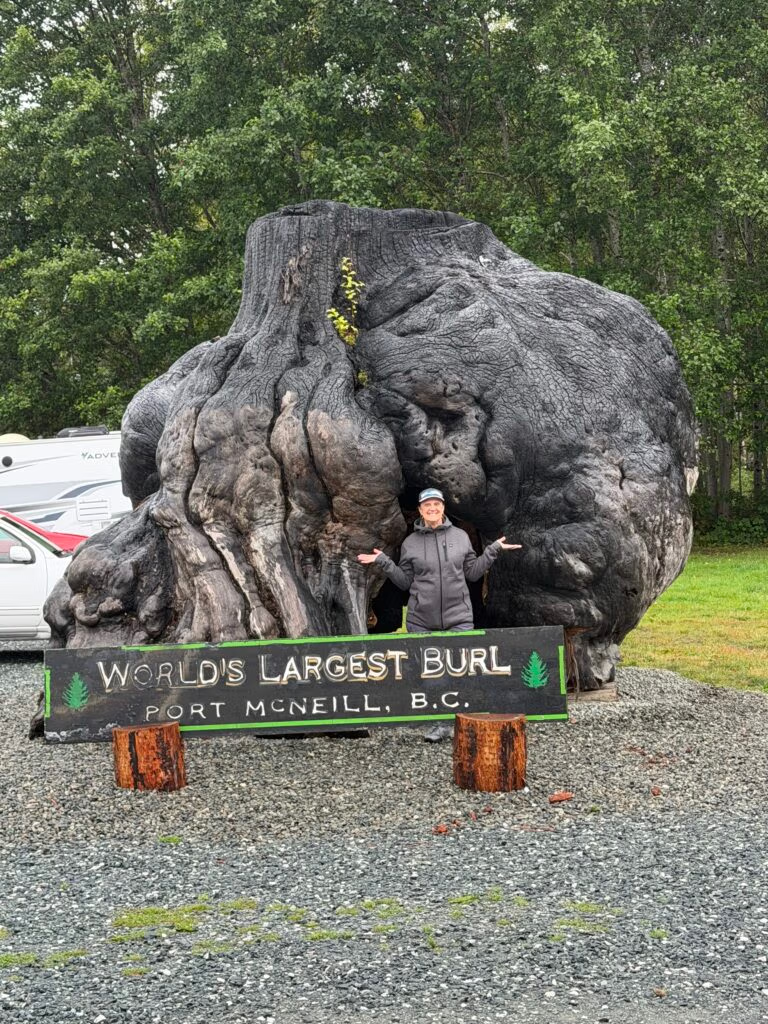
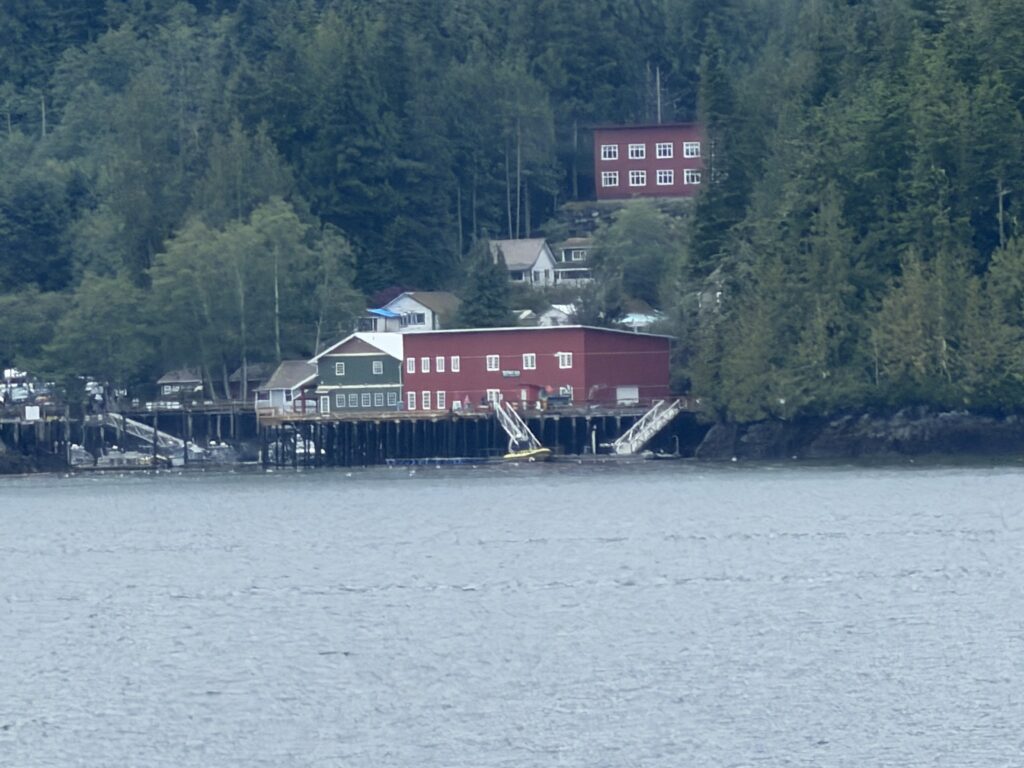
Blind Channel to Port McNeill

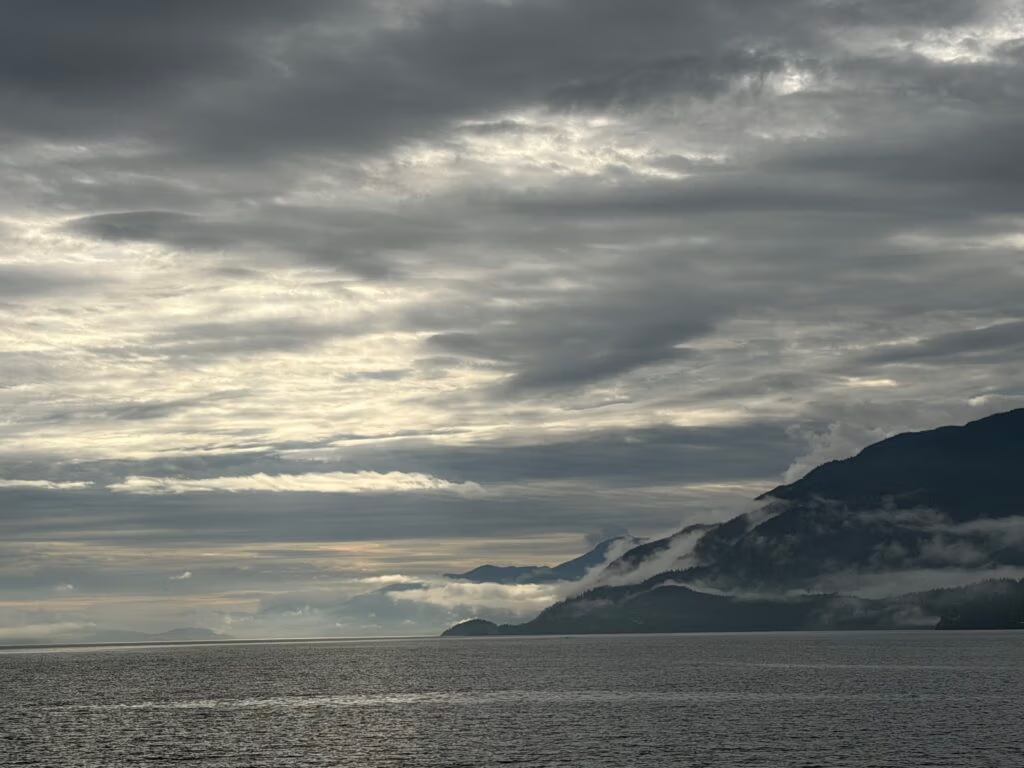
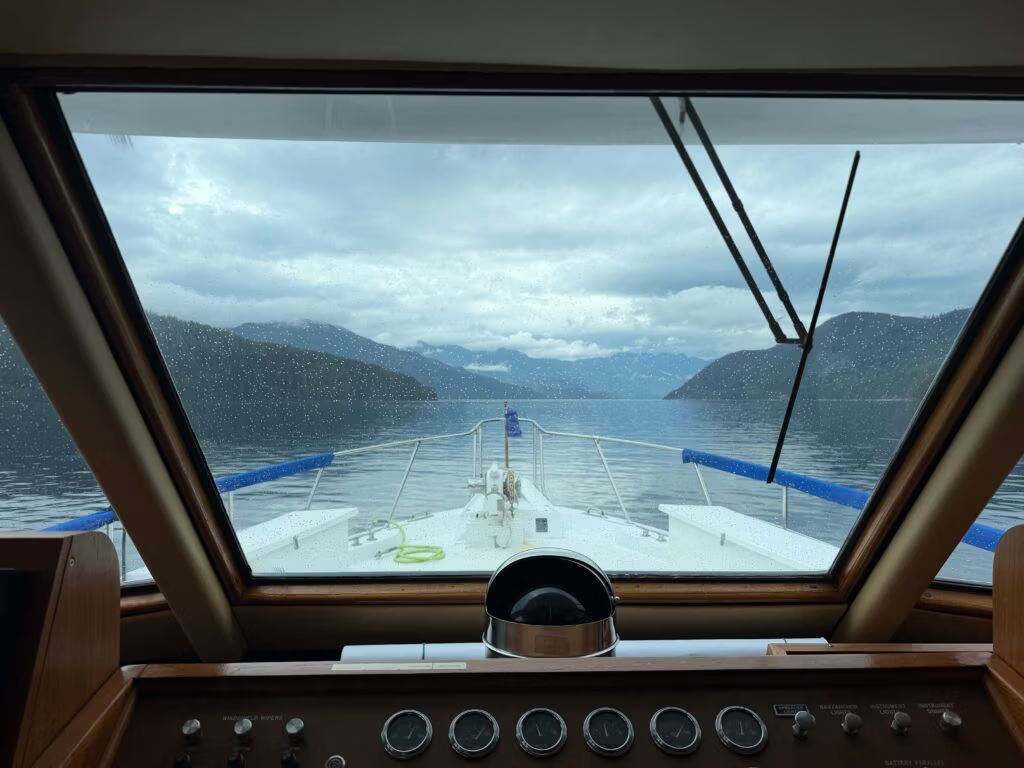
We left Blind Channel just after 6:30 in the morning, hoping to catch a favorable tide as we headed up Johnstone Strait, a major boating route along the northeast coast of Vancouver Island. What followed was a full day on the water: sunshine gave way to rain, then cloud, then clear skies again, and by the time we pulled into Port Richey, the whole crew was ready to tie up and breathe a little easier.
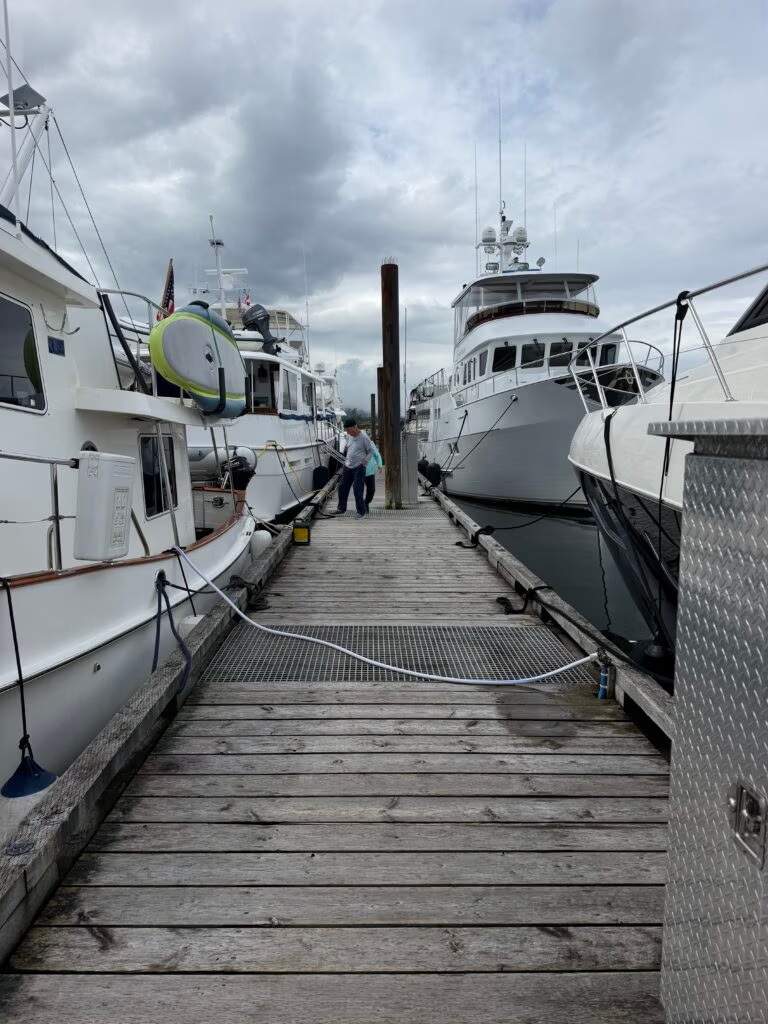
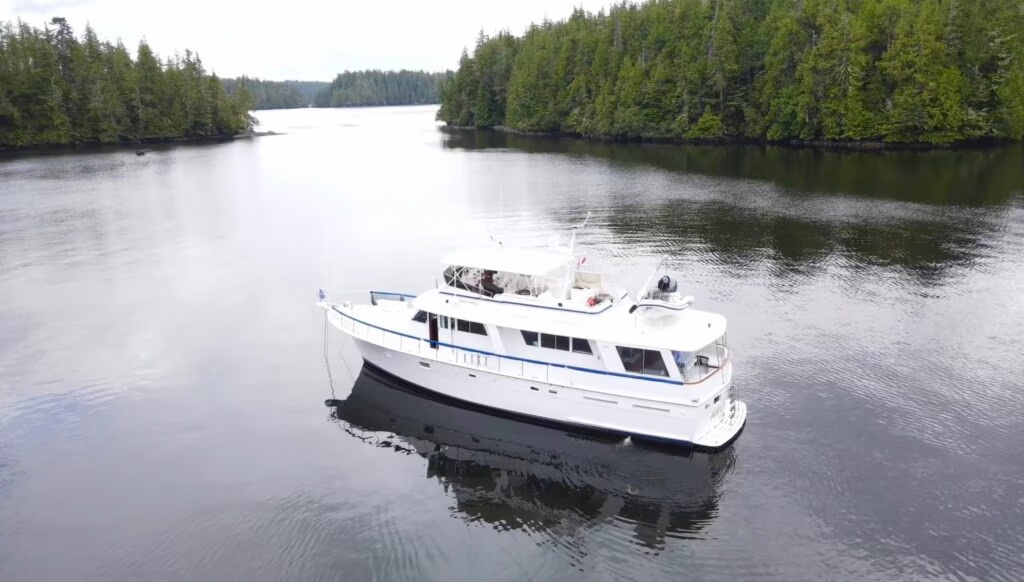
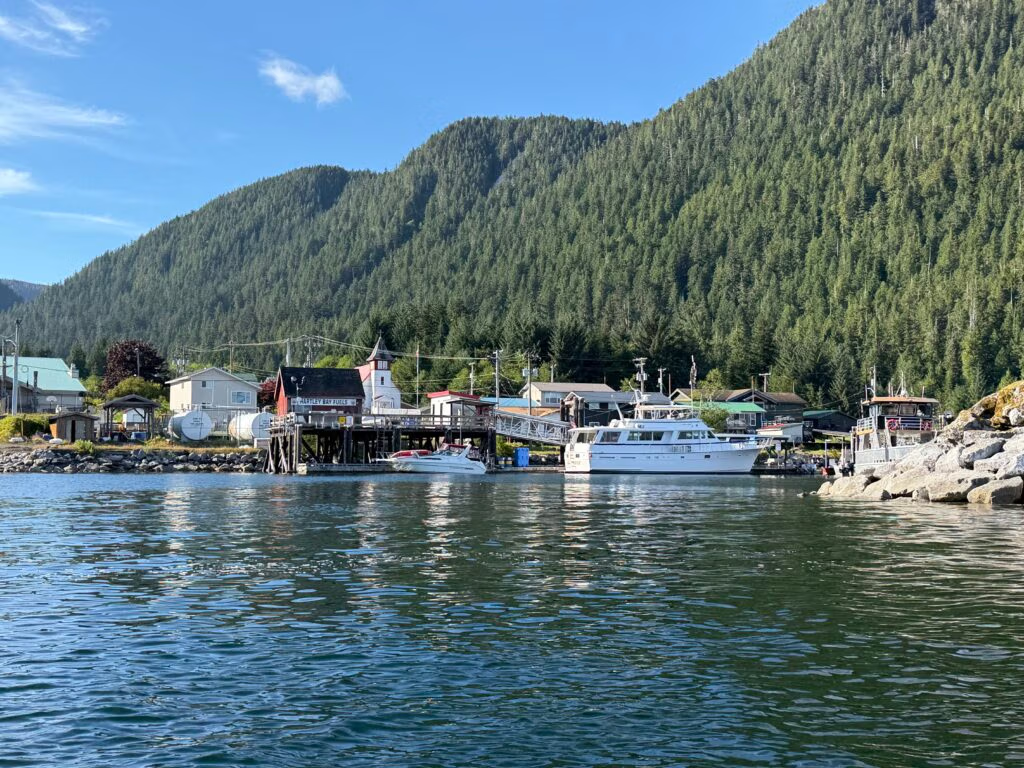
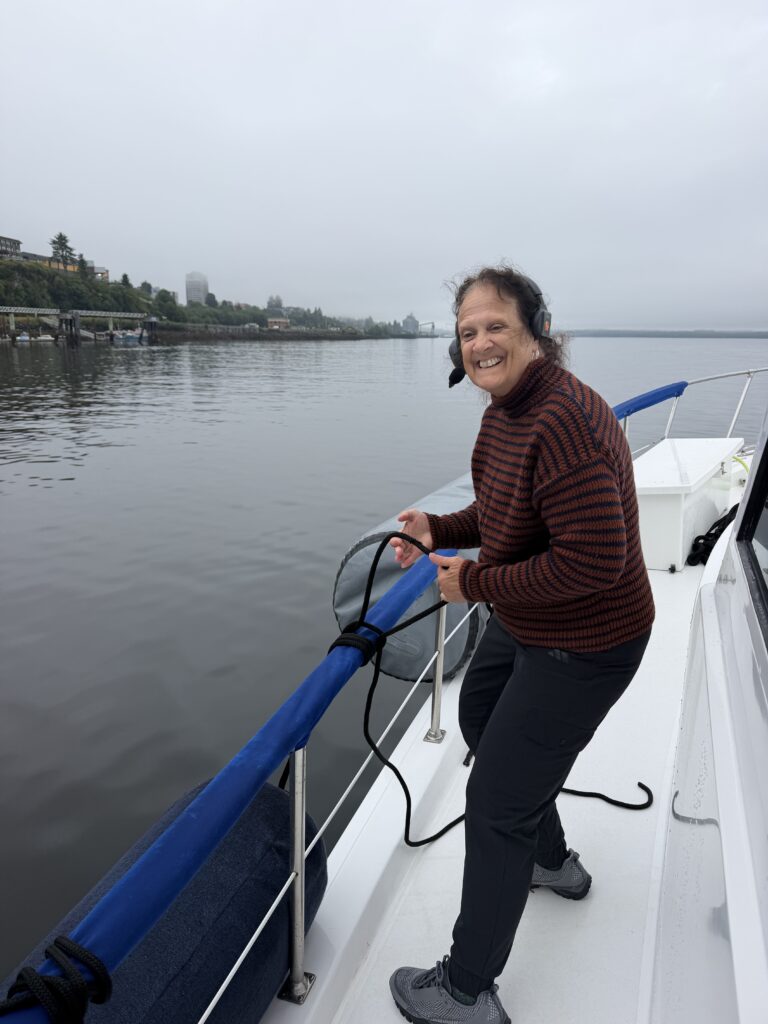
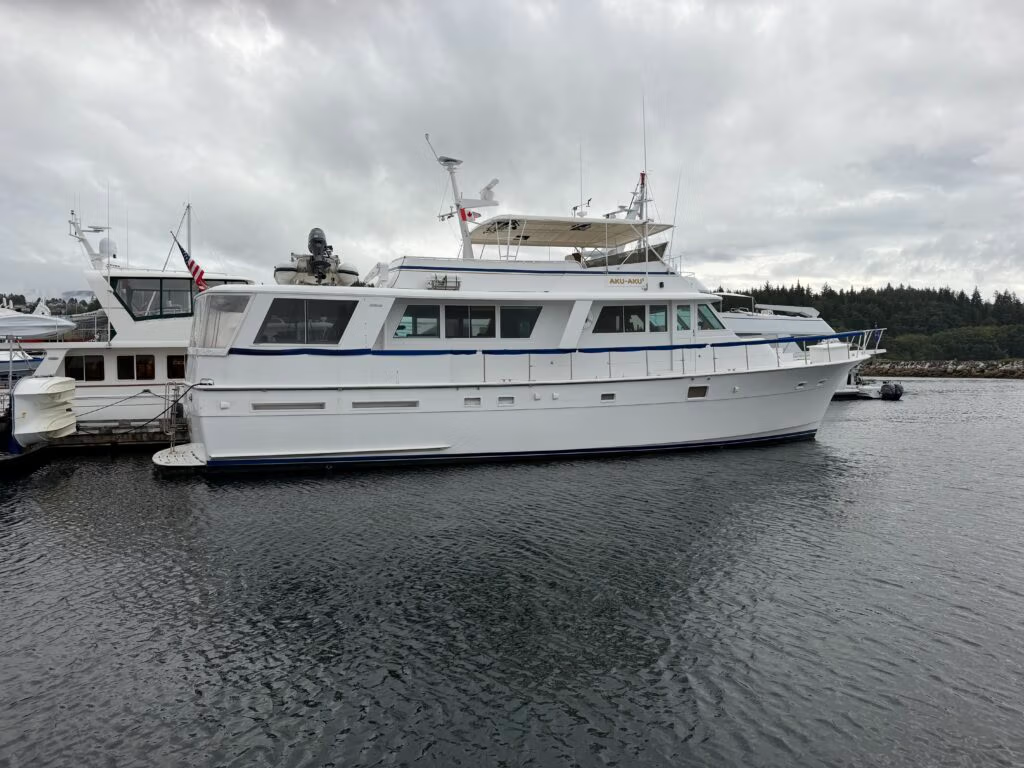
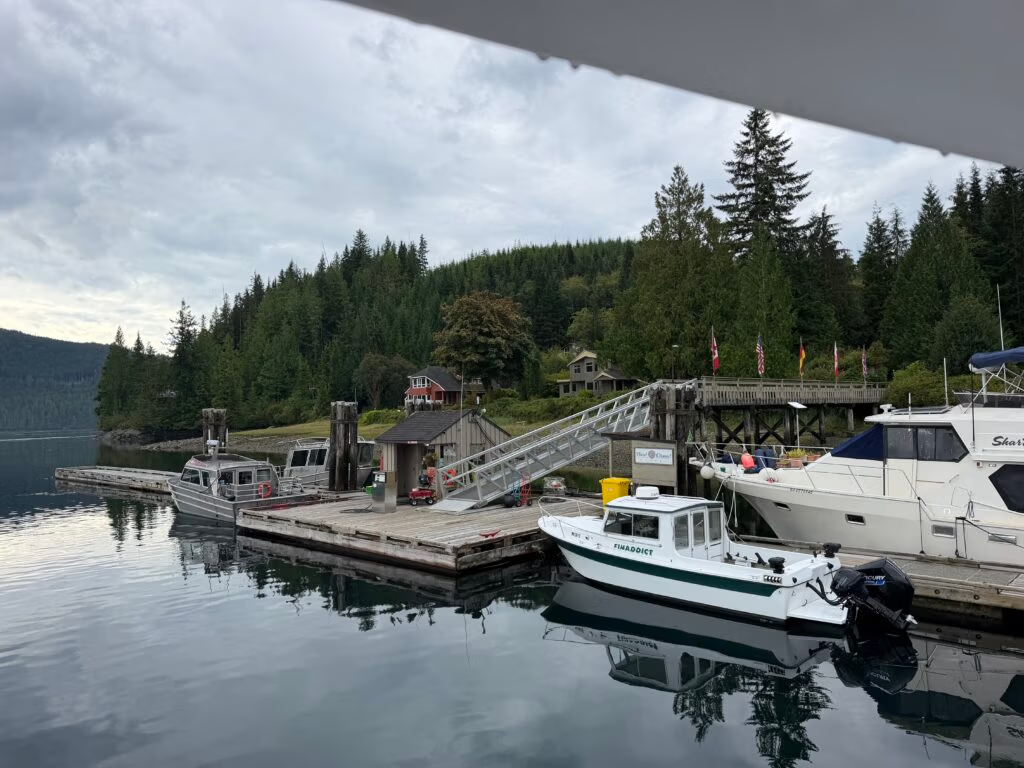
By late morning, around 11:30 or 12:00, we finally succeeded in parking the boat. The first try put us at the wrong dock, but after a bit of maneuvering we slipped in between two other boats and made ourselves secure.
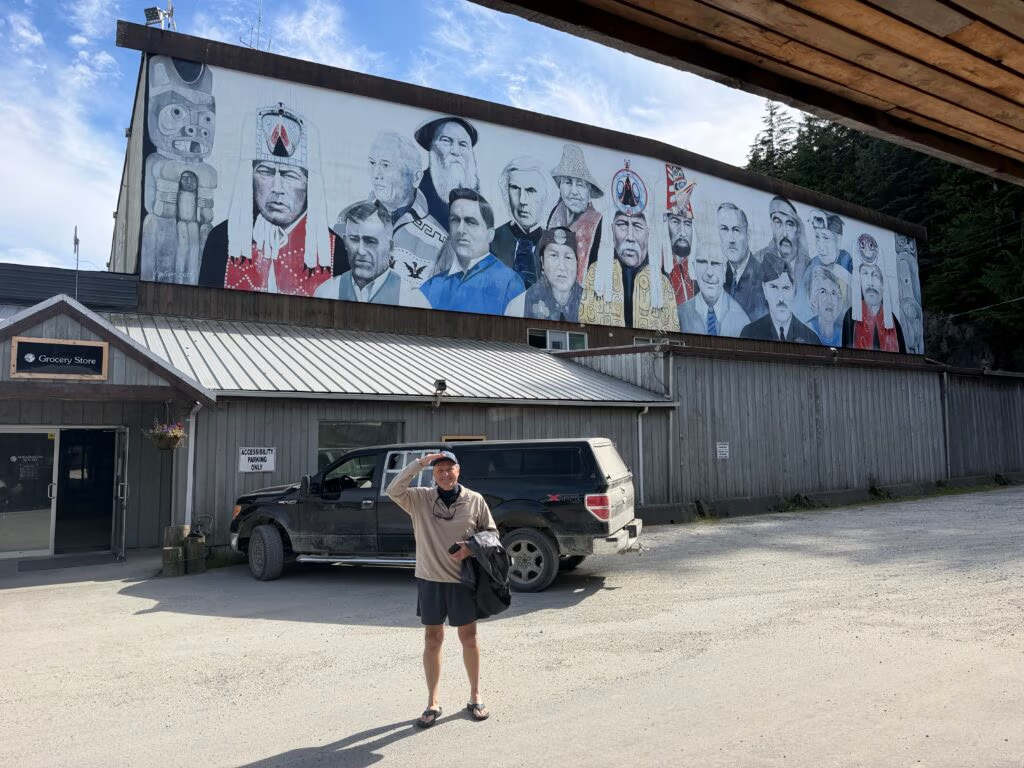
With the boat settled, we went ashore to get the oil and picked up a few supplies at an auto parts store and a grocery store. Everyone seemed upbeat; after a solid day of progress, the mood on board was relaxed and cheerful.
That evening, we drifted back to the boat where Chris had prepared a warm meal of beef stew, along with salad, and it felt like a proper supper after the long run. We shared good conversation into the evening, then turned in for the night, satisfied with the day’s travel and ready for what came next.
The next day would take us out to the sound for the first time, where we would finally experience the real Pacific.

Port McNeill to Penrose Island Marine Park, Fury Cove, 1 August

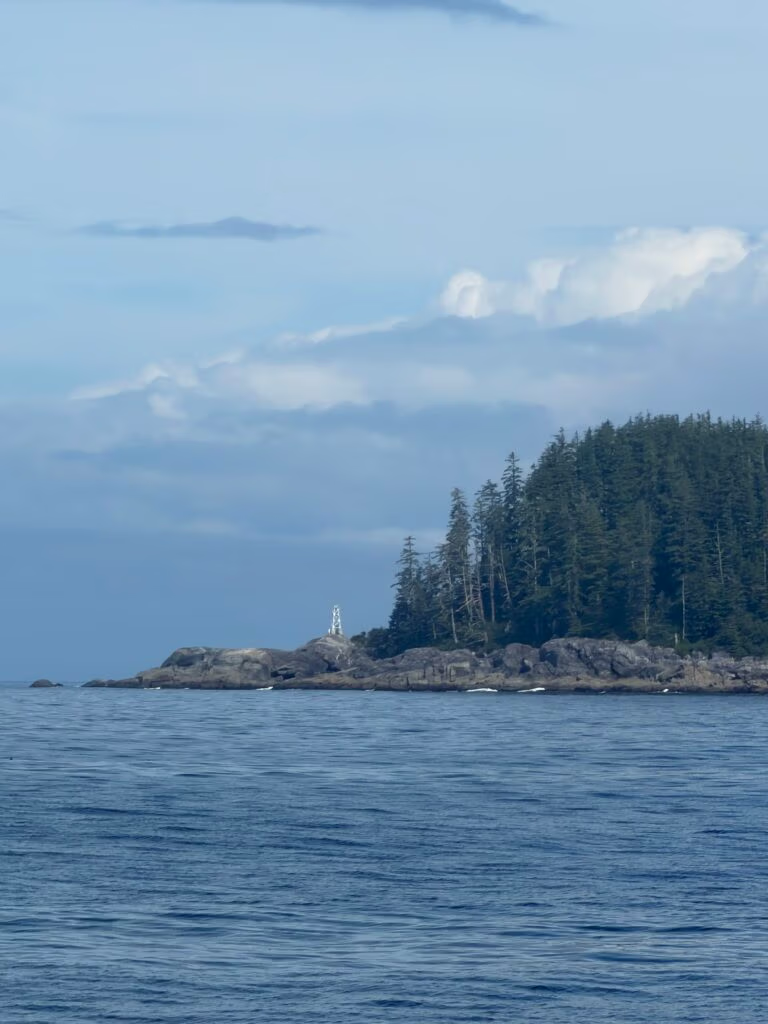
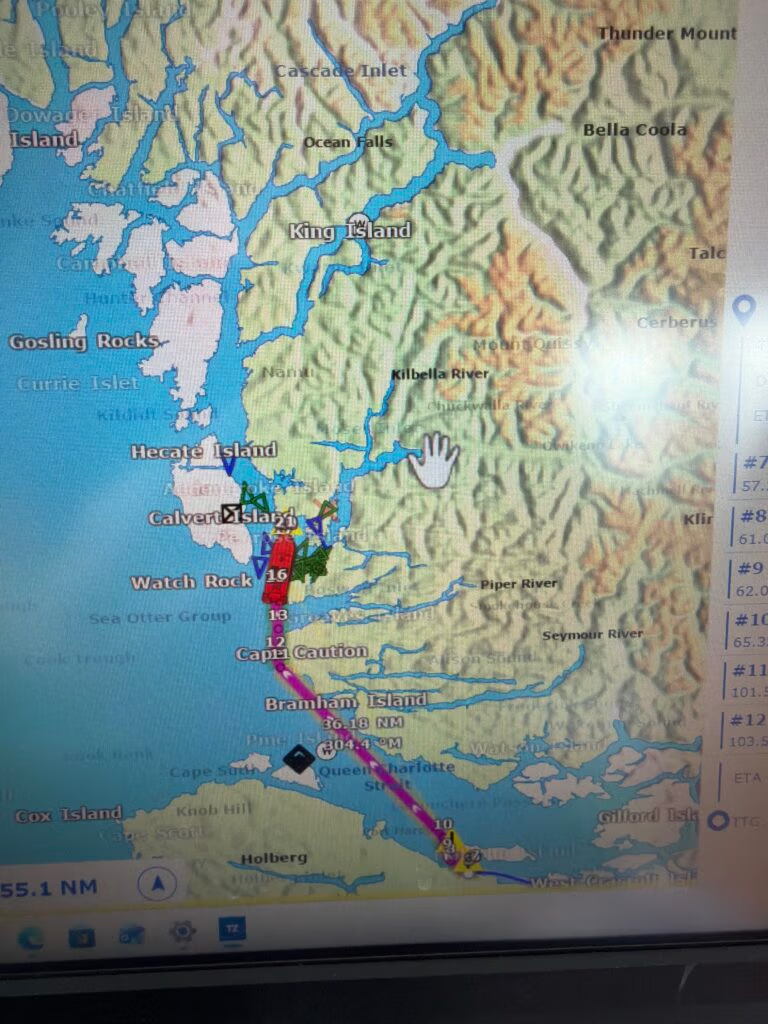
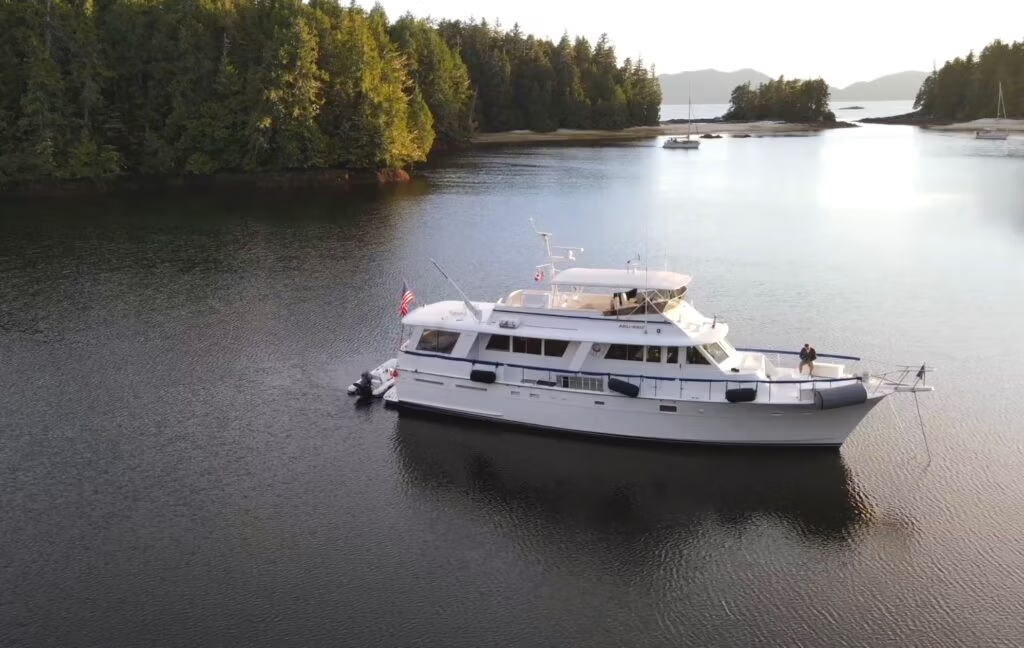
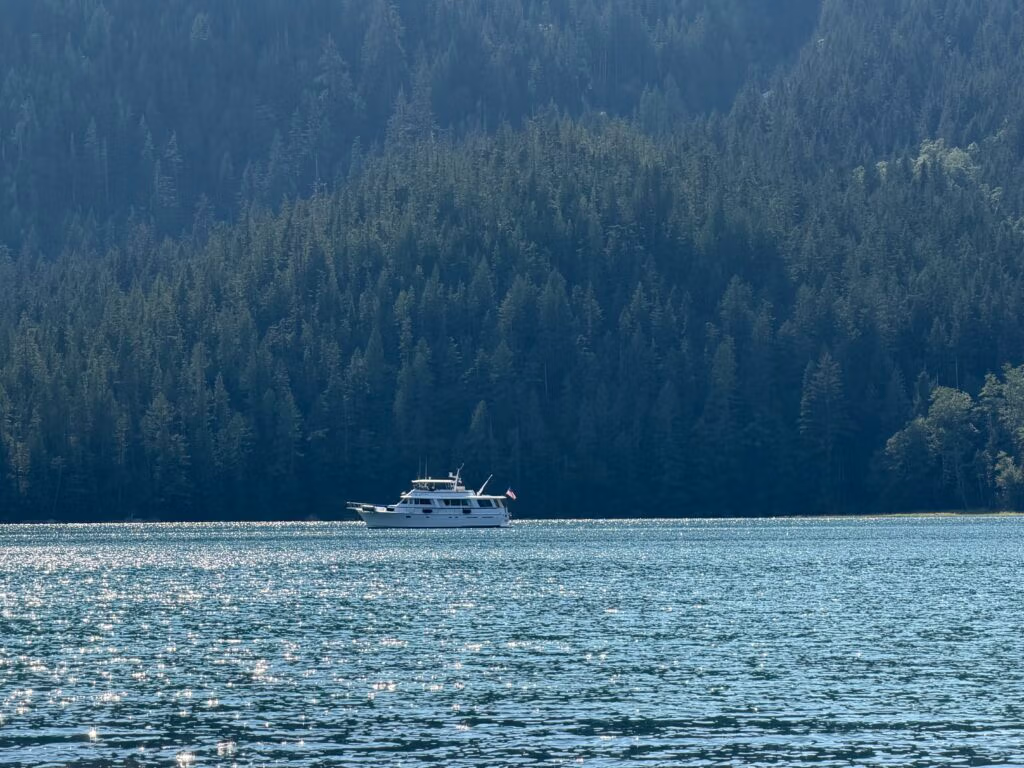
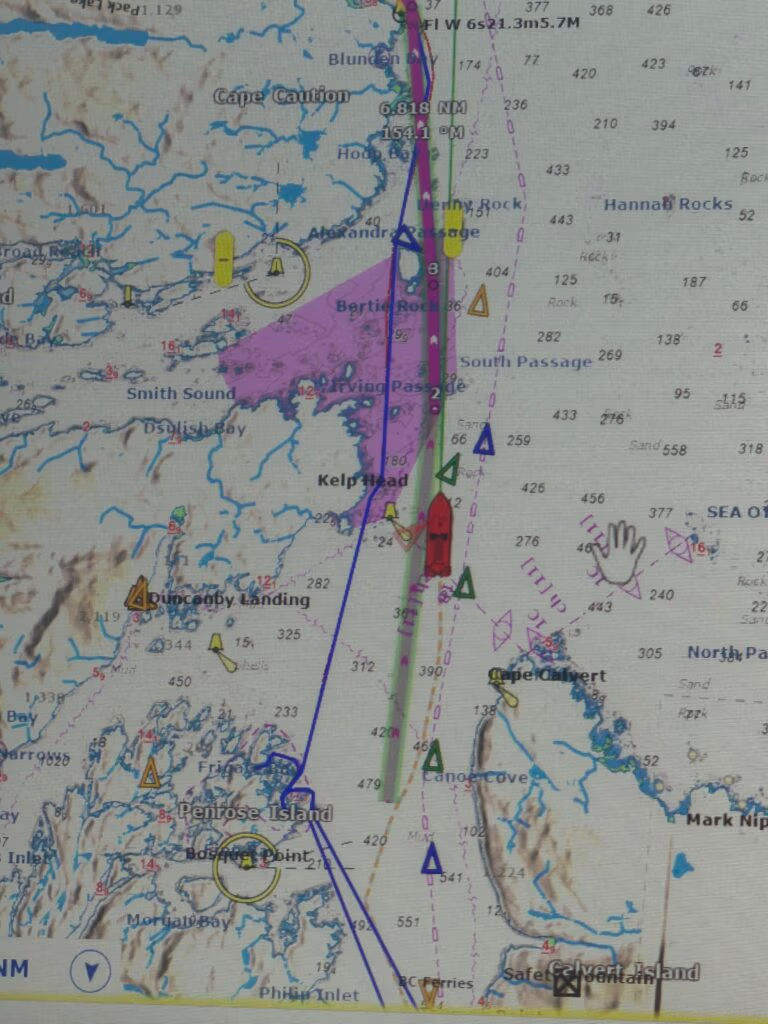
We left Port McNeill just after 6:20 this morning, the kind of early start that makes the whole world feel quiet and waiting. Our destination was Penrose Island Marine Park, all the way up to Furry Cove, and the plan was simple enough at first: cross Queen Charlotte Sound, then decide how far to push on.
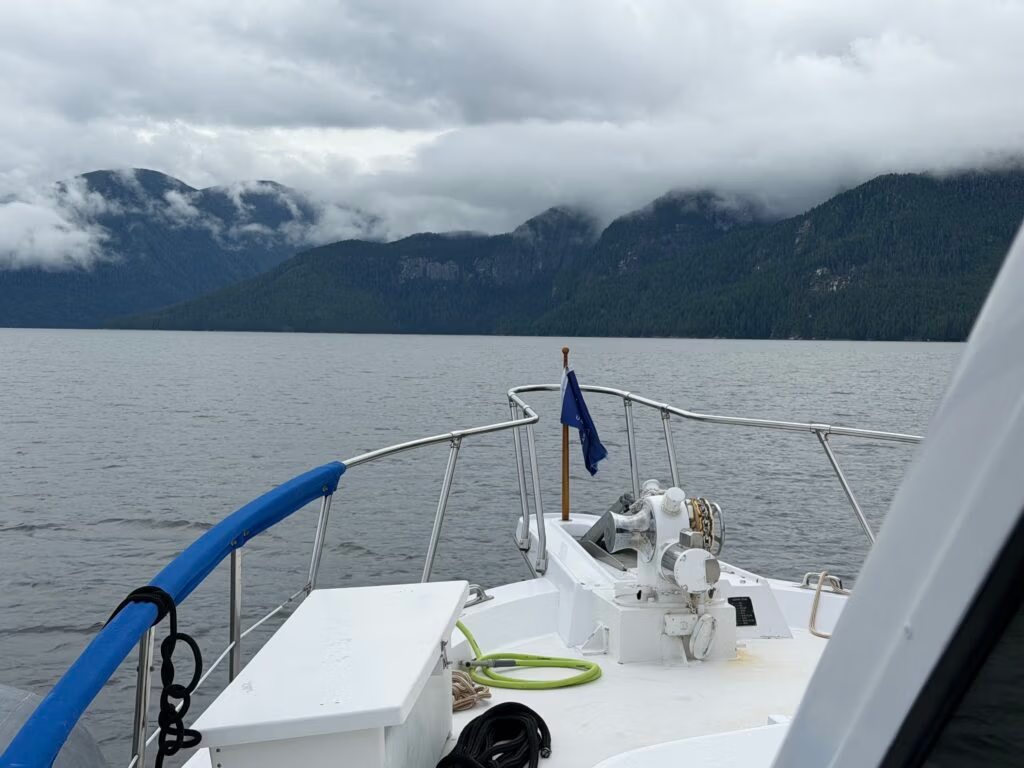
Queen Charlotte Sound has a reputation for being no joke, especially when the weather turns, and this crossing had all the ingredients for a day that could have gone either way. But the sea was kind to us, with waves around a meter and about nine seconds apart, and the ride was smooth and easy instead of hard and punishing.

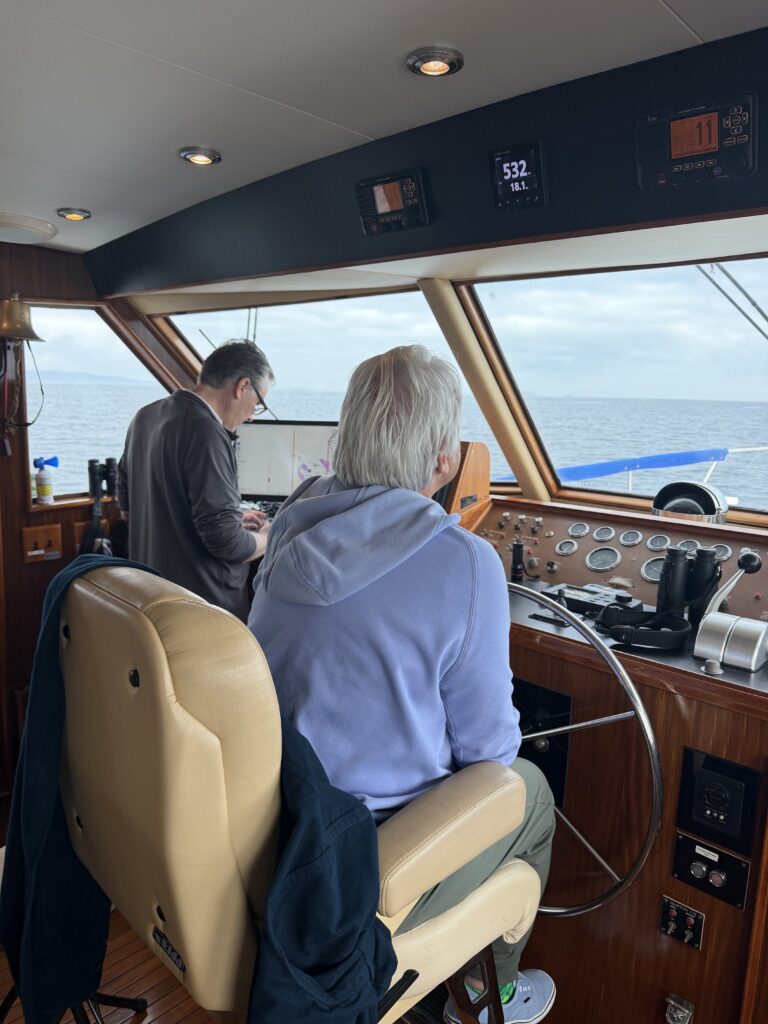
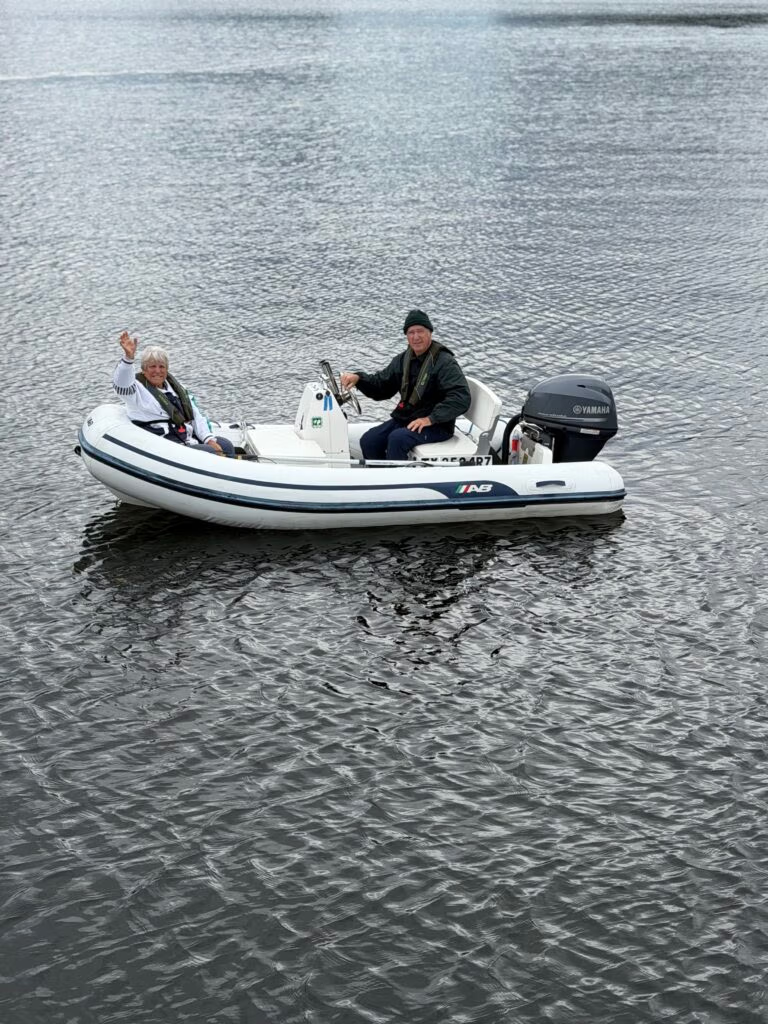
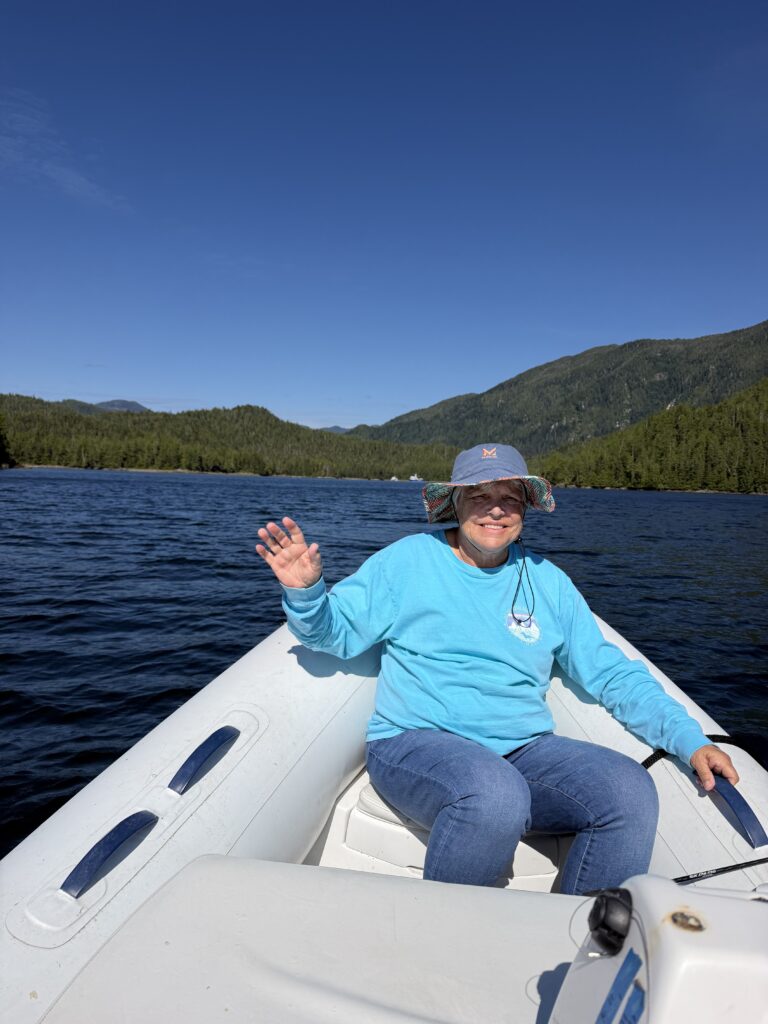
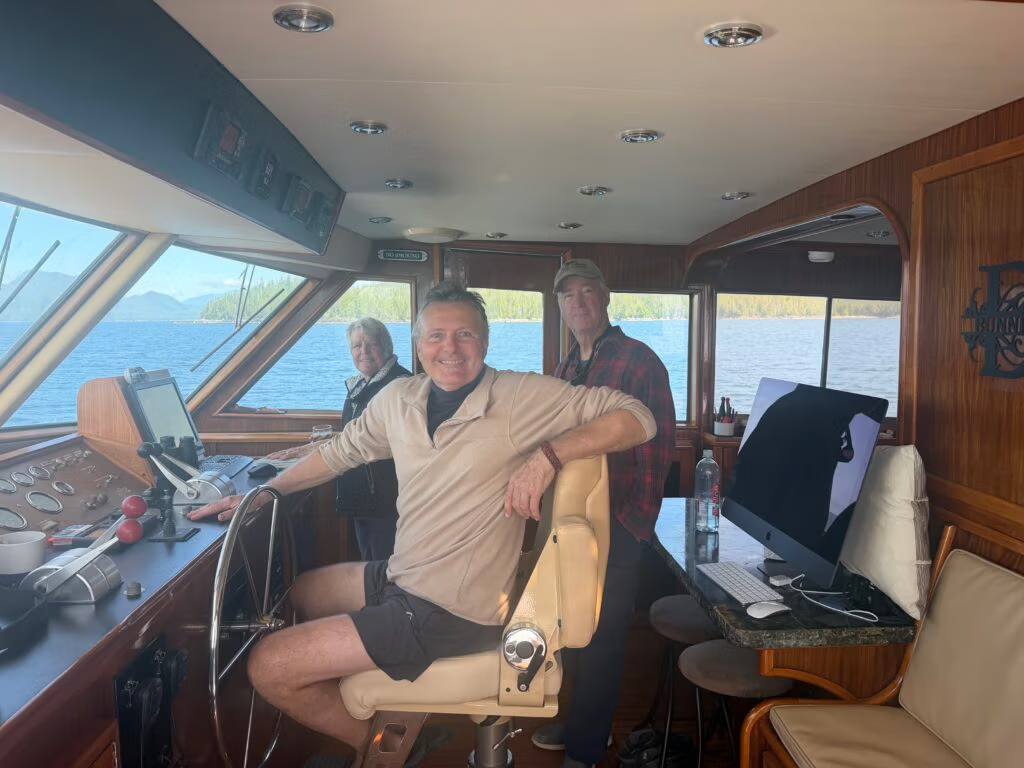
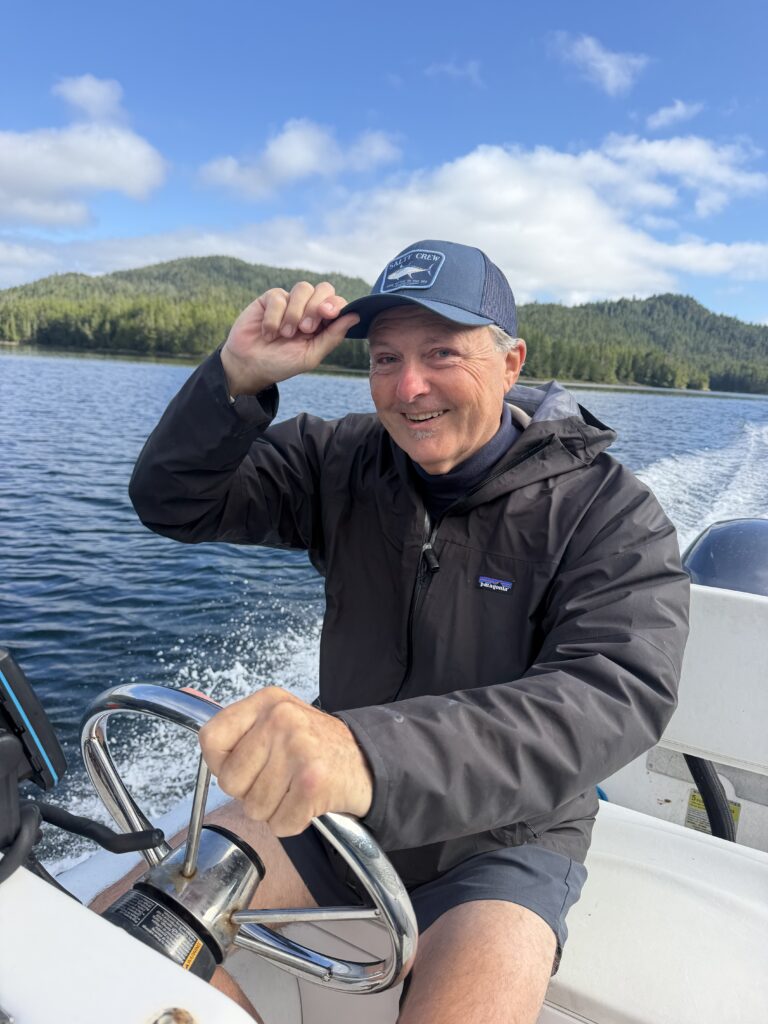
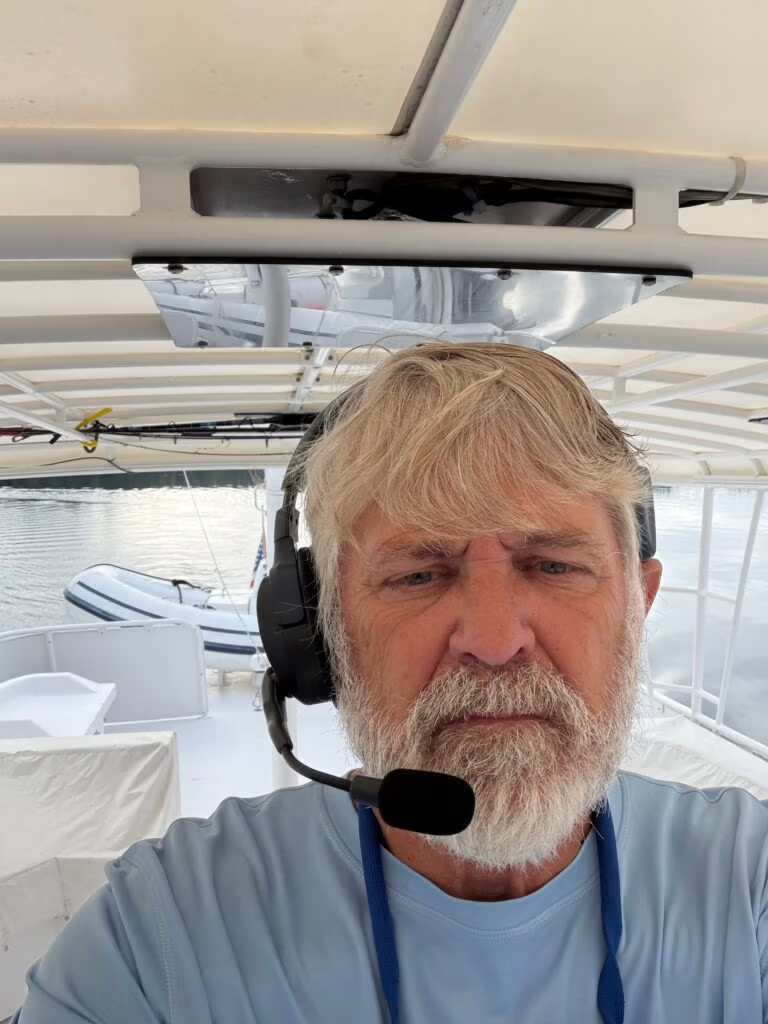
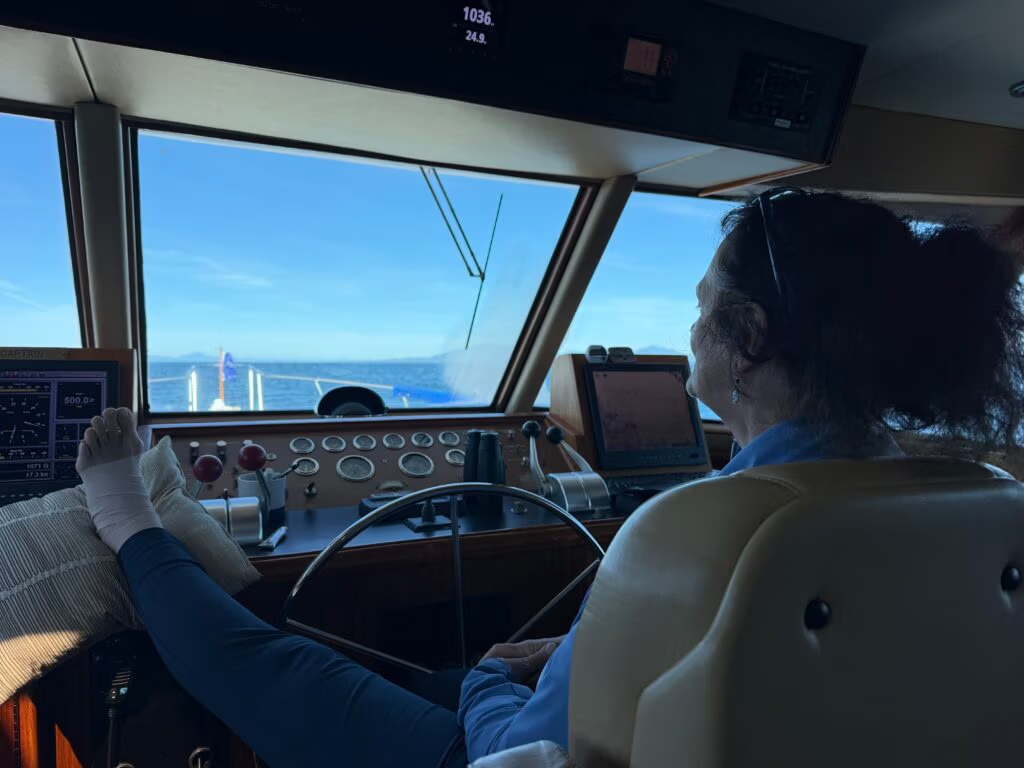
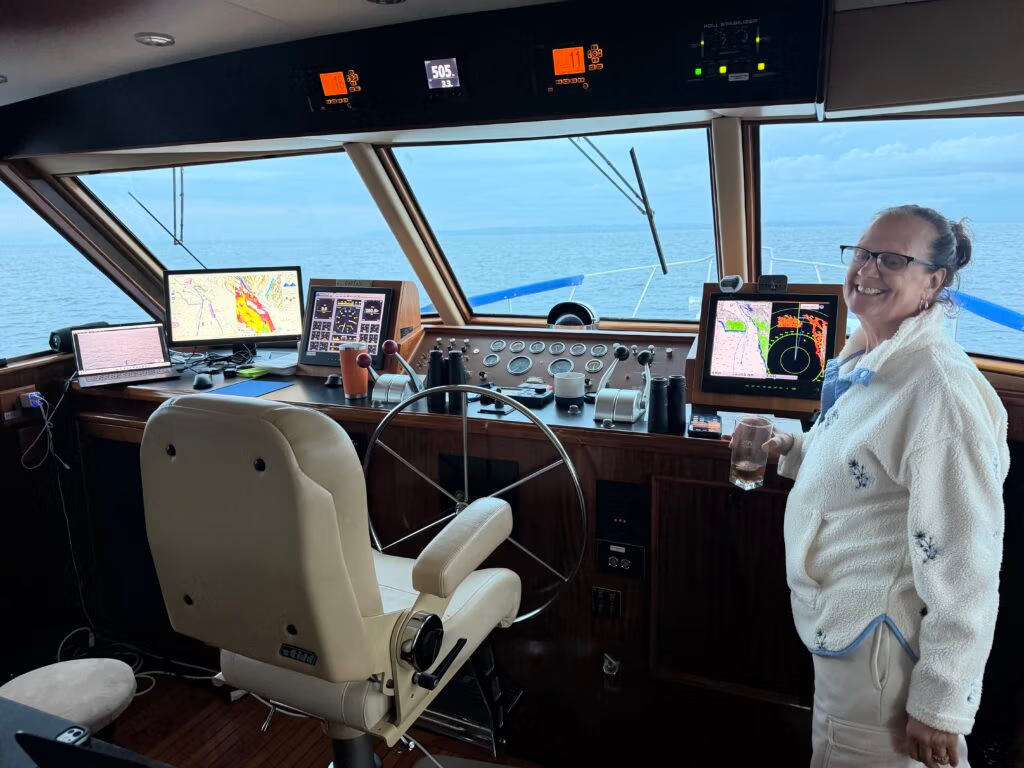
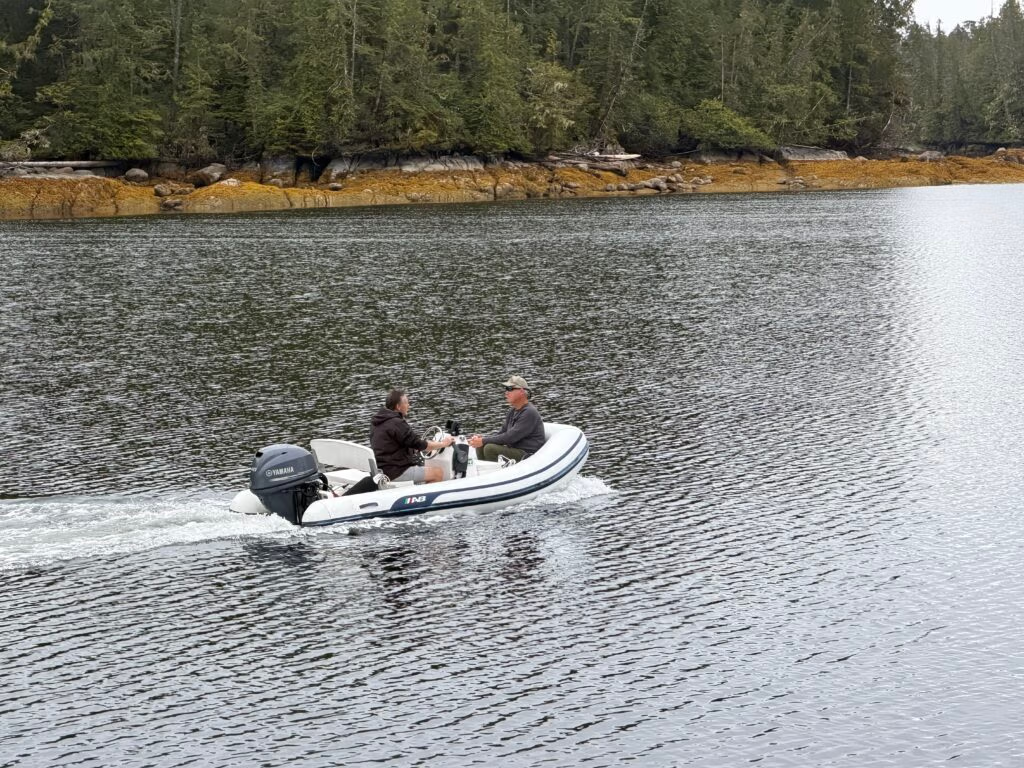
Kris driving for the first time....
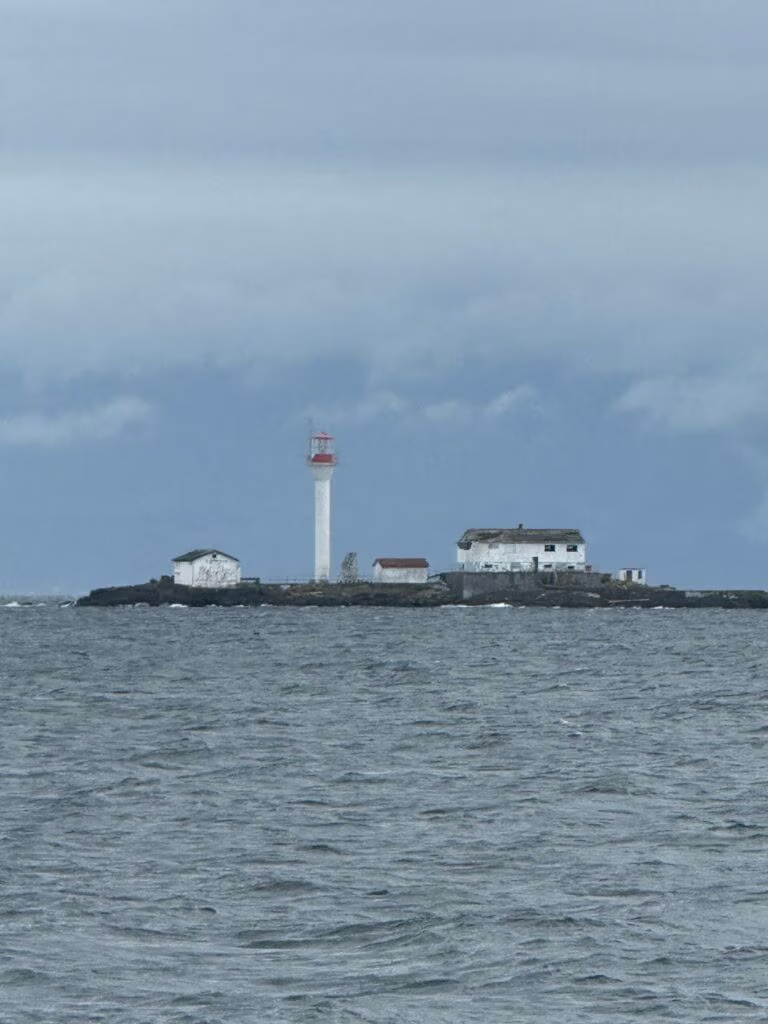
Cape Caution

At first we thought we’d go only halfway, just play it safe and see how things looked on the water. Then the weather held, the sound stayed calm enough, and we made the call to keep going all the way. That turned the day into a longer one, but also the kind of day you remember because everything lines up just right.
Crossing that stretch felt bigger than just getting from one place to another. It was one of those moments I’d read about for years, the sort of passage boaters talk about with a little awe, and now I was actually out there doing it myself.
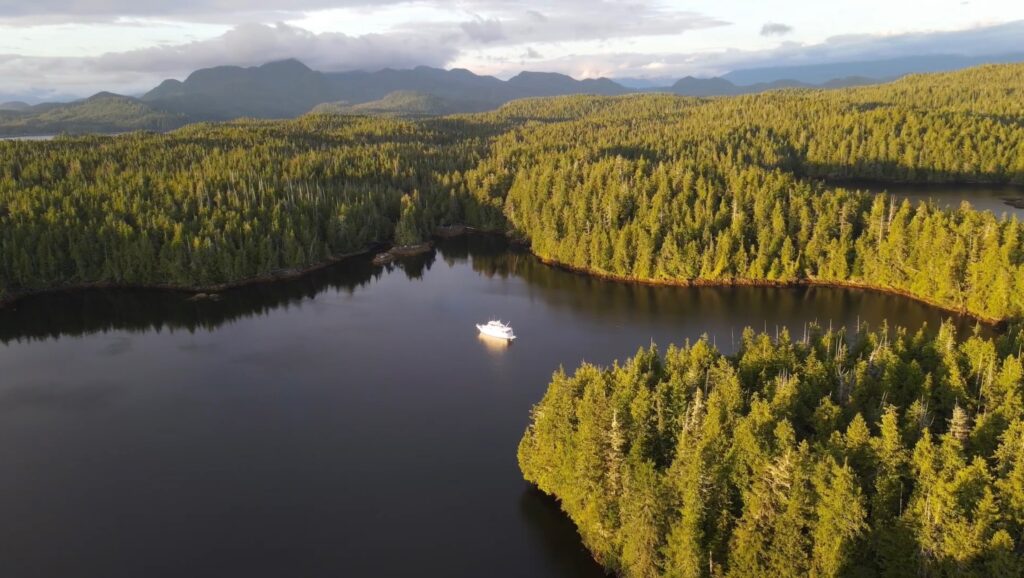
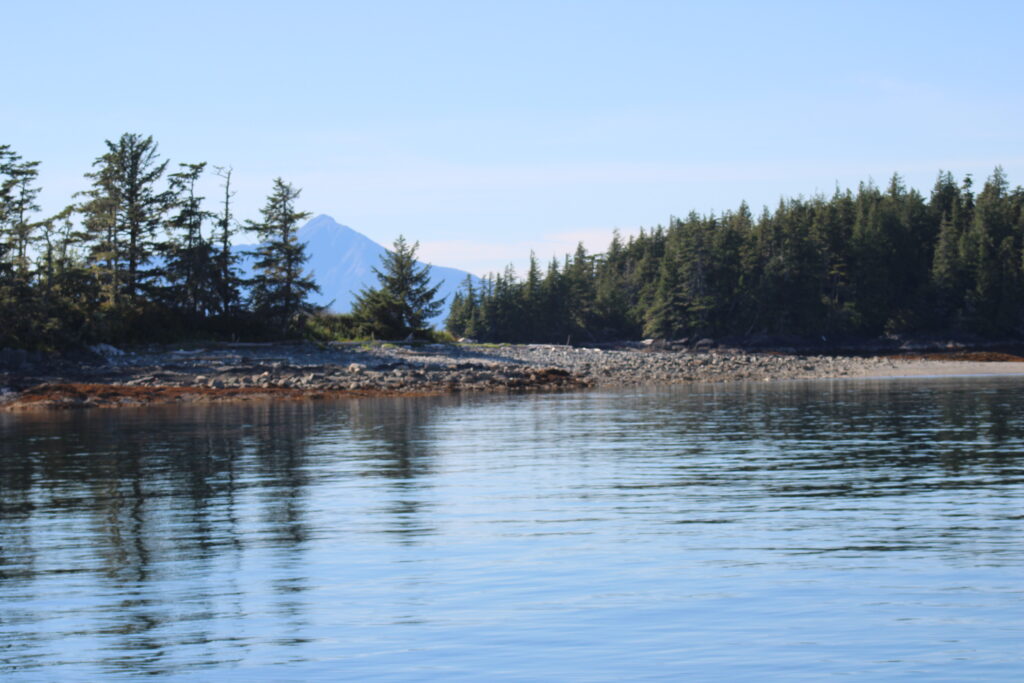
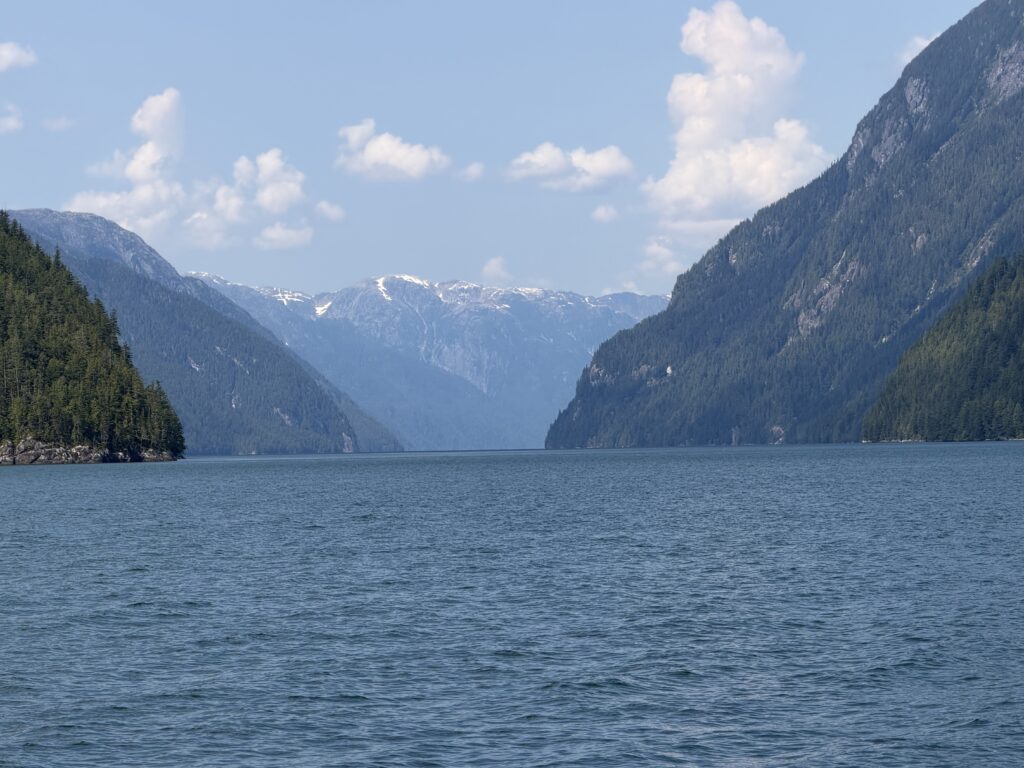
When we finally pointed toward Furry Cove, it felt like arriving somewhere both remote and earned. Penrose Island Marine Park sits in a beautiful, protected spot near Rivers Inlet and Fitz Hugh Sound, and Furry Cove is known as a shelter for boats that make the run past Cape Caution and across the open water.
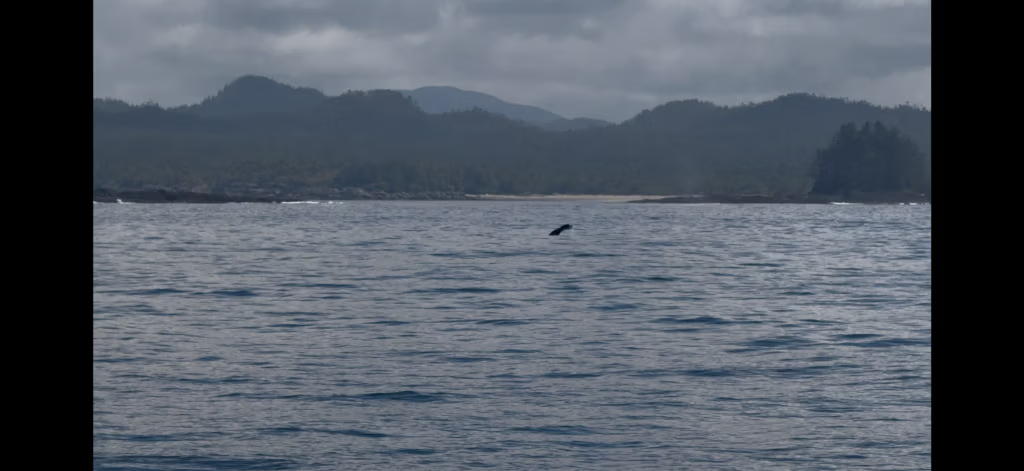
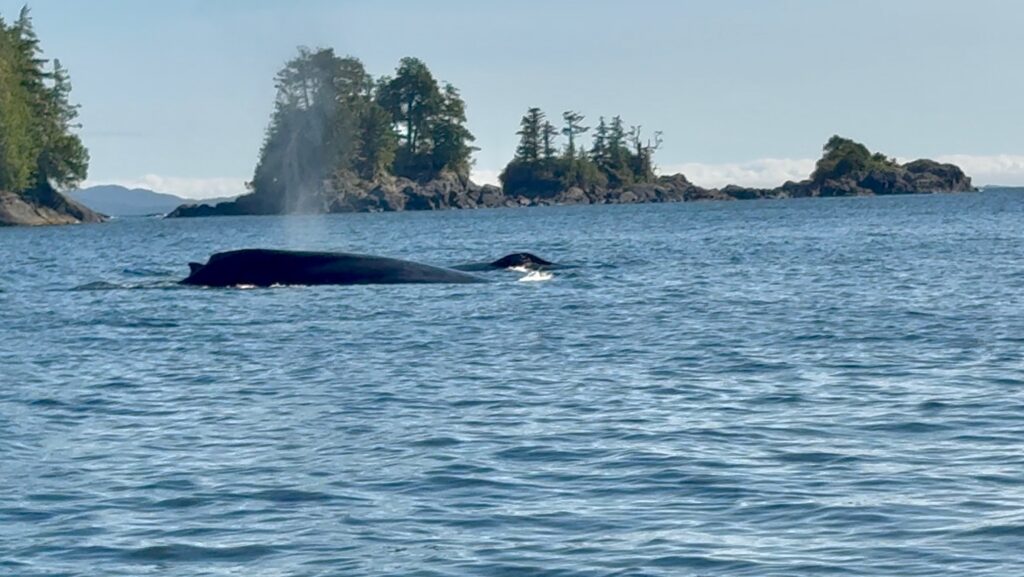
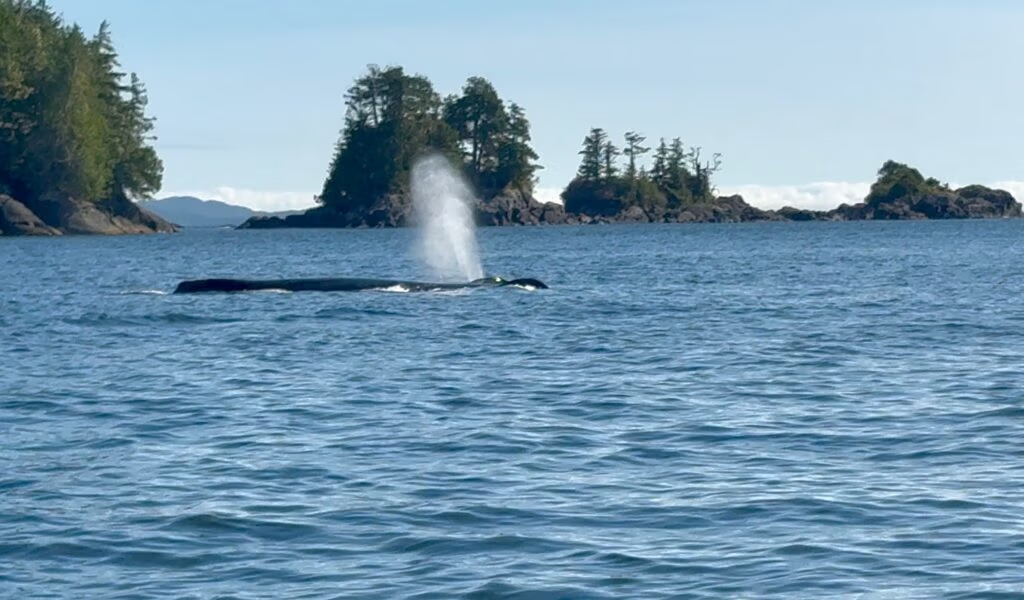
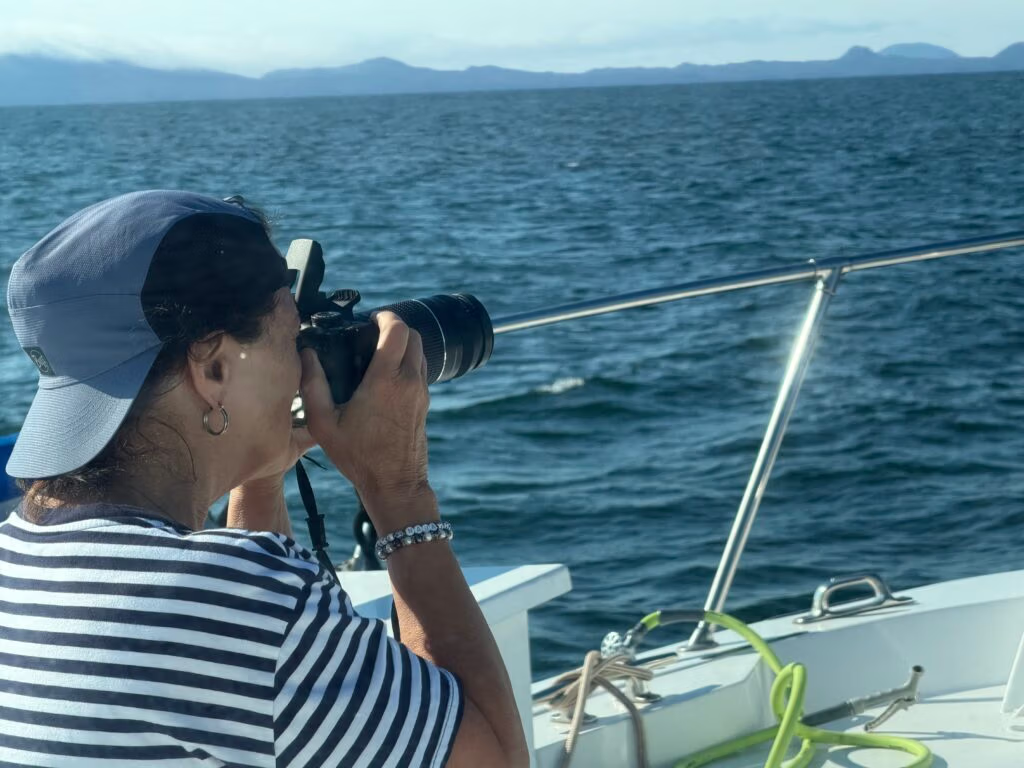
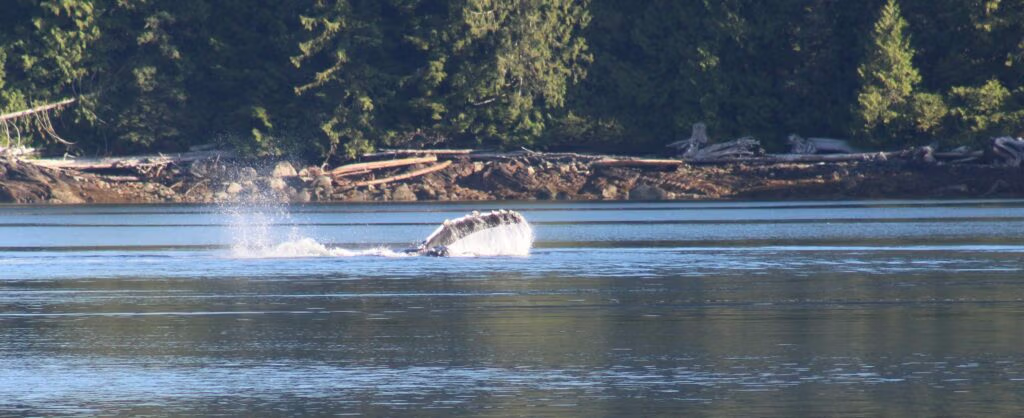
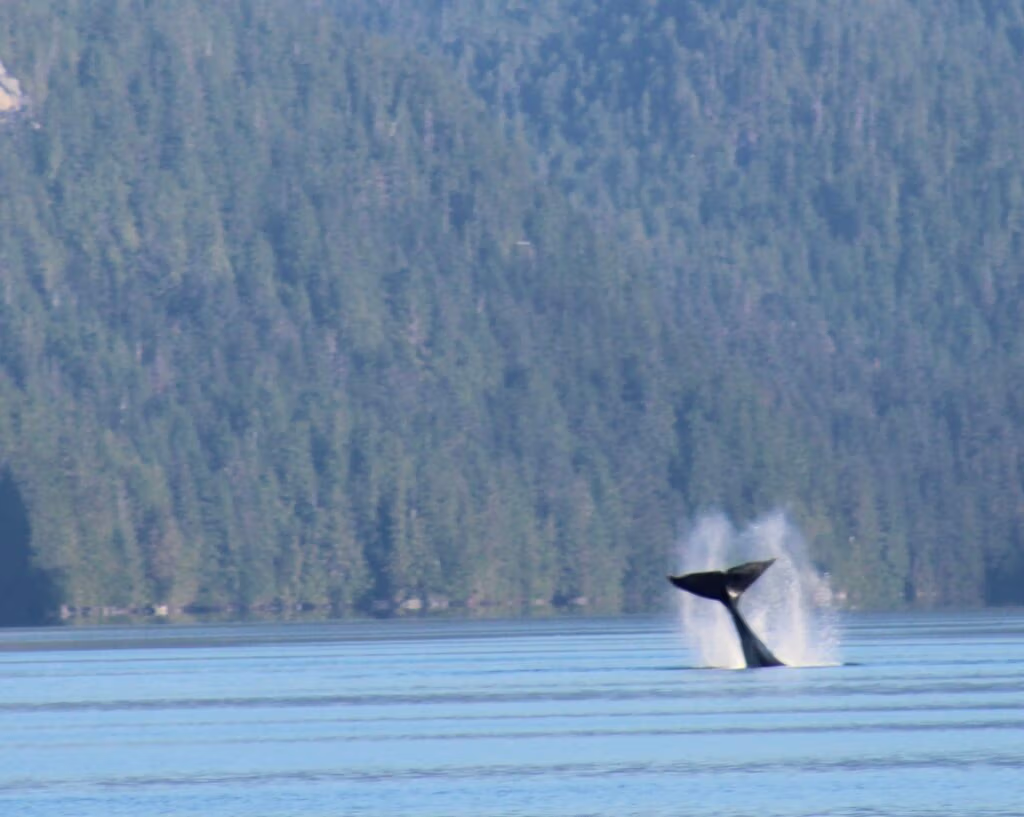
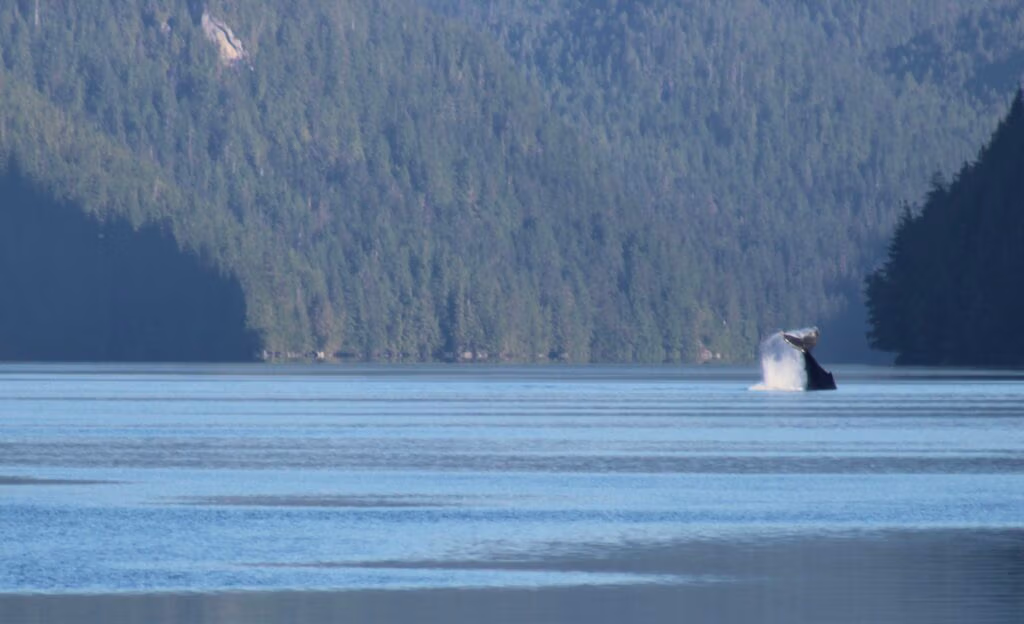
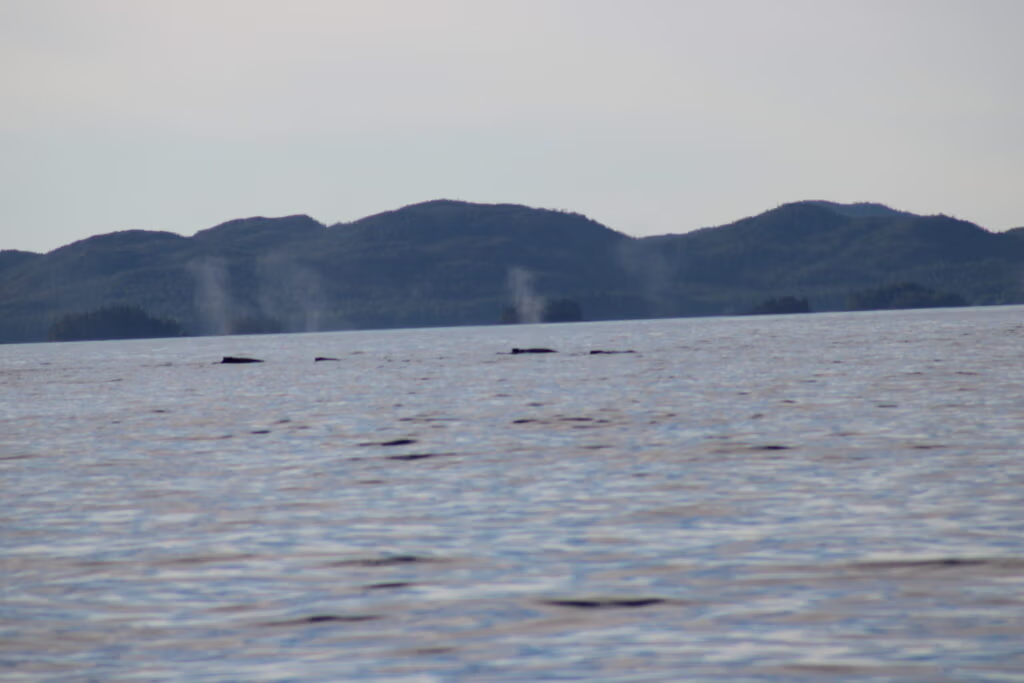
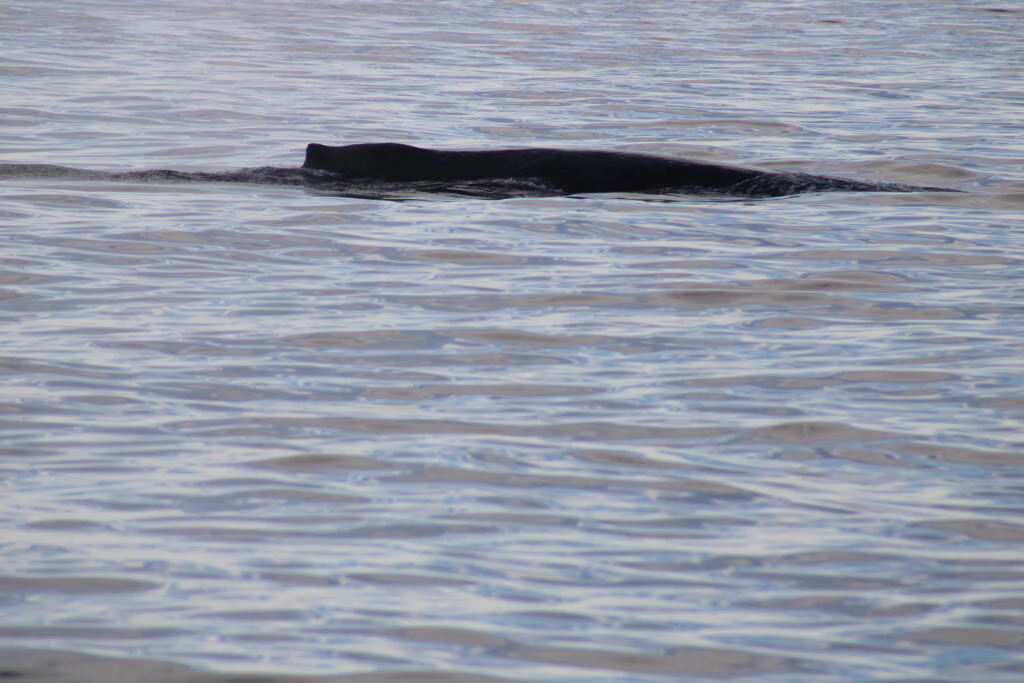
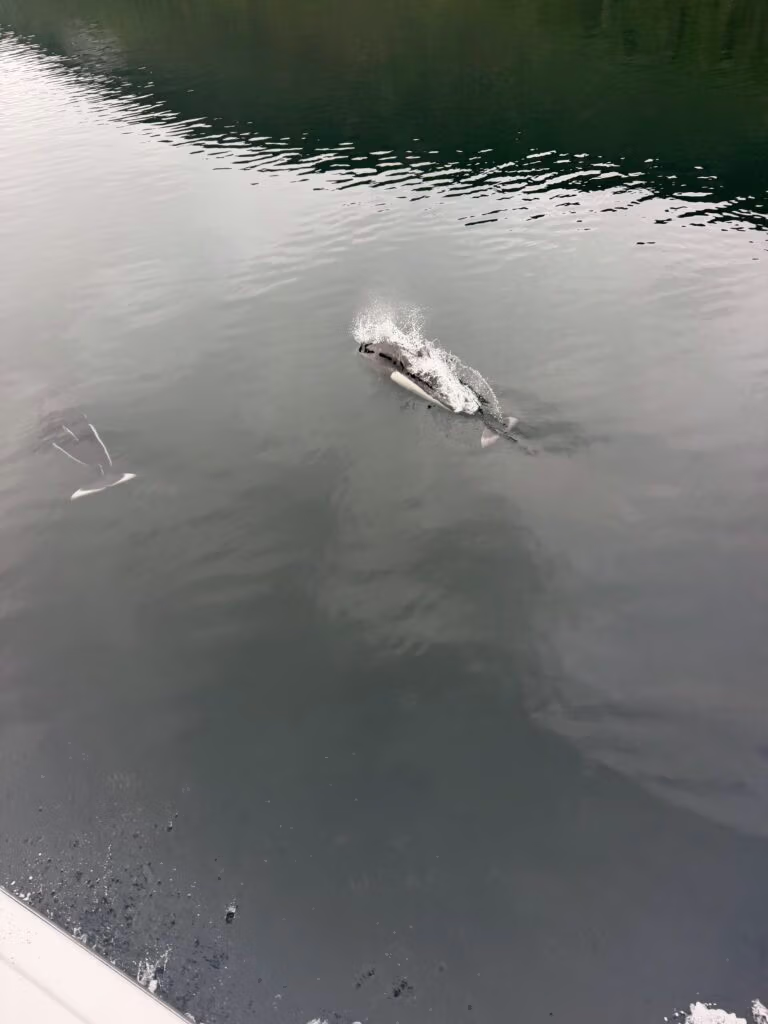
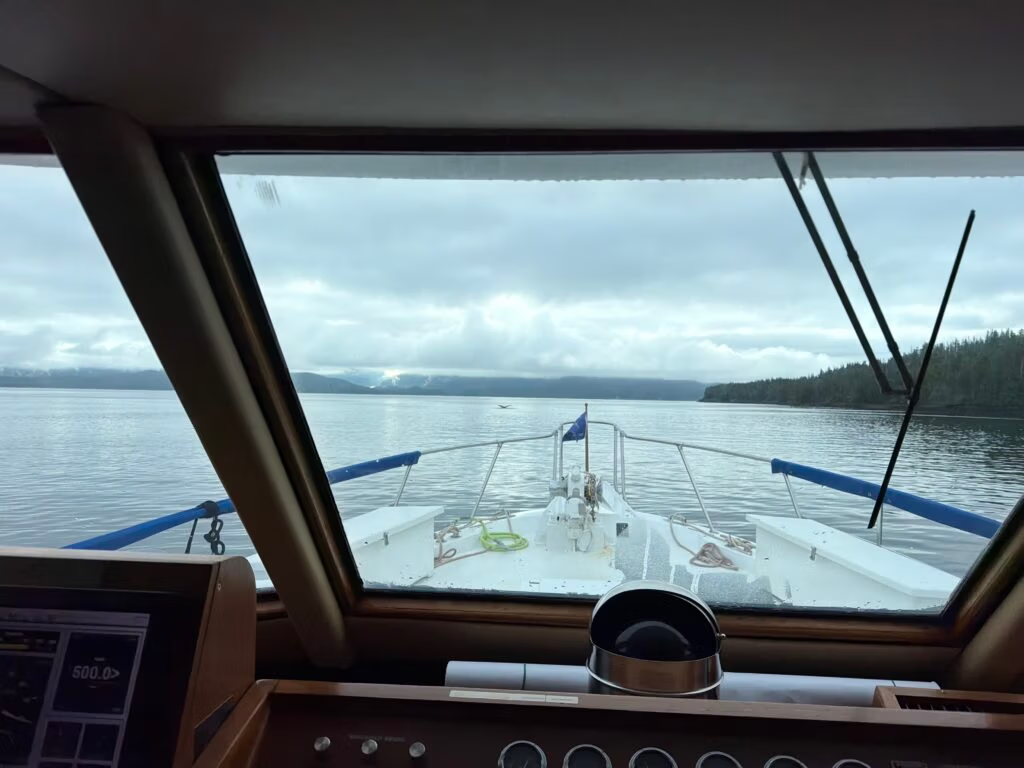
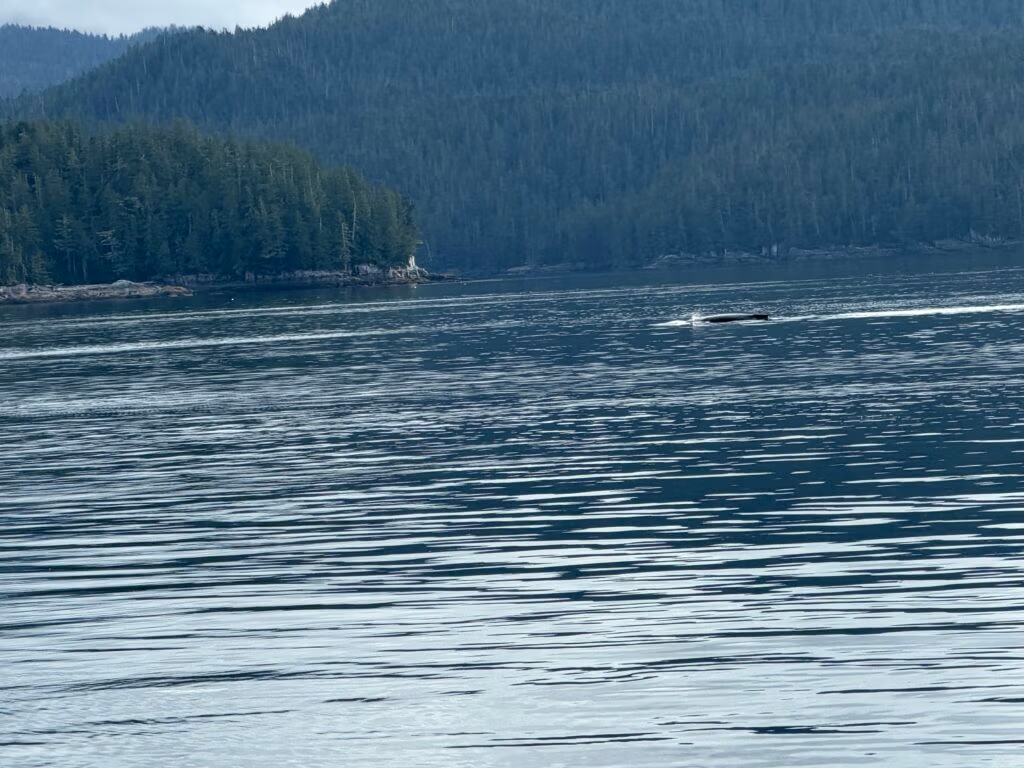
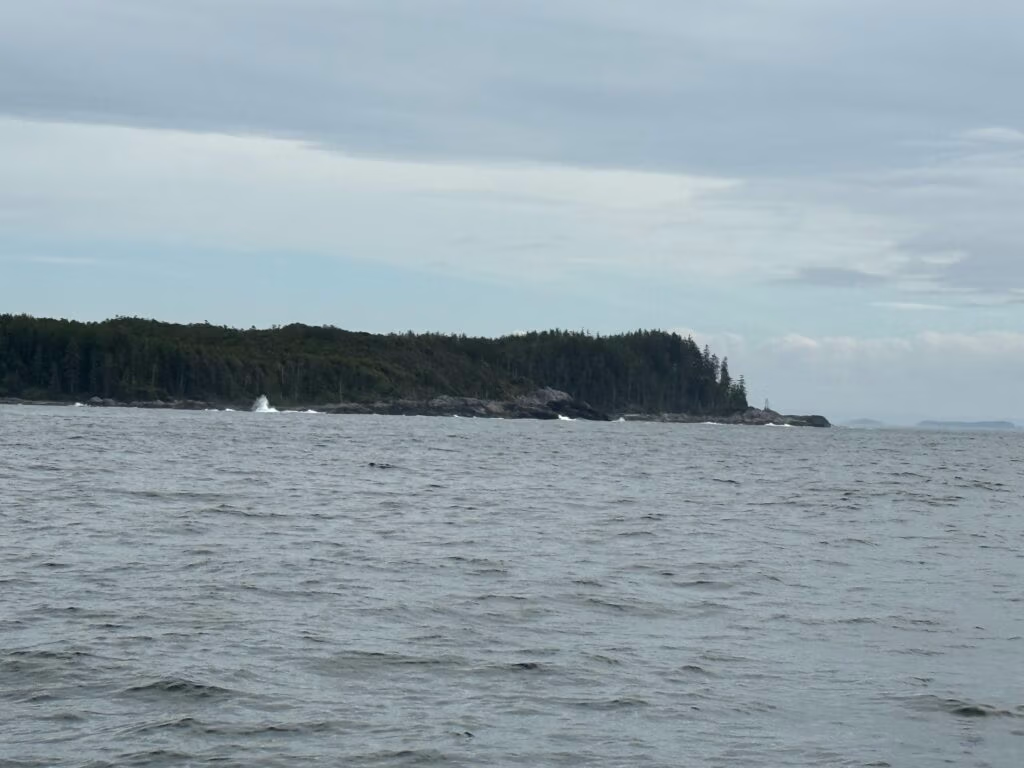
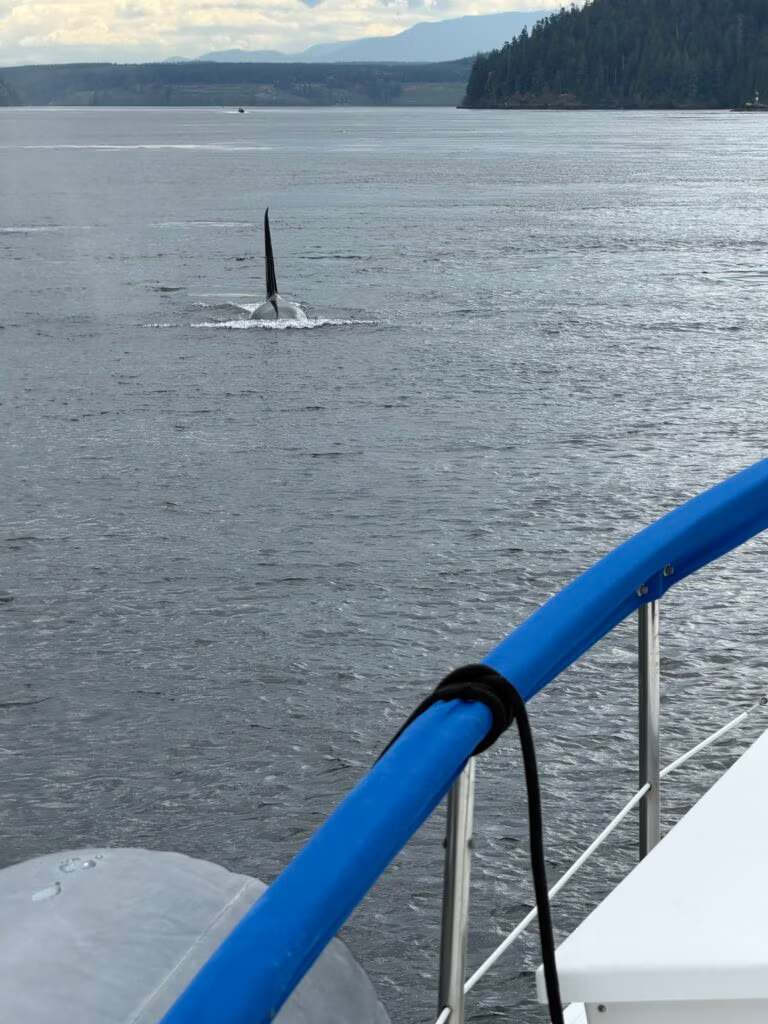
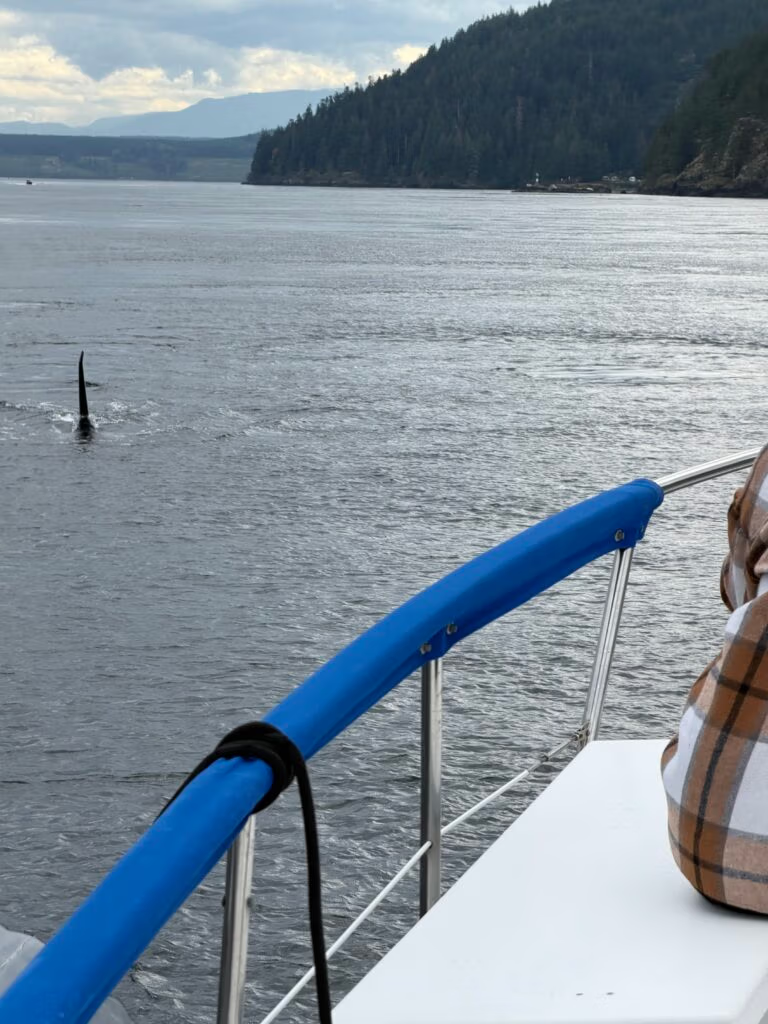
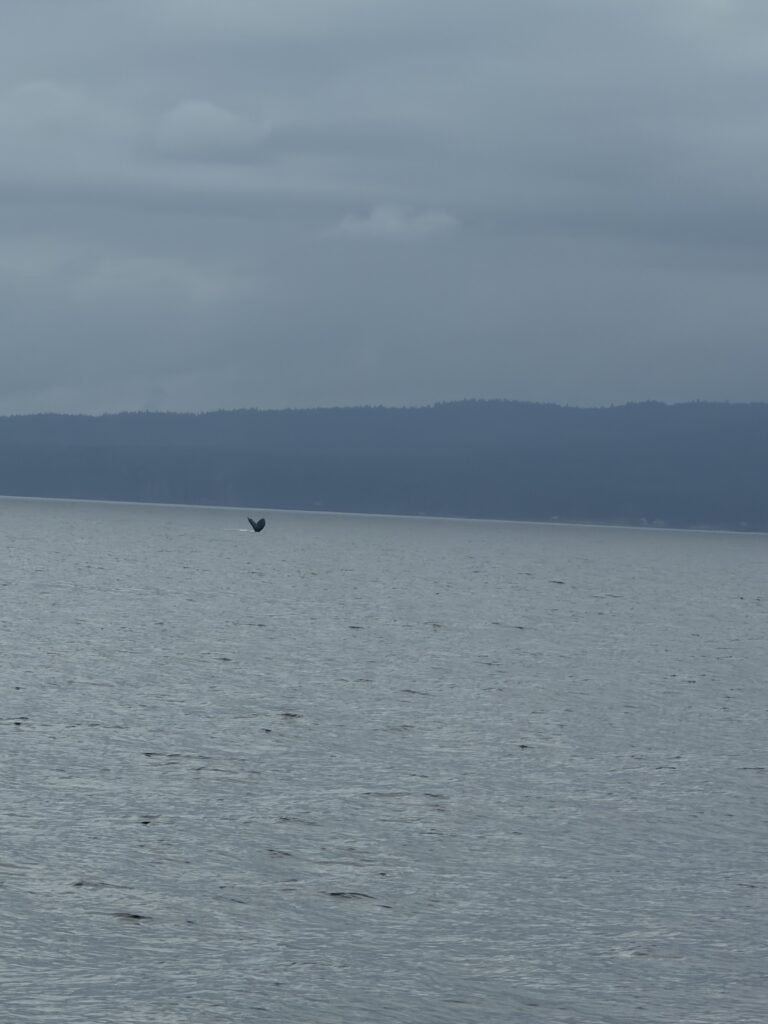
Whales...
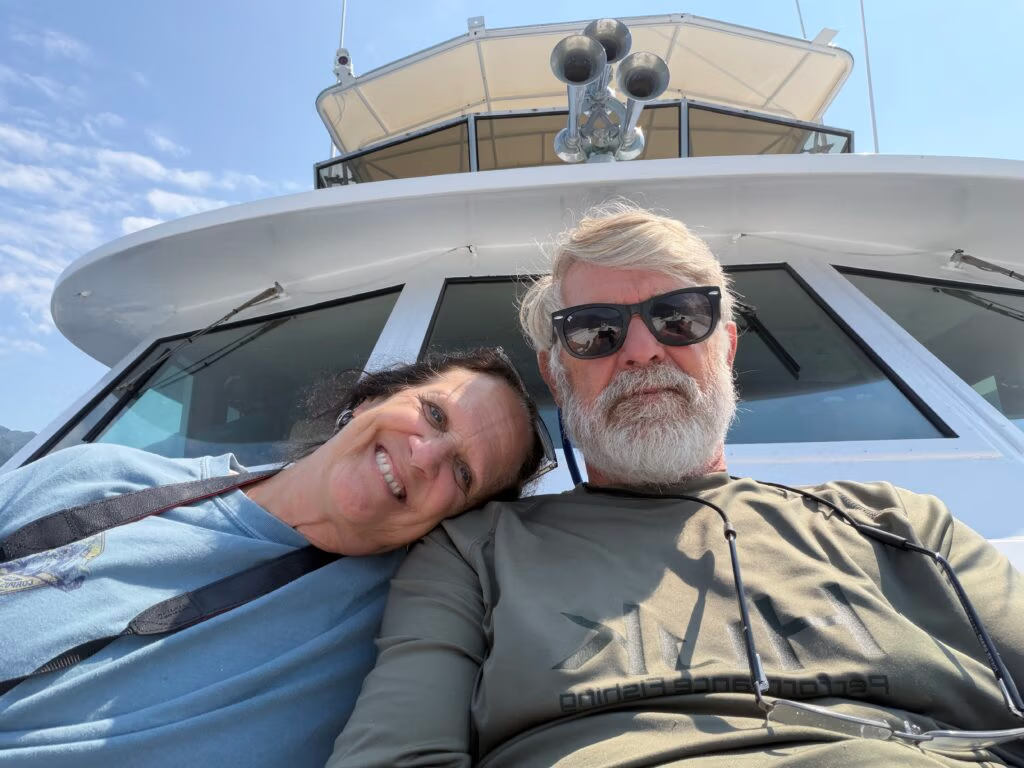
I kept wishing Jennifer was there to see it with me. Still, I was glad she was home taking care of Jada, the house, and whatever else life had lined up for her, because someone had to hold down the fort while I went chasing salt water and horizon lines. Sorry, Jennifer.

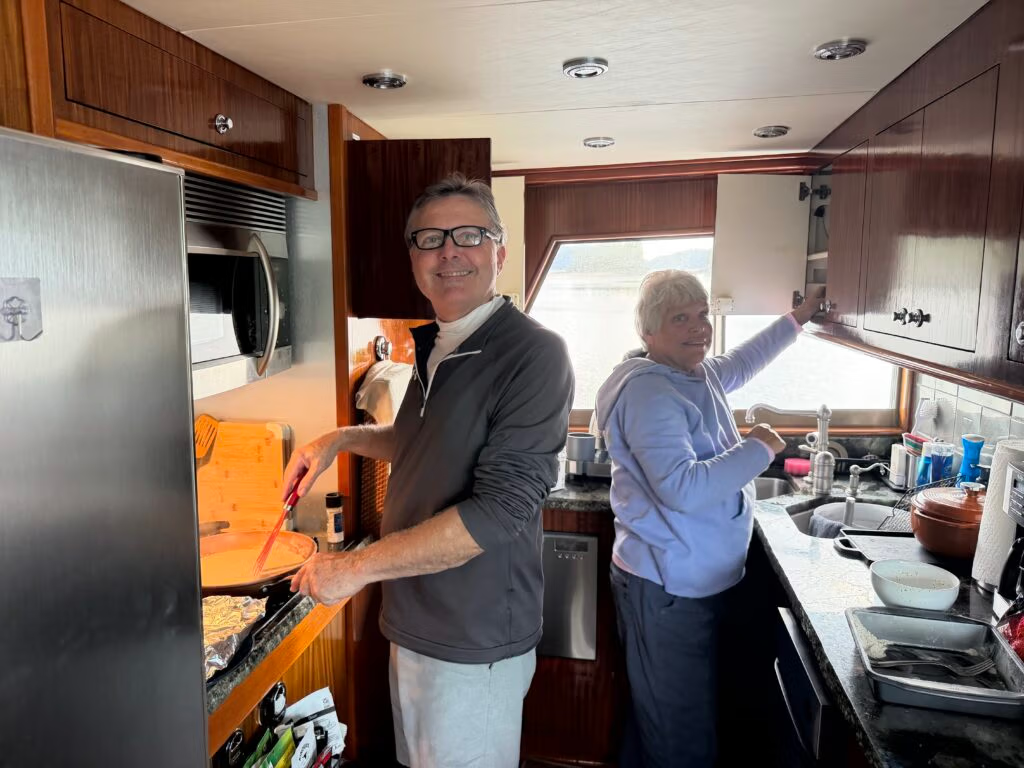
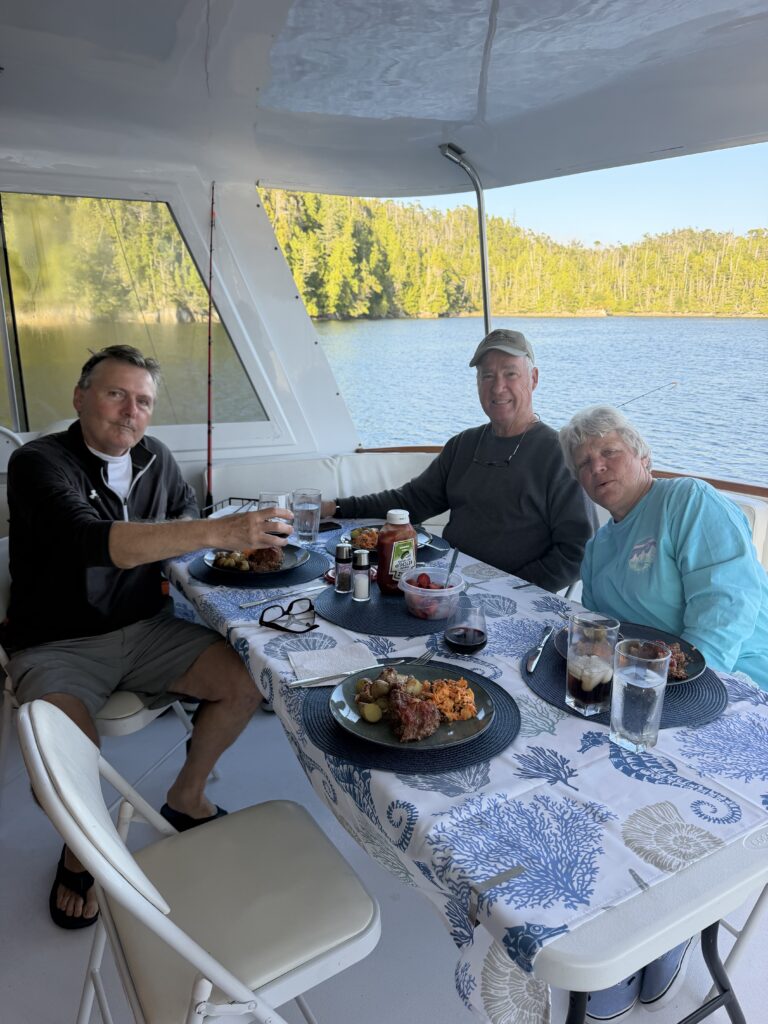
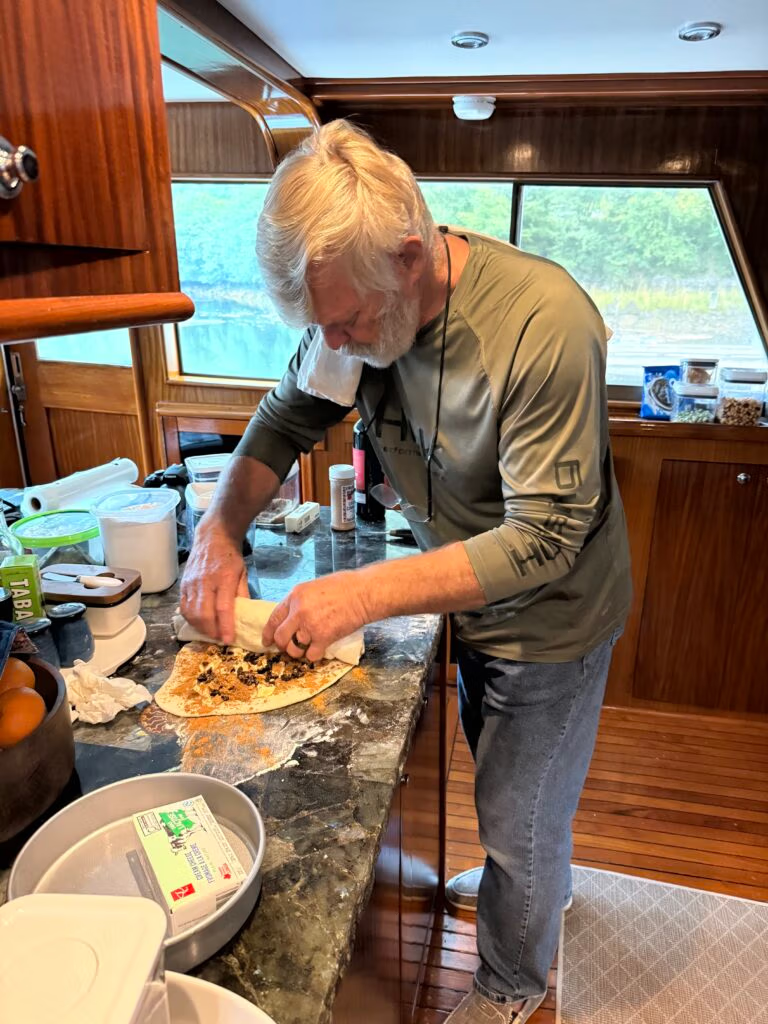
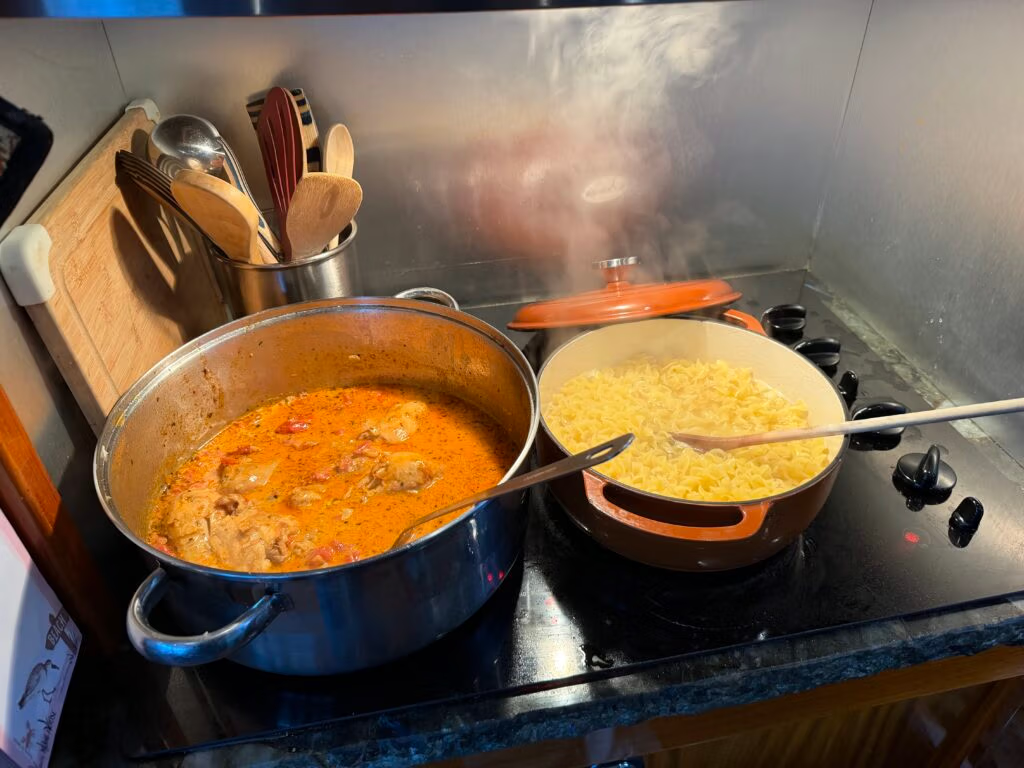
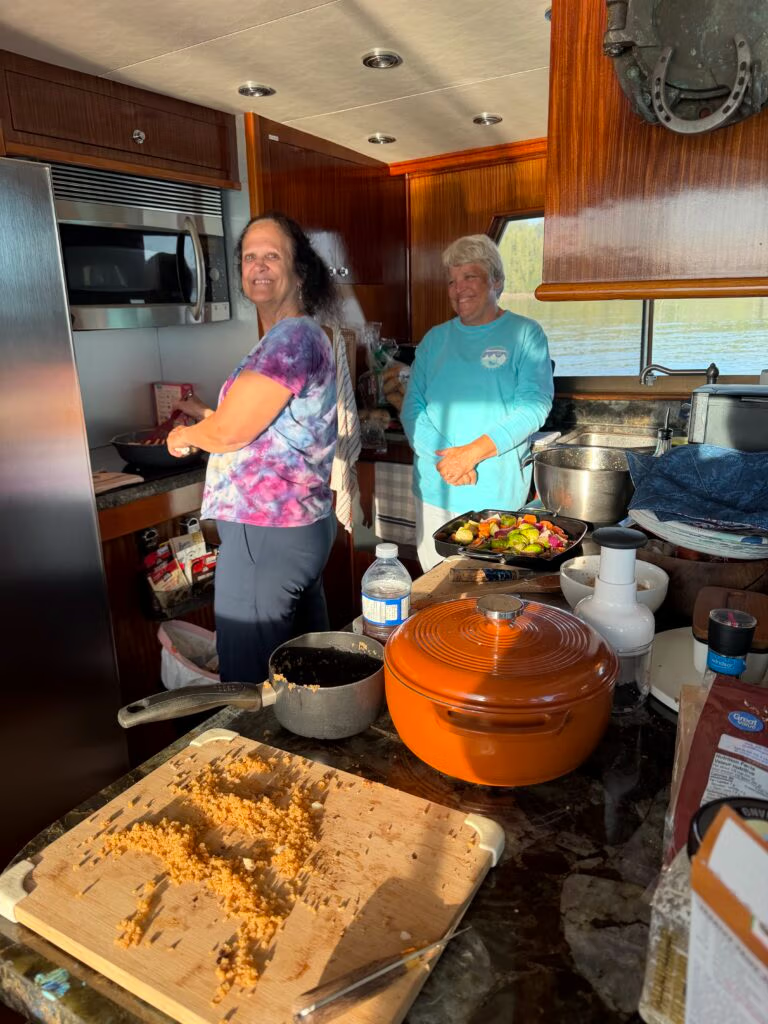
Peter and Khris cooked supper tonight, chicken fried chicken, mashed potatoes, peas....

Fury Cove SNOW DAY

A Quiet Snow Day at Sea
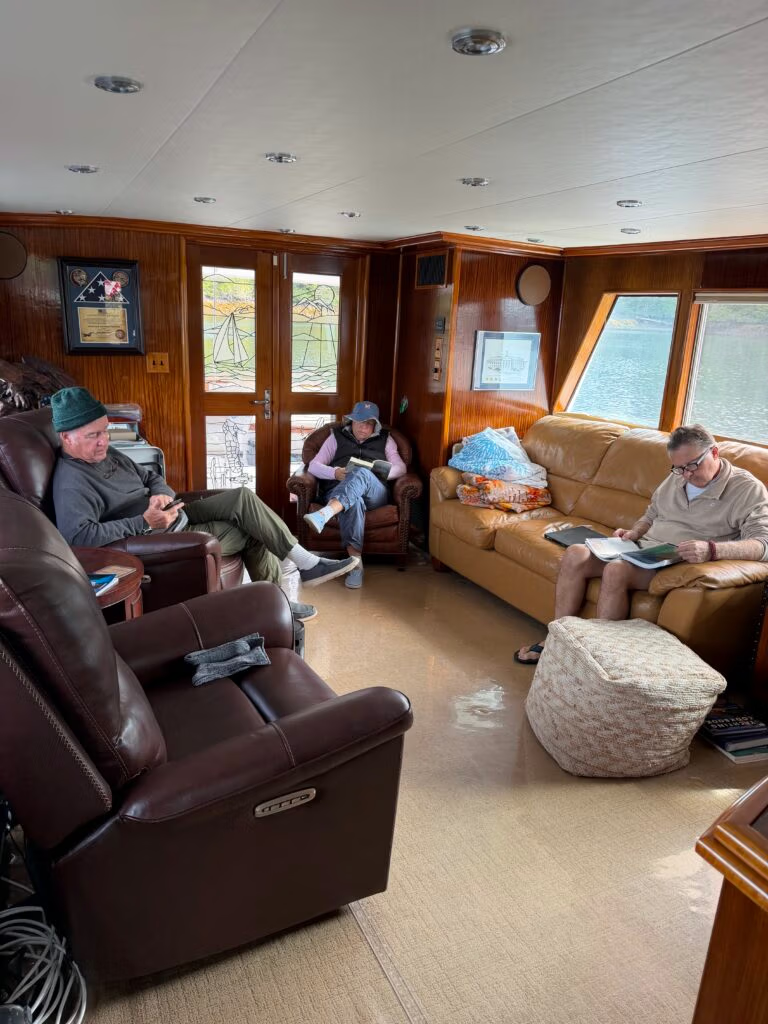
Today unfolded like one of those rare snow days when everyone agrees to slow down, stay put, and let the hours drift by. There wasn’t much on the schedule, and that was part of the beauty of it. The boat settled into an easy rhythm, with a few small jobs getting done here and there, but mostly it was a day for taking it all in and letting the pace stay gentle.
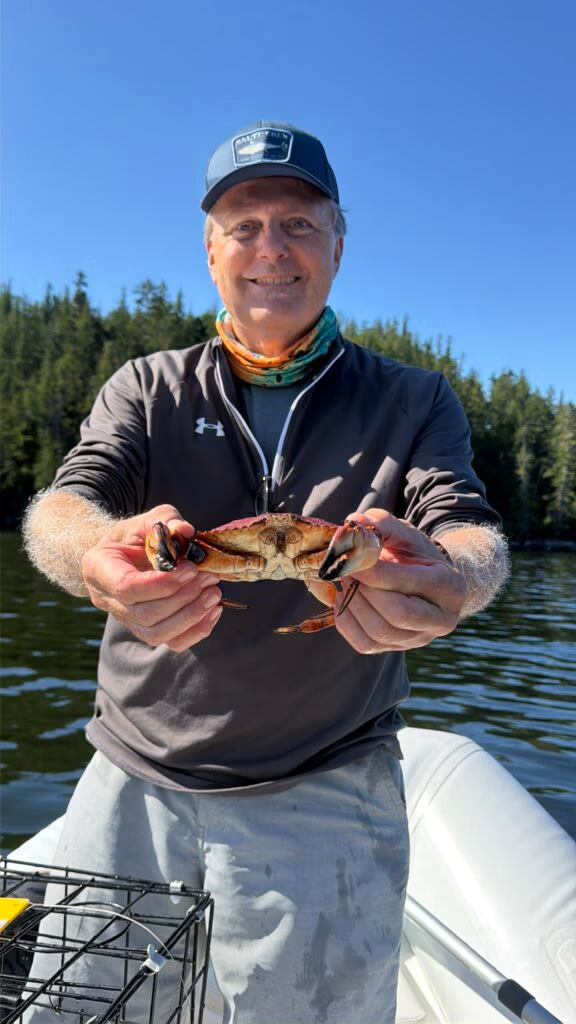
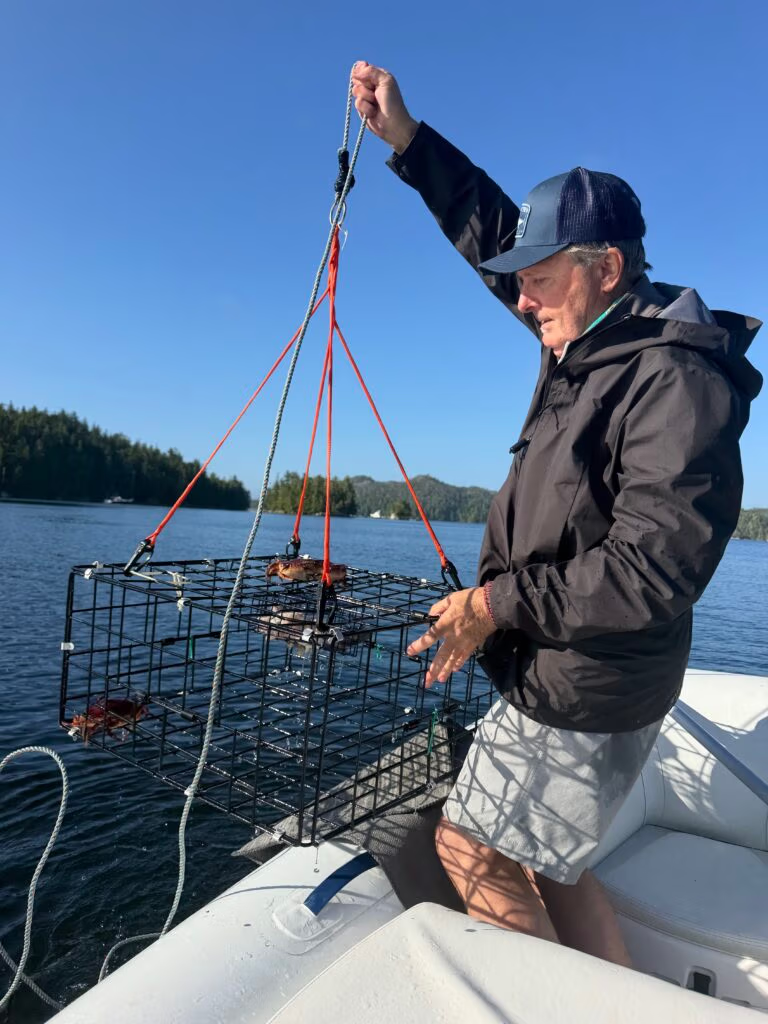
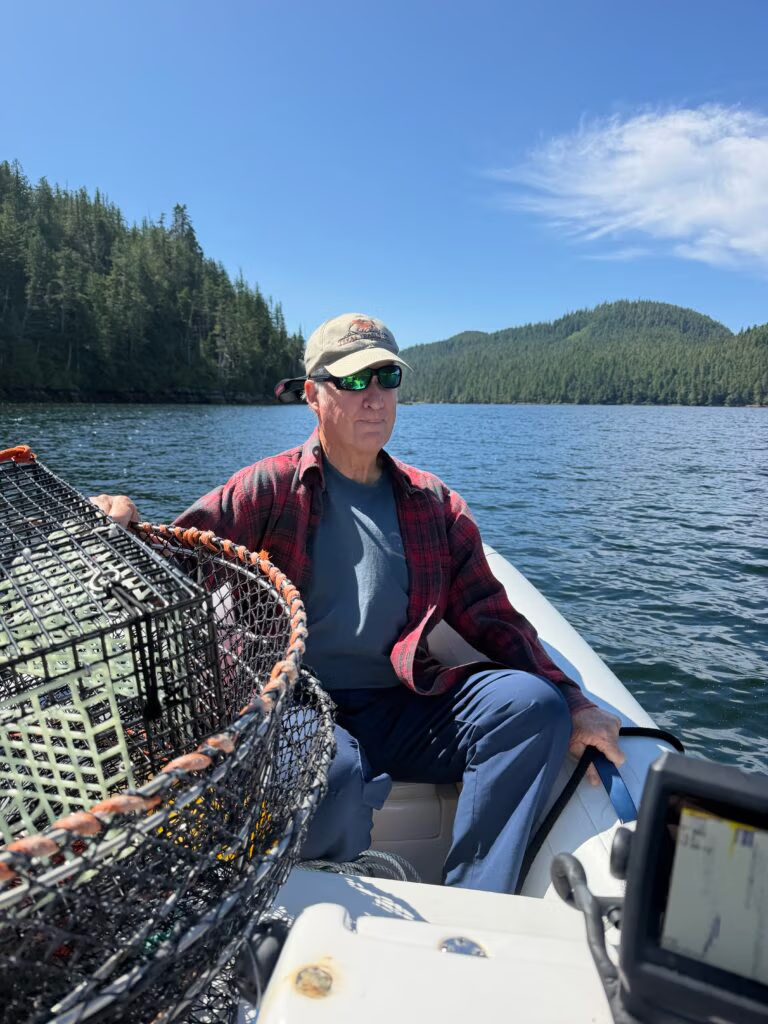
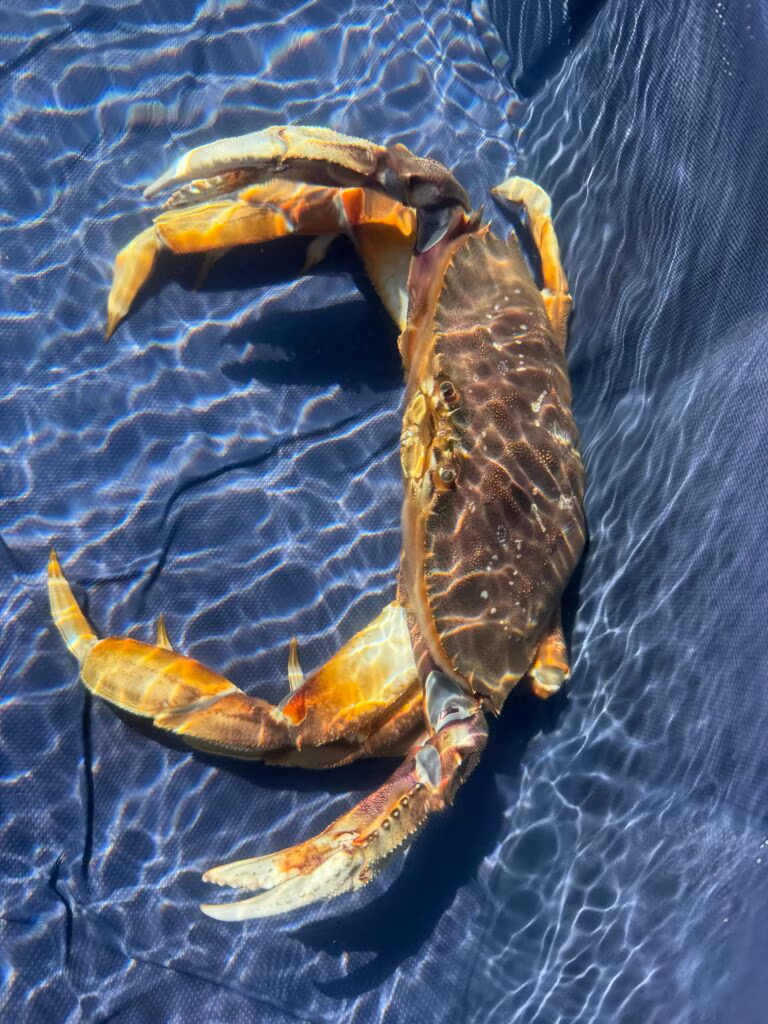
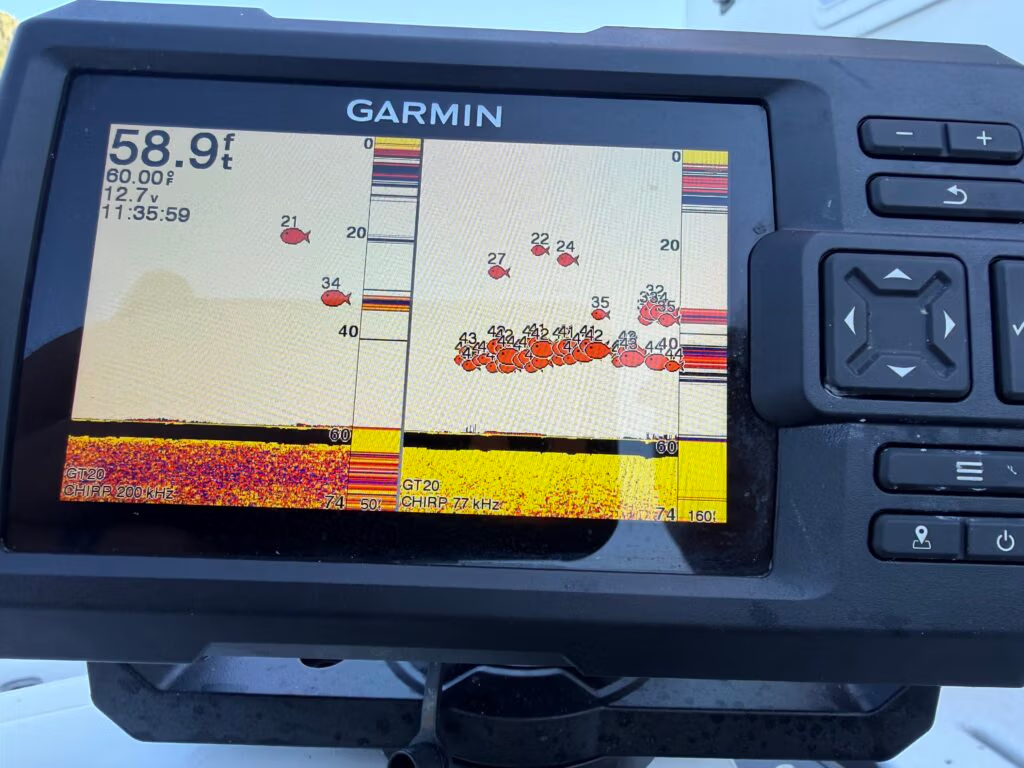
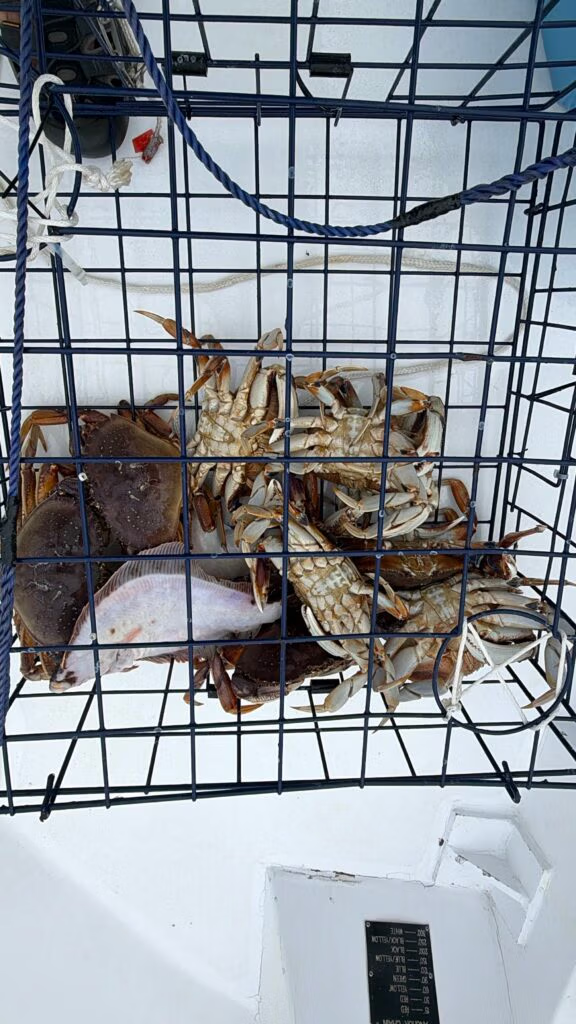
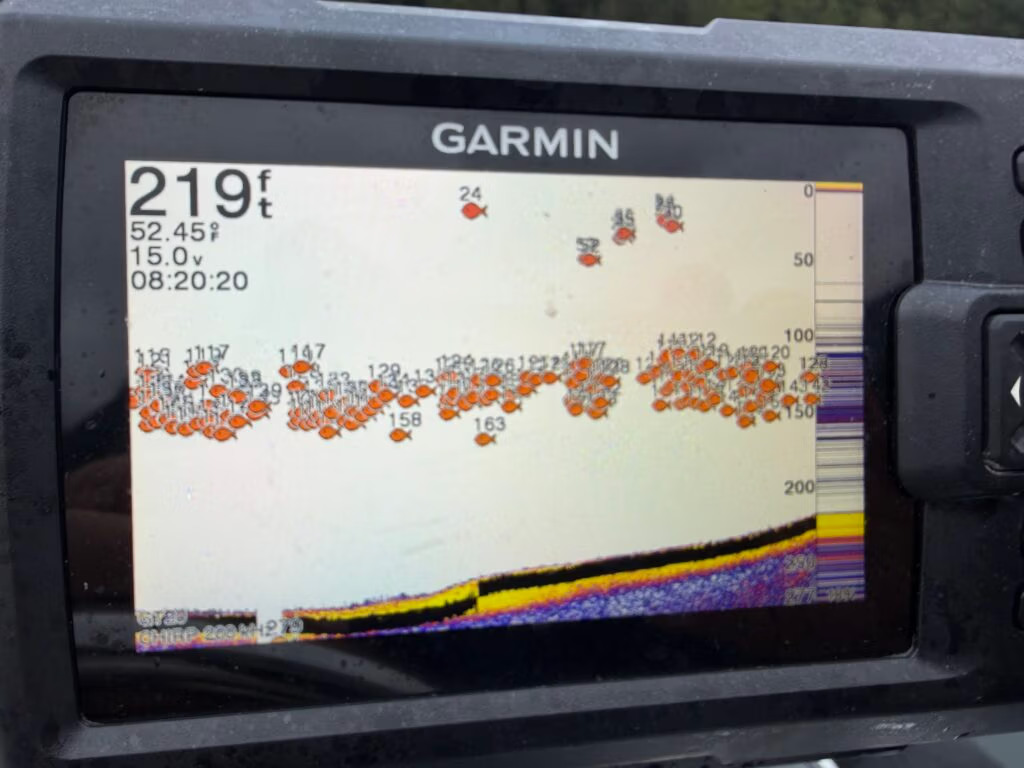
One of the bigger tasks was putting a new fish finder on the tender, along with a handful of odds and ends scattered across the boat. While that was happening, Robert and Khris headed ashore earlier in the morning and wandered around for a while. Peter and I spent the morning setting crab traps, then came back in the afternoon to check them with modest expectations. The traps didn’t amount to much, except for one undersized male rock crab that had to be let go, but even that felt like part of the day’s slow, patient rhythm.
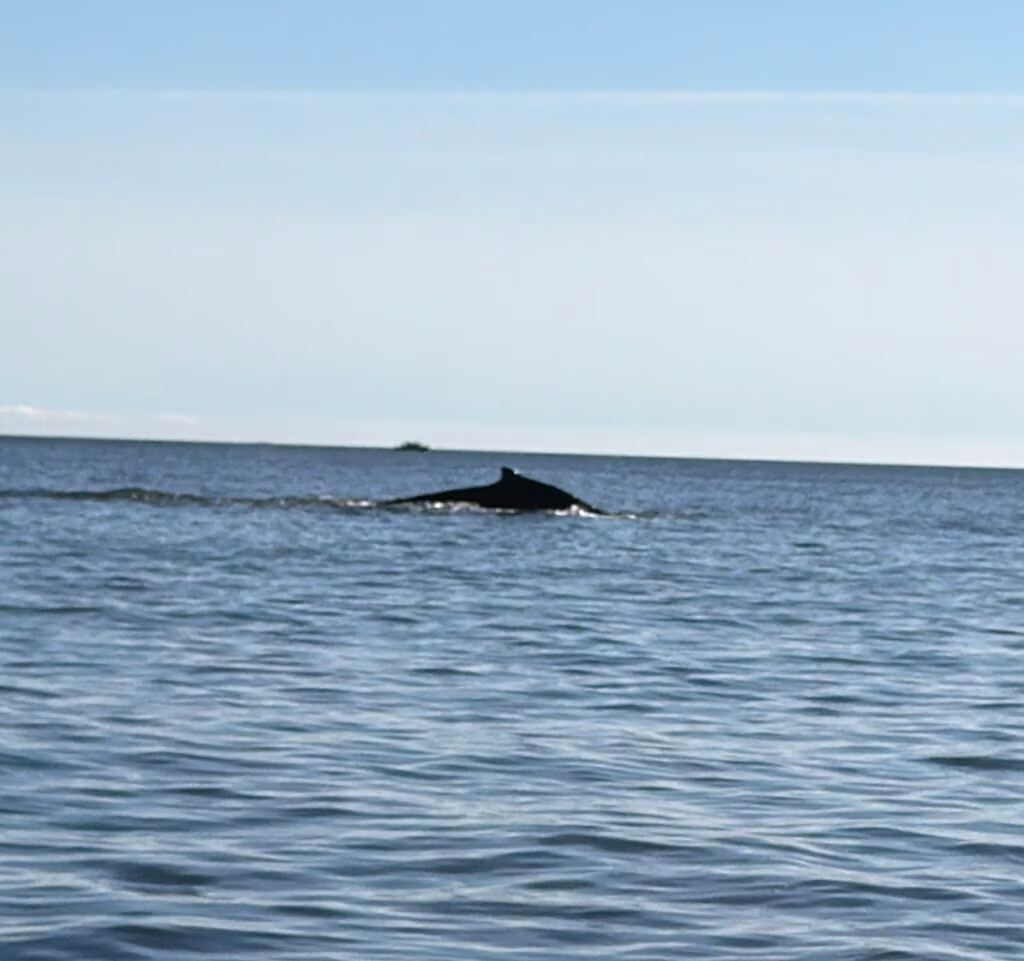
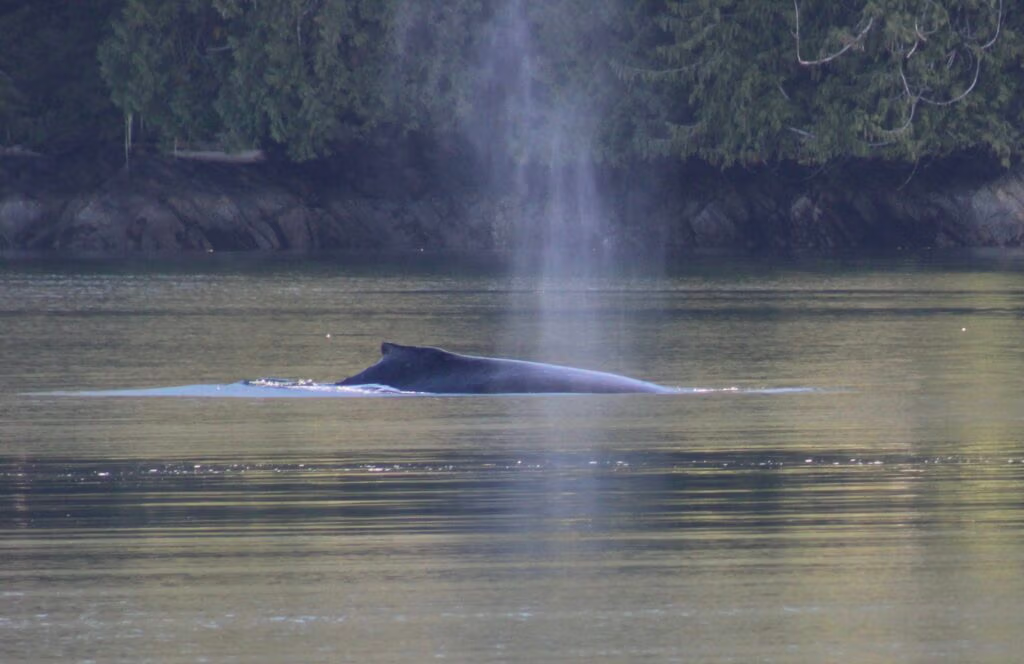
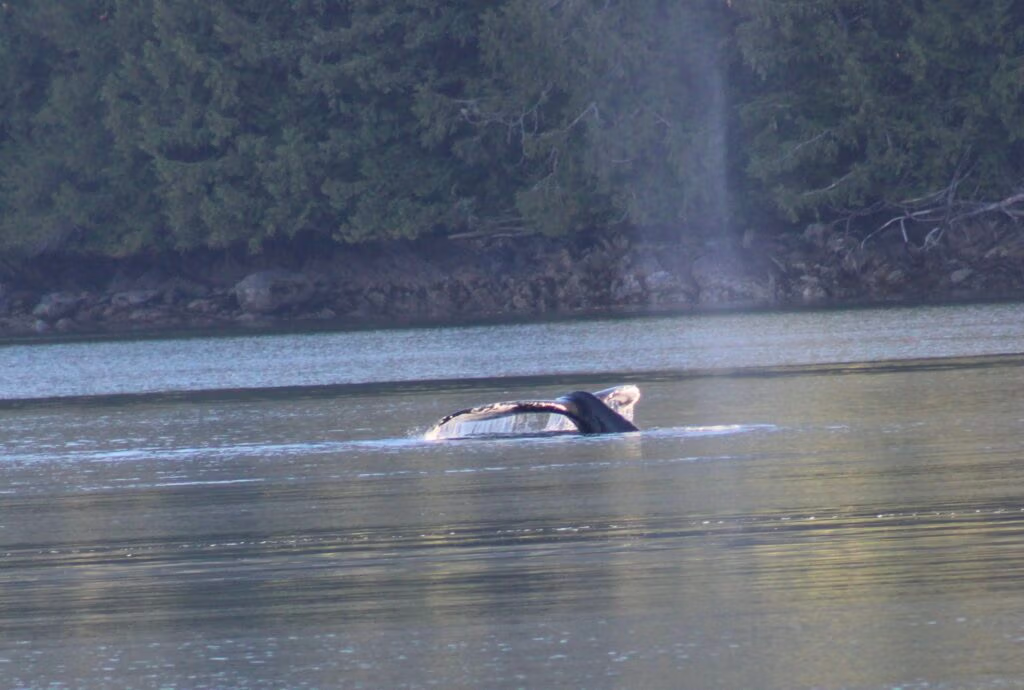
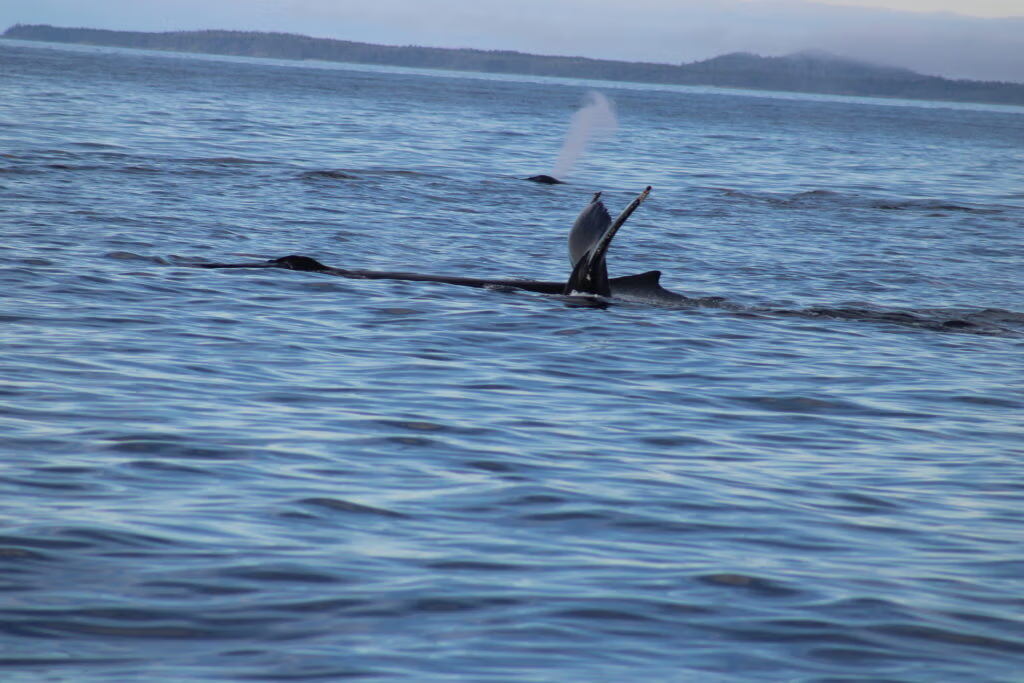
On the way back, we paused near a cove where we had come in earlier, and that’s when the day turned unforgettable. Out of a clear blue stretch of water, two whales suddenly breached right next to us, no more than 30 yards away. They came up more than once, throwing themselves skyward, rolling and blowing and flashing their fins in the air. It was the kind of moment that catches you completely off guard, leaving you startled and awed all at once. For a few seconds, everything else disappeared.
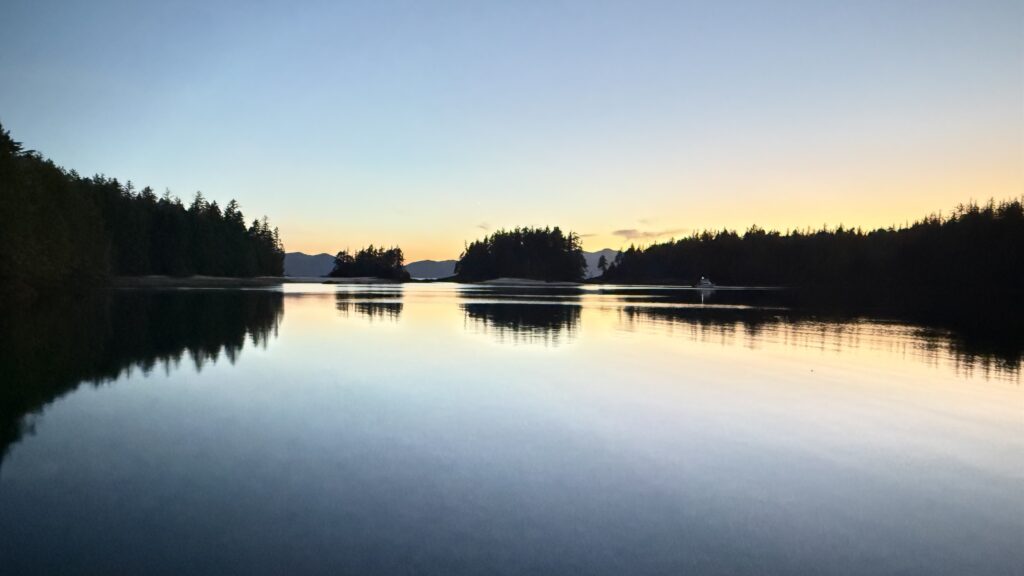
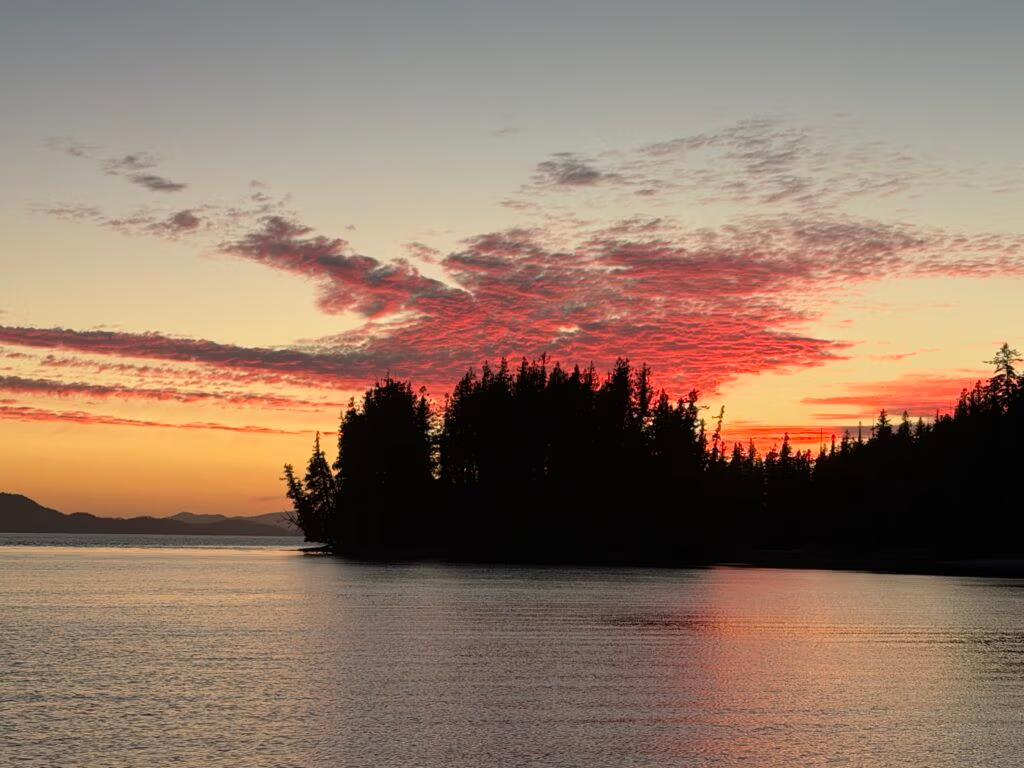
By evening, the day had softened back into calm. Peter cooked Cuban chicken with squash, and we opened a good bottle of Spanish wine to go with it. It was a mellow, easygoing close to a day that asked very little and gave quite a lot. Now the cabin is winding down in the late light, with the sun pouring through the starboard window and warming the inside of the boat. Open the port side door, and the air turns cool; stay on the starboard side, and it’s warm. The whole boat feels caught between two worlds, and the day seems to be drifting gently to an end.  I miss Jennifer….  

Fury Cove to Pruth Bay

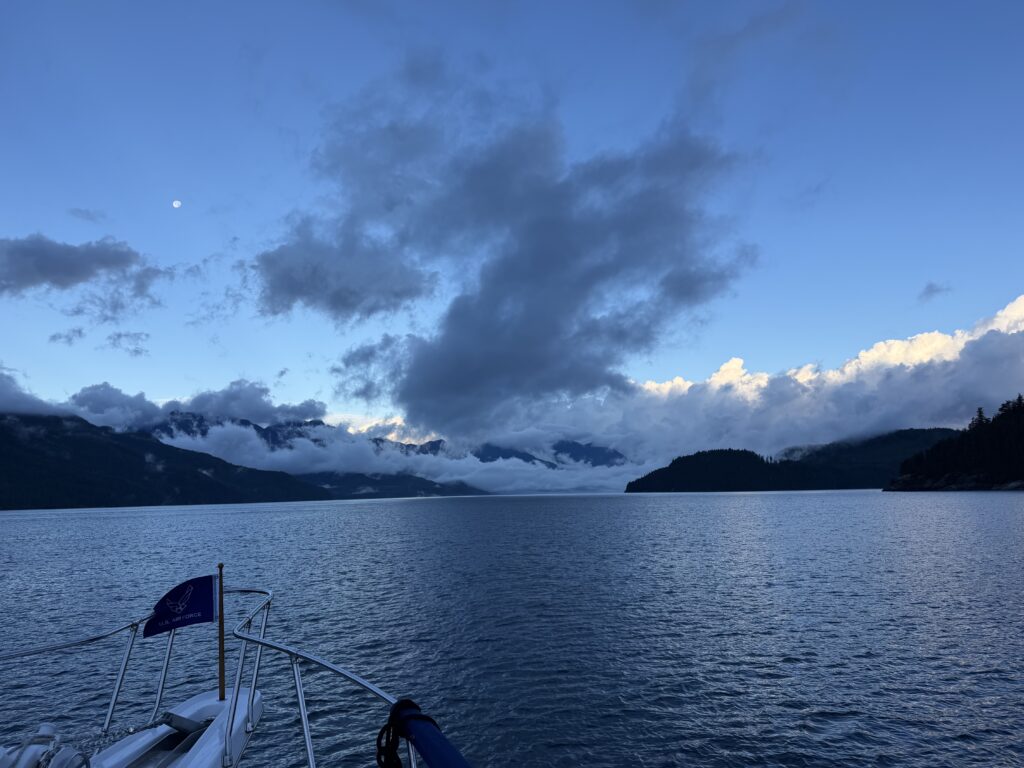
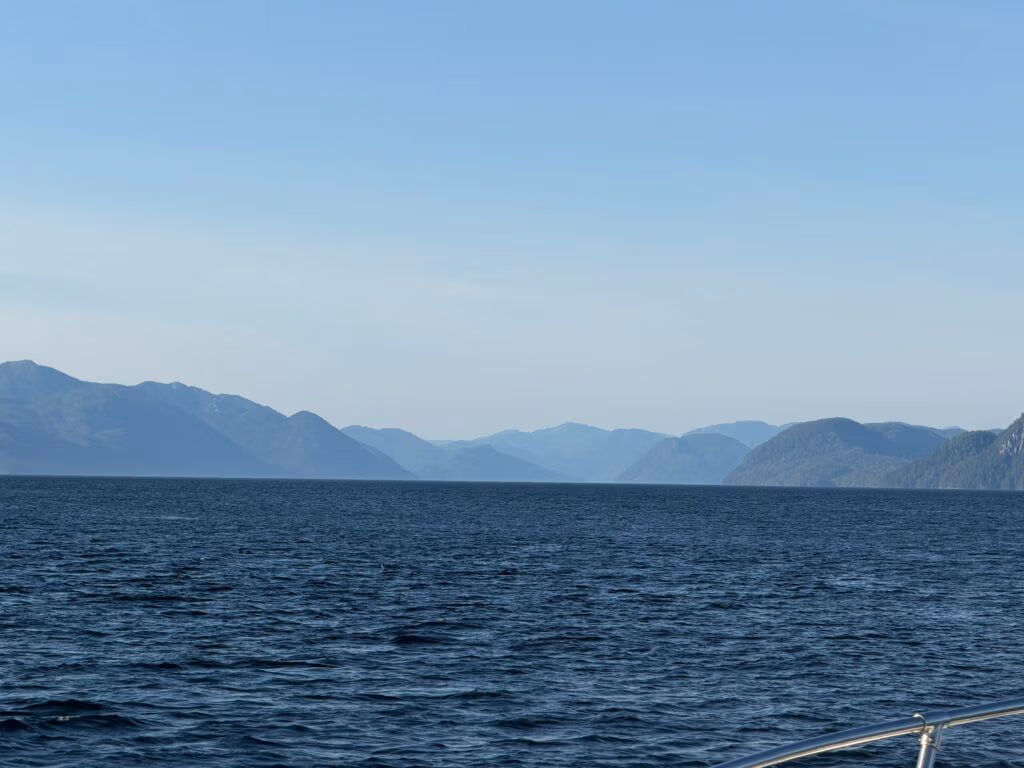
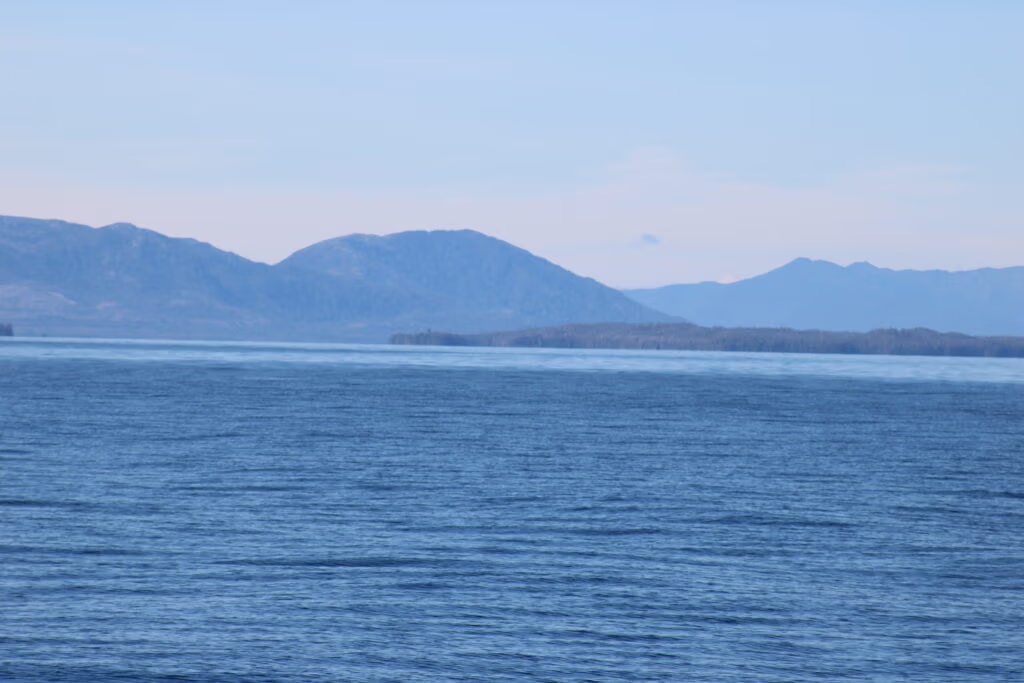
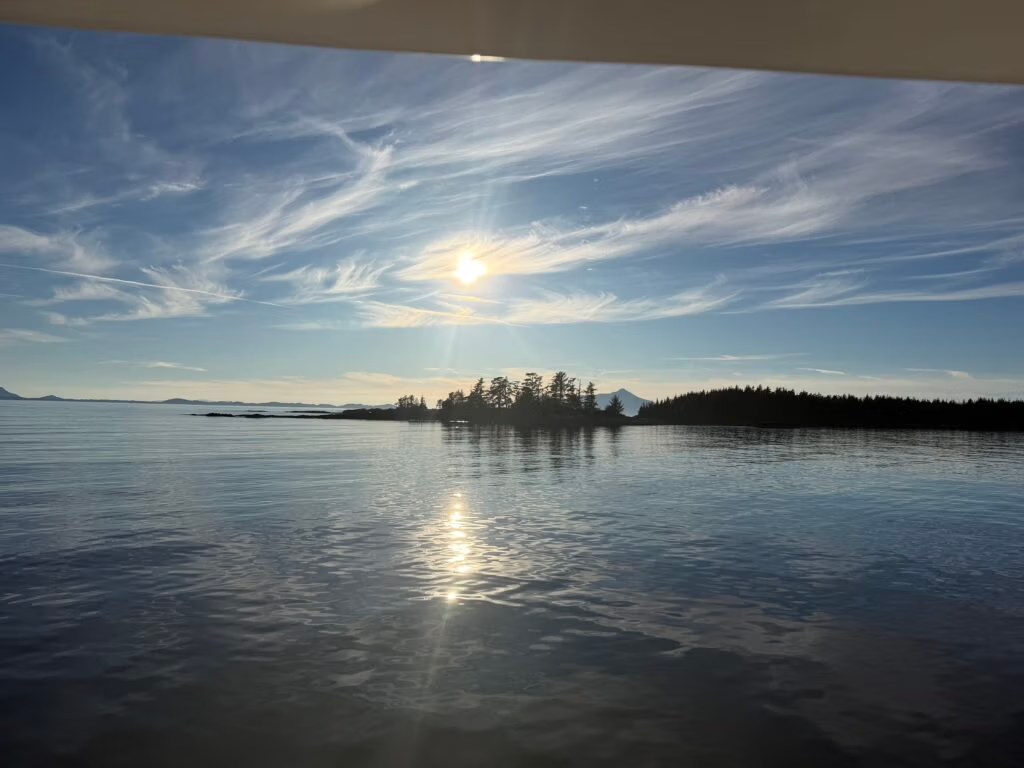
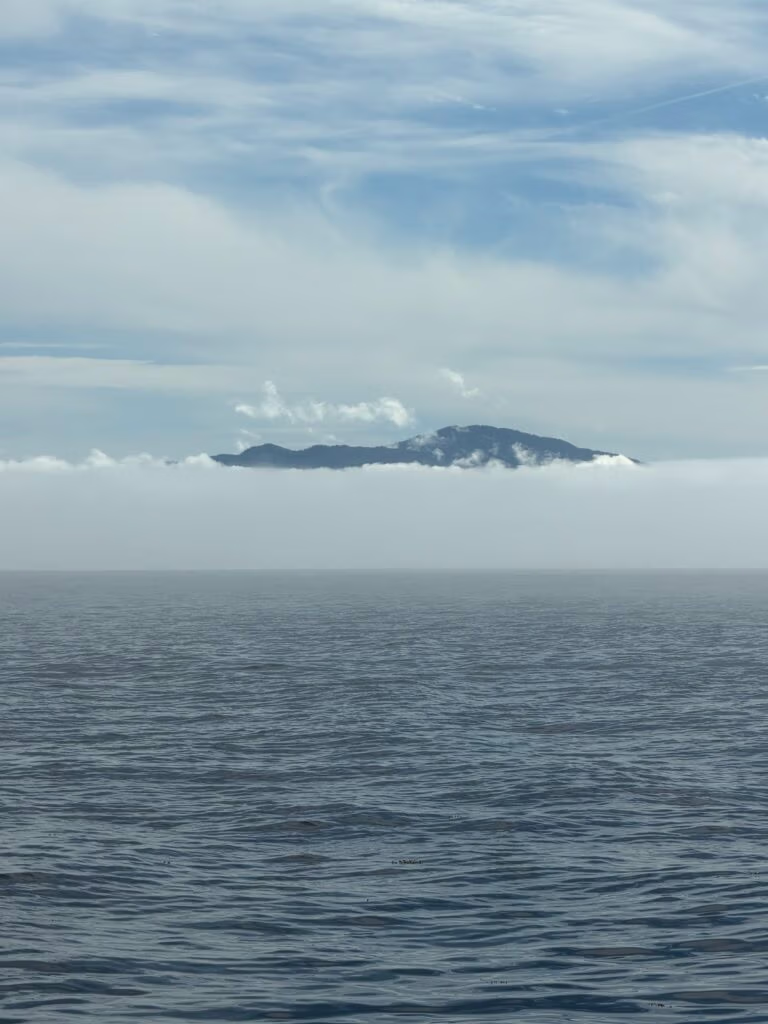
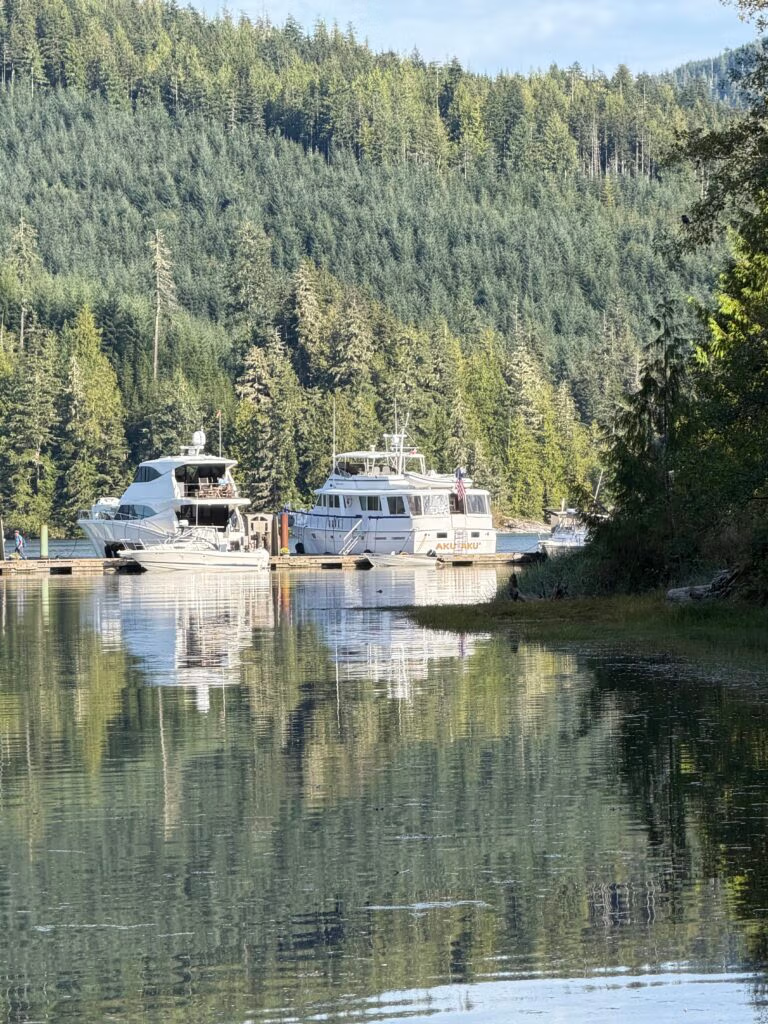
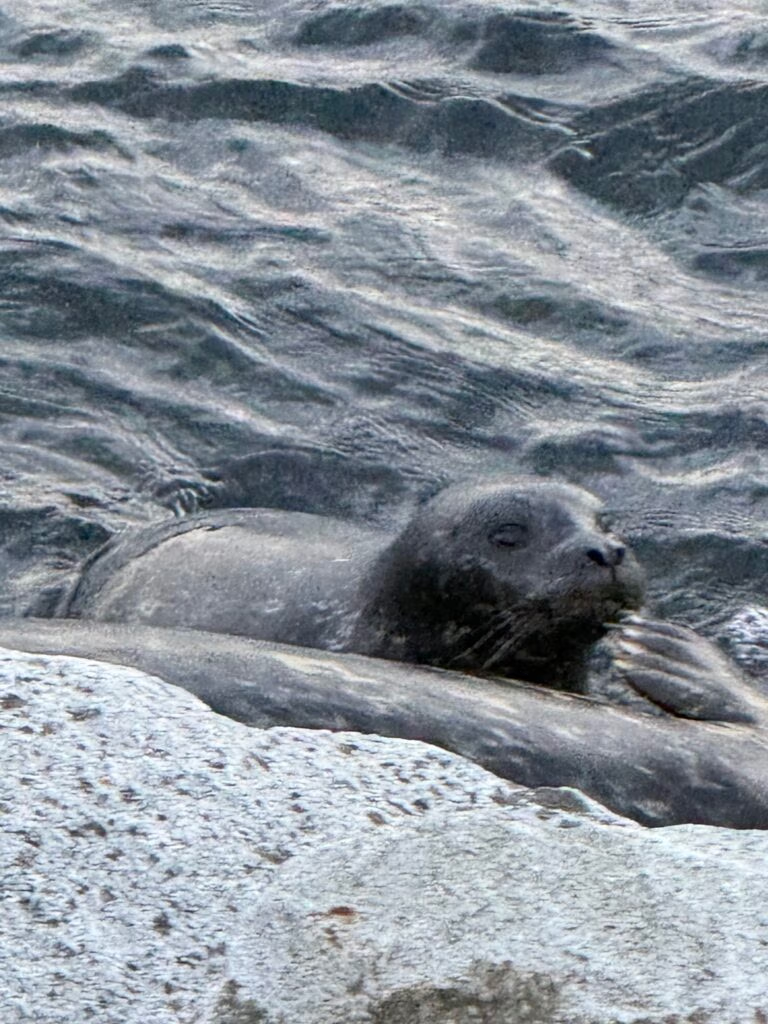
We slipped away from Fury Cove just after 6:30 this morning, greeted by a clear, beautiful dawn and the quiet promise of another day on the water. As we eased out into the open Pacific, sea otters dotted our path and we set a direct course across the wide expanse ahead, settling into the steady rhythm of the journey.


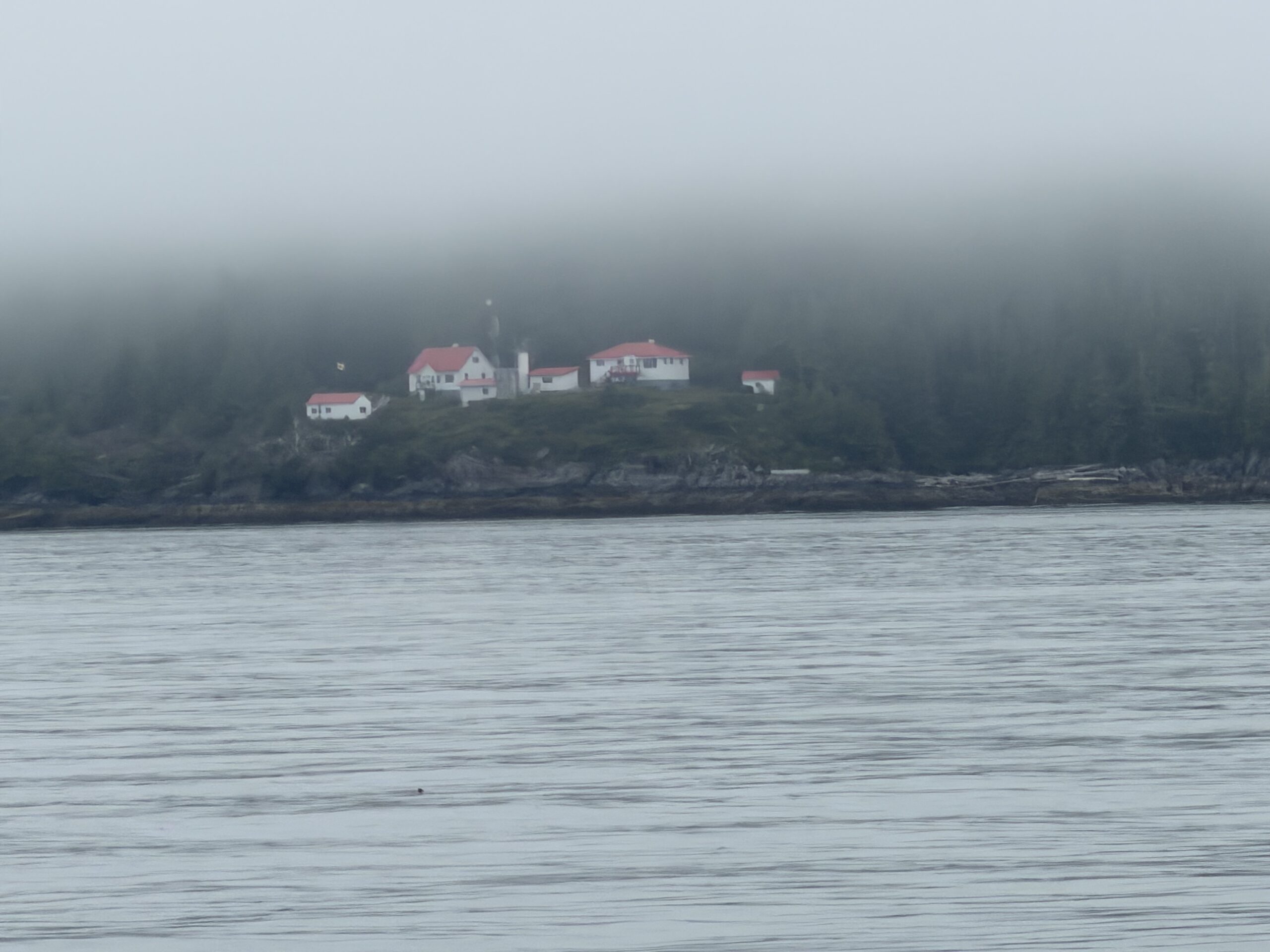
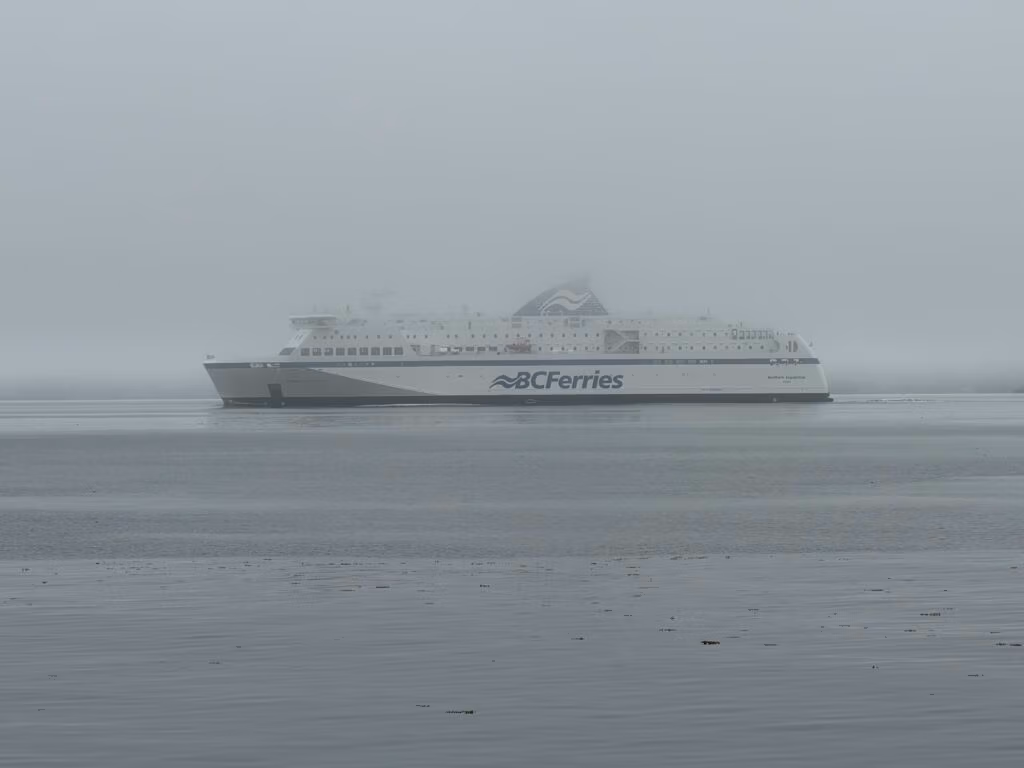
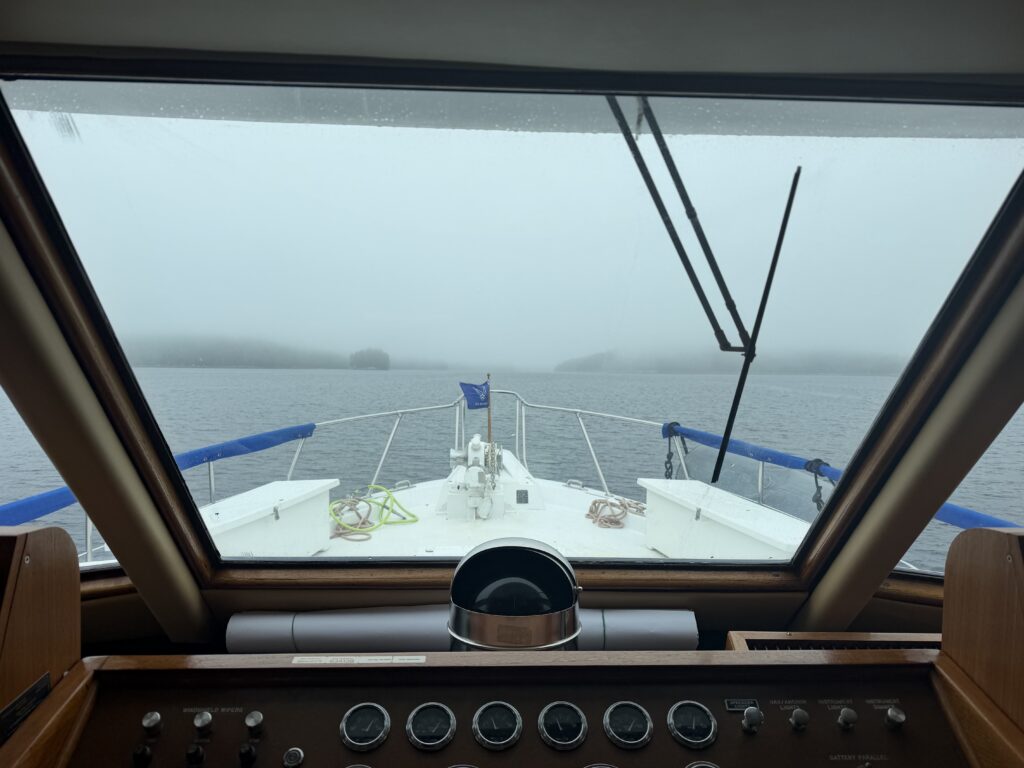
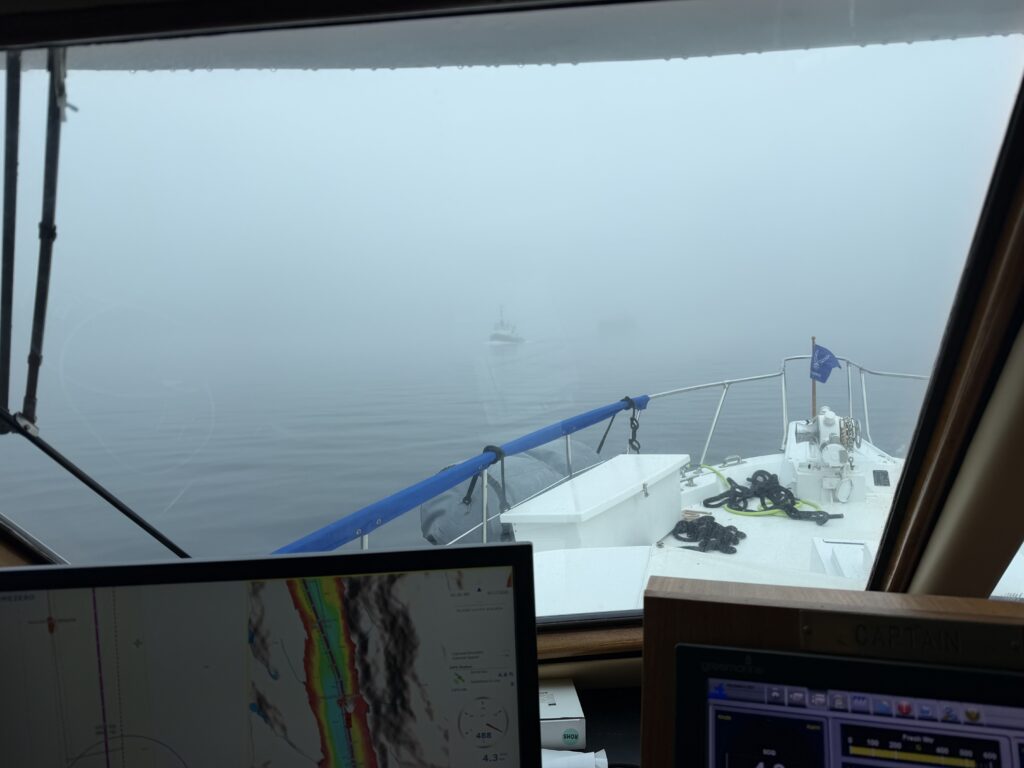
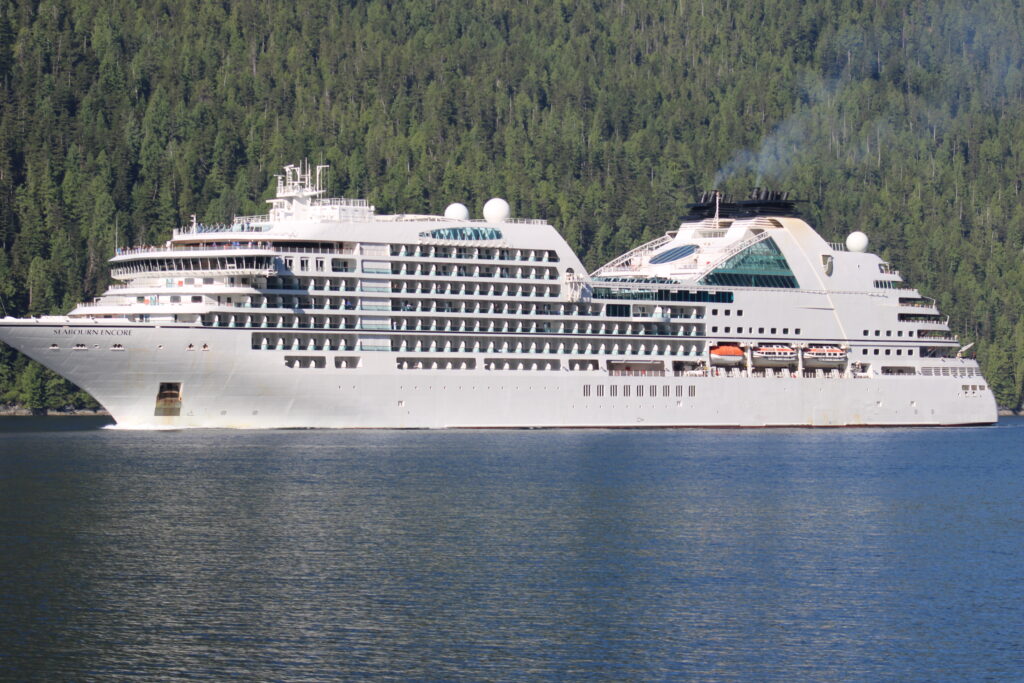
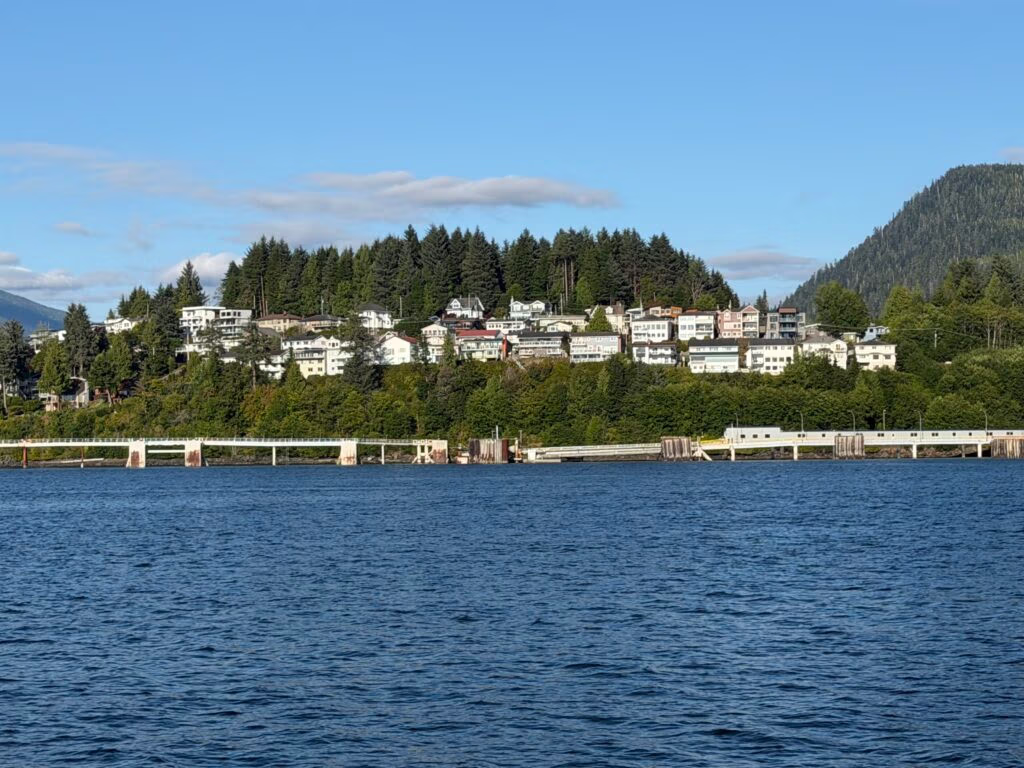
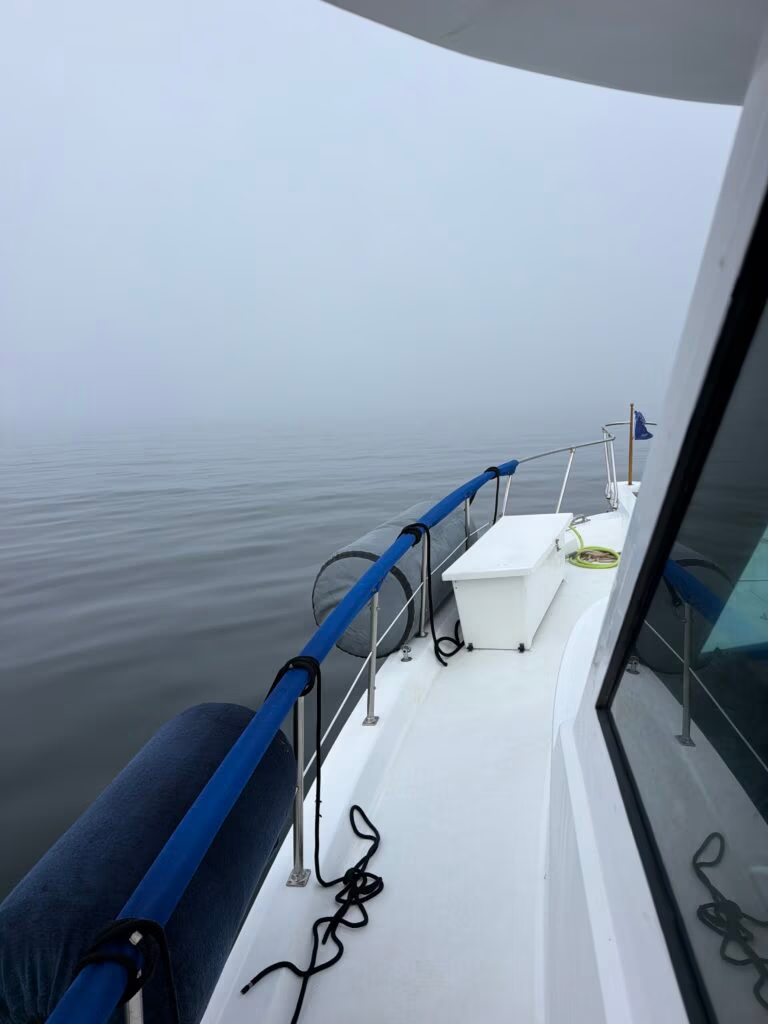
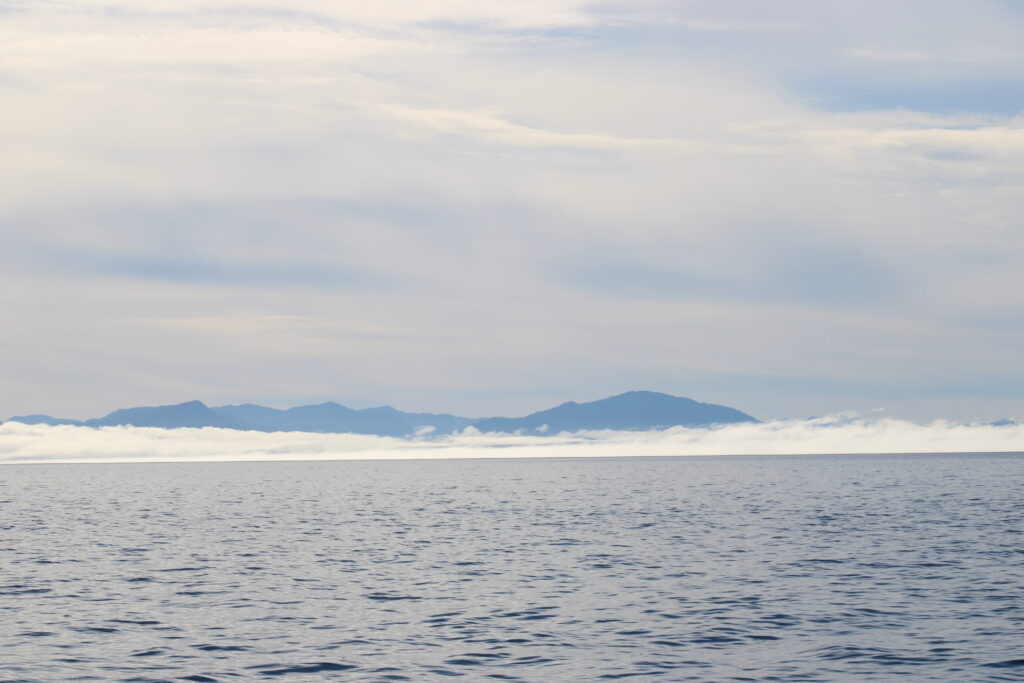
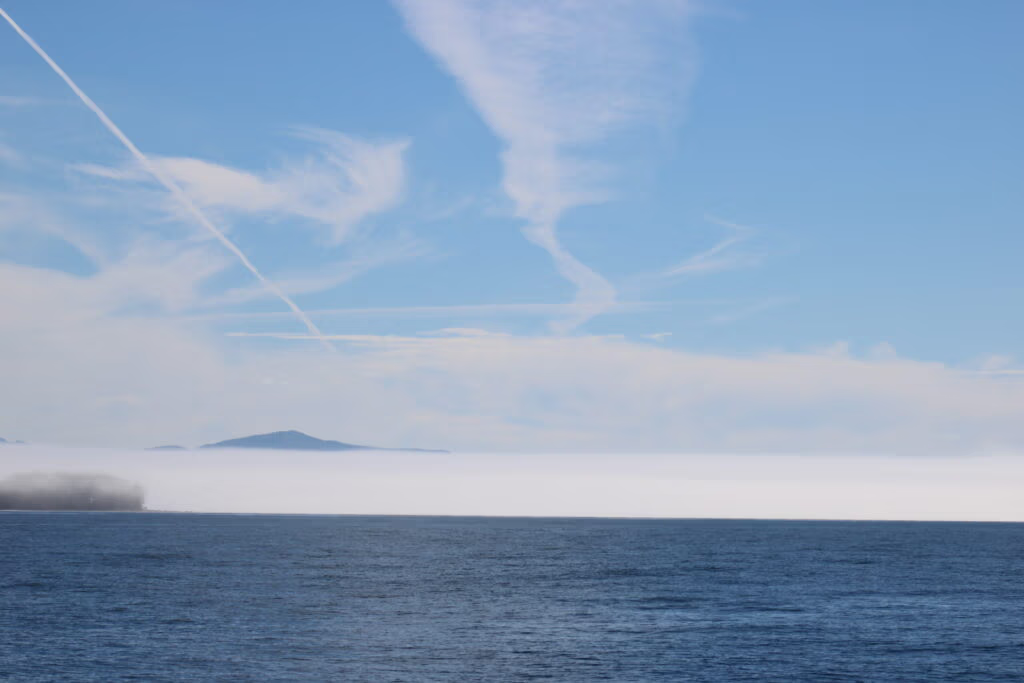
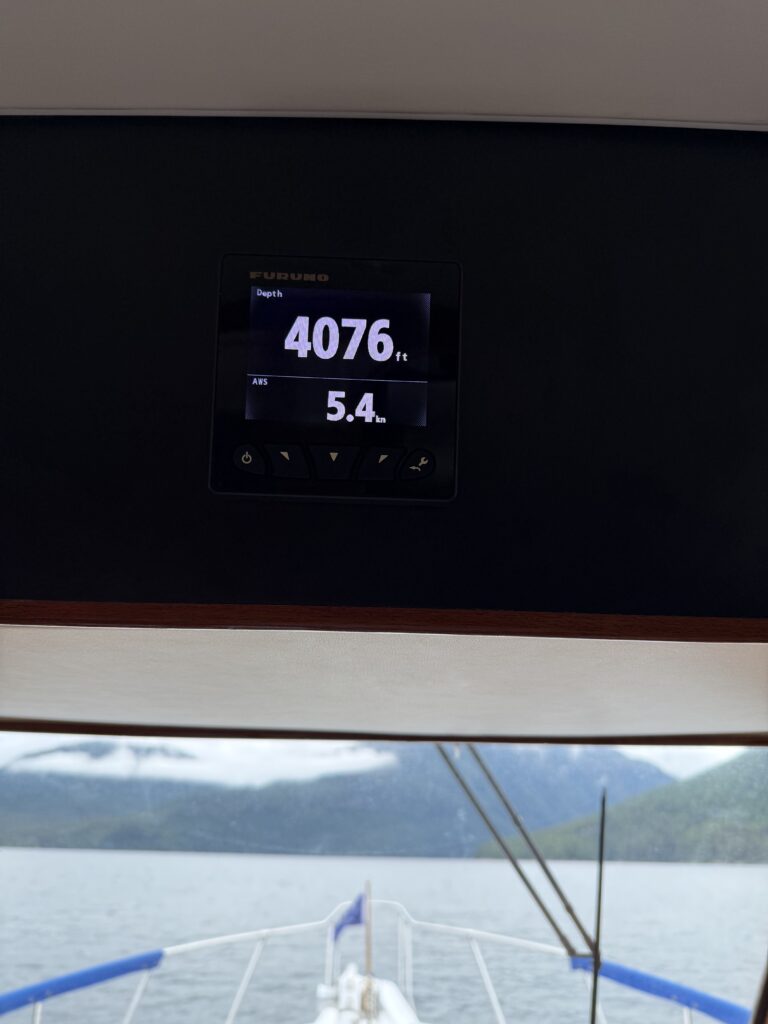
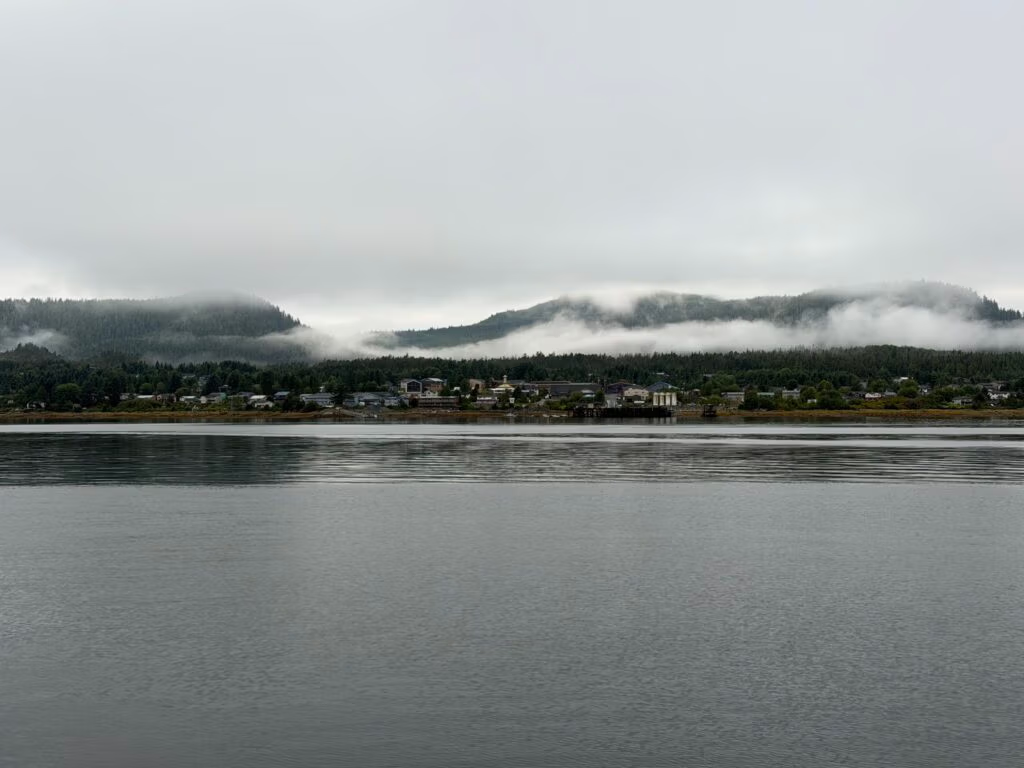
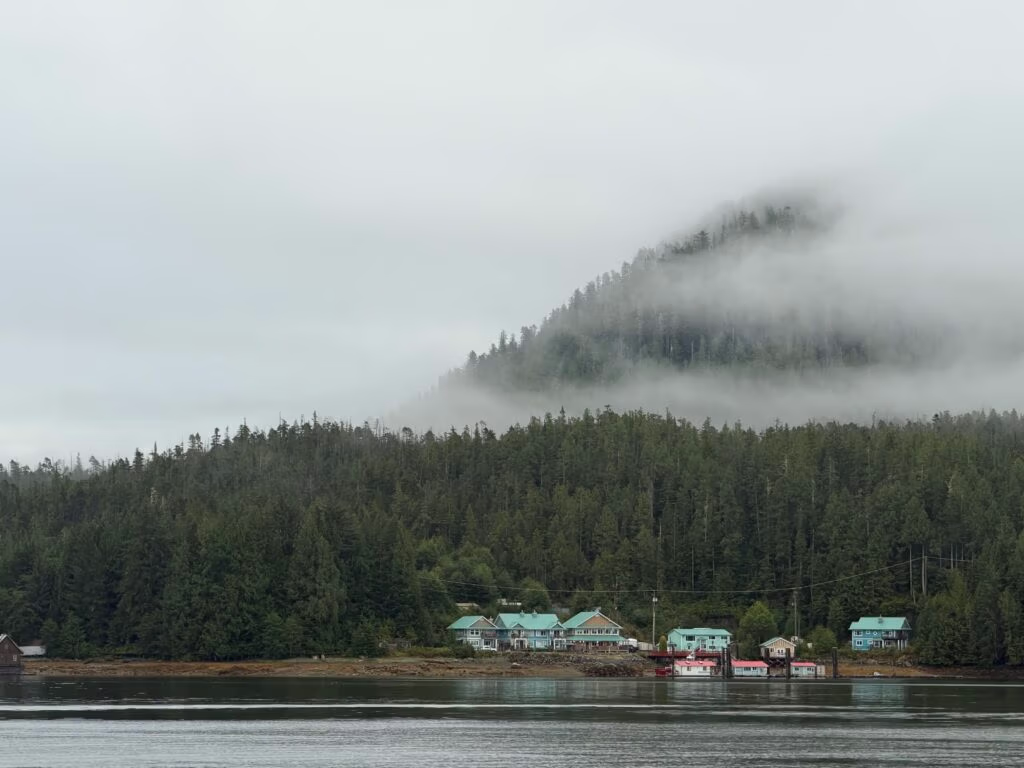
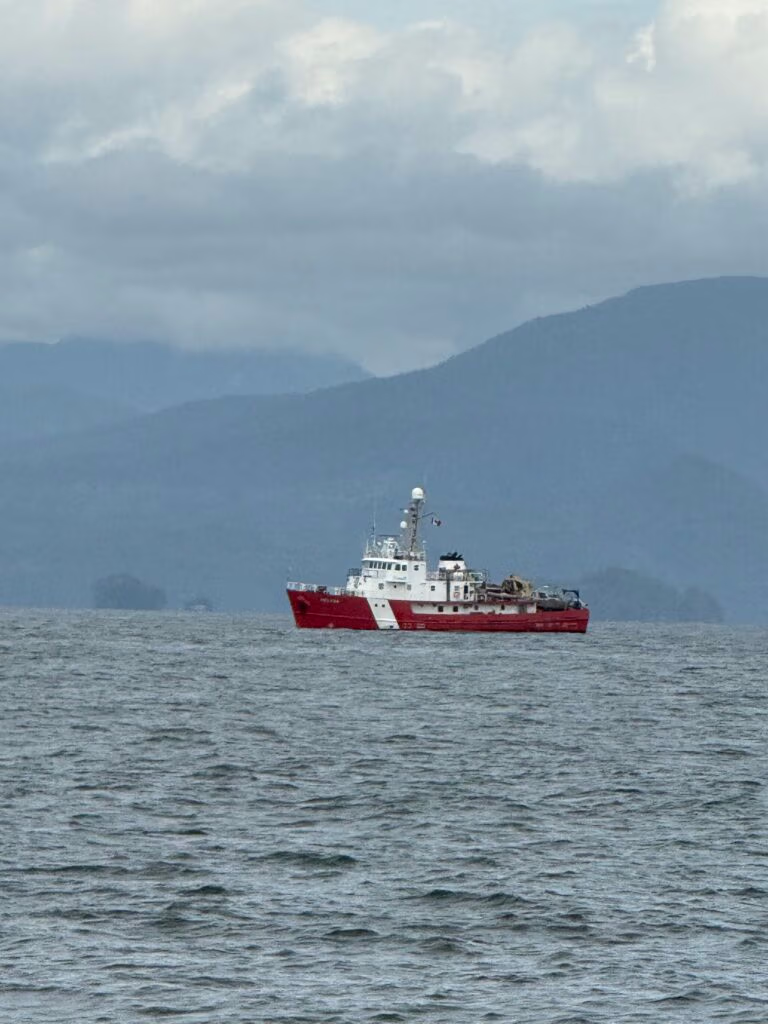
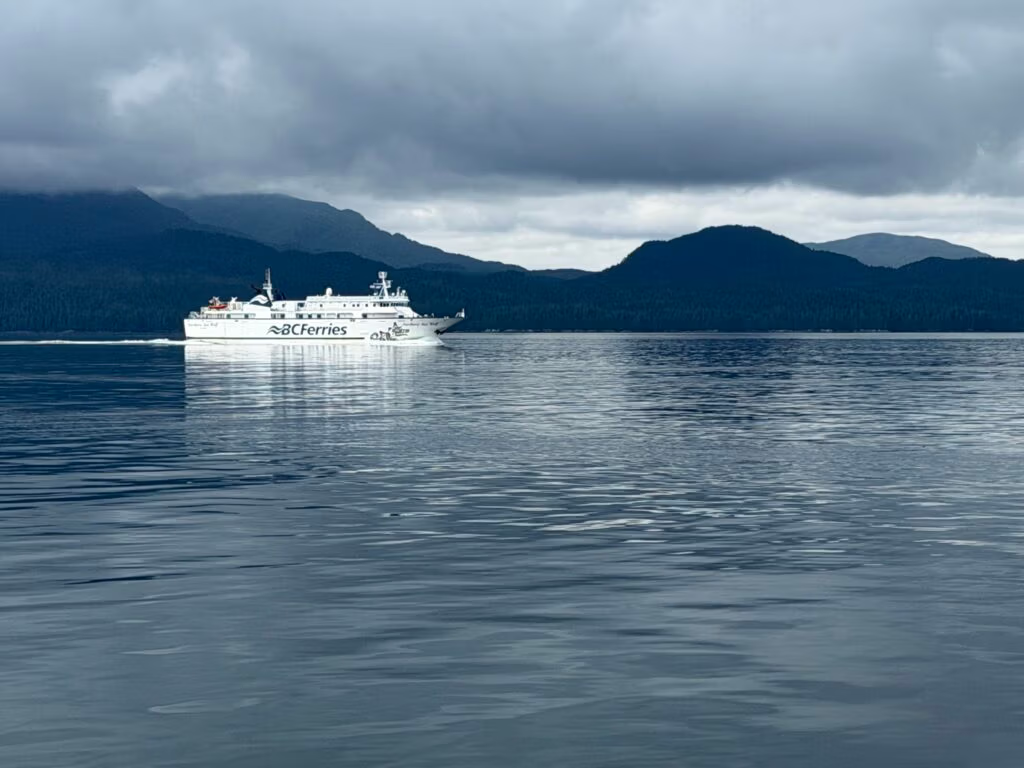
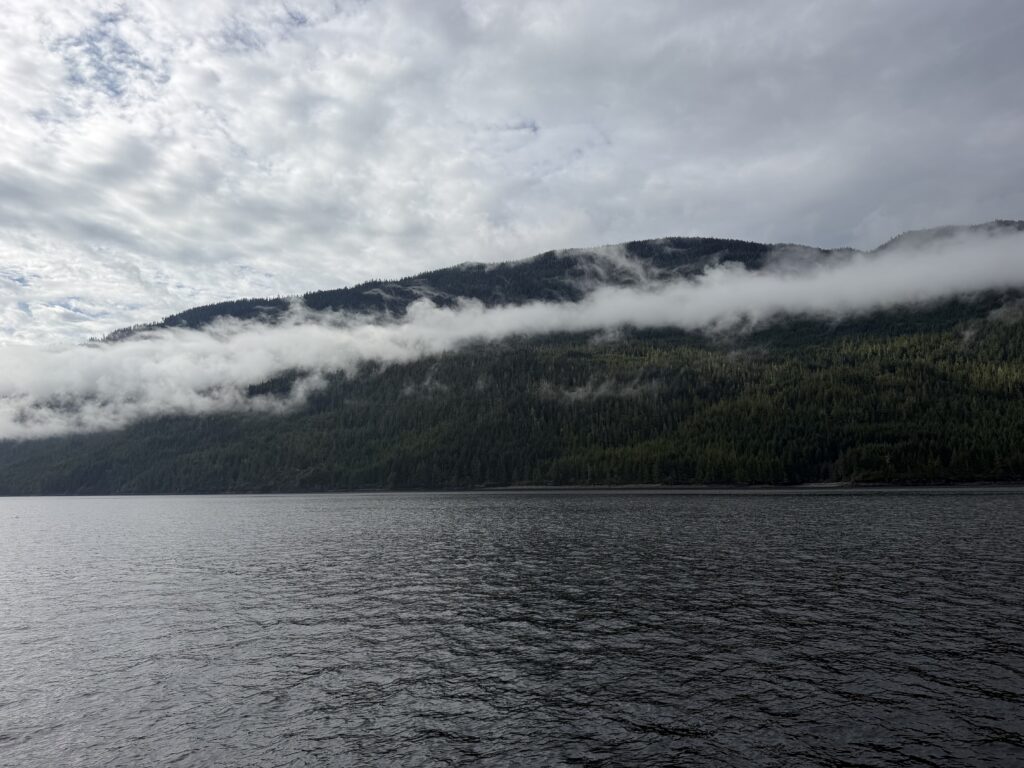
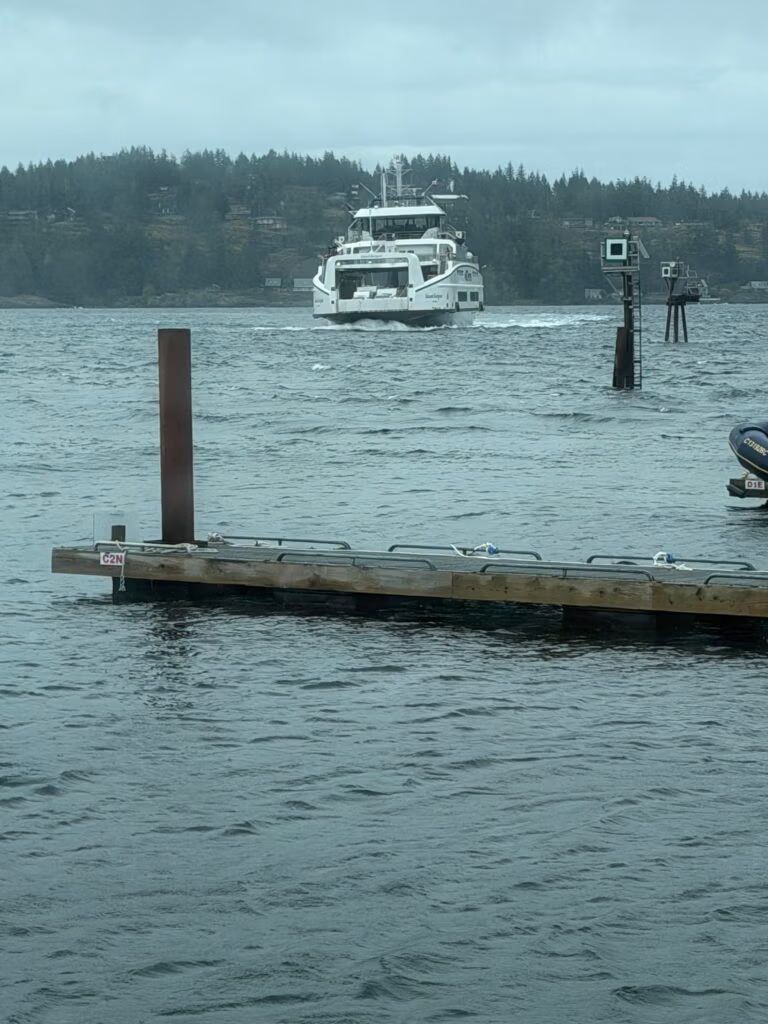
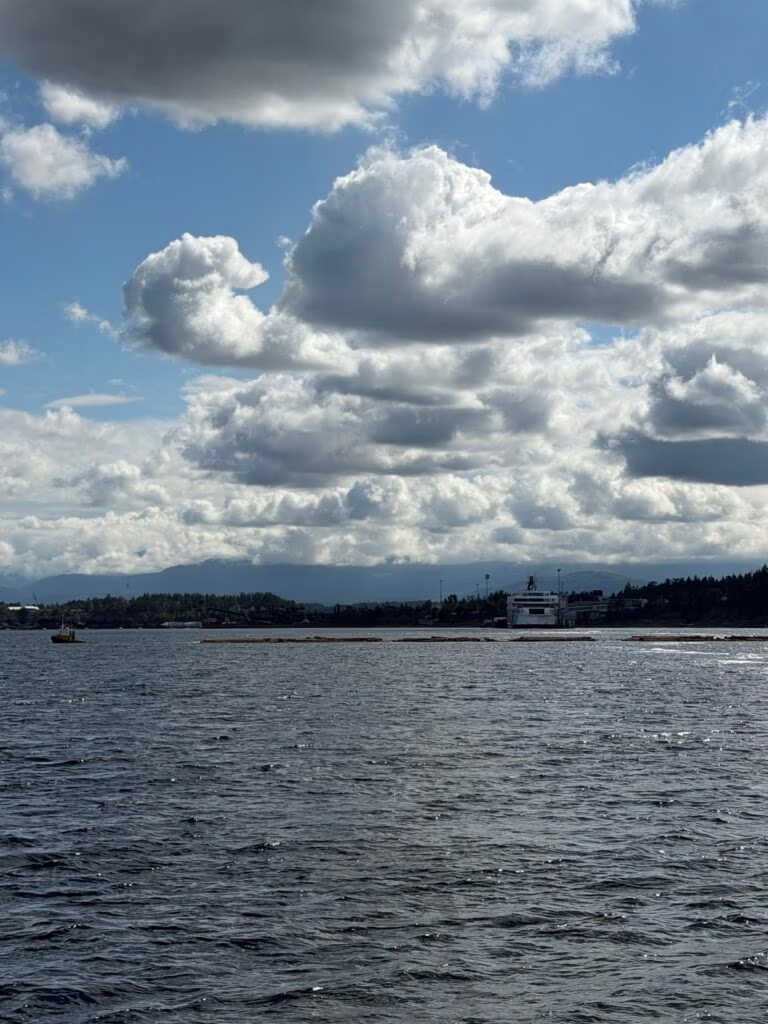
The crossing took about an hour and forty-five minutes to two hours, with the boat humming along at around 7.8 knots. Fog drifted in and then slowly lifted, revealing houses below the cloud line before a BC ferry appeared on our route, sharing the same broad waters for a stretch. When we reached the channel, we swung left and headed into Pruth Bay, a place known for its research station and beautiful coastal surroundings.

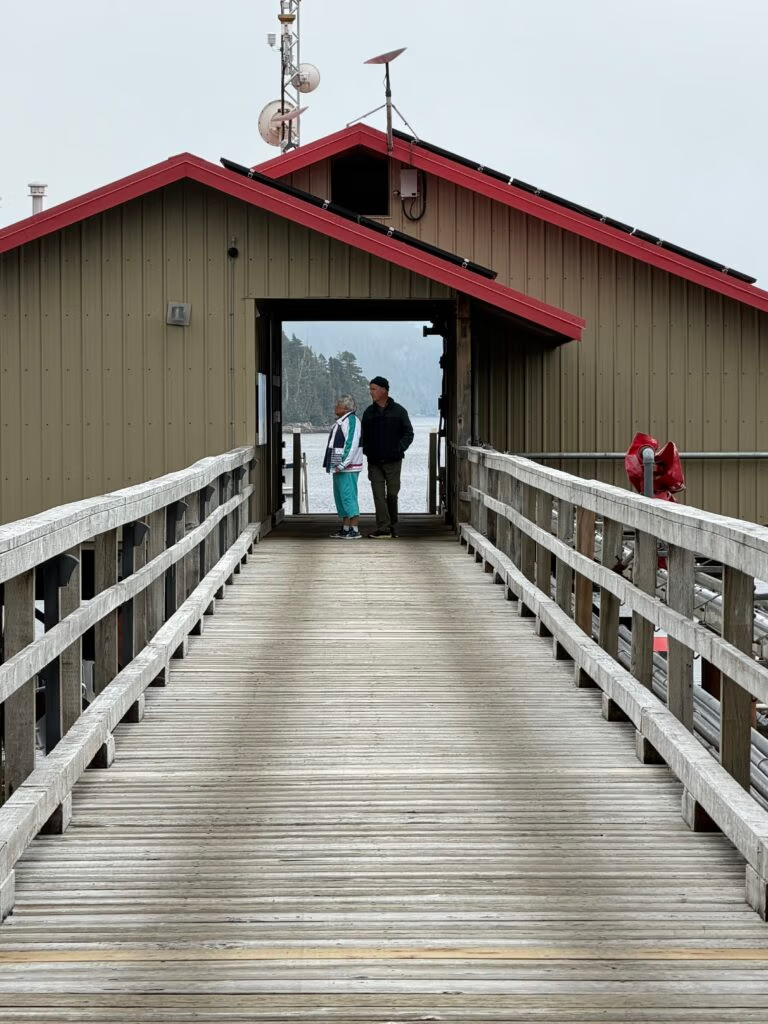
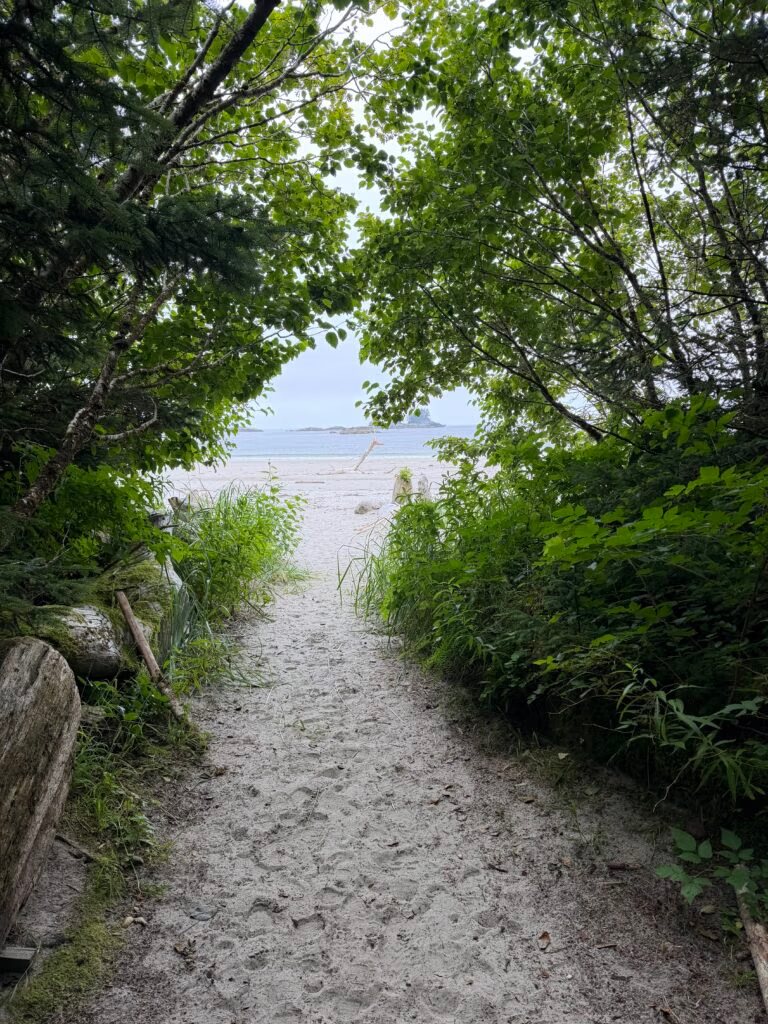
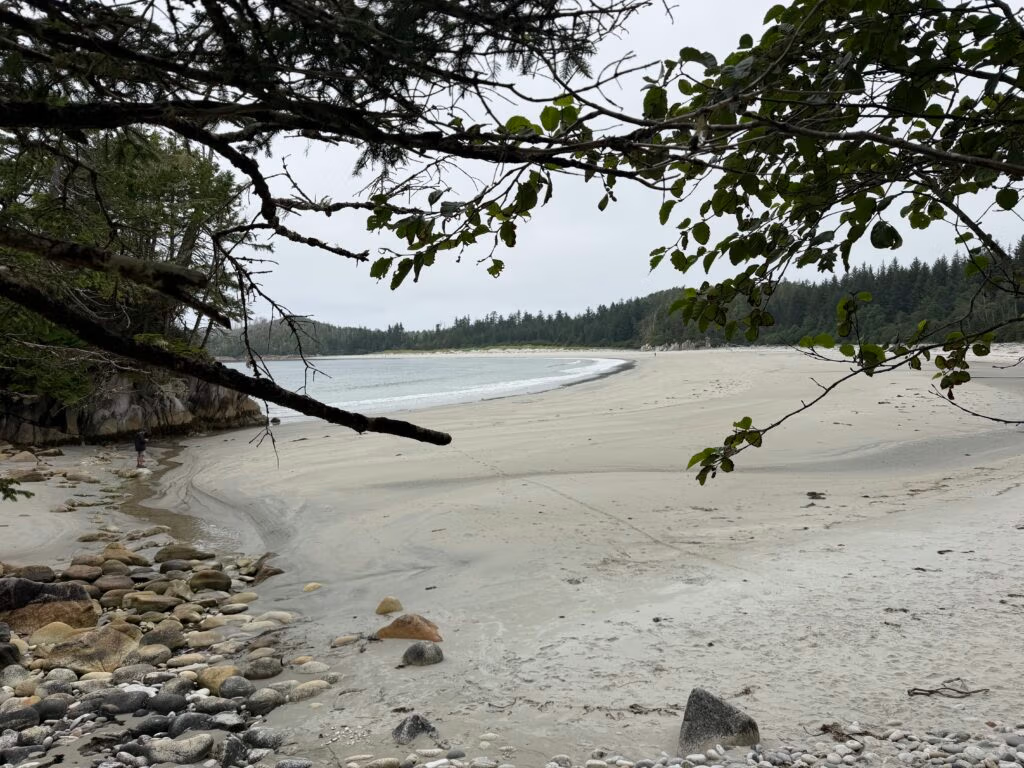
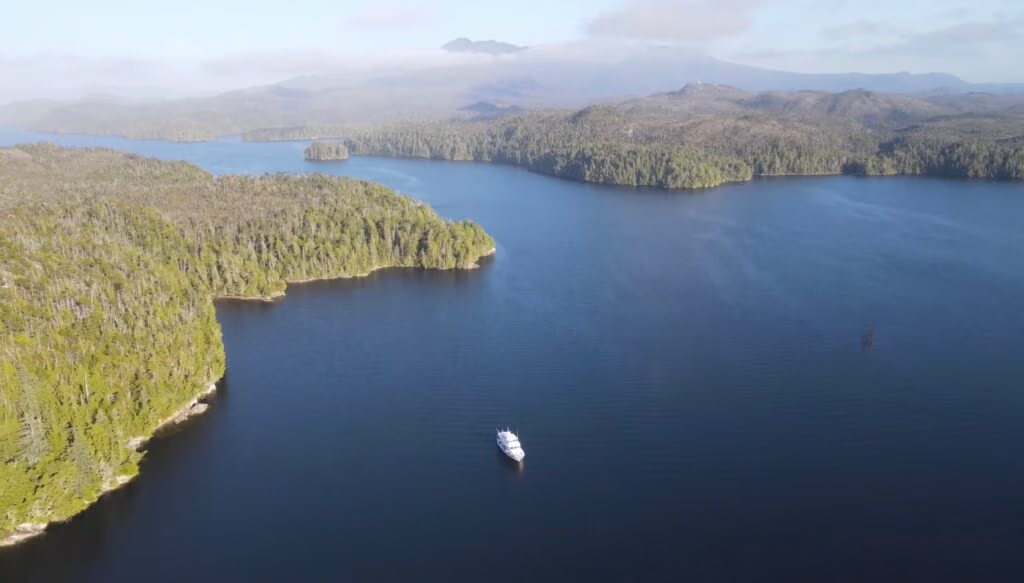
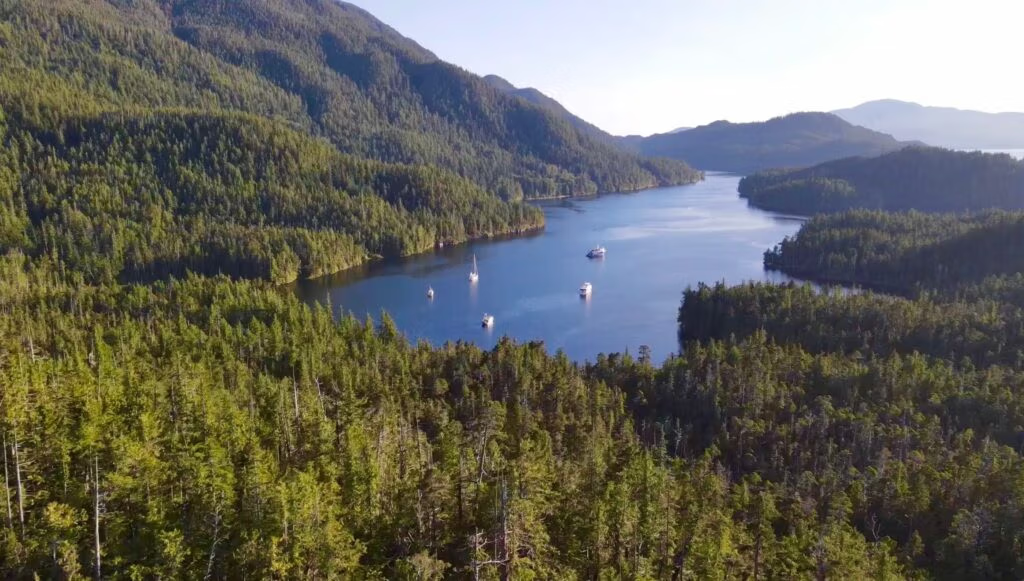
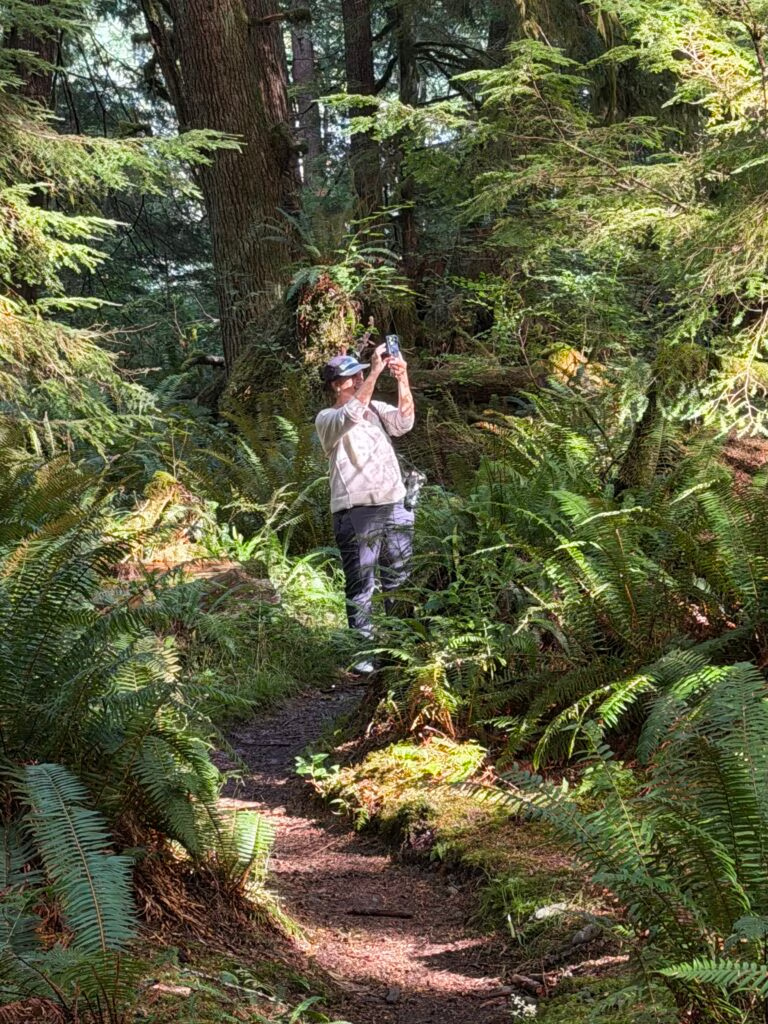
We traveled roughly three miles up Pruth Bay and arrived at the research station at the end, where we set out on a walk across the land to the ocean side of the island. The trail opened onto a stunning sandy beach, warm and inviting, and Peter sent the drone skyward to capture a set of excellent shots of the coastline and surf. 
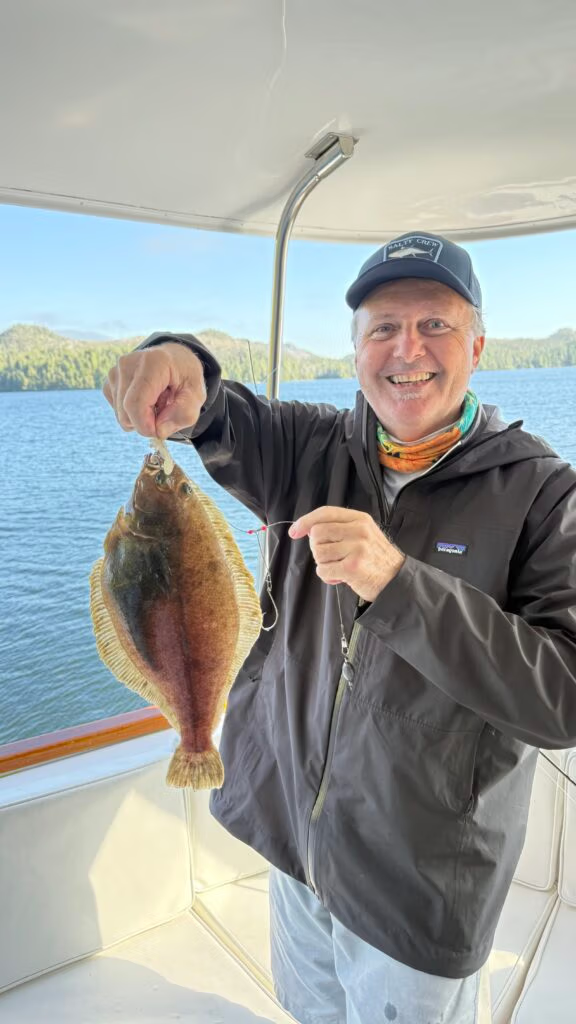
By the end of the day, the adventure had taken on the perfect cadence of a good cruising day: a successful crab trap, Peter and Chris and Robert pulling flounder off the back deck, and Chris finishing things off with meatloaf, potatoes, and carrot slaw. It was the kind of evening that makes a day feel complete — full of motion, good food, and the easy satisfaction of being exactly where you want to be.
Retired and content, everyone settled in for the night with tired smiles and thoughts already turning toward tomorrow’s adventures.

Pruth Bay to Kwakume Inlet

The run along Fitz Hugh Sound
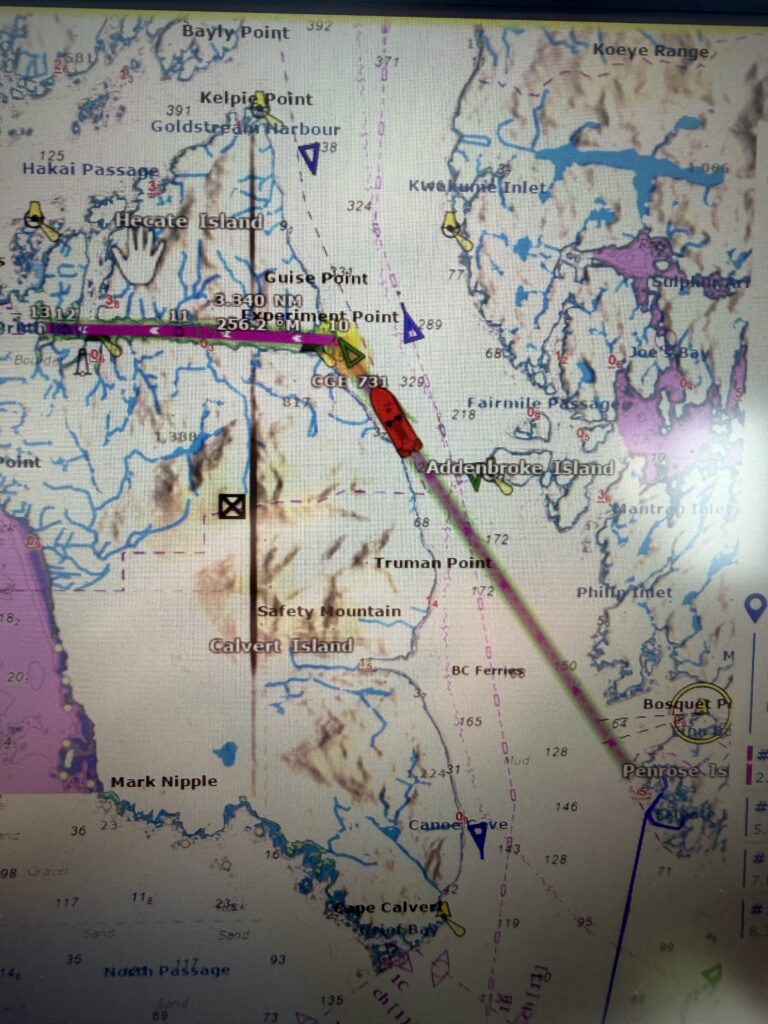
We left Pruth Bay at the head of the east–west Kwakshua Channel, a sheltered anchorage on Calvert Island within the Hakai Luxvbalis Conservancy. From there, we threaded out into Fitz Hugh Sound and made for Kwakume Inlet, the little pocket of water tucked between Rivers Inlet and Namu on the Central Coast.
About an hour and a half on the water gave us time to settle into the rhythm of the passage. The day was “uneventful” in the best boating sense: no drama, just sea, sky, and the low thrum of the engine as you crossed familiar blue.
Whales off the port bow…
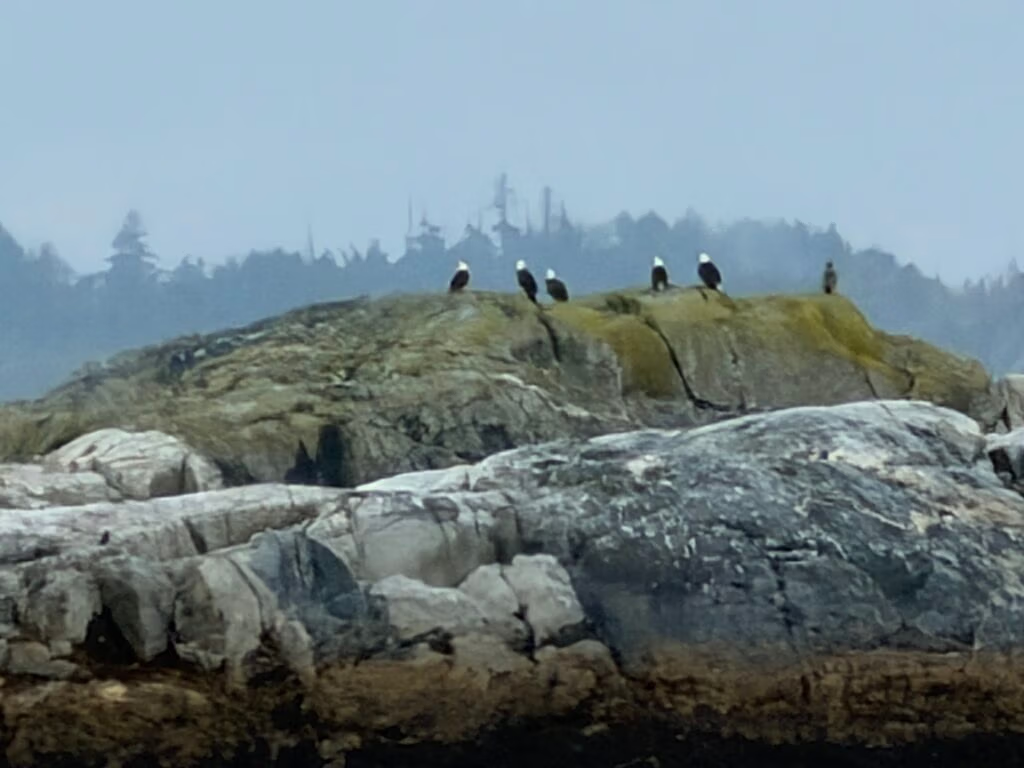
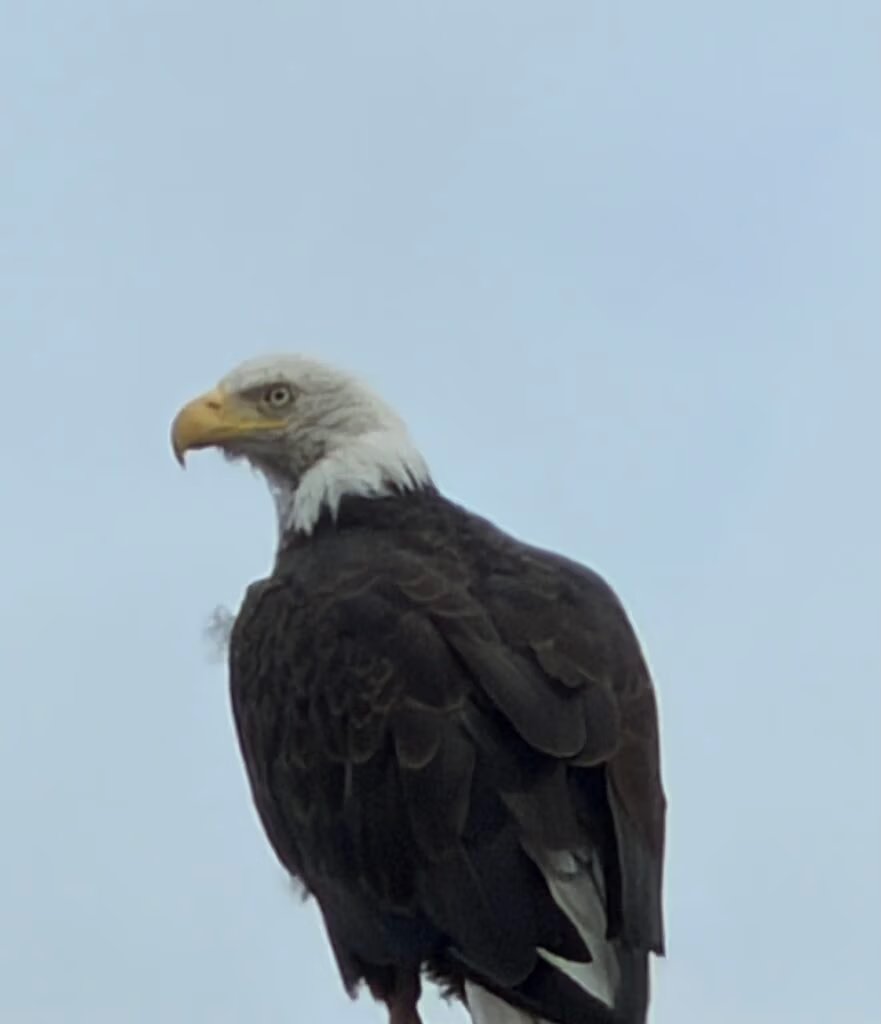
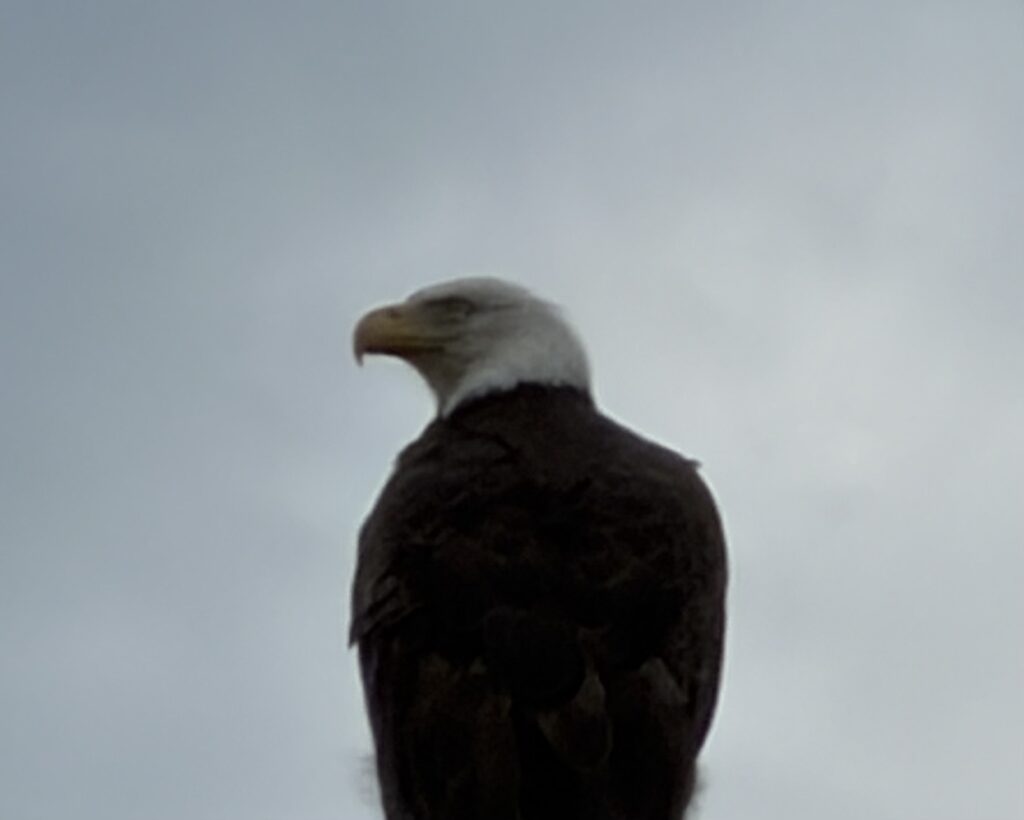
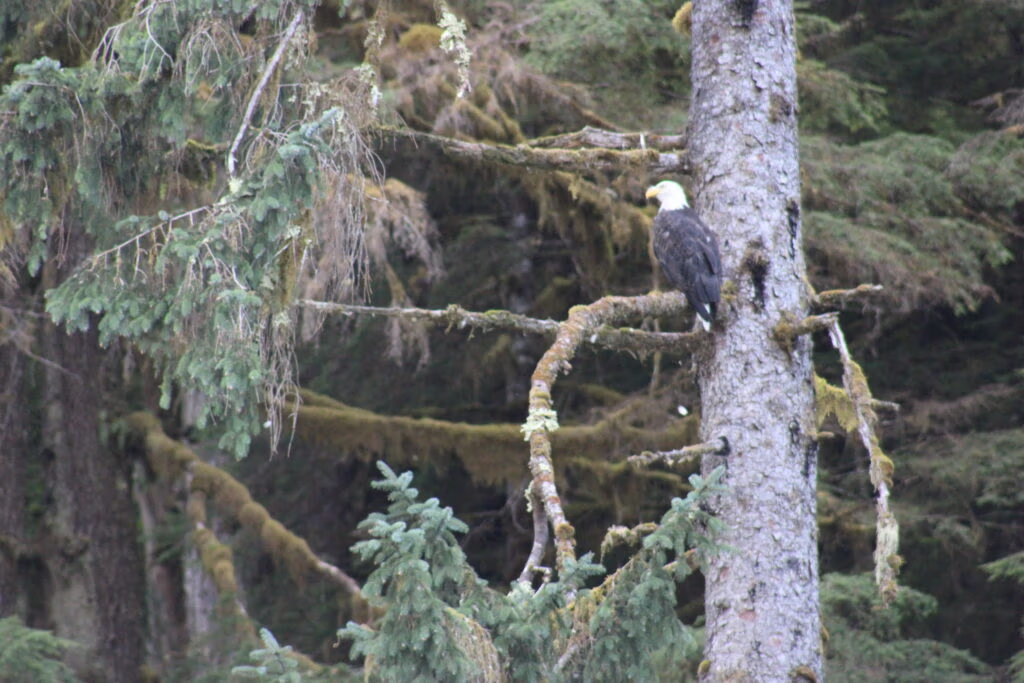
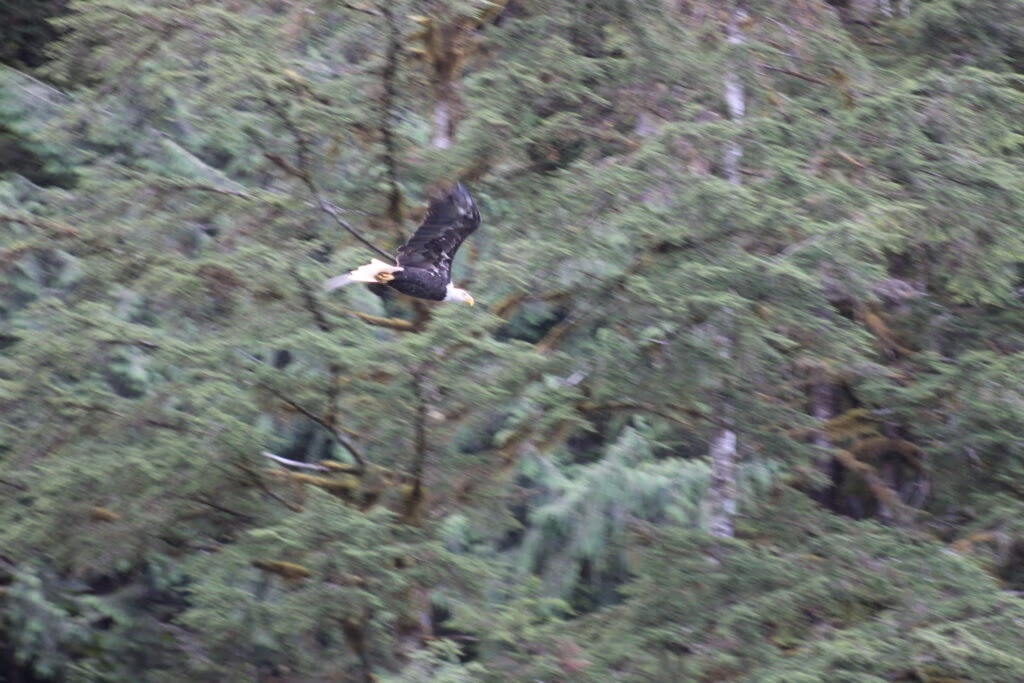
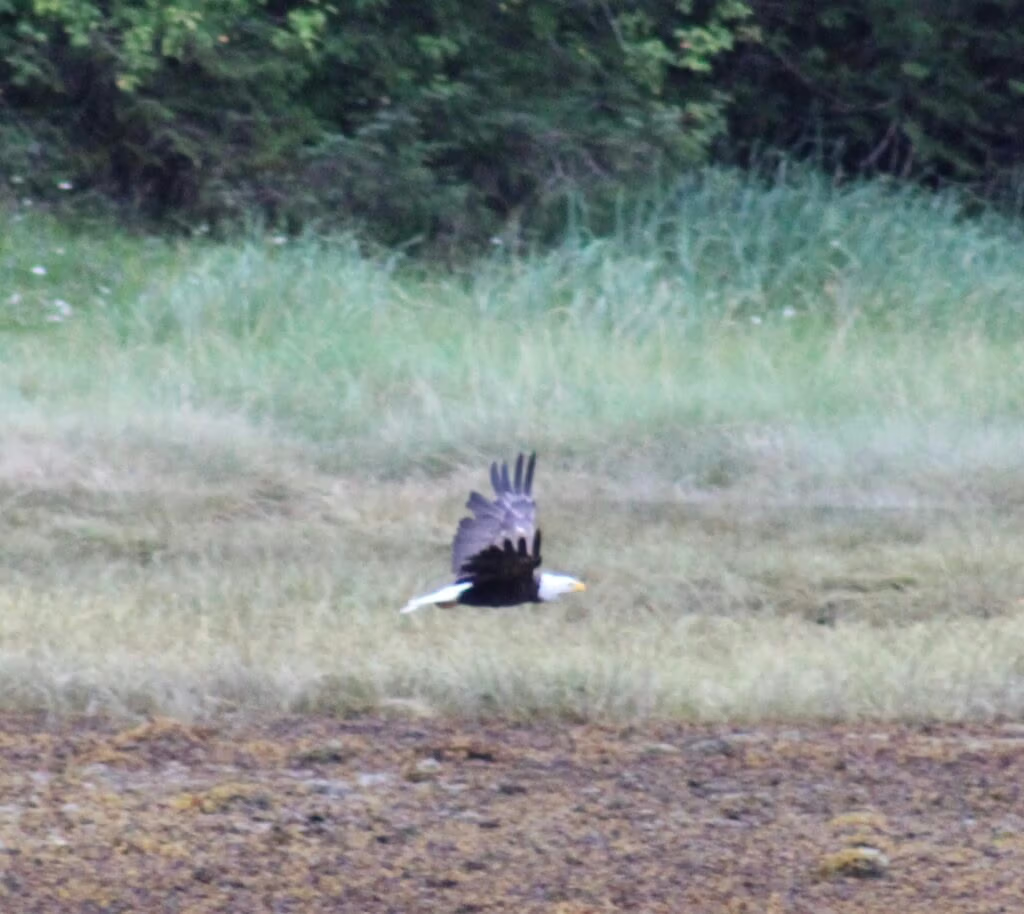
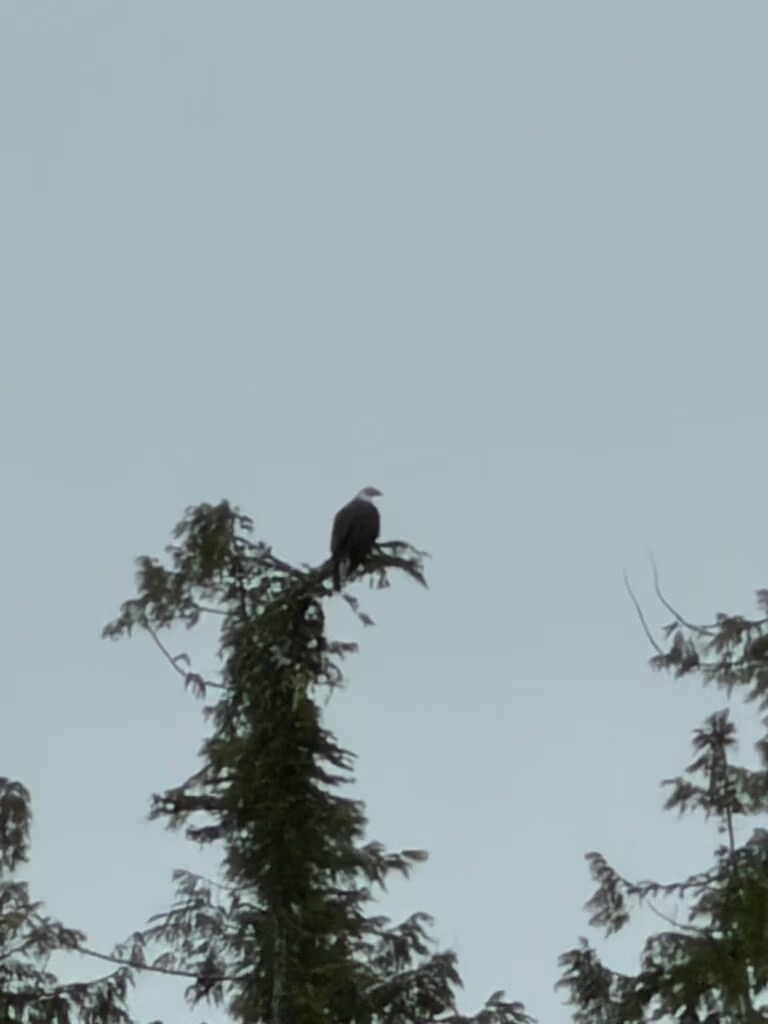
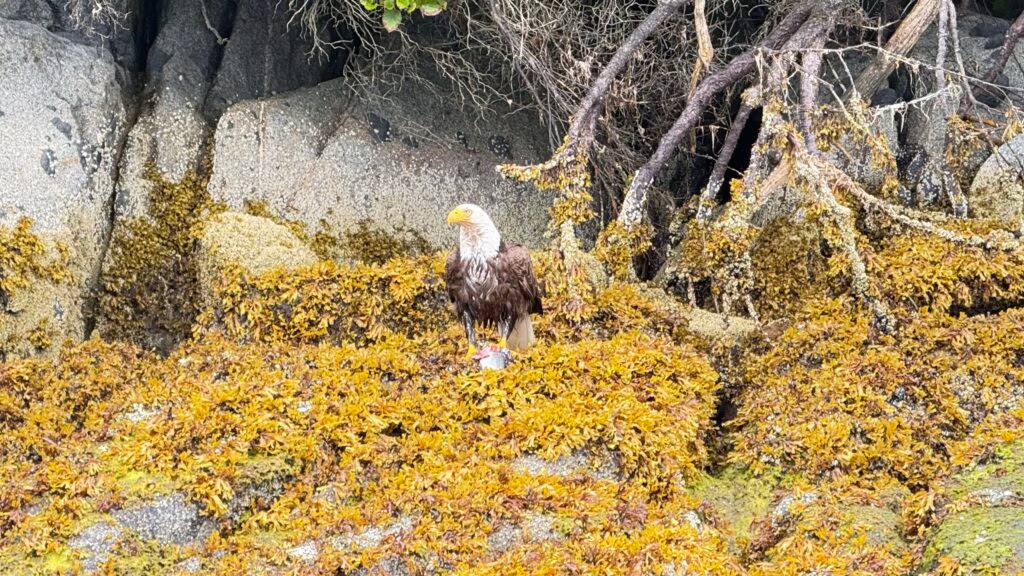
Then came the highlight: two whales sighted off the port side, one of them close enough to make the moment stick. In these waters, that could be anything from humpbacks to orcas, but the specifics matter less than the feeling—sudden stillness on deck, eyes locked on the blow and the roll of a dark back, the shared glance among crew that says, there they are. It’s the kind of wildlife encounter that defines trips like this, right up there with eagles wheeling overhead and the constant sense of being in a living seascape.
Into Kwakume Inlet: “a little dicey”
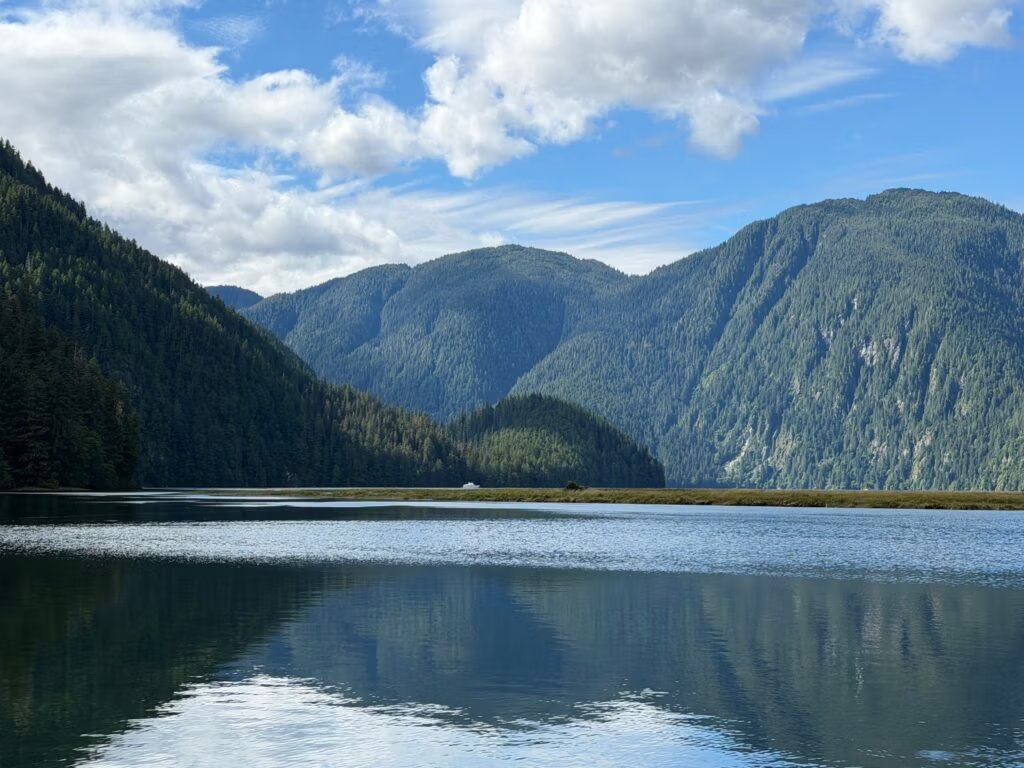
Kwakume’s entrance is known for being tight, with a drying rock about 200 metres west of the mouth that most skippers keep to starboard. Depths inside are good—around 7 to 10 metres—and the holding is sound, making it a secure anchorage once you’re through.
Crab traps, odd jobs, and the rhythm of anchorage
Once anchored, Robert and Peter put out the crab traps and checked the area, while the rest of us tackled the endless list of boat-life chores: fixing, squaring things away, cleaning, making the vessel feel like home again after a passage.
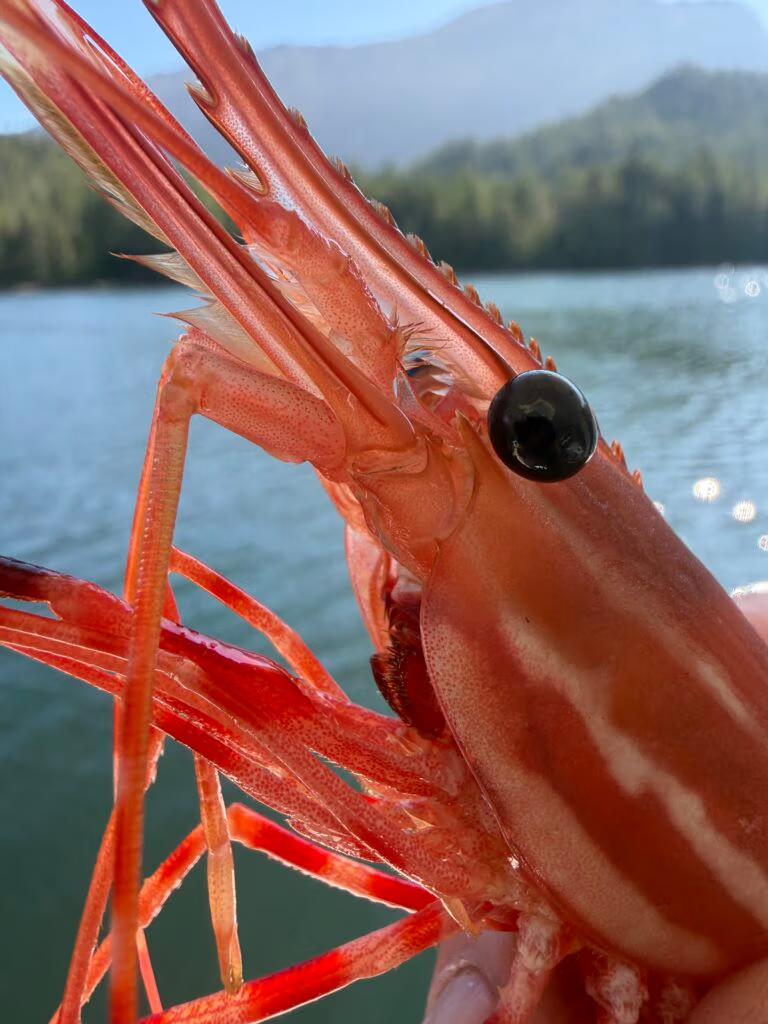
In BC tidal waters, recreational crabbing comes with rules—limits on traps, size and sex restrictions for Dungeness and red rock crab, and the requirement that traps be properly marked with your name on a buoy. 

Supper with good friends
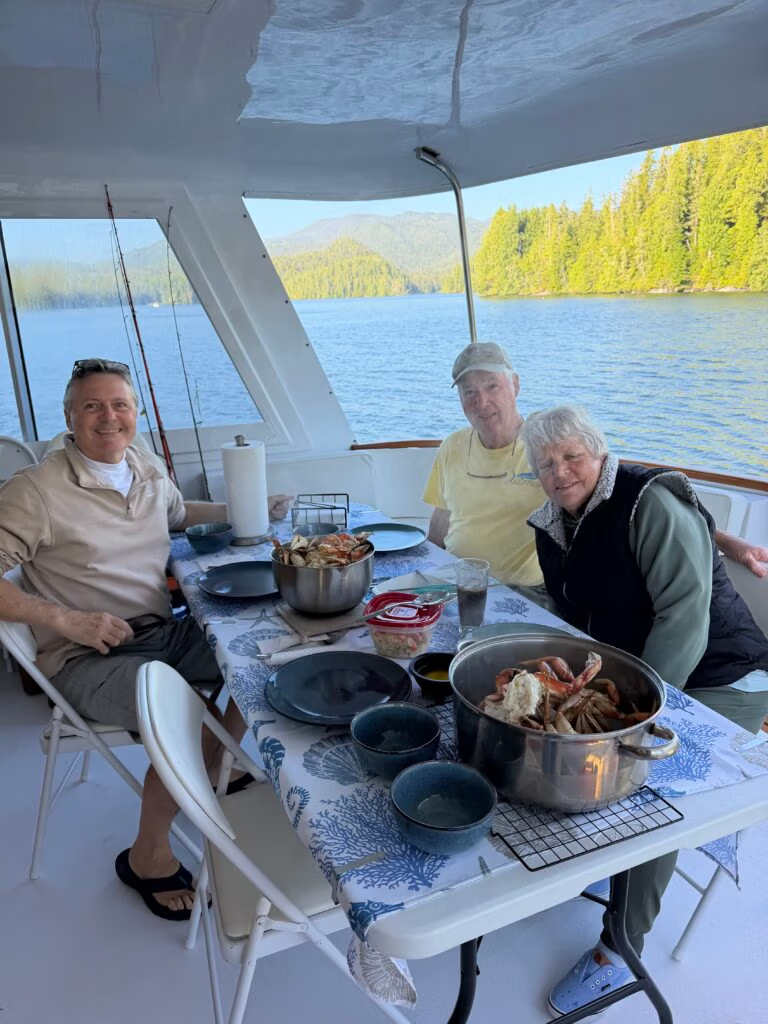
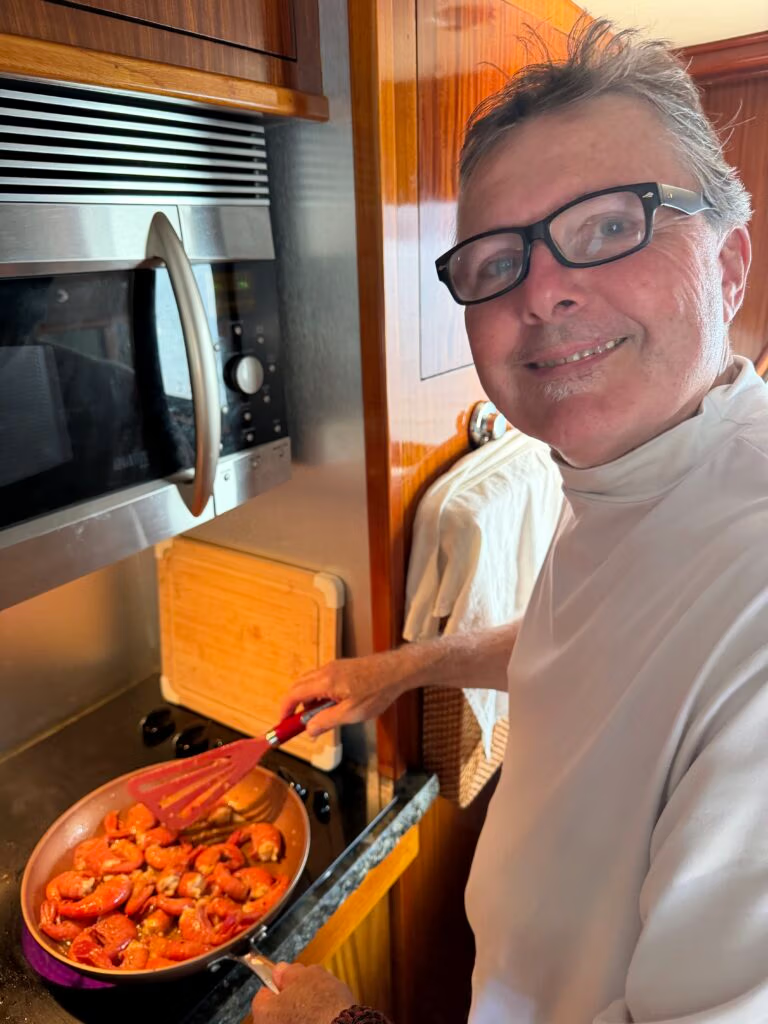
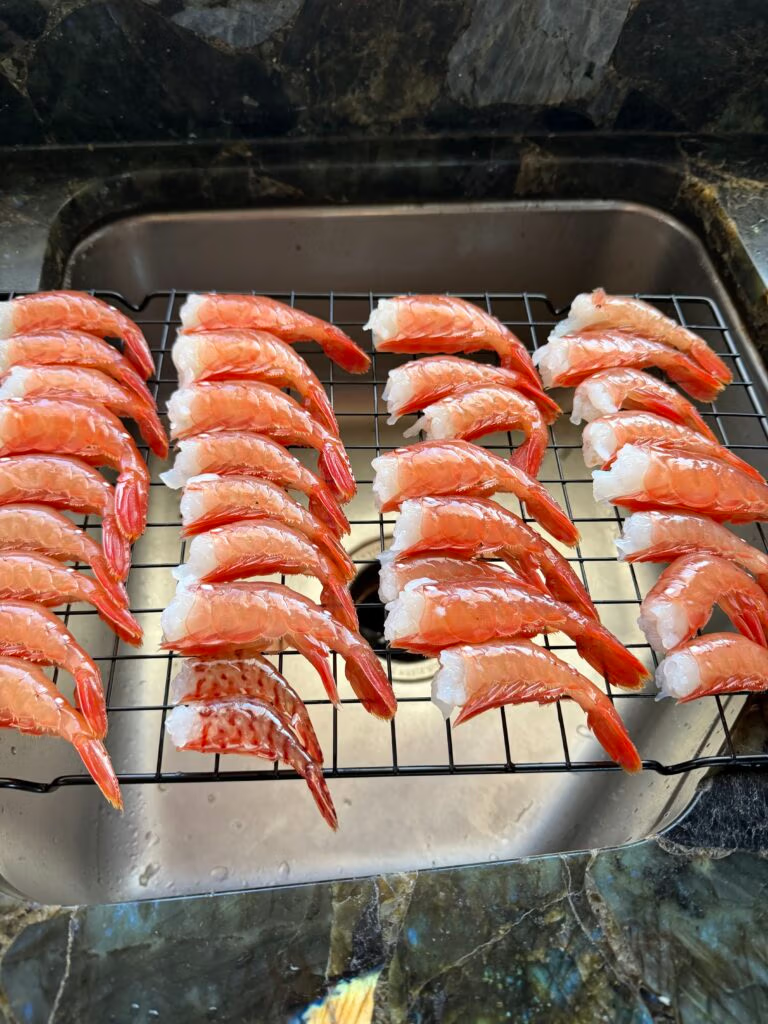
That evening, we cooked crab we’re caught the day before at Pruth Bay. There’s a particular satisfaction to that: food earned by your own effort, shared with friends in a quiet anchorage, the boat gently tugging at its hook as mountain and sea views close in around us. It was a lovely supper and a wonderful meal—and on trips like this, the food is as much about the company and the setting as it is about what’s on the plate.
Looking ahead—and missing someone
The day closed with that forward-leaning feeling that makes cruising addictive: wondering where tomorrow’s seas will take us, what the next anchorage will look like, what the next wildlife moment will be. And threaded through it, a quiet note of absence: “Just wish Jennifer was here.”
That line gives the story its heart. It’s not just a log entry about miles and crab and a tight inlet; it’s a memory being made in a place you love, with the awareness that it would be even better if one more person were sharing it.

Photo by Peter Cox
Is there supposed to be water around our feet?
Peter's first Crab Fest....

Kwakume Inlet to Namu Bay

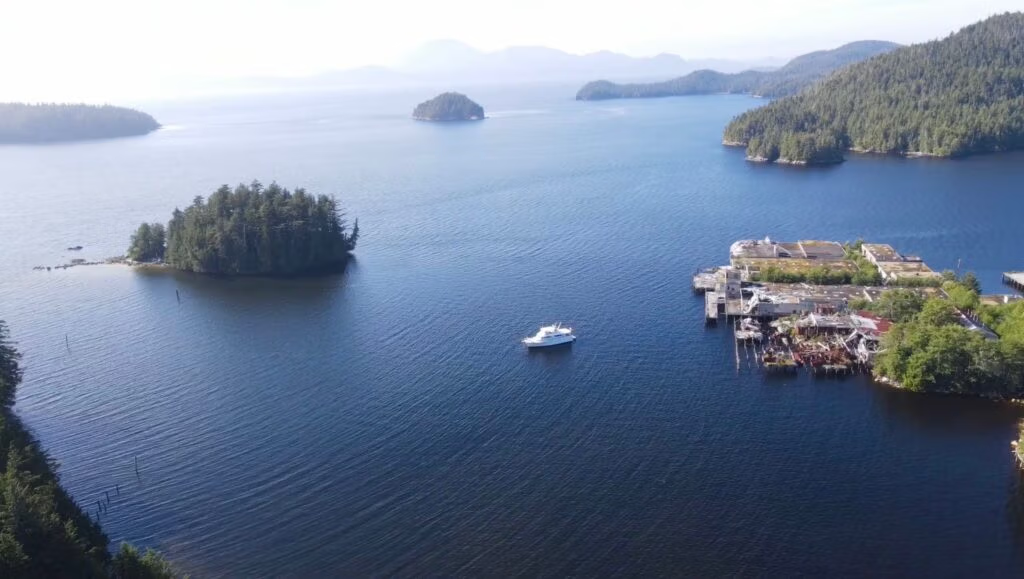
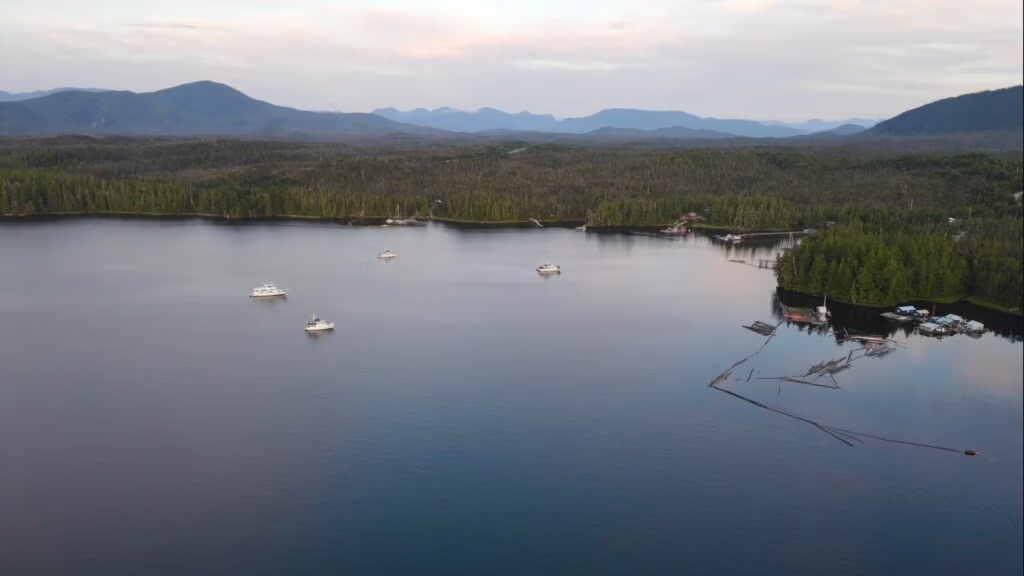
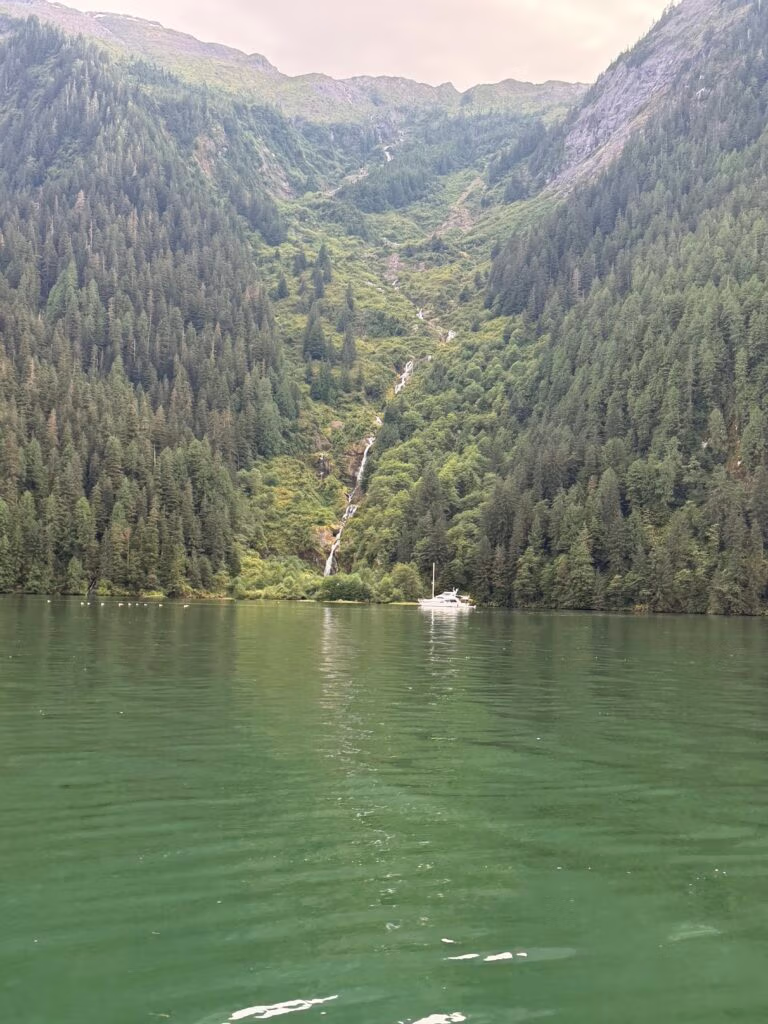
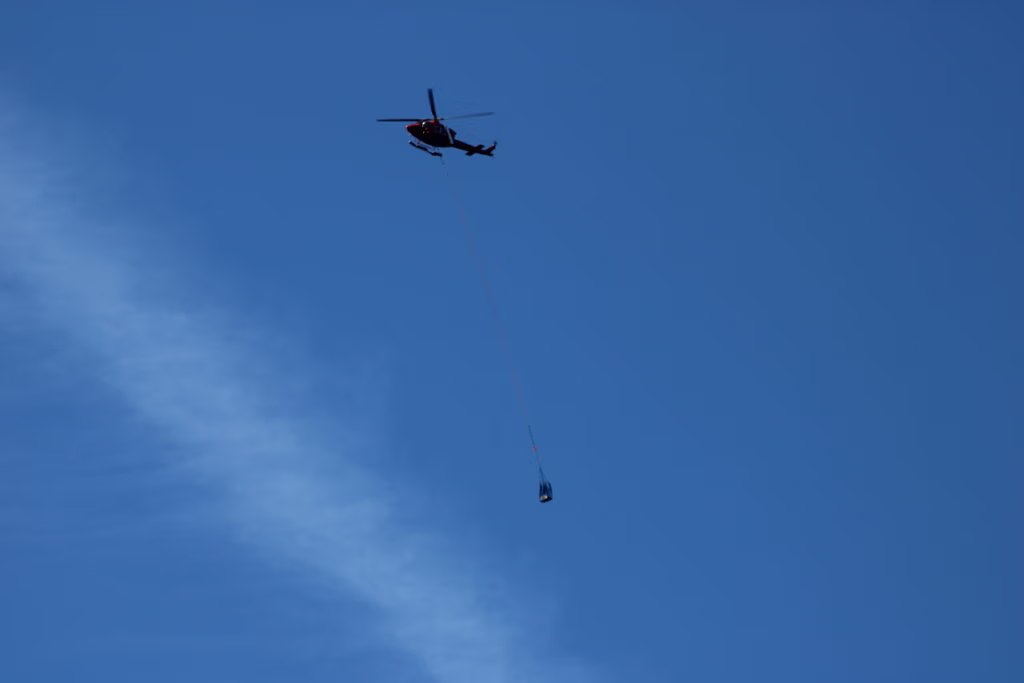
Peter sent up the drone and took this pic....
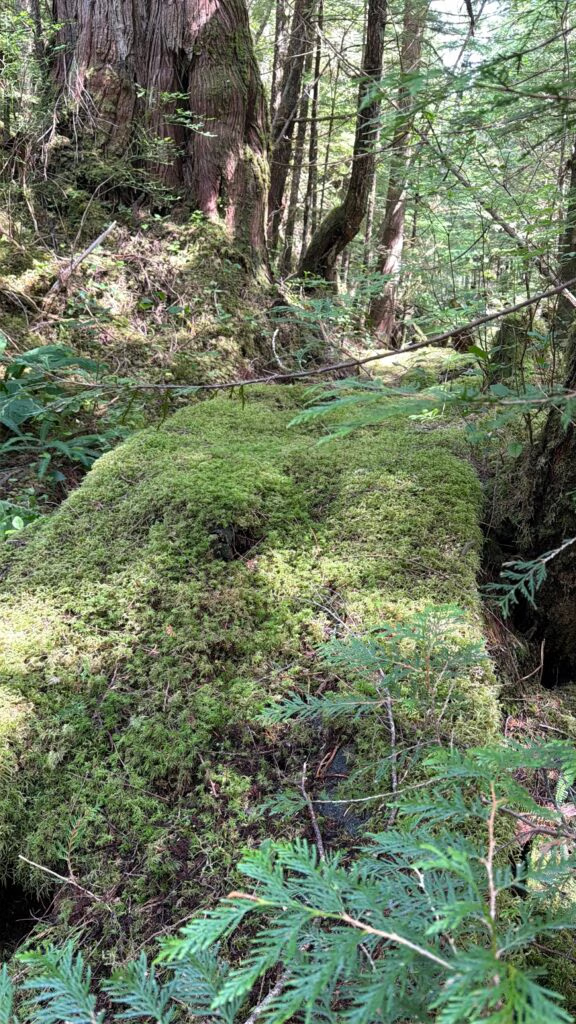
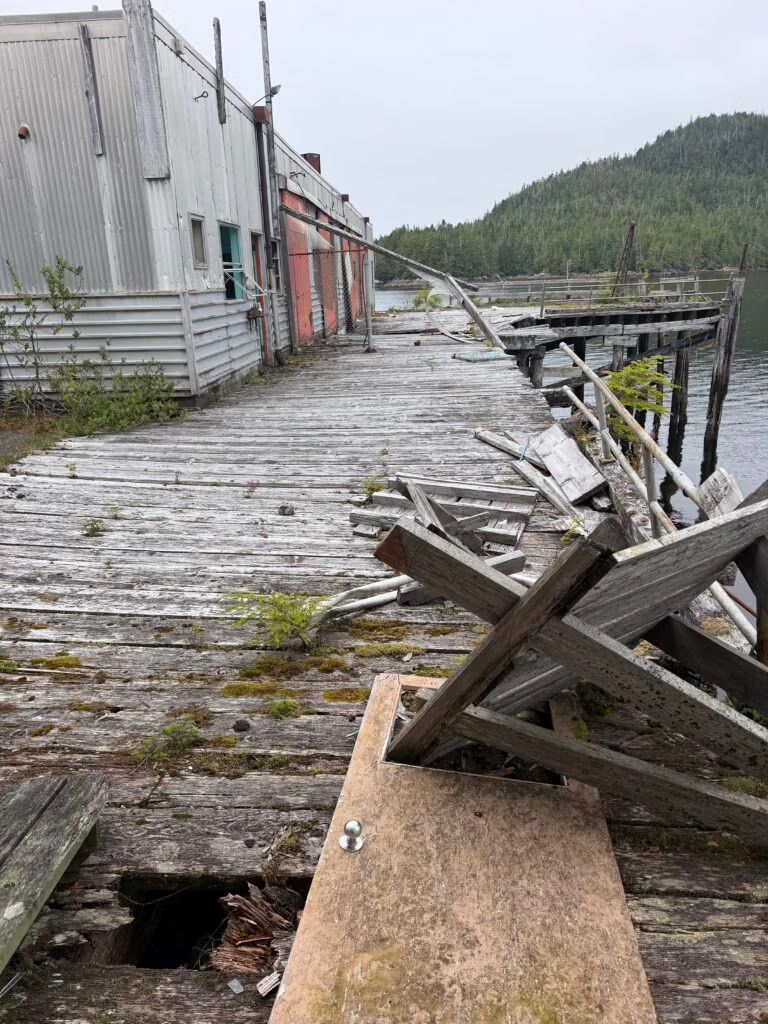
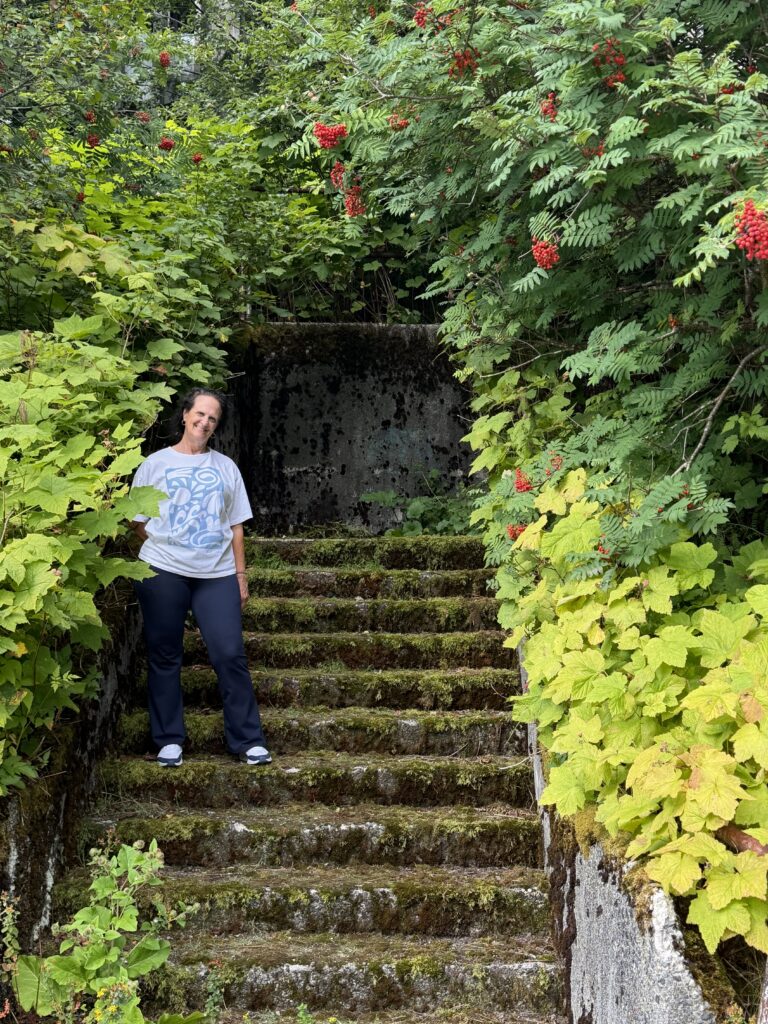
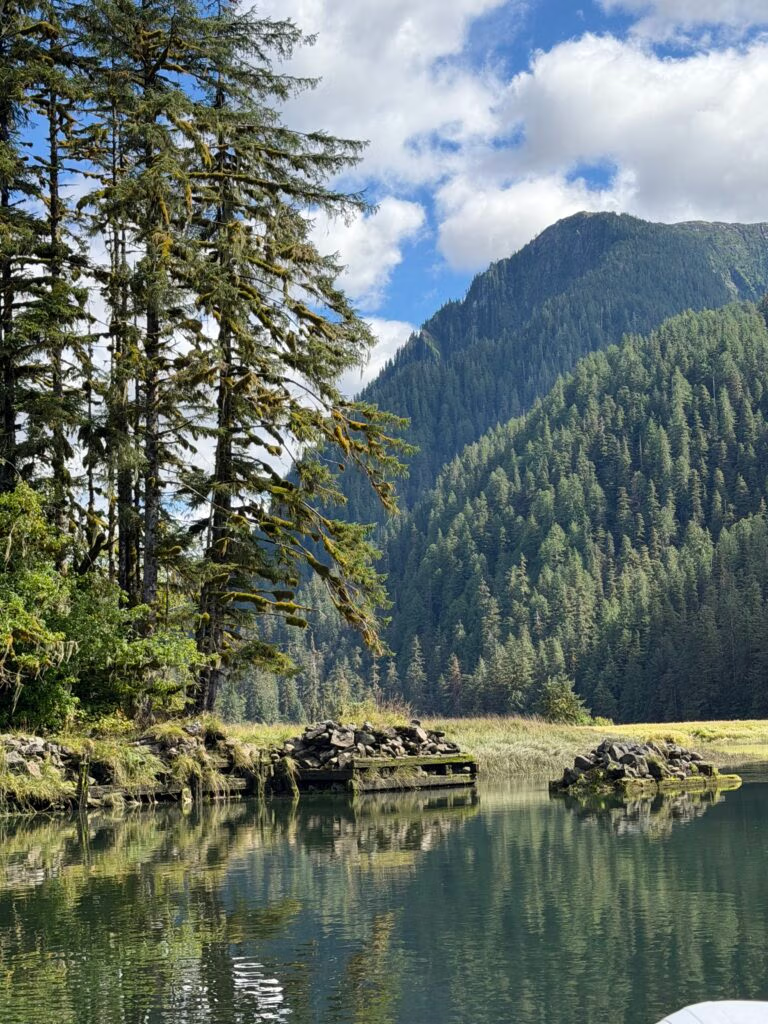
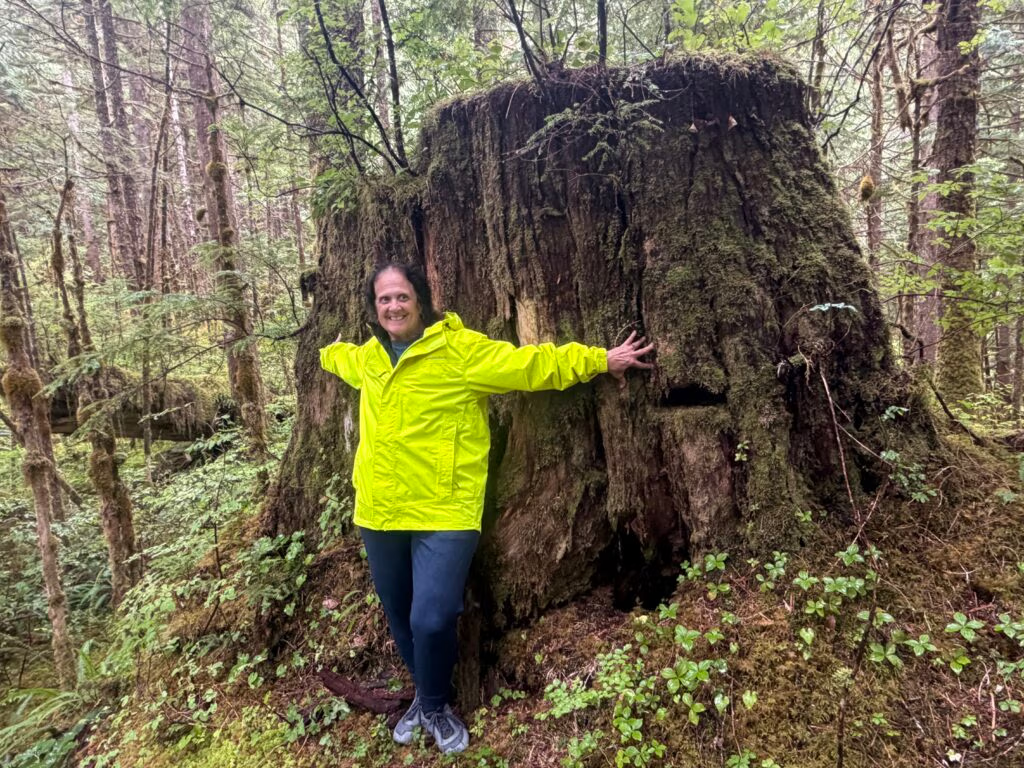
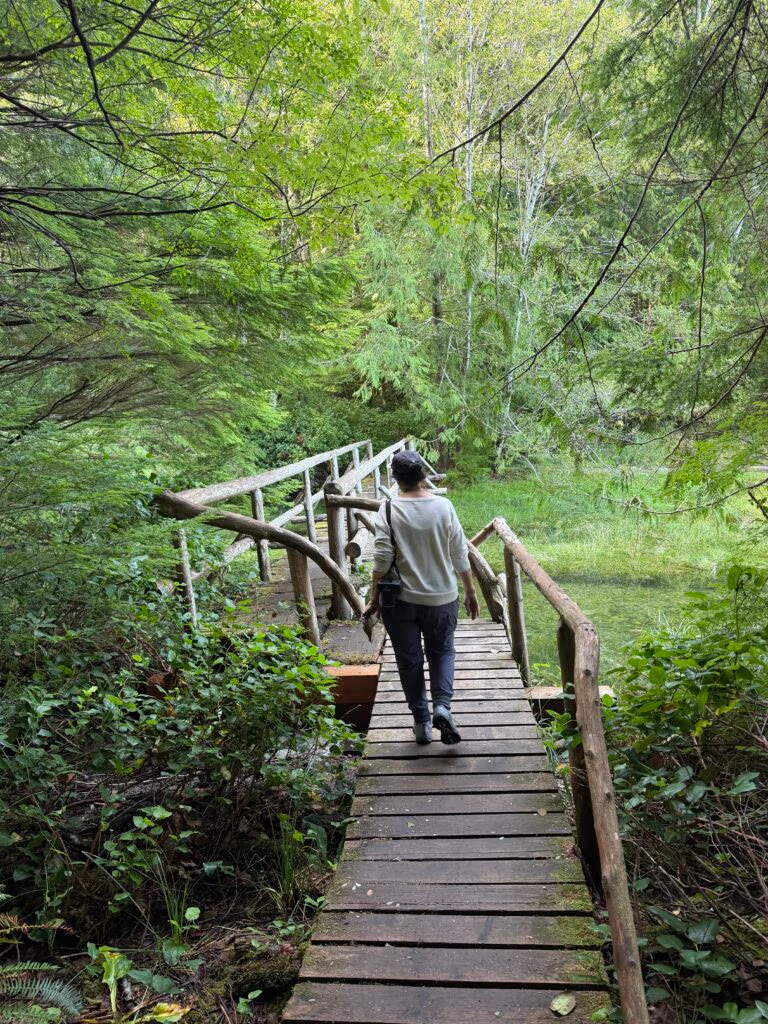
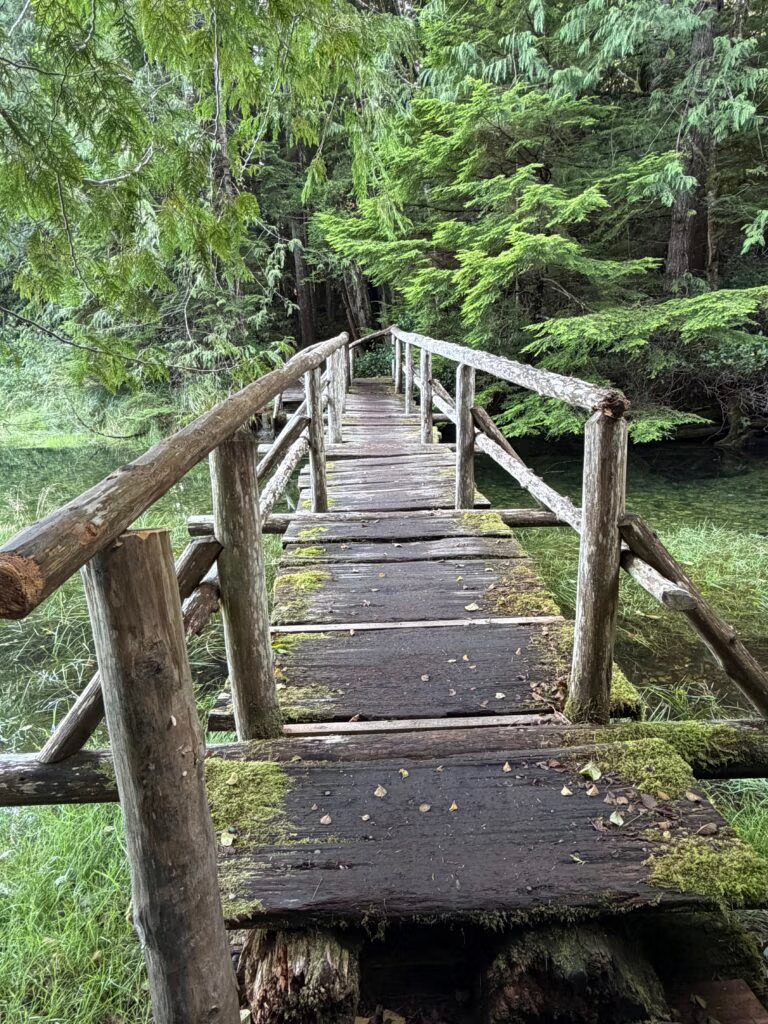
This was once a walk way, from the cannery to the lake but is now covered over with moss and decaying

(1) We left early, after a delicious breakfast of sun shine eggs—the kind that catch the morning light—and headed out into a remarkably calm day. The water was smooth, the air quiet, and whales appeared along the way, surfacing here and there as though escorting us toward Namu Bay.
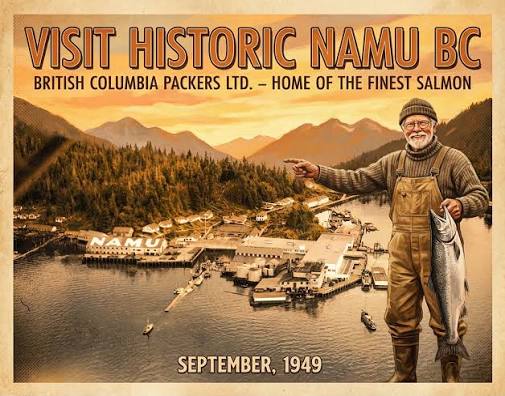
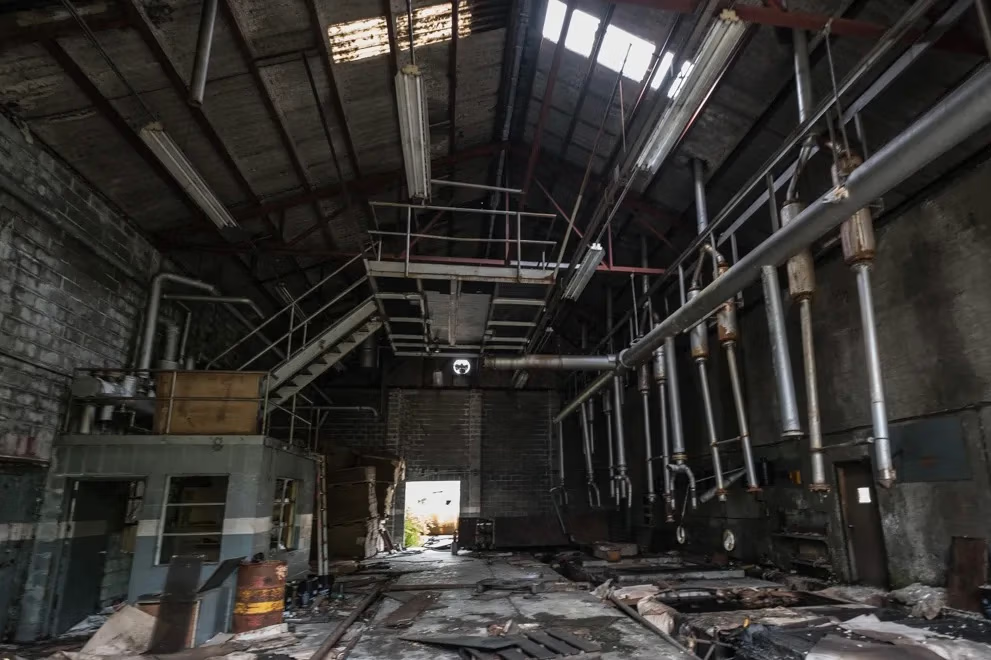
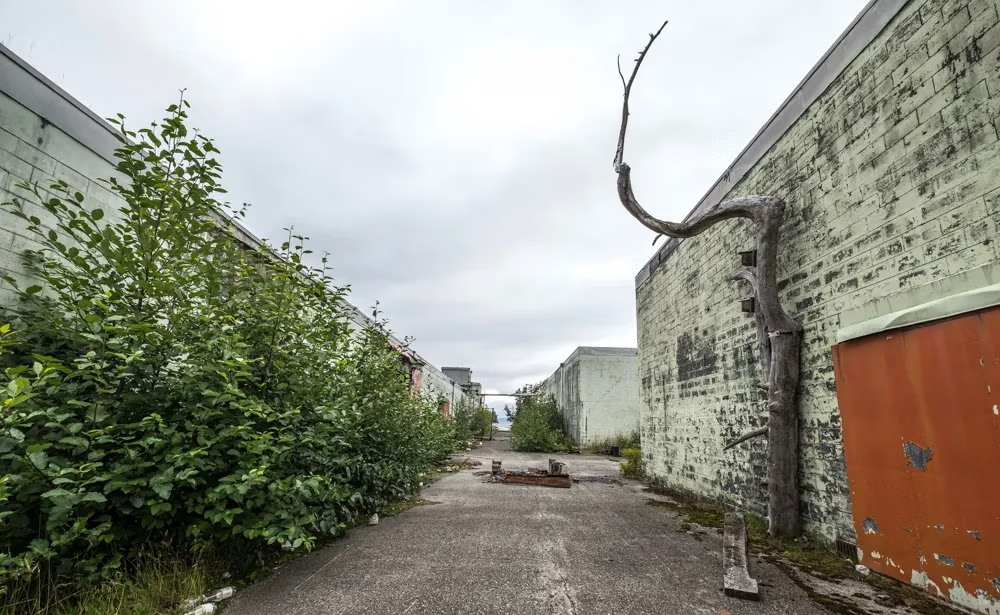
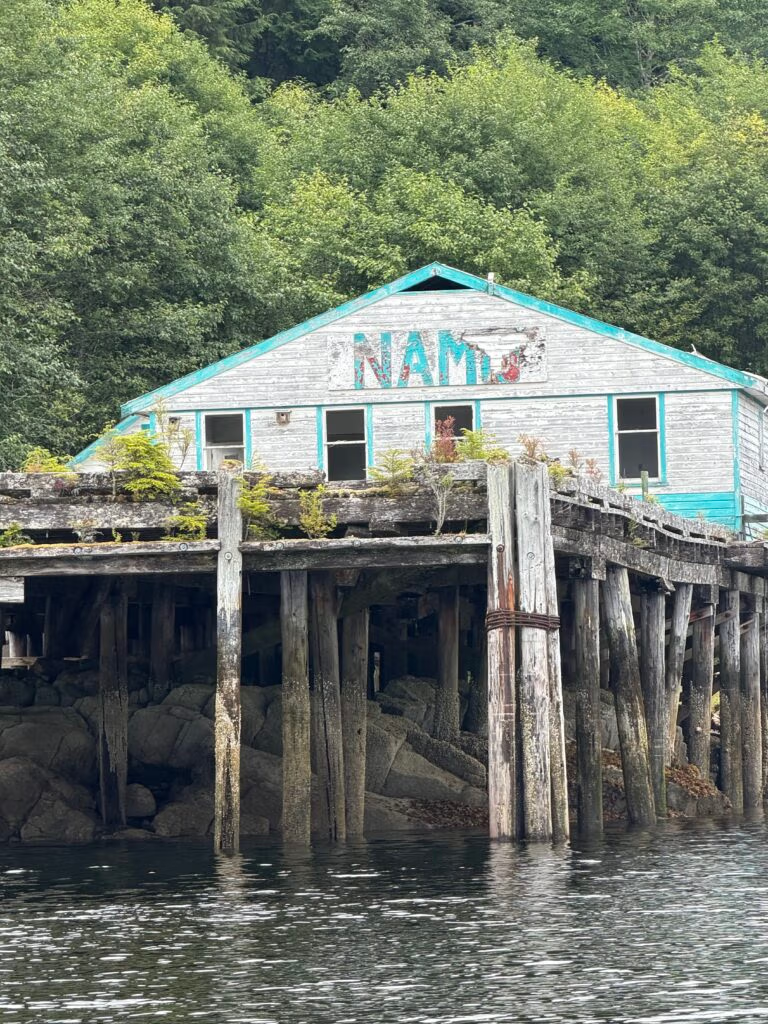
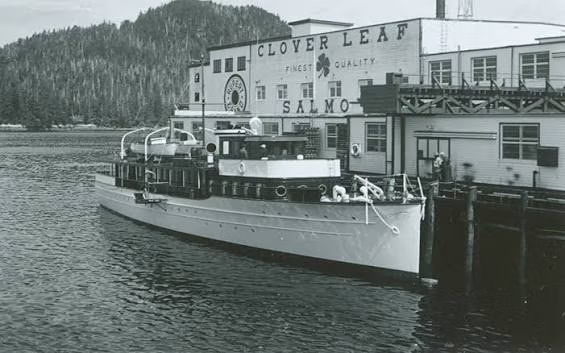
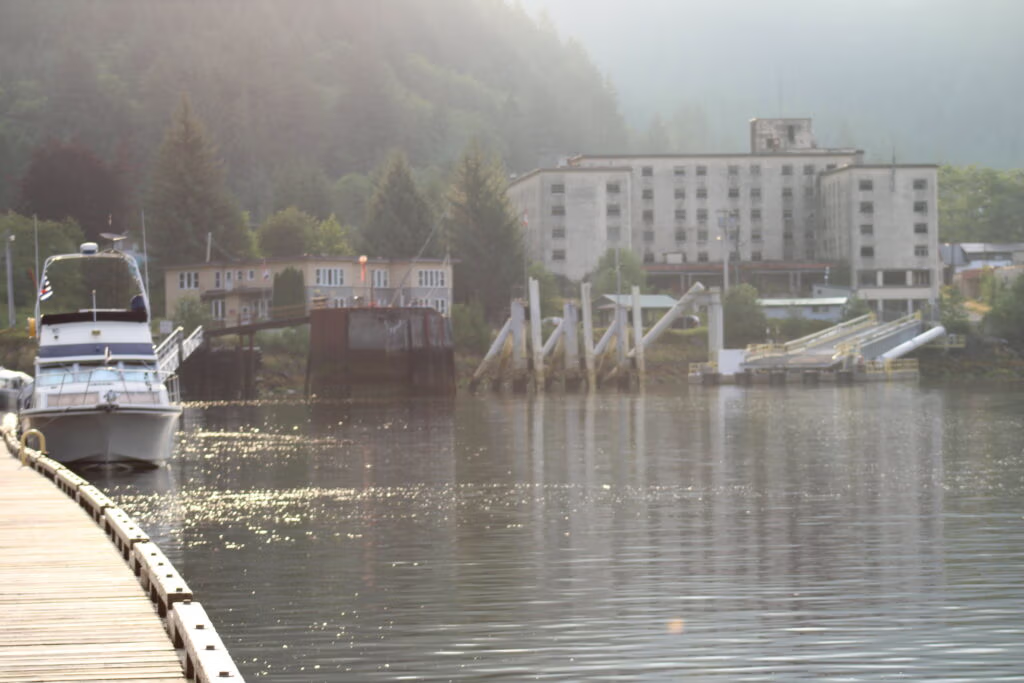
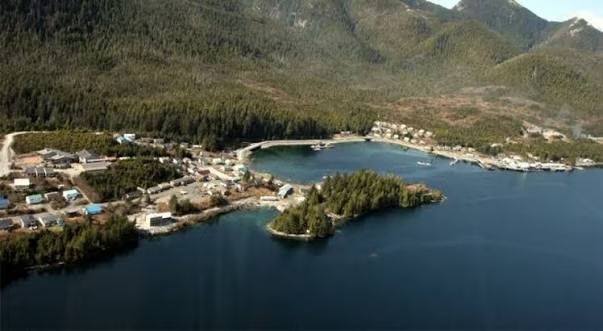
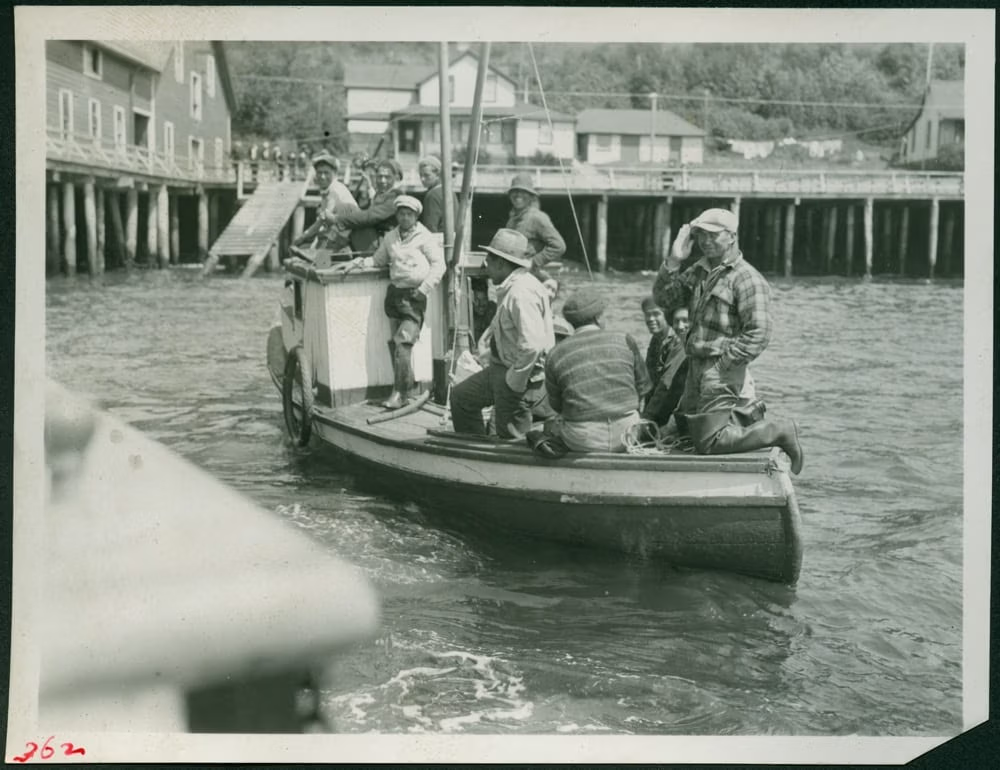
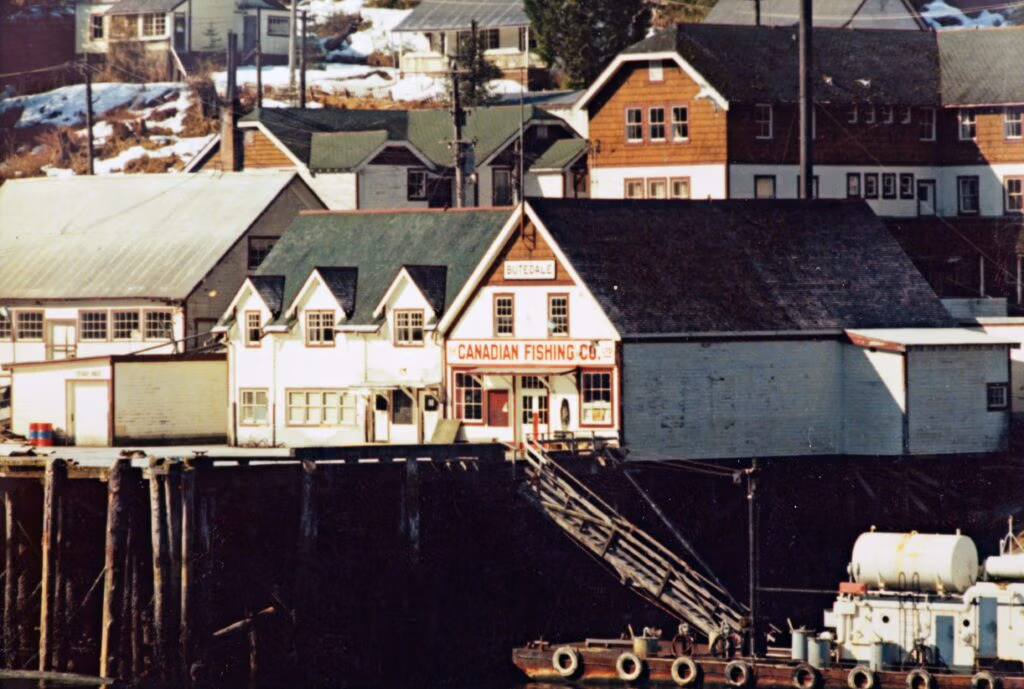
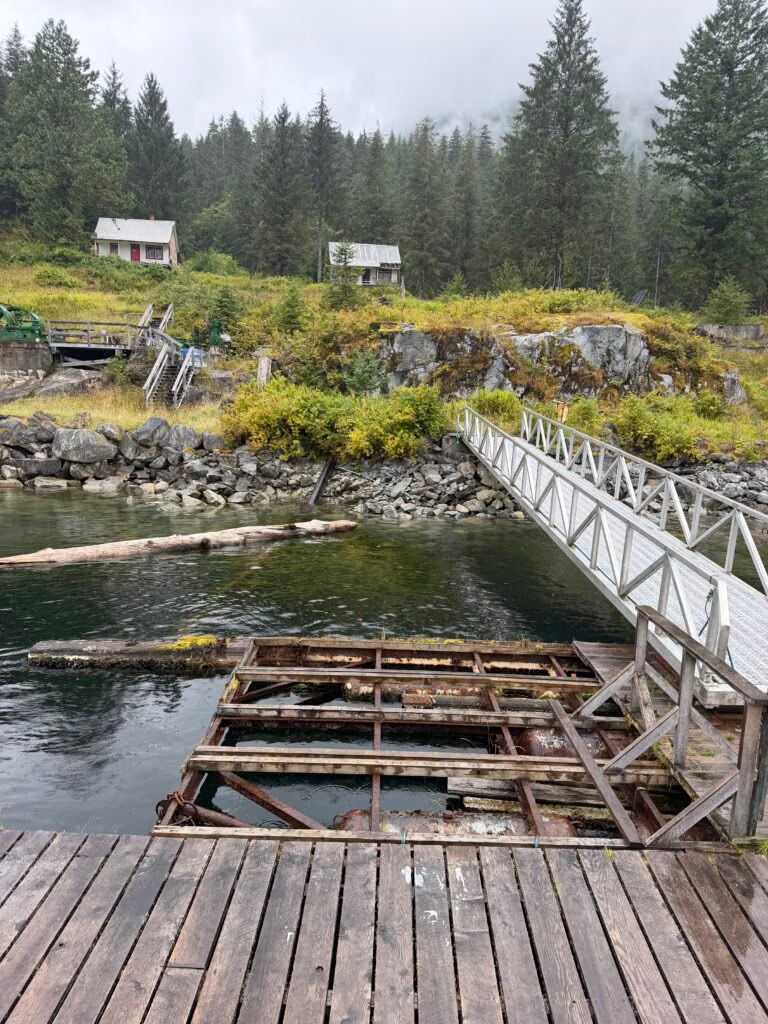
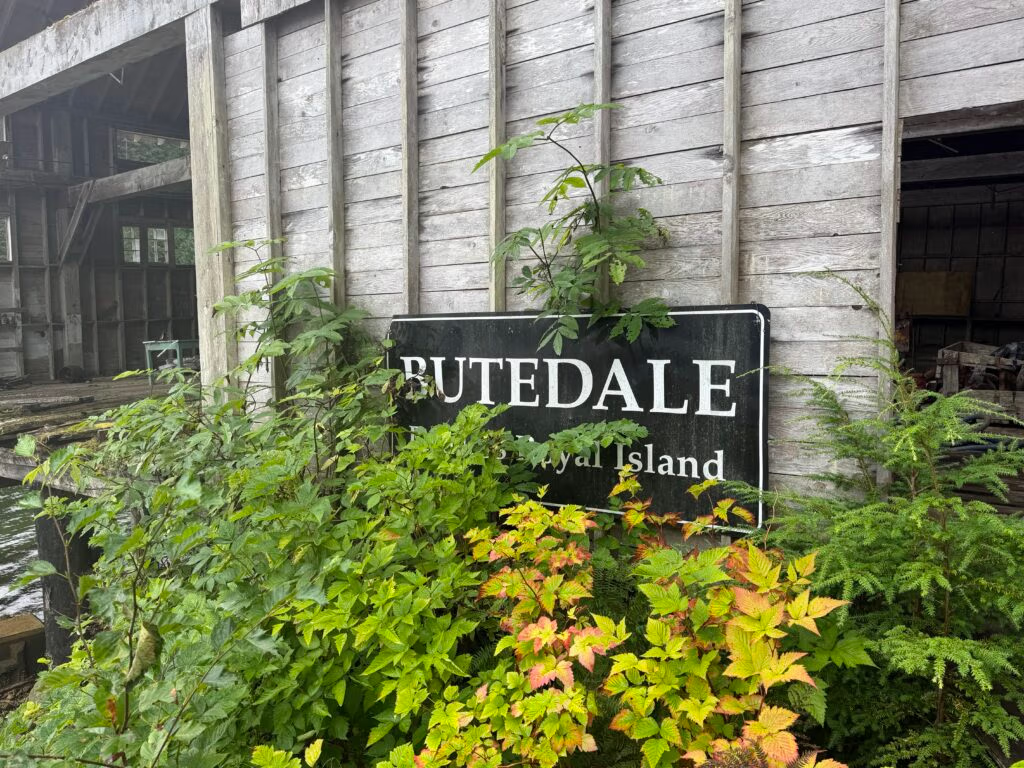
Namu has a long and complicated history. A cannery was established there in 1893, and a sawmill followed in 1909 to provide lumber and build the boxes used to ship canned salmon. B.C. Packers bought the operation in 1928 and expanded it into a substantial industrial community, complete with processing lines, warehouses, bunkhouses, a school, a recreation hall, and residences. At its height, as many as 400 people worked there, and the summer population could swell far beyond that. A fire destroyed much of the cannery in 1962, but it was rebuilt the following year.


(2) The cannery closed around 1969 or 1970, while cold-storage operations continued until 1988; after that, Namu was largely abandoned.
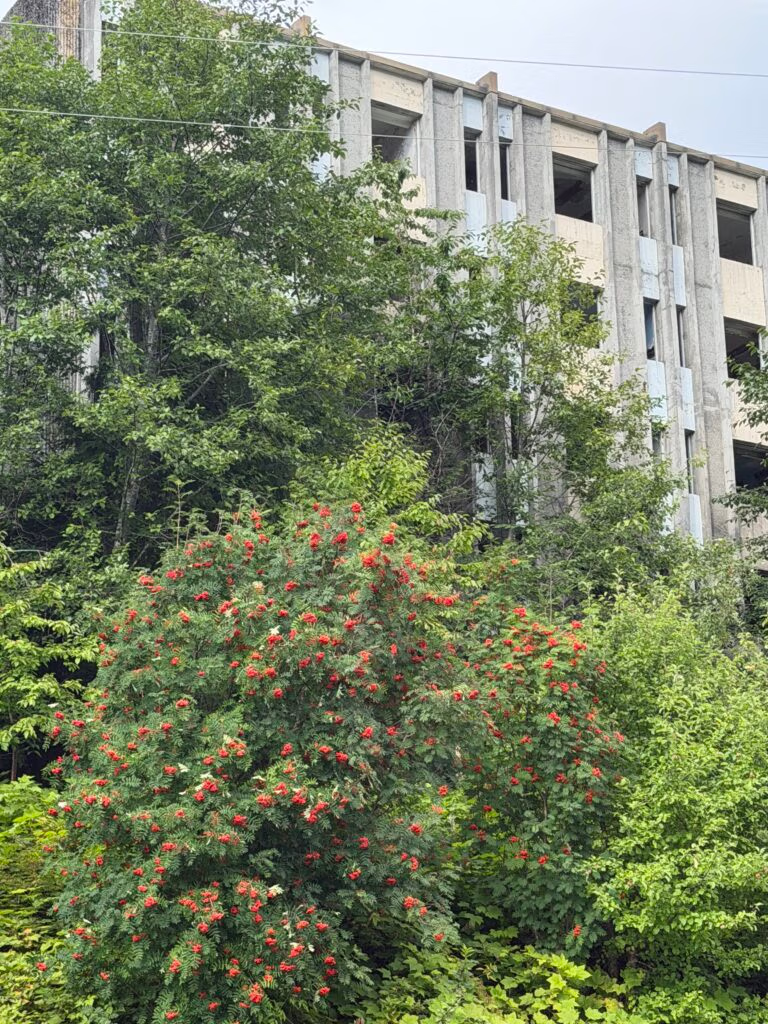
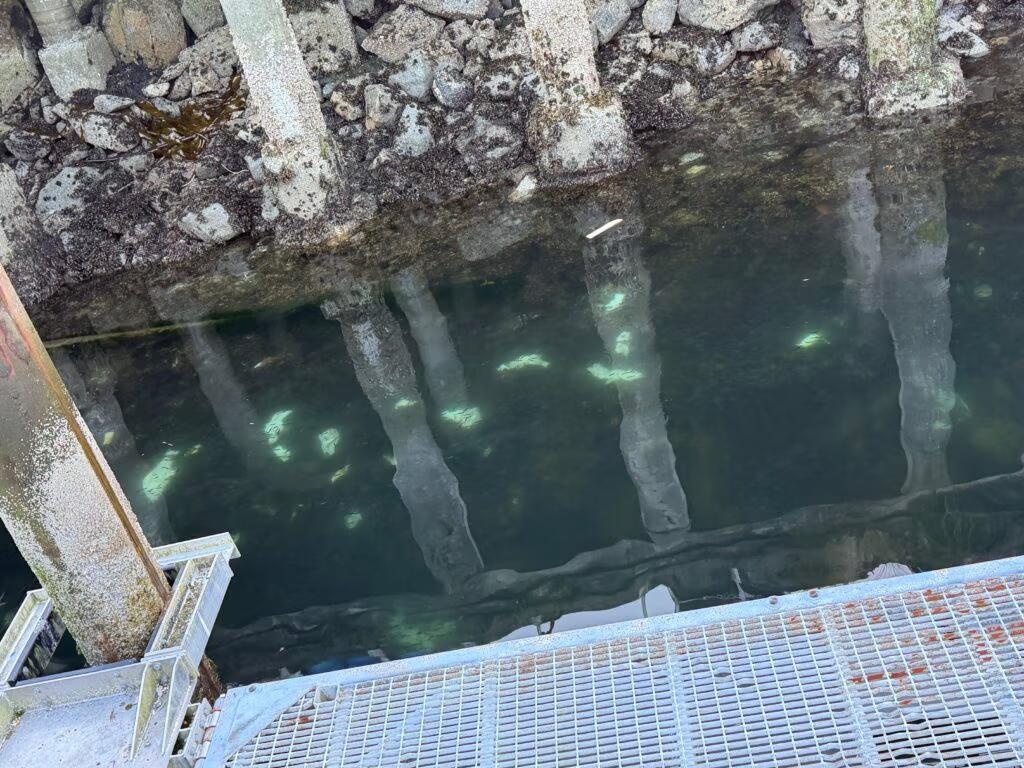
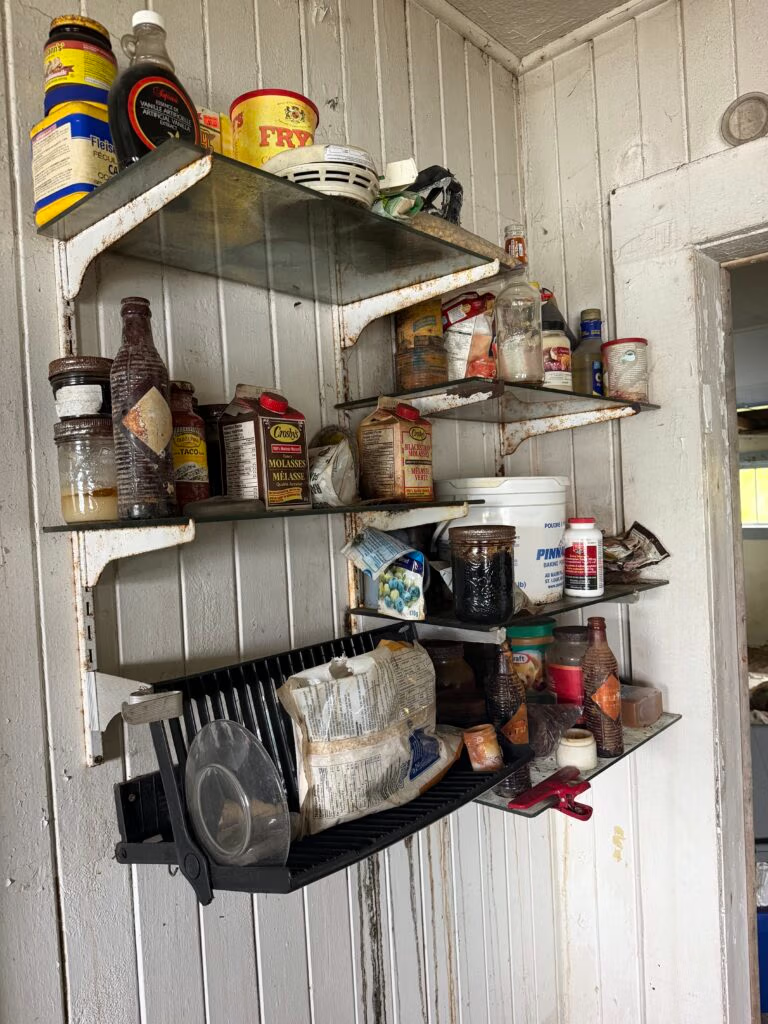
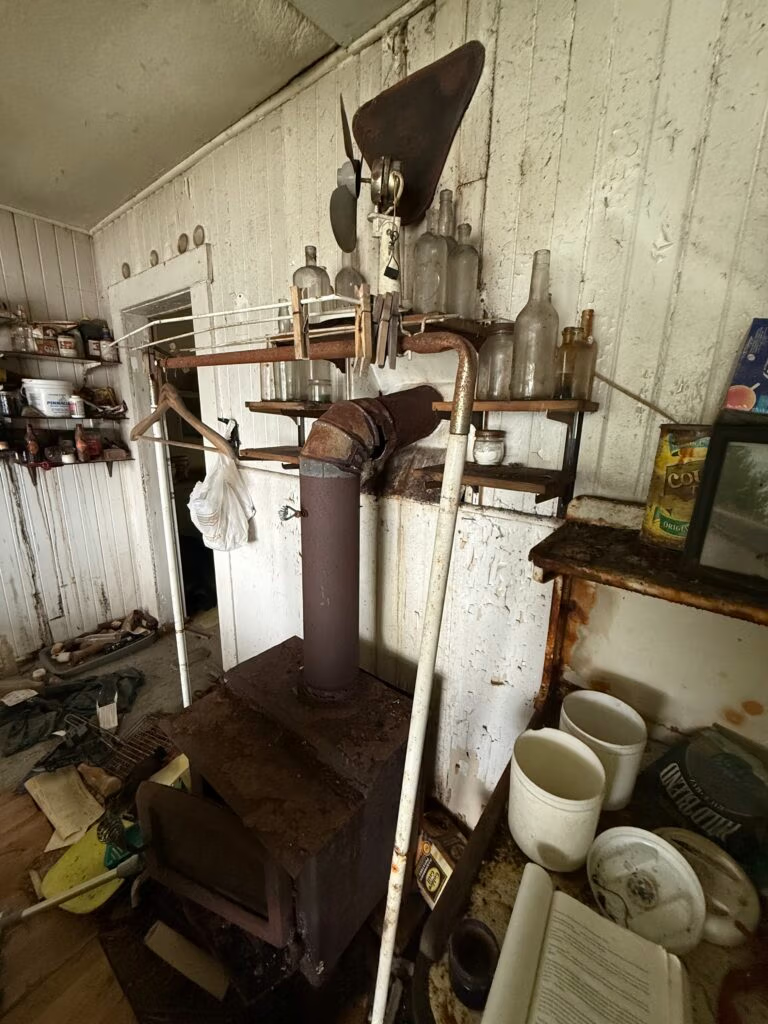
We arrived at Namu and spent much of the day exploring the old cannery. The vacant buildings stood around us in various stages of collapse, their weathered boards and rusting machinery bearing witness to the life that had once filled this place. We wandered through what remained, looking into empty rooms and along the old passages, trying to imagine the noise and motion that must once have defined the settlement.


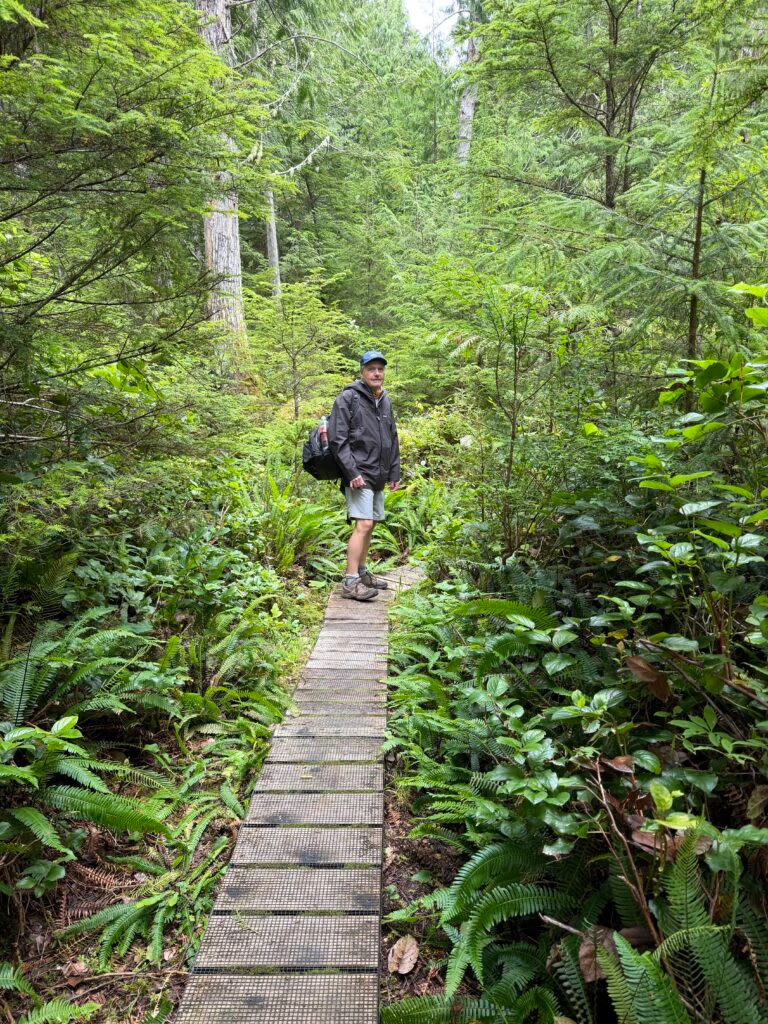
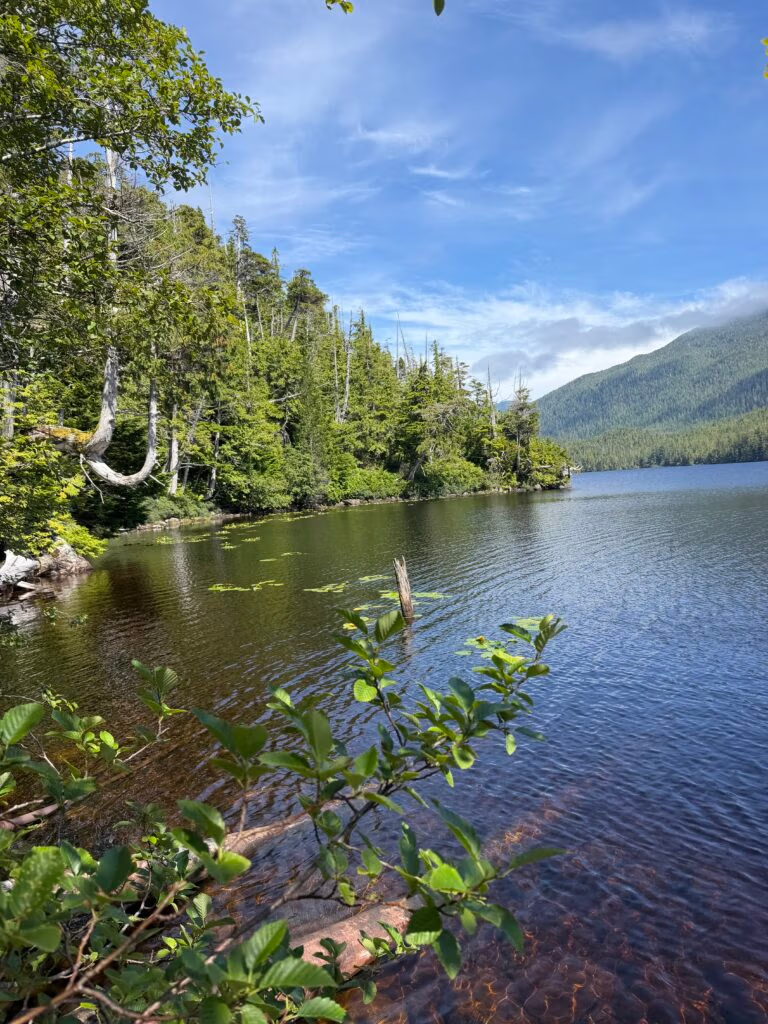
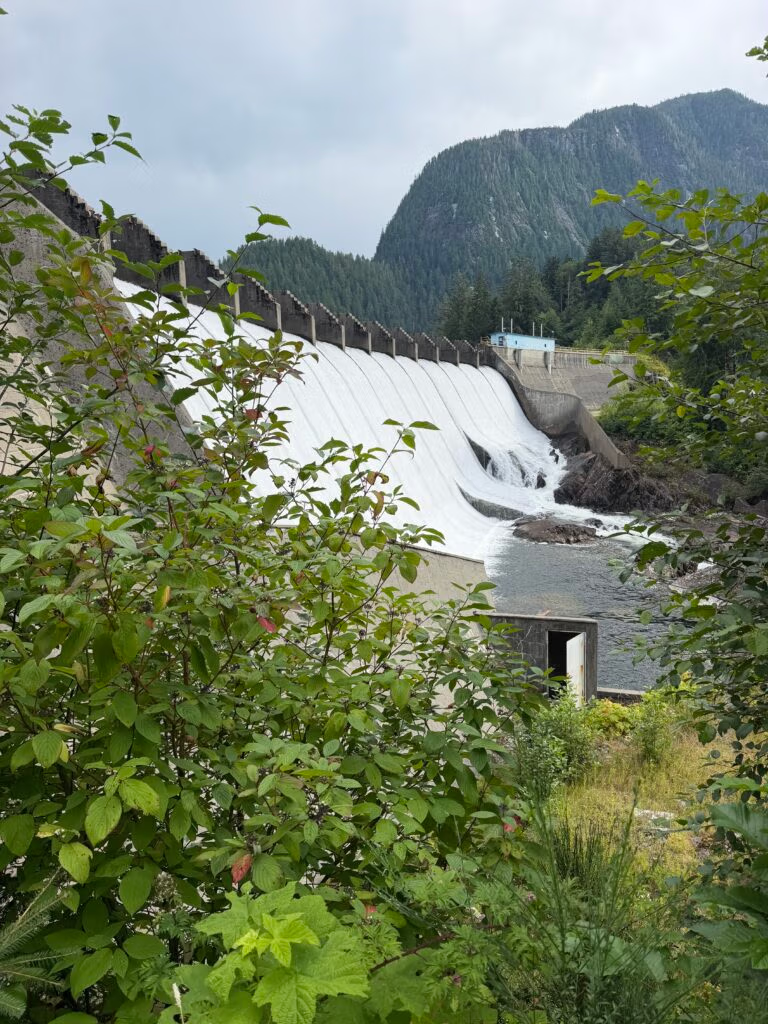
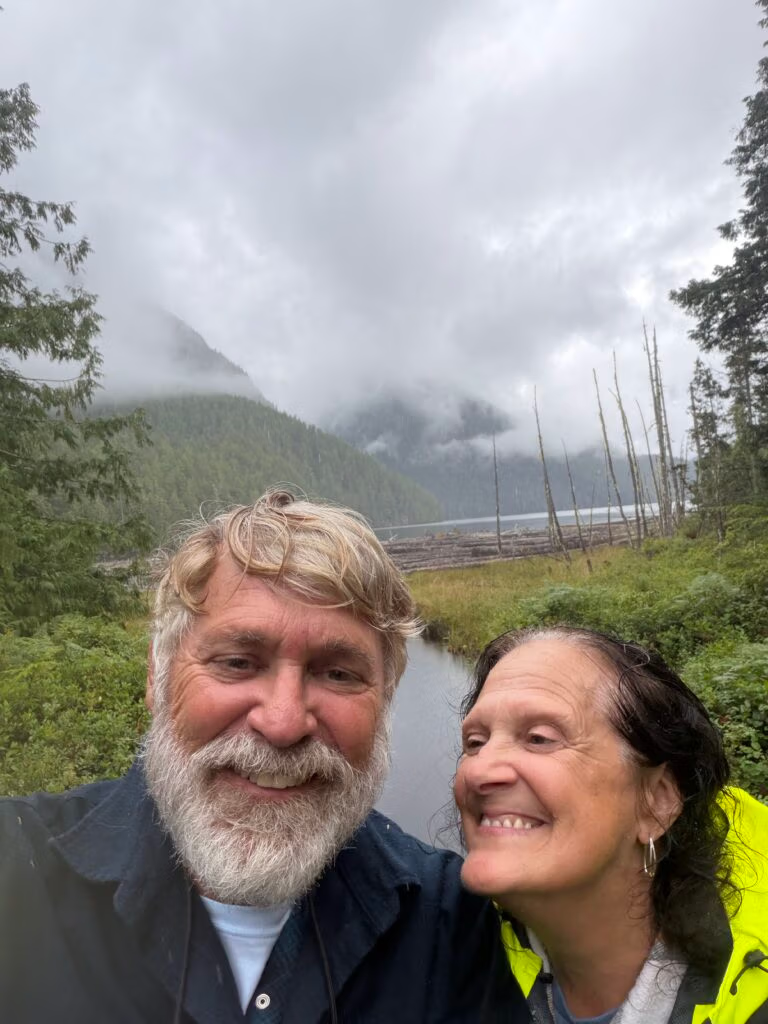
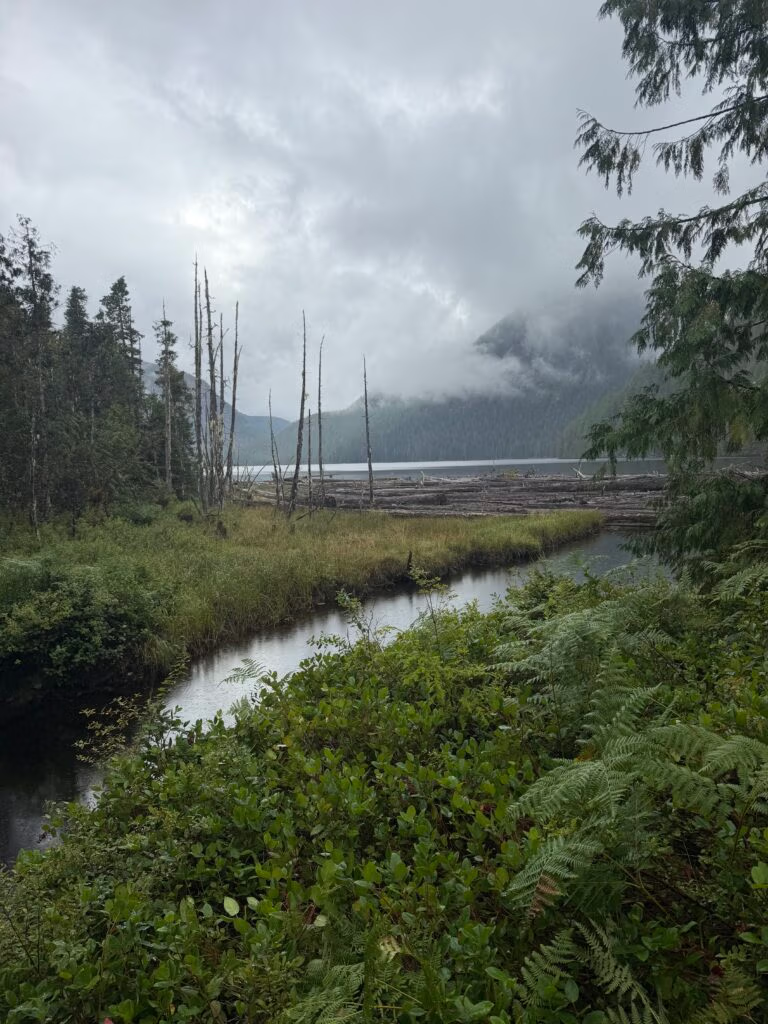
(3) From there, we hiked up to Namu Lake. The trail took about thirty minutes, climbing through the forest above the cannery. Some of the photographs are from that walk, including one of a covered walkway that has almost completely surrendered to time. Its boards are rotting away, slowly being absorbed back into the landscape.
The whole place felt like a meeting point between human industry and the persistence of nature. Namu had once been dynamic and bristling with life, but now it smells of mold, wet timber, and deterioration. Everywhere, Mother Nature is reclaiming what people built. Even the walkways that once connected the community are failing, leaving the forest and rain to fill the gaps.
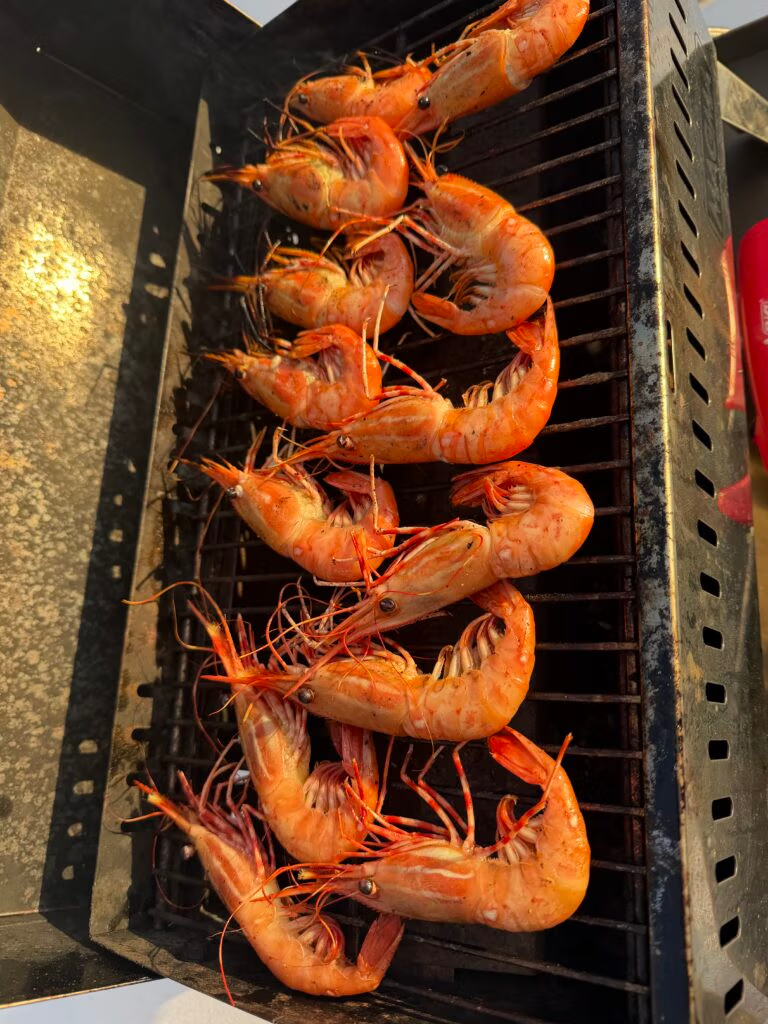
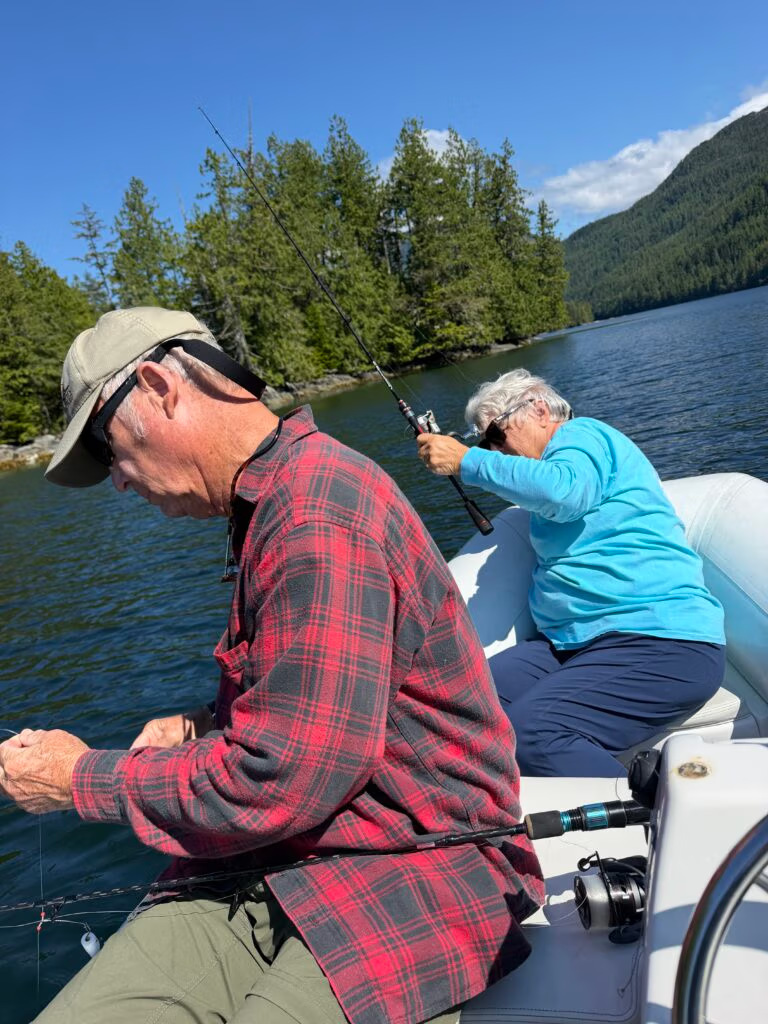
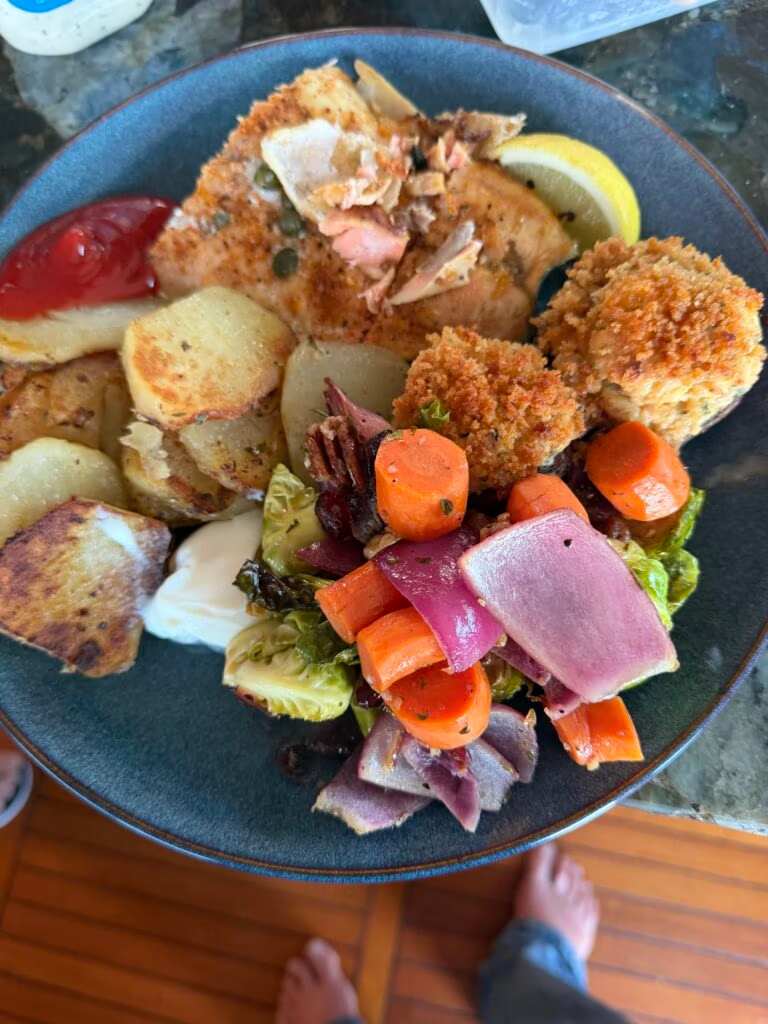
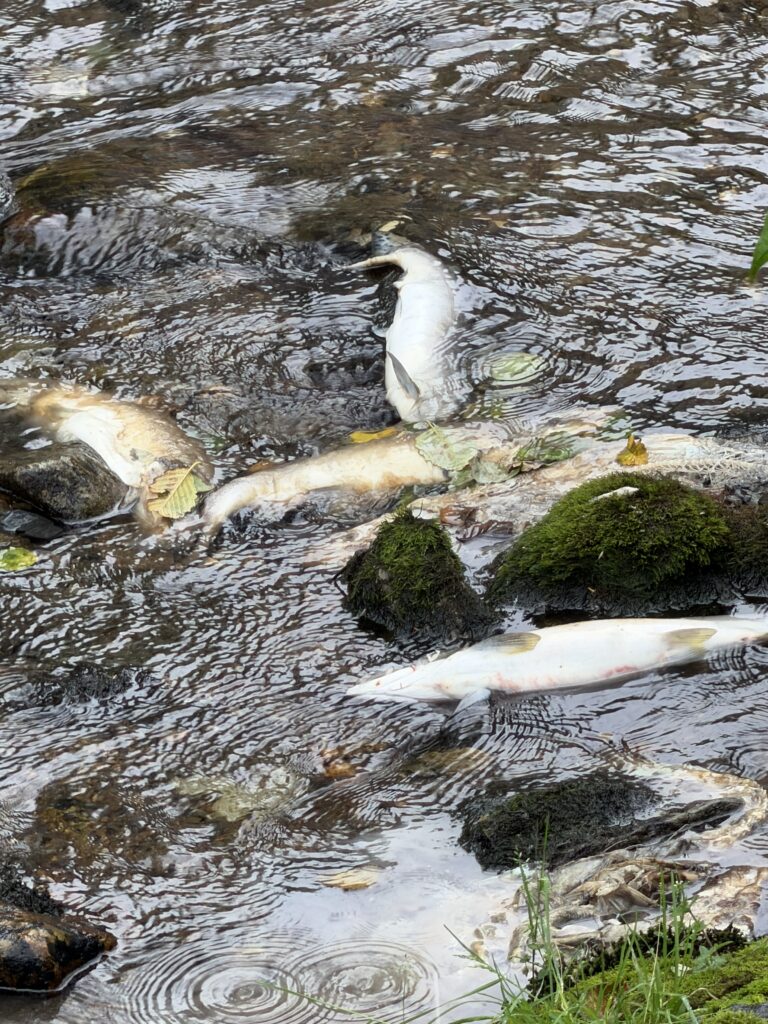
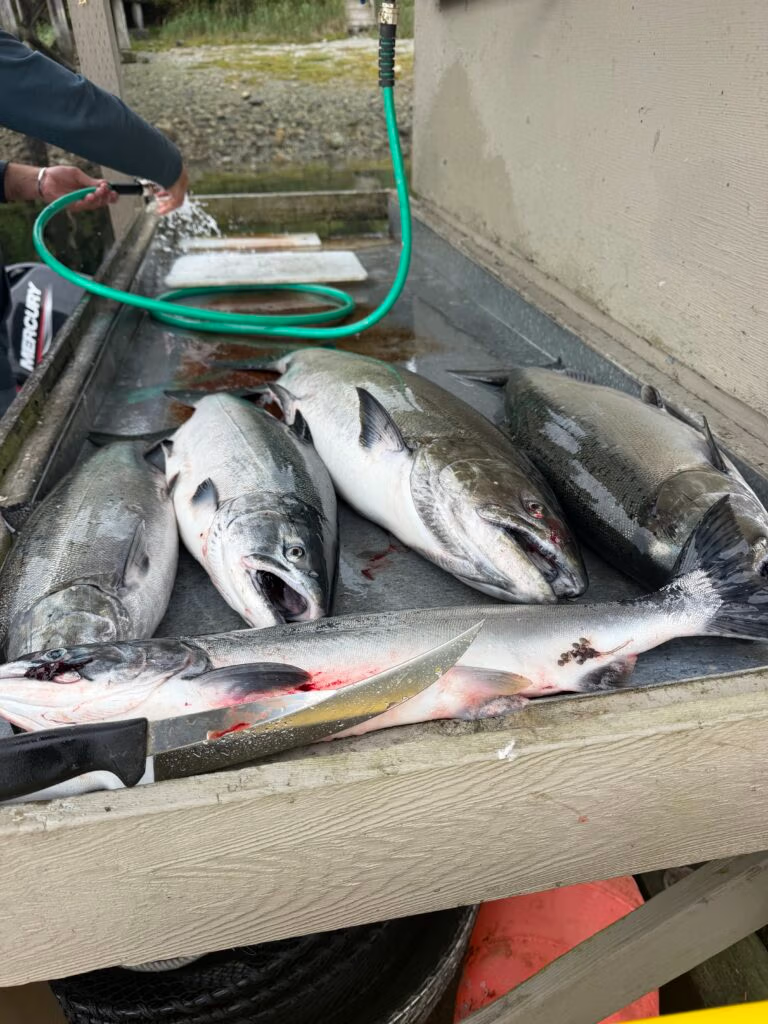
Later, we set the crab traps and went fishing. There were coho salmon everywhere, moving through the water in abundance, but we still haven’t quite found the technique to catch them. We’re working on it. For dinner, we finished the day with blackened fish, pan-fried fish, rice, and salad—a wonderful meal after a full day outside.
Other boats came and went throughout the day, their crews drawn to Namu for the same reason we were: to look, explore, and take in the strange beauty of a place that was once so alive. But I have to admit that I didn’t truly appreciate Namu. It felt eerie—less like a destination than a ghost of one. The silence seemed to emphasize everything that was missing.

(4) Still, it was a memorable day: calm water, whales along the route, a hike to the lake, salmon we couldn’t quite catch, crab traps set for tomorrow, and a lovely evening meal. In the morning, we’ll pull out and head toward something fresh and new.

Leave a Reply

Your email address will not be published. Required fields are marked *